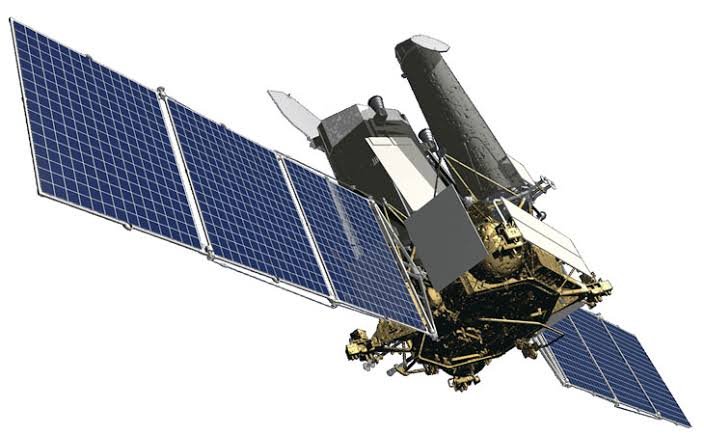
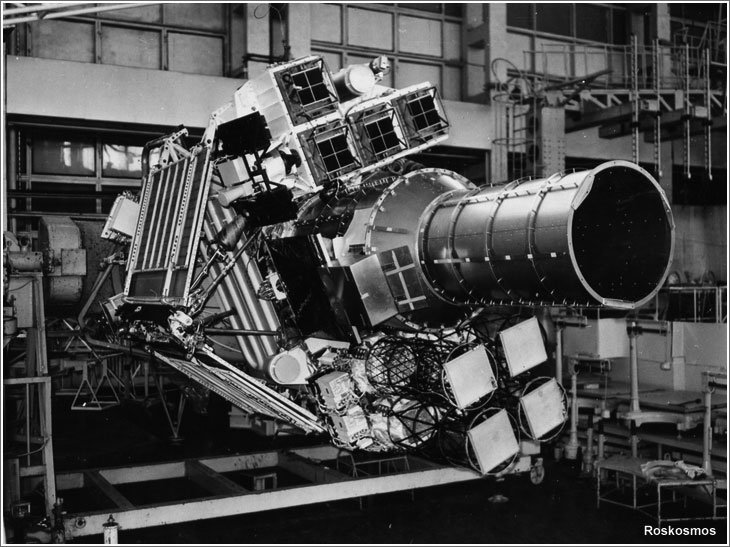
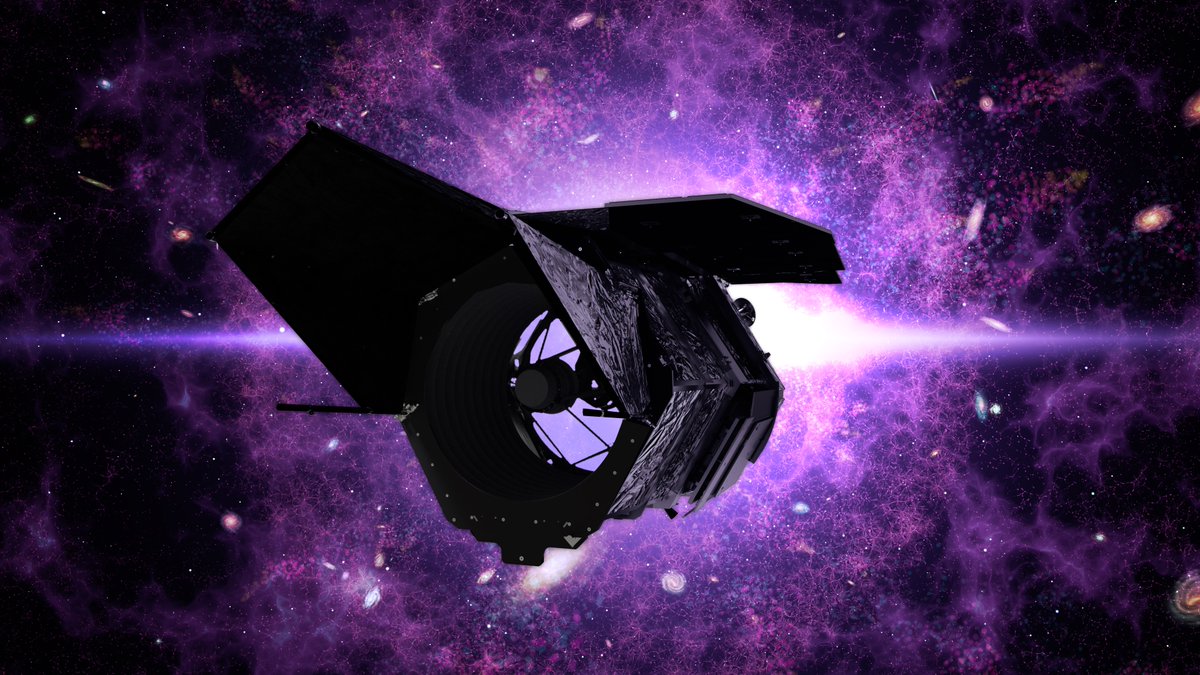
Join NASA’s Night Sky Network on Thursday, Oct. 22, at 5:00 p.m. PT (8:00 p.m. ET) for a livestream all about Roman! Learn about the telescope and how it will unveil the cosmos in ways never before possible. The event will also be recorded. Details: https://t.co/t74qWWo5iy
A Gaze from the Darkness: How Voyager 1 Saw Our Home 🌌
Far beyond Neptune’s orbit, where the Sun barely warms anything and the darkness grows thicker than any night on Earth, Voyager 1 received one final command: turn around.
It swung its cameras back toward the tiny system it had left behind years earlier. And what it saw were not majestic worlds, but a handful of faint sparks in the black void.
Venus. Earth. Jupiter. Saturn. Uranus. Neptune.
All of them fit into a single frame as barely visible points of light. The glow of these planets was weaker than that of the most distant stars. And Earth — our only, noisy, living Earth — turned out to be the palest and smallest of them all. A tiny blue speck of dust, lost in a sunbeam.
In that moment it became painfully clear: our entire home, all our wars, all our songs, everyone who has ever lived — is nothing more than one almost invisible point of light that you could cover with your fingernail.
That is how Voyager 1 forever remembered the Solar System — not as a kingdom of planets, but as a scattering of faint lights in endless darkness.