STOP THIS NONSENSE NARRATIVE.
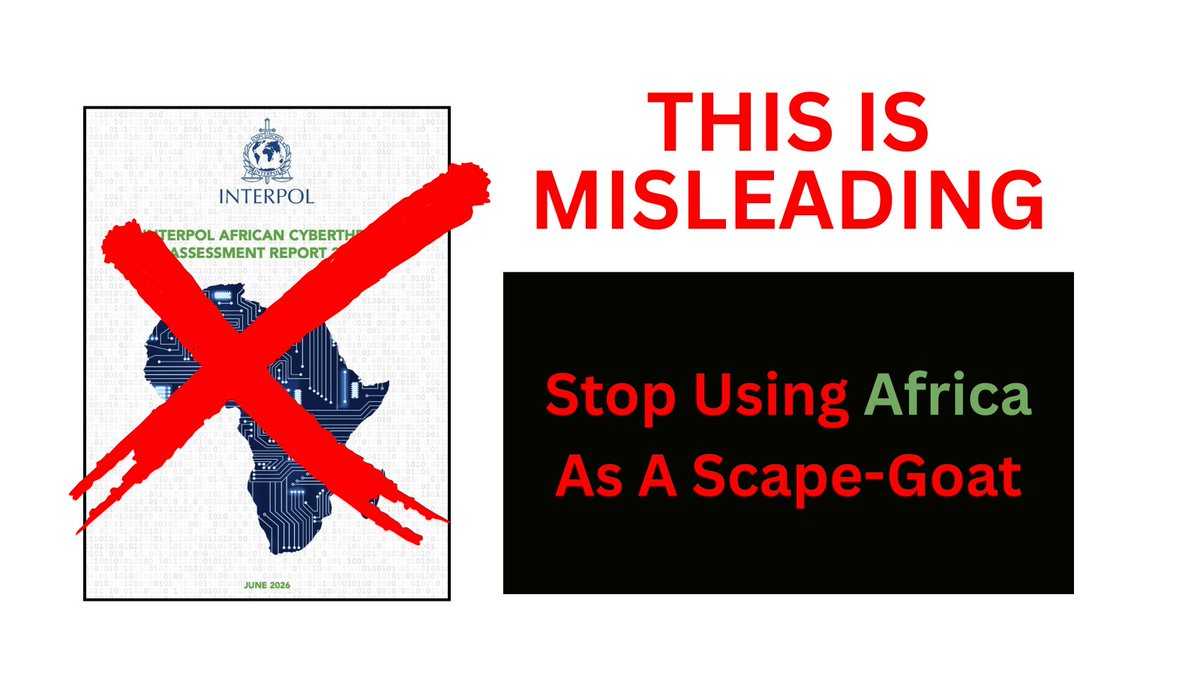
I speak for Africa when I say THIS IS MISLEADING, and it misrepresents where the real crime and AI abuse is happening in the world today.
If you genuinely want to talk about cybercrime, or AI being used for crime, Africa should not be anywhere near the center of that picture.
Start with AI itself. The top countries in AI adoption globally are the UAE, Singapore, China, India, and the USA. Even South Africa, sits around 21 to 23% adoption, while the UAE is above 70%. We are not even in the top 3 users of this technology, so how does Africa become the poster child for AI-driven crime.
Add the infrastructure gap. Large parts of Africa still doesn't have reliable banking rails, card penetration, or digital payment systems mature enough to run large-scale, automated fraud at the level a "55% AI-enabled" statistic implies. You need infrastructure to commit crime at scale. Africa is still building that infrastructure for legitimate commerce.
Now read the actual INTERPOL report closely, because it undercuts its own headline.
South Africa alone accounts for 92% of every ransomware detection and 70% of every BEC detection cited in the report. Add Nigeria and two countries explain almost the entire "African" story. The other 50-plus nations on this continent barely register. That is not a continental crisis. That is two data points wearing a continent's name.
The 55% AI figure everyone is running with is not a measurement. It comes from a survey asking police officers if they had "occasionally" or "frequently" seen AI show up in a case. That is a perception poll of 36 self-selected countries, not a forensic count of anything.
The report itself admits 89% of respondents said underreporting is a serious problem, with no formal reporting systems and no forensic capacity in many countries. So the data is being driven by whoever has the infrastructure to detect and report, which is exactly the two countries carrying the whole statistic.
The entire assessment is funded by the UK Foreign, Commonwealth and Development Office, and built on data from Fortinet, Mastercard, Shadowserver, and other Western firms. Africa is the subject of this report. Africa did not write it.
Now look at scale. Total reported cybercrime losses across the whole continent in 2025: $484 million. INTERPOL's four biggest cross-border enforcement operations in Africa, spanning nearly 20 countries each, recovered a combined total of about $100 million.
Meanwhile the US alone reported $16.6 billion in cybercrime losses in 2024, and global ransomware payments hit $820 million in 2025 with a median payment of over $800,000 per incident, overwhelmingly from US, European, and Asian targets.
Africa's entire continent-wide total doesn't outpace what a single ransomware crew pulls from a handful of Western companies in one year.
Global cybercrime damage is projected at over $10 trillion for 2025 and 2026 combined. If cybercrime were a national economy, it would rank third in the world, behind only the US and China. Africa's entire reported total barely registers against that number.
So ask yourself why a 55% figure out of Africa's much smaller crime base gets a headline, while the actual centers of AI-driven fraud, the US, China, and the scam compounds of Southeast Asia generating close to $40 billion a year according to the UN, don't get the same "linked to over half" framing. That is not analysis. That is a choice of headline.
Then look at how INTERPOL illustrates its own stories. For Operation Sentinel, they used real, captioned photos of the actual arrests in Benin and Ghana. Actual African officers, actual African suspects, actual African raids. They had the real images and they used them.
But the article headlined "African authorities dismantle massive cybercrime and fraud networks, recover millions" runs a header image of handcuffed men whose appearance is not African.
If African authorities did the work, why illustrate Africa's own success story with a stock photo of people who aren't African? You don't reach for a generic photo when you have the real one, unless no one thought it mattered what image ran under Africa's name.
So ask who benefits from a headline that says "AI linked to more than half of cybercrime in Africa," built on a survey, funded by a foreign government office, driven by two countries' data, and illustrated with photos that don't even match the story.
International bodies need to stop using Africa as a scapegoat because it's convenient. It is easier to point at the continent with the least power to push back than to look honestly at where the money, the AI, and the crime actually are.
Every time this happens, it costs credibility. Not ours. Theirs.
STOP THIS.
They call it a “free market” until you trade outside the dollar, nationalize your resources, or elect a leader Washington doesn’t approve of. Then come the sanctions. Then come the coups. Then comes war. Suddenly, “free market” means following Washington’s rules.
Who wants to divide NIGERIA? Israel
Who wants to divide Somalia? Israel
Who wants to divide South Africa? Israel
Who wants to divide Sudan? Israel
Who is the problem of AFRICA n the world? USA and ... you guessed it... ISRAEL!!
Why is United Epstein Republic making noises about carrying out airstrikes in Mali - a country that was neither in need of nor informed of such a thing?
It's the usual suspects playing their information warfare agames again.
The white man comes to legally work in your land, you call them expatriates.
You go to legally work in their land, they call you immigrants.
Taking note.
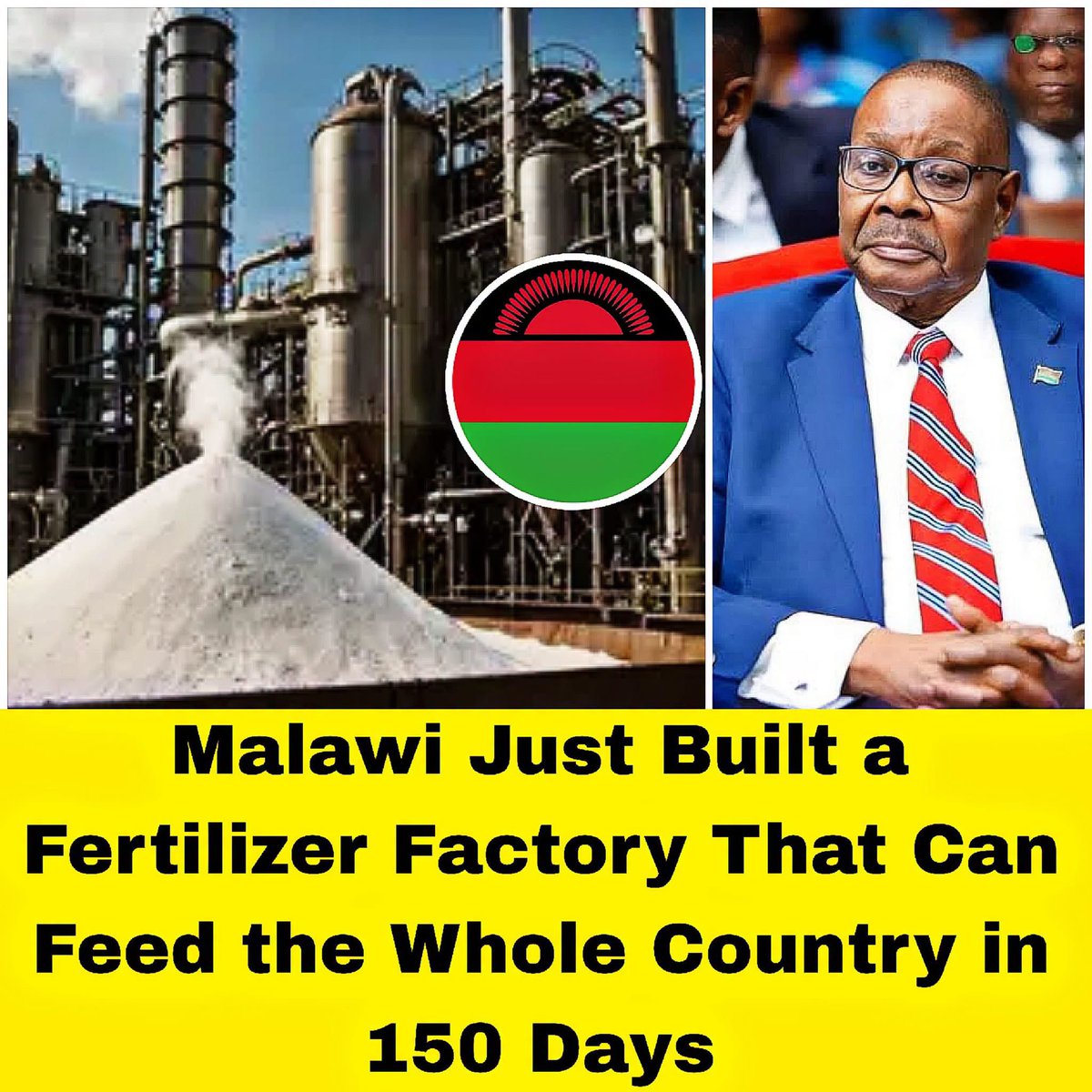
In Malawi 🇲🇼, the country has equipped itself with a fertilizer factory to avoid shortages.
Malawi has taken a major step toward ending fertilizer shortages with the green light given to a new production plant in Dowa.
The Environmental Protection Authority has approved the facility. Equipment is already installed and roofing is nearly complete.
Once operational, the plant will produce 40 tons of fertilizer per hour—enough to meet the country’s entire national demand in just 150 days of production.
The factory will manufacture key nutrients locally: zinc, nitrogen, phosphorus, and potassium.
Officials say the impact on the market is expected next year, after the rainy season.
Interpool is up to something here.
Next will be AI companies announcing geo-restrictions to certain products.
But remember they created this generative AI technologies o, but it’s the way Africans use them that is the problem.
Create a loophole, use this loophole to their advantage, accuse Africa of doing the same, then punish the continent in some forms.
Will they withdraw the products totally? No. They will simply limited its usage for African consumers the way it suits them, while allowing the parts of it that will allow them to continue carrying out their surveillance activities and injecting their preferred narratives.
We know this pattern.
It's long been rumoured, but there is solid evidence now that the usual suspects have been harvesting organs of African civilians trapped in warzones.
And you know who the "usual suspects" are. The RSF is just their latest contracted supplier.
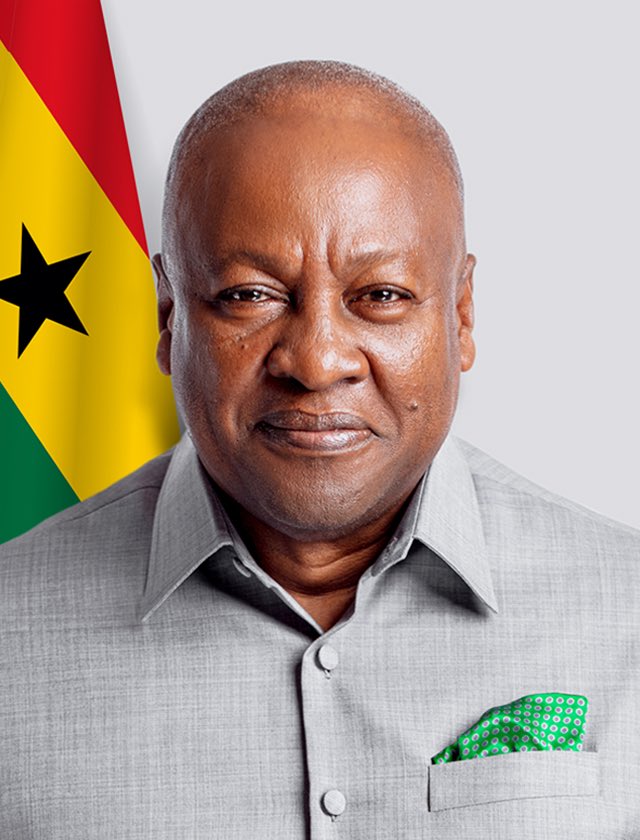
President John Dramani Mahama has arrived in Kingston, Jamaica, to begin a four-day state visit aimed at strengthening the longstanding ties between Ghana and Jamaica, deepening Africa-Caribbean relations, and advancing the global campaign for reparatory justice.
[🎥: JoyNews]
🇬🇭 President John Mahama has directed the Energy Minister to explore a new payment model that would allow Tema Oil Refinery (TOR) and Sentuo Refinery to pay for Ghana’s locally produced crude oil in cedis instead of US dollars.
According to Energy Minister John Jinapor, the proposal aims to reduce pressure on the cedi by limiting the need to buy foreign exchange for locally produced oil.
A Chinese man and an African met in Europe.
Chinese: My name is Ki Pin
African: Nice to meet you. I'm John Emmanuel Samwel.
Chinese: So, you're not African?
African: No. I am proudly African.
Chinese: Yet your name is John Emmanuel Samwel?
African: Yes. It's the name my parents gave me.
The Chinese man smiled.
Chinese: Interesting. Even something as simple as names—something that requires no technology, no factories, no engineering—you still import. We never realized Africa was such a large market for foreign names. Perhaps we should start manufacturing names too. After all, if they're "Made in China," they'll probably be cheaper than the European ones.
The African laughed.
African: You have quite a sense of humor. What brings you here?
Chinese: I'm studying neuroscience, with a specialization in robotics. I also lecture on Chinese civilization at the University of London. And you?
African: I'm a doctoral researcher.
Chinese: In what field?
African: English Literature. I specialize in William Shakespeare.
The Chinese looked puzzled.
Chinese: Shakespeare? The man has been dead for centuries.
African: I study his writings and analyze his literary works.
Chinese: You're not a forensic scientist, so why spend your life analyzing the thoughts of a man who died hundreds of years ago? Instead of solving today's African problems, you're dedicating your intellect to explaining yesterday's European ideas.
The African smiled awkwardly.
African: Well... I actually came to invite you to our worship service.
Chinese: Wonderful! I've attended Christian, Muslim and Buddhist services out of curiosity, but never an African one. This should be fascinating. Where is it?
African: At the International Church of the Last Soldiers of Jesus.
Chinese: Wait... you're inviting me to a church?
African: Yes. Our founder is the great American prophet Weiss White—a man of extraordinary miracles.
The Chinese paused.
Chinese: You don't even have your own prophets? Your names are foreign. Your academic heroes are foreign. Your religious leaders are foreign.
He shook his head.
Chinese: I'm sorry, my friend. I don't think I'll make it today.
As he walked away, he glanced back at the African's clothing.
Chinese: That's a beautiful outfit.
African: Thank you. It's African traditional fabric.
The Chinese quietly whispered to himself as he walked away:
"Poor man. He doesn't even know that the cloth he proudly calls African was manufactured in one of our factories."
Moral Lesson:
The greatest form of dependence is not economic—it is intellectual and cultural.
A people who abandon their own names, celebrate other people's heroes while forgetting their own, consume other people's knowledge without creating their own, and wear imported products while believing they are symbols of local pride will always struggle to define their own future.
Africa's greatest wealth has never been beneath its soil. It has always been within its people—their ideas, their identity, their innovation, and their confidence to build for themselves.
Until Africa produces what it proudly consumes, tells its own stories, invests in its own knowledge, and believes in its own potential, true independence will remain unfinished.
@~Masanza Muntu
So white people ate black people, used our babies as alligator bait, used our skin for clothes, our hair as cushions, boiled us alive to make food, drank our blood for strength, and we are the violent animals?
Whenever Nigerians begin to understand that people like these randomly showing up in country and promoting your celebrities pose far more threat than a Tyla show in Lagos is when I will have hope that the country can be salvaged.
When Nigerians begin to understand that a German foreign minister showing up and gathering your influencers (as was the case the other day) is not a good sign for your country.
When the likes of Very Dark Man and his co activists will begin to mobilize to “bring everything down”whenever entities like these land in your country, just like they do with irrelevant issues, that’s when it can be said that redemption is feasible.
Until then, your country will continue to be every foreign spy agent’s dream project.
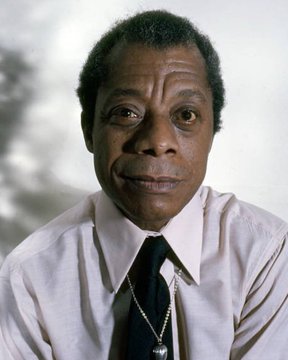
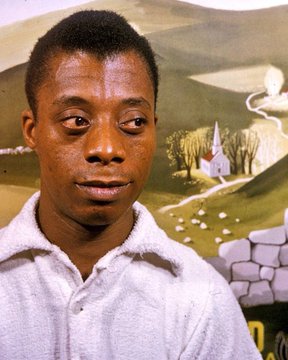
On this day in 1924, Novelist, playwright, poet and social critic, the late James Baldwin was born.
“To be African American is to be African without any memory and American without any privilege.” —James Baldwin
He used just 30 seconds to collapse the lies repeated for centuries. Truly, Ancient Egypt (Kemet) was a black African civilization before being invaded several times.
Capt Ibrahim Traoré is not negotiating with mediocrity.
He is humiliating it.
In under two years he built Faso Mêbo from scratch, a real state construction force.
First drop: over 900 heavy machines for roughly 200 billion FCFA.
Then another 776 (bulldozers, graders, excavators, asphalt plants, compactors).
Thousands of machines now sitting in Burkina Faso hands, not foreign contractor yards.
Target locked: 3,000–5,000 km of roads every year.
Expressway launched. Youth trained.
Citizens donating money and materials.
Roads actually appearing.
This is what happens when a leader treats the country’s resources like they belong to the people instead of a recycling plant for political thieves.
Now look at the Nigerian Federal Government — the continent’s most expensive faulty Tiger generator.
It coughs, it smokes, it screams “light is coming,” then plunges the whole house into darkness while the owners keep buying fuel for it.
Decades of oil money.
Endless budgets.
Endless “infrastructure interventions.” Result? Roads that swallow cars, power that exists mostly in press statements, contracts that vanish into the same sticky hands, and citizens still running generators like it’s a national sport.
They have turned governance into a performance of incompetence.
Loud. Expensive. Completely unreliable.
Every new administration just replaces the spark plug and pretends the machine is new.
Traoré is building.
The Nigerian FG is still shaking a dead generator and blaming the fuel.
One is constructing a future.
The other is a national embarrassment with a budget.
Faso Mêbo is the standard. Everything else is noise.