Este es el camino de los airdrops de Perp DEX que has tenido que seguir durante los últimos 2 años para hacer las cosas bien.
Y todavía no ha terminado.
En los próximos meses tendremos el lanzamiento de varios airdrops importantes como Extended, Variational y Pacifica.
Estos airdrops, junto con la evolución de Bitcoin y Hyperliquid, marcarán el camino del sector cripto durante los próximos meses.
Y después ocurrirá algo que para mí es bastante evidente:
Gran parte de esos usuarios rotará a farmear las siguientes oportunidades.
Y una de las principales será TxFlow.
Ahí veremos cómo tanto el volumen como el Open Interest (OI) empezarán a crecer de forma exponencial.
Ahora mismo los números que está consiguiendo TxFlow son MUY buenos.
Para que te hagas una idea:
🔥 Hyperliquid durante sus primeros 3 meses: ~6.500 usuarios.
🔥 TxFlow durante sus primeros 3 meses: ~6.500 usuarios.
Y TxFlow ya cuenta con:
✅ Más de 150 mercados.
✅ Más de 800M de dólares en ingresos.
✅ Sin Venture Capital (VC).
¿De verdad te vas a esperar a que finalicen los otros Airdrops?
Porque lo más importante es esto:
AHORA MISMO SEGUIMOS EN LA FASE OCULTA DE PUNTOS.
Todavía ni siquiera ha comenzado públicamente la temporada de puntos.
Y además, ahora tienes una oportunidad perfecta para empezar.
🎁 Hay un evento de recompensas exclusivo para NUEVOS USUARIOS, donde puedes recibir 77 USDC por operar.
�� Accede a la BETA PRIVADA con el enlace de invitación del evento.
https://t.co/VwJNm7HK3v
No esperes a que haya 50.000 usuarios para querer empezar a farmear lo que hoy están farmeando apenas 6.500.
¡PRIMEROS PUNTOS DE TXFLOW! UNA AUTÉNTICA BARBARIDAD 🔥
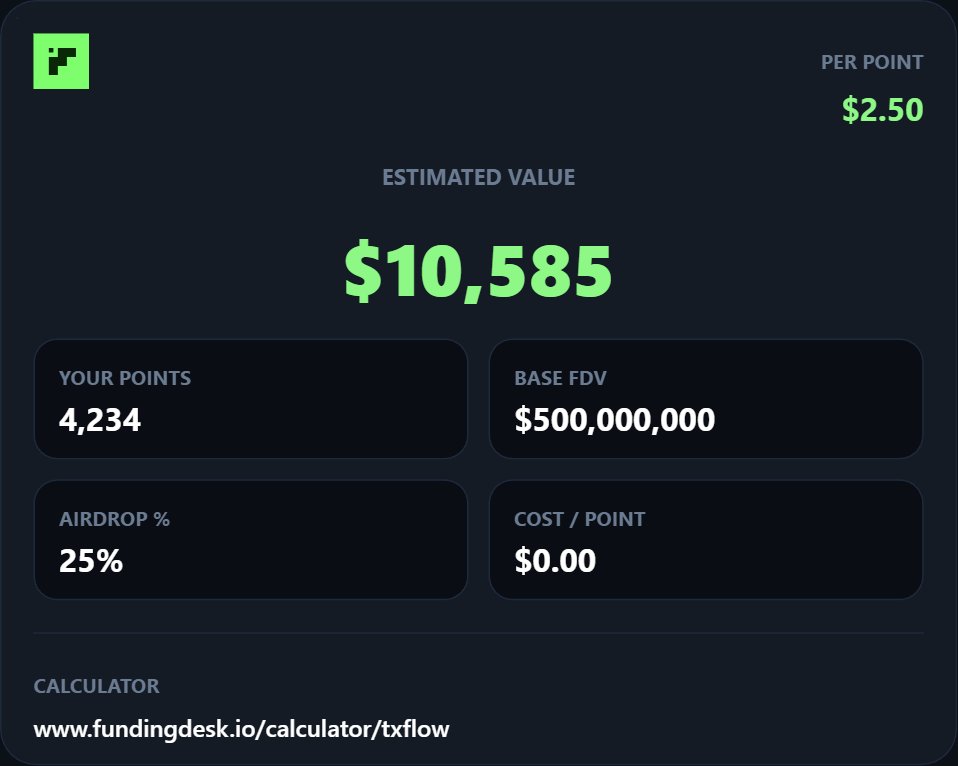
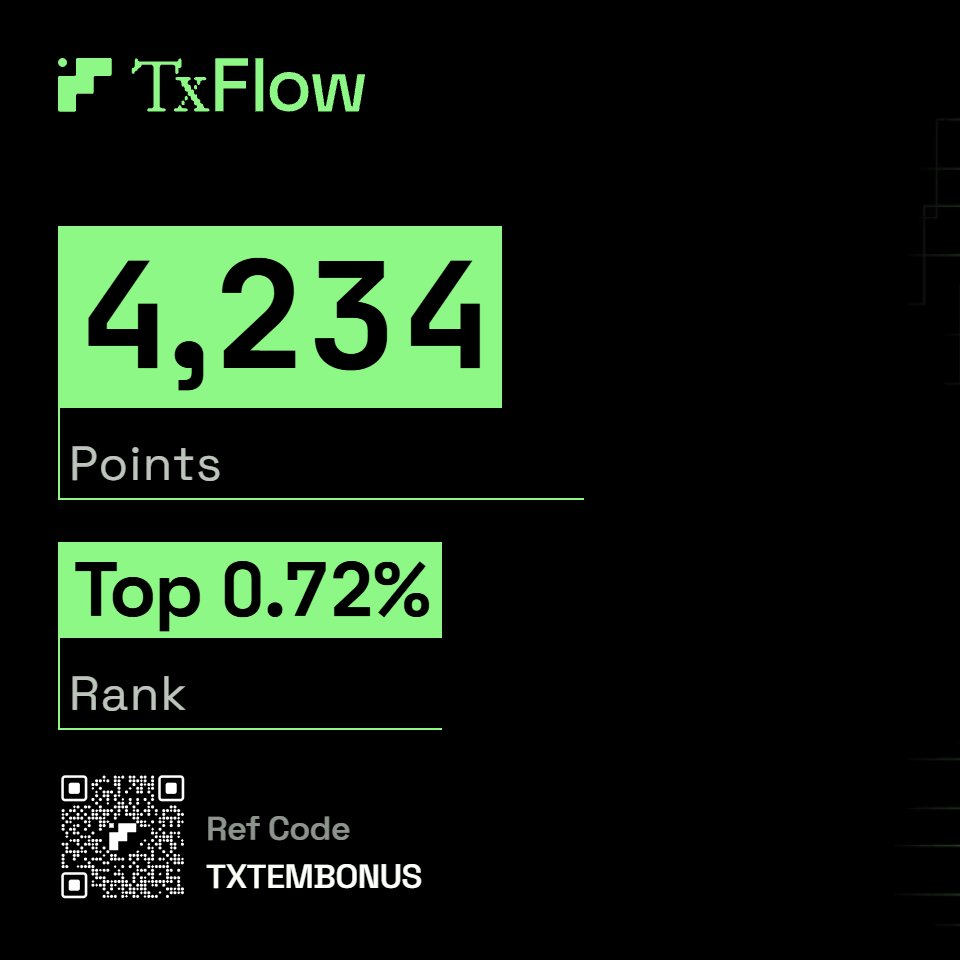
Acaban de repartir los puntos de la primera semana de la Season 1 de TxFlow y he recibido un total de 4.234 PUNTOS.
Y ahora imaginad que cada punto termina valiendo entre 2$ y 2,5$, teniendo en cuenta un posible TGE dentro de aproximadamente un año.
Estaríamos hablando de entre 8.468$ y 10.585$ DE AIRDROP EN UNA SOLA SEMANA.
¡UNA AUTÉNTICA LOCURA!
Recordad que todavía quedan por repartir los puntos de la TEMPORADA OCULTA, donde estuvimos durante meses generando muchísimo volumen.
Personalmente, tengo unas expectativas MUY ALTAS con esa distribución, porque le dimos una caña impresionante cuando apenas había usuarios en la plataforma.
¡PODRÍA SER UNA AUTÉNTICA SALVAJADA!
Y antes de nada, quiero daros la ENHORABUENA A TODOS LOS QUE HABÉIS CONSEGUIDO PUNTOS.
Llevamos meses hablando de TxFlow y muchos habéis confiado en el proyecto desde sus primeras fases.
Ahora empezamos a ver los primeros resultados. 🔥
🚀 ¿Y AHORA QUÉ HACEMOS?
Mi recomendación es clara: SEGUIR DÁNDOLE MUCHA CAÑA DURANTE LAS PRÓXIMAS SEMANAS.
Estamos todavía al principio de la Season 1 y creo que tenemos una oportunidad MUY interesante antes de que empiecen a llegar usuarios de otros Perp DEX.
Especialmente de proyectos como Variational, donde muchos traders podrían recibir airdrops importantes y utilizar parte de ese capital para farmear nuevas plataformas.
Y cuando eso ocurra, CONSEGUIR PUNTOS SERÁ CADA VEZ MÁS COMPLICADO.
Por eso quiero aprovechar estas primeras semanas para seguir acumulando y mantener una buena posición.
EL TRABAJO SE HACE ANTES DE QUE LLEGUE TODO EL MUNDO.
Y ahora solo falta conocer los puntos de la temporada oculta y empezar a hacer números sobre su posible valoración.
¡ENHORABUENA A TODOS, SE VIENEN SEMANAS MUY INTERESANTES! 🔥
Mis dos centavos. 🪙
¡PRIMEROS PUNTOS DE TXFLOW! UNA AUTÉNTICA BARBARIDAD 🔥
Acaban de repartir los puntos de la primera semana de la Season 1 de TxFlow y he recibido un total de 4.234 PUNTOS.
Y ahora imaginad que cada punto termina valiendo entre 2$ y 2,5$, teniendo en cuenta un posible TGE dentro de aproximadamente un año.
Estaríamos hablando de entre 8.468$ y 10.585$ DE AIRDROP EN UNA SOLA SEMANA.
¡UNA AUTÉNTICA LOCURA!
Recordad que todavía quedan por repartir los puntos de la TEMPORADA OCULTA, donde estuvimos durante meses generando muchísimo volumen.
Personalmente, tengo unas expectativas MUY ALTAS con esa distribución, porque le dimos una caña impresionante cuando apenas había usuarios en la plataforma.
¡PODRÍA SER UNA AUTÉNTICA SALVAJADA!
Y antes de nada, quiero daros la ENHORABUENA A TODOS LOS QUE HABÉIS CONSEGUIDO PUNTOS.
Llevamos meses hablando de TxFlow y muchos habéis confiado en el proyecto desde sus primeras fases.
Ahora empezamos a ver los primeros resultados. 🔥
🚀 ¿Y AHORA QUÉ HACEMOS?
Mi recomendación es clara: SEGUIR DÁNDOLE MUCHA CAÑA DURANTE LAS PRÓXIMAS SEMANAS.
Estamos todavía al principio de la Season 1 y creo que tenemos una oportunidad MUY interesante antes de que empiecen a llegar usuarios de otros Perp DEX.
Especialmente de proyectos como Variational, donde muchos traders podrían recibir airdrops importantes y utilizar parte de ese capital para farmear nuevas plataformas.
Y cuando eso ocurra, CONSEGUIR PUNTOS SERÁ CADA VEZ MÁS COMPLICADO.
Por eso quiero aprovechar estas primeras semanas para seguir acumulando y mantener una buena posición.
EL TRABAJO SE HACE ANTES DE QUE LLEGUE TODO EL MUNDO.
Y ahora solo falta conocer los puntos de la temporada oculta y empezar a hacer números sobre su posible valoración.
¡ENHORABUENA A TODOS, SE VIENEN SEMANAS MUY INTERESANTES! 🔥
Mis dos centavos. 🪙
¡PRIMEROS PUNTOS DE TXFLOW! UNA AUTÉNTICA BARBARIDAD 🔥
Acaban de repartir los puntos de la primera semana de la Season 1 de TxFlow y he recibido un total de 4.234 PUNTOS.
Y ahora imaginad que cada punto termina valiendo entre 2$ y 2,5$, teniendo en cuenta un posible TGE dentro de aproximadamente un año.
Estaríamos hablando de entre 8.468$ y 10.585$ DE AIRDROP EN UNA SOLA SEMANA.
¡UNA AUTÉNTICA LOCURA!
Recordad que todavía quedan por repartir los puntos de la TEMPORADA OCULTA, donde estuvimos durante meses generando muchísimo volumen.
Personalmente, tengo unas expectativas MUY ALTAS con esa distribución, porque le dimos una caña impresionante cuando apenas había usuarios en la plataforma.
¡PODRÍA SER UNA AUTÉNTICA SALVAJADA!
Y antes de nada, quiero daros la ENHORABUENA A TODOS LOS QUE HABÉIS CONSEGUIDO PUNTOS.
Llevamos meses hablando de TxFlow y muchos habéis confiado en el proyecto desde sus primeras fases.
Ahora empezamos a ver los primeros resultados. 🔥
🚀 ¿Y AHORA QUÉ HACEMOS?
Mi recomendación es clara: SEGUIR DÁNDOLE MUCHA CAÑA DURANTE LAS PRÓXIMAS SEMANAS.
Estamos todavía al principio de la Season 1 y creo que tenemos una oportunidad MUY interesante antes de que empiecen a llegar usuarios de otros Perp DEX.
Especialmente de proyectos como Variational, donde muchos traders podrían recibir airdrops importantes y utilizar parte de ese capital para farmear nuevas plataformas.
Y cuando eso ocurra, CONSEGUIR PUNTOS SERÁ CADA VEZ MÁS COMPLICADO.
Por eso quiero aprovechar estas primeras semanas para seguir acumulando y mantener una buena posición.
EL TRABAJO SE HACE ANTES DE QUE LLEGUE TODO EL MUNDO.
Y ahora solo falta conocer los puntos de la temporada oculta y empezar a hacer números sobre su posible valoración.
¡ENHORABUENA A TODOS, SE VIENEN SEMANAS MUY INTERESANTES! 🔥
Mis dos centavos. 🪙
¡PRIMEROS PUNTOS DE TXFLOW! UNA AUTÉNTICA BARBARIDAD 🔥
Acaban de repartir los puntos de la primera semana de la Season 1 de TxFlow y he recibido un total de 4.234 PUNTOS.
Y ahora imaginad que cada punto termina valiendo entre 2$ y 2,5$, teniendo en cuenta un posible TGE dentro de aproximadamente un año.
Estaríamos hablando de entre 8.468$ y 10.585$ DE AIRDROP EN UNA SOLA SEMANA.
¡UNA AUTÉNTICA LOCURA!
Recordad que todavía quedan por repartir los puntos de la TEMPORADA OCULTA, donde estuvimos durante meses generando muchísimo volumen.
Personalmente, tengo unas expectativas MUY ALTAS con esa distribución, porque le dimos una caña impresionante cuando apenas había usuarios en la plataforma.
¡PODRÍA SER UNA AUTÉNTICA SALVAJADA!
Y antes de nada, quiero daros la ENHORABUENA A TODOS LOS QUE HABÉIS CONSEGUIDO PUNTOS.
Llevamos meses hablando de TxFlow y muchos habéis confiado en el proyecto desde sus primeras fases.
Ahora empezamos a ver los primeros resultados. 🔥
🚀 ¿Y AHORA QUÉ HACEMOS?
Mi recomendación es clara: SEGUIR DÁNDOLE MUCHA CAÑA DURANTE LAS PRÓXIMAS SEMANAS.
Estamos todavía al principio de la Season 1 y creo que tenemos una oportunidad MUY interesante antes de que empiecen a llegar usuarios de otros Perp DEX.
Especialmente de proyectos como Variational, donde muchos traders podrían recibir airdrops importantes y utilizar parte de ese capital para farmear nuevas plataformas.
Y cuando eso ocurra, CONSEGUIR PUNTOS SERÁ CADA VEZ MÁS COMPLICADO.
Por eso quiero aprovechar estas primeras semanas para seguir acumulando y mantener una buena posición.
EL TRABAJO SE HACE ANTES DE QUE LLEGUE TODO EL MUNDO.
Y ahora solo falta conocer los puntos de la temporada oculta y empezar a hacer números sobre su posible valoración.
¡ENHORABUENA A TODOS, SE VIENEN SEMANAS MUY INTERESANTES! 🔥
Mis dos centavos. 🪙
¡PRIMEROS PUNTOS DE TXFLOW! UNA AUTÉNTICA BARBARIDAD 🔥
Acaban de repartir los puntos de la primera semana de la Season 1 de TxFlow y he recibido un total de 4.234 PUNTOS.
Y ahora imaginad que cada punto termina valiendo entre 2$ y 2,5$, teniendo en cuenta un posible TGE dentro de aproximadamente un año.
Estaríamos hablando de entre 8.468$ y 10.585$ DE AIRDROP EN UNA SOLA SEMANA.
¡UNA AUTÉNTICA LOCURA!
Recordad que todavía quedan por repartir los puntos de la TEMPORADA OCULTA, donde estuvimos durante meses generando muchísimo volumen.
Personalmente, tengo unas expectativas MUY ALTAS con esa distribución, porque le dimos una caña impresionante cuando apenas había usuarios en la plataforma.
¡PODRÍA SER UNA AUTÉNTICA SALVAJADA!
Y antes de nada, quiero daros la ENHORABUENA A TODOS LOS QUE HABÉIS CONSEGUIDO PUNTOS.
Llevamos meses hablando de TxFlow y muchos habéis confiado en el proyecto desde sus primeras fases.
Ahora empezamos a ver los primeros resultados. 🔥
🚀 ¿Y AHORA QUÉ HACEMOS?
Mi recomendación es clara: SEGUIR DÁNDOLE MUCHA CAÑA DURANTE LAS PRÓXIMAS SEMANAS.
Estamos todavía al principio de la Season 1 y creo que tenemos una oportunidad MUY interesante antes de que empiecen a llegar usuarios de otros Perp DEX.
Especialmente de proyectos como Variational, donde muchos traders podrían recibir airdrops importantes y utilizar parte de ese capital para farmear nuevas plataformas.
Y cuando eso ocurra, CONSEGUIR PUNTOS SERÁ CADA VEZ MÁS COMPLICADO.
Por eso quiero aprovechar estas primeras semanas para seguir acumulando y mantener una buena posición.
EL TRABAJO SE HACE ANTES DE QUE LLEGUE TODO EL MUNDO.
Y ahora solo falta conocer los puntos de la temporada oculta y empezar a hacer números sobre su posible valoración.
¡ENHORABUENA A TODOS, SE VIENEN SEMANAS MUY INTERESANTES! 🔥
Mis dos centavos. 🪙
Season 1, Epoch 1.
1,250,000 points have been distributed across 5,858 accounts this week.
As a reminder, Season 0 rewards will be distributed by Oct 27.
🚨 LLEGAN LOS PRIMEROS PUNTOS DE TXFLOW
Este martes conoceremos los primeros puntos de TxFlow y creo que mucha gente se va a llevar una GRAN sorpresa.
Cuando empecemos a recibir puntos y podamos hacer estimaciones sobre su posible valor en 2027, muchos se darán cuenta de la cantidad de dinero que podrían llegar a ganar con este airdrop.
Y ESTO NO HA HECHO MÁS QUE EMPEZAR.
Recordad que TxFlow es uno de los Perp DEX de nueva generación con mejores métricas de crecimiento, tanto en usuarios como en volumen y Open Interest.
De hecho, si comparas métricas se parece MUCHO a los comienzos de Hyperliquid.
Y aquí viene algo MUY IMPORTANTE. 👇
Si ya estás farmeando TxFlow, sigue sin parar.
Durante los próximos meses llegarán airdrops importantes como el de Variational, y creo que muchos de esos usuarios, con bastante capital disponible, terminarán entrando en proyectos como TxFlow.
¿El problema?
CUANTA MÁS GENTE ENTRE, MÁS DIFÍCIL SERÁ CONSEGUIR PUNTOS.
Por eso llevo meses insistiendo en la importancia de posicionarse ANTES de que llegue todo el mundo.
Todavía estamos en la primera semana de la Season 1 y tenemos una oportunidad MUY interesante por delante.
EL TRABAJO SE HACE ANTES DE QUE LLEGUE EL FOMO. 💎
👇 Si todavía no has empezado, te dejo mi invitación para acceder a TxFlow:
https://t.co/SRq29ovq11
Mis dos centavos. 🪙
🚨 LLEGAN LOS PRIMEROS PUNTOS DE TXFLOW
Este martes conoceremos los primeros puntos de TxFlow y creo que mucha gente se va a llevar una GRAN sorpresa.
Cuando empecemos a recibir puntos y podamos hacer estimaciones sobre su posible valor en 2027, muchos se darán cuenta de la cantidad de dinero que podrían llegar a ganar con este airdrop.
Y ESTO NO HA HECHO MÁS QUE EMPEZAR.
Recordad que TxFlow es uno de los Perp DEX de nueva generación con mejores métricas de crecimiento, tanto en usuarios como en volumen y Open Interest.
De hecho, si comparas métricas se parece MUCHO a los comienzos de Hyperliquid.
Y aquí viene algo MUY IMPORTANTE. 👇
Si ya estás farmeando TxFlow, sigue sin parar.
Durante los próximos meses llegarán airdrops importantes como el de Variational, y creo que muchos de esos usuarios, con bastante capital disponible, terminarán entrando en proyectos como TxFlow.
¿El problema?
CUANTA MÁS GENTE ENTRE, MÁS DIFÍCIL SERÁ CONSEGUIR PUNTOS.
Por eso llevo meses insistiendo en la importancia de posicionarse ANTES de que llegue todo el mundo.
Todavía estamos en la primera semana de la Season 1 y tenemos una oportunidad MUY interesante por delante.
EL TRABAJO SE HACE ANTES DE QUE LLEGUE EL FOMO. 💎
👇 Si todavía no has empezado, te dejo mi invitación para acceder a TxFlow:
https://t.co/SRq29ovq11
Mis dos centavos. 🪙
💎 ¡SEGUNDA SEMANA DE PUNTOS DE ARCUS!
Acaban de repartir los puntos de la segunda semana de la Season 1 y he recibido 172 puntos adicionales, acumulando ya un total de 595,21 PUNTOS. 🔥
Esta semana he bajado de la posición #100 a la #133, pero hay algo MUY interesante.
El número de participantes ha aumentado de 9.659 a 14.429 usuarios, casi un 50% MÁS en apenas una semana.
Y aun así, seguimos bastante bien posicionados.
📊 ¿CUÁNTO ME ESTÁ COSTANDO CADA PUNTO?
Hasta ahora he generado aproximadamente 3 MILLONES de dólares de volumen, con un coste estimado de 1,25$ por punto.
Sin embargo, los números serán mejores, ya que este cálculo no incluye los puntos de la temporada oculta.
Recordad que terminé esa fase en la posición #67, por lo que espero recibir una cantidad importante de puntos adicionales.
Si finalmente la recompensa de la temporada oculta es buena, mi coste medio por punto podría reducirse considerablemente.
🚀 ¿MERECE LA PENA SEGUIR FARMEANDO ARCUS?
Personalmente, creo que sigue siendo una oportunidad interesante si consigues entrar en la whitelist, especialmente porque todavía estamos en las primeras semanas.
Sin embargo, ahora mismo estoy MUCHO MÁS ALCISTA CON TXFLOW Y RISEX.
TxFlow acaba de comenzar su primera semana de puntos y sus métricas siguen creciendo a un ritmo espectacular.
Y RiseX también tiene un potencial ENORME, especialmente por la posición que ya hemos conseguido durante las últimas semanas.
Mi estrategia sigue siendo la misma: concentrarme en los Perp DEX que considero de mayor calidad y posicionarme antes de que llegue la mayoría.
🔗 Si quieres intentar acceder a la whitelist de Arcus o farmear TxFlow y RiseX te dejo la invitación en el siguiente post
Mis dos centavos. 🪙
🚨 ¡YA TENEMOS LOS PRIMEROS PUNTOS DE ARCUS!
Primera semana de la Season 1 y he terminado en la posición #100, recibiendo un total de 423 puntos. 💎
He bajado 33 posiciones respecto a la temporada oculta, donde terminé #67, pero sinceramente estoy bastante contento.
Mi expectativa es que la temporada oculta tenga una recompensa importante, ya que normalmente estas fases iniciales buscan premiar especialmente a los usuarios que estuvieron desde el principio.
Esta semana he generado aproximadamente 600.000$ de volumen, repitiendo prácticamente el mismo patrón que utilicé durante la temporada oculta.
Y parece que está funcionando MUY bien.
He conseguido 423 puntos haciendo bastante menos volumen que otros usuarios, lo que vuelve a demostrar que probablemente no se trata únicamente de generar volumen sin más.
Voy a seguir manteniendo el mismo ritmo y estrategia durante las próximas semanas.
Con esto ya tenemos una muy buena posición antes de que empiece a entrar más gente.
Pronto intentaré hacer una estimación del posible valor por punto y coste por punto.
Espero llevarme una buena sorpresa.
Pero ahora mismo mi OBJETIVO Nº1 sigue siendo TxFlow.
Queda MUY POCO para que termine su fase oculta y ahí es donde estoy concentrando la mayor parte de mis esfuerzos.
Si todavía no has empezado, en el siguiente post os dejaré las invitaciones.
Mis dos centavos. 🪙