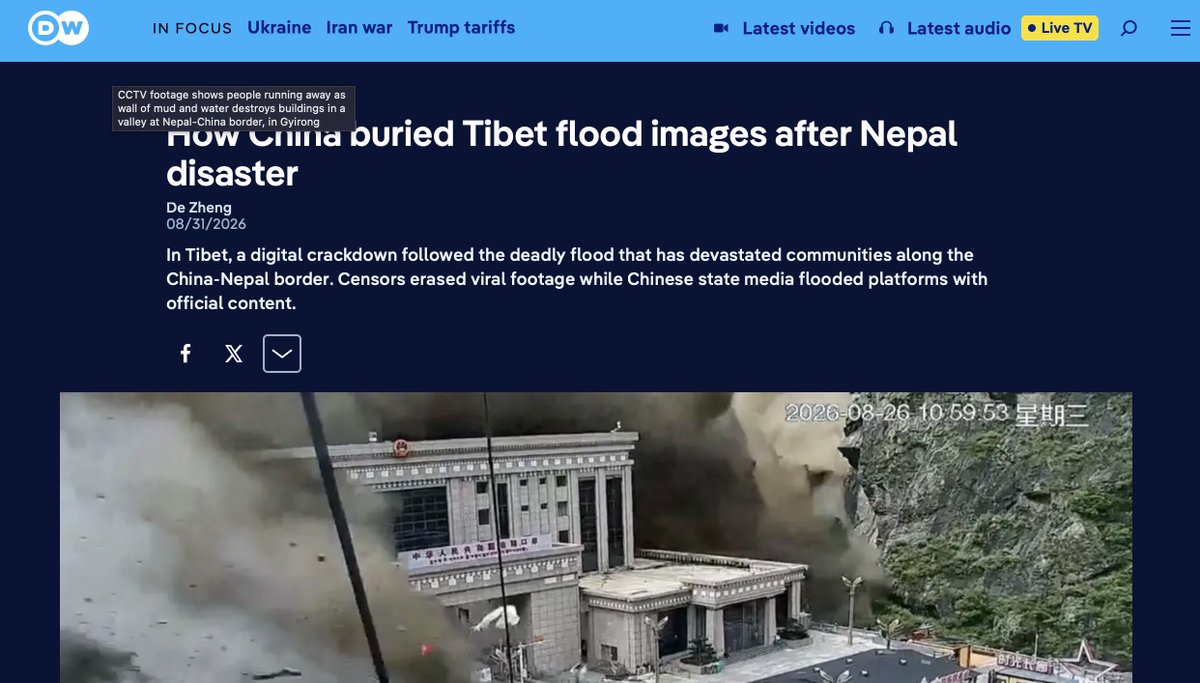
Nepal has been deeply affected by the recent natural calamity. And at this difficult moment, we have a simple message for the world:
NEPAL IS NOT CLOSED.
This is a time to stand with Nepal.
This is a time to visit Nepal.
Nepal is calling.
👉Read more: https://t.co/ca5vadT3CM
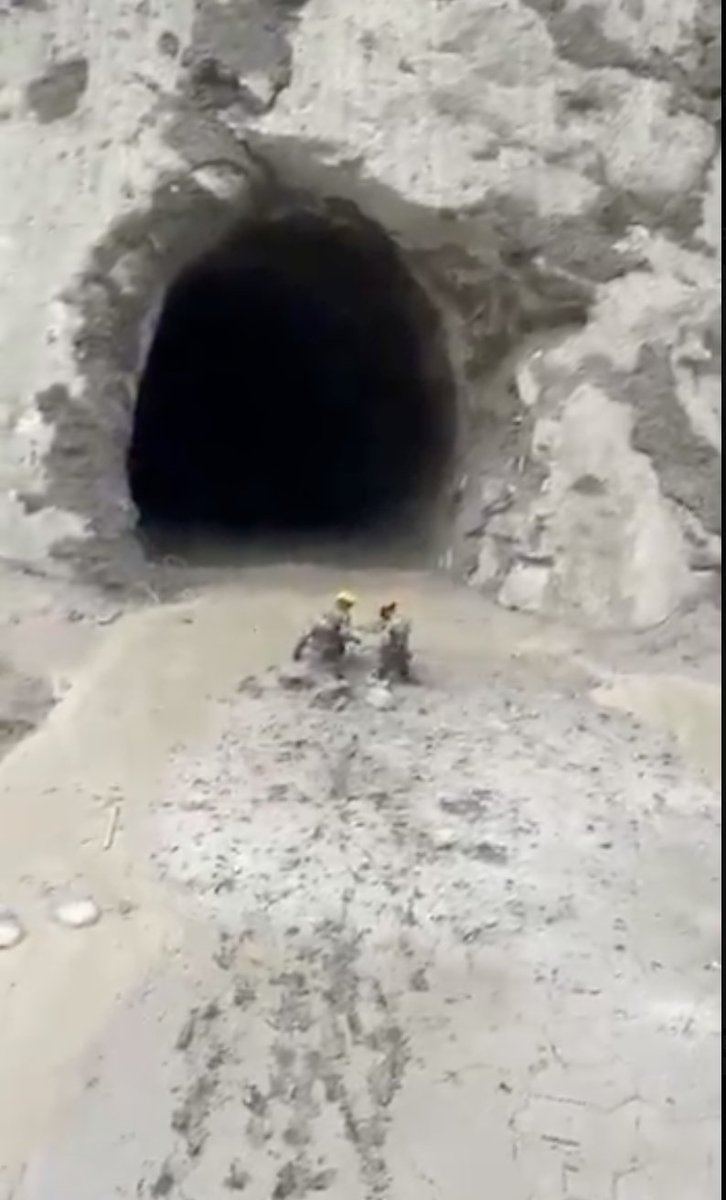
Most people watching the Trishuli hydropower tunnel rescue are seeing “workers trapped inside a hydropower tunnel.”
But I wanted to understand what rescuers are actually trying to reach after Nepal Flood.
This is roughly how Upper Trishuli-1 is laid out.
It isn't simply a hole going into a mountain.
Water travels through a ~9.7 km underground headrace tunnel, connects to the pressure system, reaches an underground powerhouse, and eventually returns to the river.
Now imagine that underground system after a massive flood and debris flow.
The entrance can be buried.
Access can be blocked.
And somewhere beyond that entrance, there can be kilometres of mountain between the rescuers and the people they're trying to reach.
That's the part I hadn't understood when I first saw the rescue news.
We see rescuers working at an entrance and think:
“Why can't they just go inside?”
But what if the entrance itself is the problem?
And if mud and debris have entered the system, how far inside has it travelled?
Could the tunnel still be physically passable?
Could air, water, electricity or structural damage become additional problems deeper inside?
I don't know the answers.
If you understand hydropower tunnels, underground construction or disaster rescue, what do you think is the biggest challenge once a tunnel like this is hit by a flood?
Note - The diagram is a simplified illustration of the project layout, not a map showing the exact location of trapped workers.
Nepal's foreign minister said the country will raise the matter of the flooding disaster internationally as a climate justice issue https://t.co/ot3gMqMaAZ
e-Book of Condolence
The Embassy of Nepal in New Delhi has opened an e-Book of Condolence for those wishing to express their condolences and solidarity following the recent devastating floods in Nepal.
Messages may be submitted through the link below or by scanning the QR code.
🔗 https://t.co/XEuM2E3unn
SCO members agreed to amend the SCO Charter to add English as an official working language. India was one of the major backer of this move. Russian, Chinese have been the working language in the grouping so far.
Just in: "We must dismantle the entire ecosystem of terrorism, its financing, recruitment, radicalisation and safe havens", Indian PM Modi tells SCO leaders in Bishkek
When a woman shaves her head to make the world notice her people’s struggle, don’t just see the sacrifice—hear the message behind it. The protest in Paris raises a powerful question: How long can the world remain silent when people fear losing their identity, culture and voice? Sometimes, silence speaks louder than words.
#Tibet #FreeTibet #StandWithTibet #TibetanCulture #TibetanIdentity #CulturalRights #HumanRights #PeacefulProtest #SaveTibetanCulture #VoiceOfTibet
The productive high-level talks open a qualitatively new stage in Uzbekistan-India relations, paving the way for a comprehensive strategic partnership.
#Tibet under #CCP rule is not just a story of political control—it is a story of suppression, restrictions, and the erosion of cultural identity.
While #Tibetans living in #India can proudly wave the Indian flag and experience the meaning of freedom, #Tibetans under #Chinese control continue to struggle to freely express their identity, #culture, and #voice.
#Freedom is truly understood by those who have been denied it. 🇮🇳🇹🇮
#Tibet #CCP #China #TibetanFreedom #HumanRights
Breaking
"Progress of cooperation at Chabahar Port were among the most important issues discussed by the two sides", Iran readout of Iran Prez, PM Modi talks