We added Xiaomi MiMo 2.6 Pro to our cybersecurity benchmark and safe to say it cooked! 🔥
- It found 25/32 vulnerabilities pass@3, matching GPT-6.1 Sol, Kimi K3 and GLM 5.3 and just one behind Opus 5
- It scored 88% precision, ahead of all Qwen and DeepSeek models
- One run found 64.6% on average; combining three got it to 78.1%
All that for just $11.79 per CVE found! 🤯
We just released the first episode of our new video series: Proof of Concept!
Where we explain the vulnerabilities we find at Aikido with visuals and an interview-style.
This episode is about the Gogs RCE vulnerability affecting default configuration:
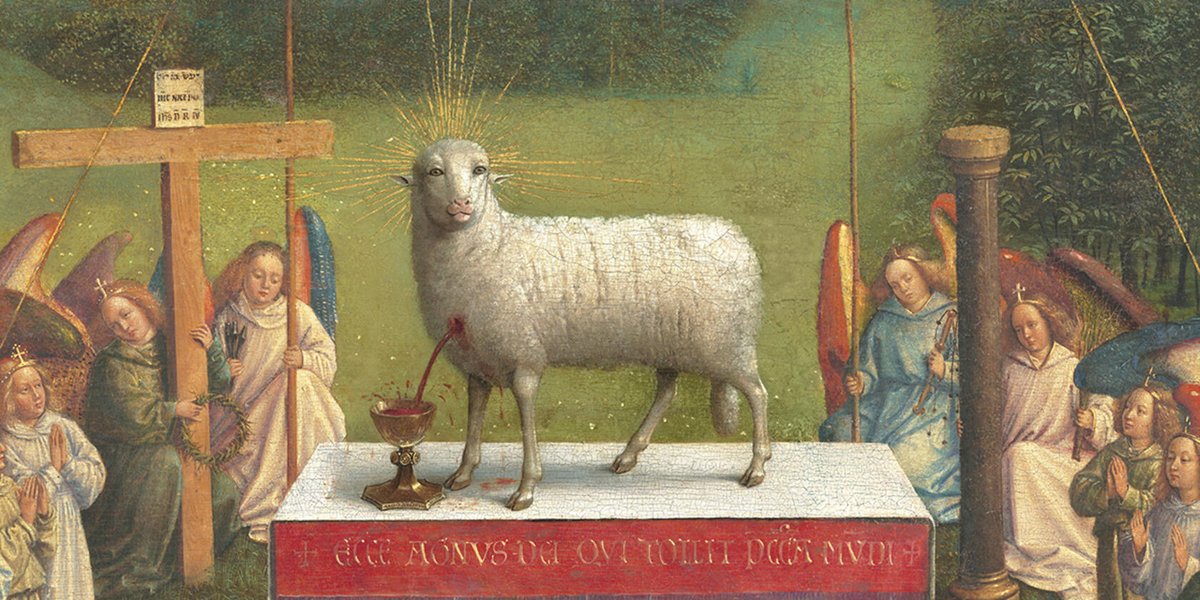
btw we named the model "altar" after the Ghent altarpiece...
For those who don’t know, Aikido is from Ghent, Belgium. Our city is home to The Adoration of the Mystic Lamb, completed in 1432.
Why is it famous?
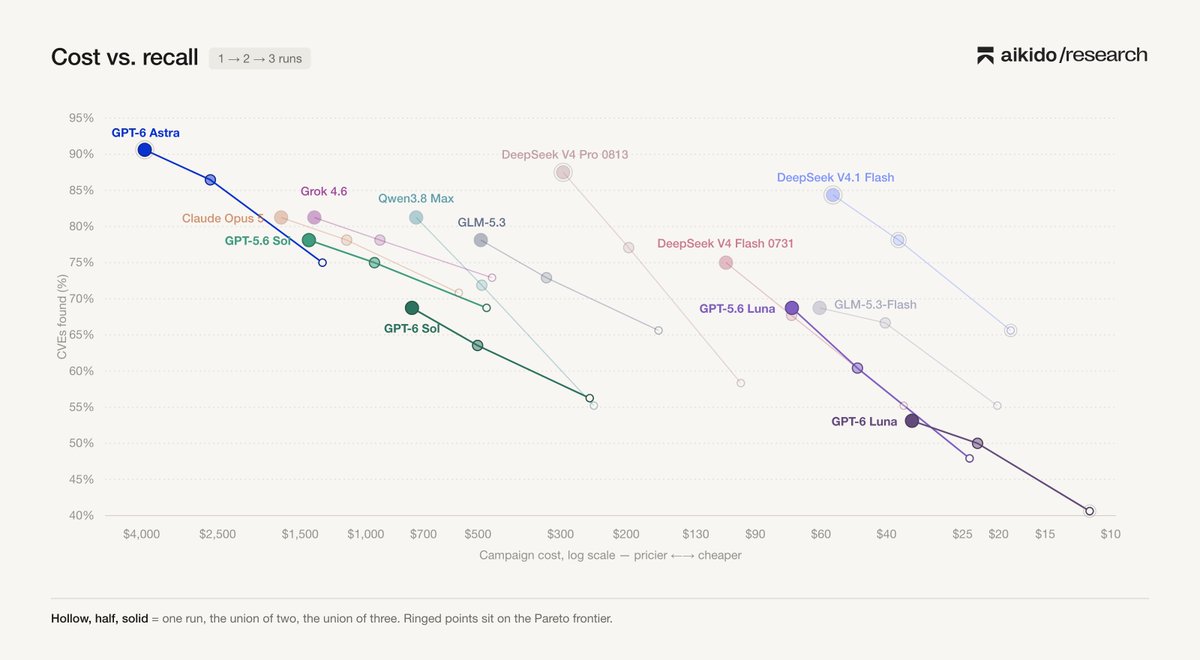
We ran GPT-6 Luna and Sol on our 32-CVE cyber benchmark and the results were unexpected! 🤯
Luna rediscovered 53.1%
Sol reached 68.8%
Neither beat GPT-5.6 variants on recall
But both got A LOT cheaper per vulnerability found:
Luna $3.43 → $2.01/CVE
Sol $56.88 → $34.18/CVE
🧵 1/3
HOLY MOLY: @AikidoSecurity got GPT-6 Astra in advance to run it on our Cybersecurity benchmark, it crushed EVERY other model!
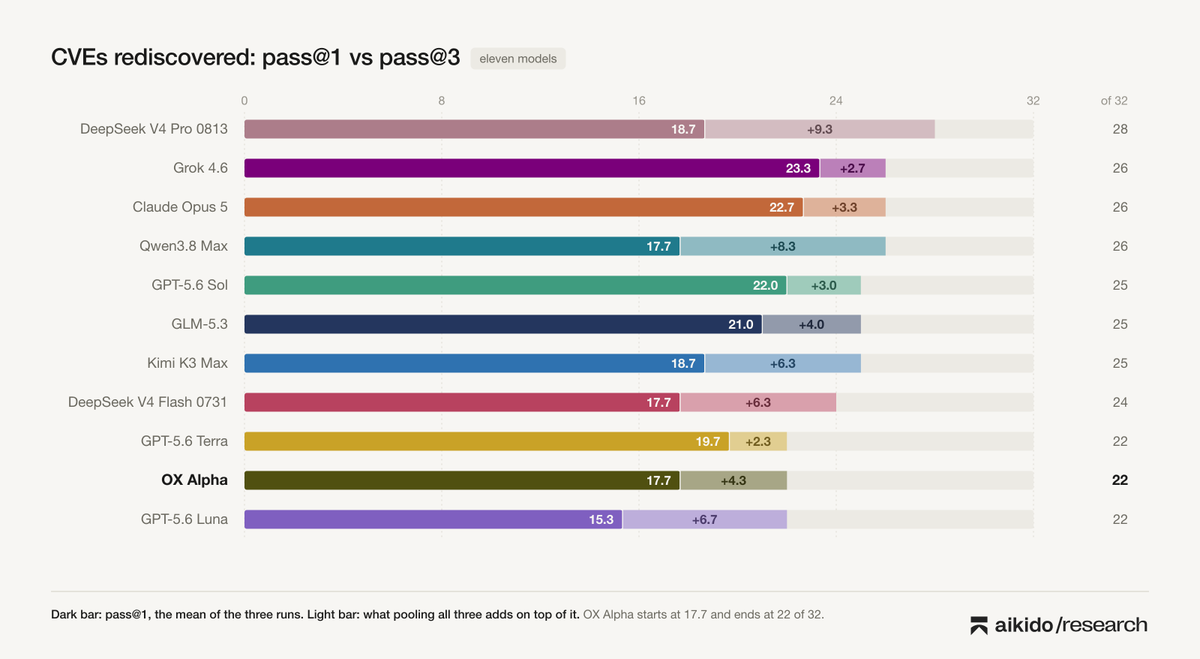
- At pass@3 it rediscovered 29/32 CVEs, the highest recall we've ever recorded and 4 more than GPT-5.6-Sol
- Even at pass@1, it has 75% recall. The model is VERY consistent
- The performance however come at a high price (literally). The three runs cost us almost $4,000
Astra is now the #1 model on the benchmark @iminurputer and I built, and by a LOT
1/3 🧵
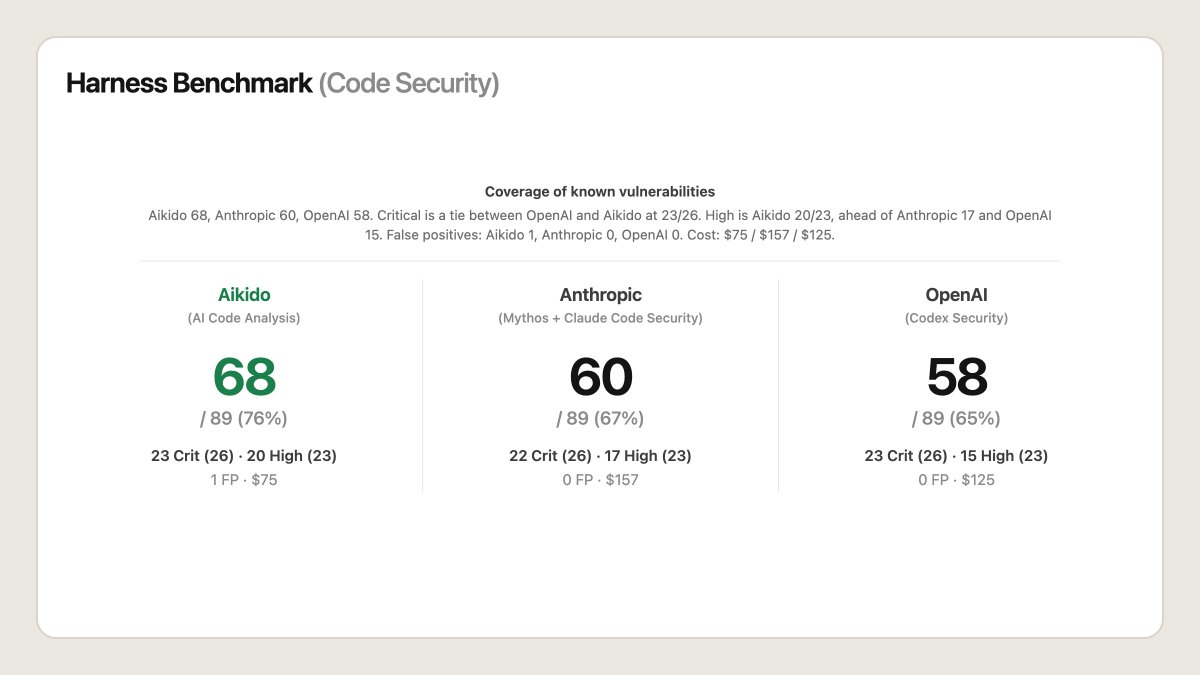
We found a way to find more vulnerabilities than Mythos (Claude Security) without burning $10k worth of tokens
TLDR: it's much better to use many agents with small models than to use a few agents with big models
Full blog post on how we did it: https://t.co/8xvHVQwMGD
@xlab_os @madelinelawren Add to that the fact that we can also compensate with test-time compute vs an attacker bottlenecked by cost, and testing continuously with Aikido Infinite directly on the Machine, so testing new features and bypasses at the speed of development.
@xlab_os @madelinelawren Hey, we actually use quite powerful models/hardware, and the edge from having access to the code in whitebox (vs attackers that use frontier models in a black box context, if they ever bypass guardrails), is enough to compensate for the intelligence gap :)
OK guys I'm sorry to disappoint but Ox Alpha is overhyped
We ran it on our cybersecurity benchmark, it's better than GPT-5.6-Luna, but worse than every other frontier models
We added Grok 4.6 to our cybersecurity benchmark. It's great, it's consistent, but it's not creative enough. Here are the results:
- At pass@1, Grok finds more vulnerabilities than every other model. It is much more consistent at finding the easy-medium ones.
- However, at pass@3, it only finds 81.3% of the CVEs. DeepSeek v4 Pro finds 87.5% of them.
- It is also among the most expensive models. $55.29 per CVE found. DeepSeek v4 Pro has a cost of $7.34 per CVE.
Overall, given a single shot, it's the best model. But gathering the output of multiple runs doesn't give much better results.
1/3 🧵
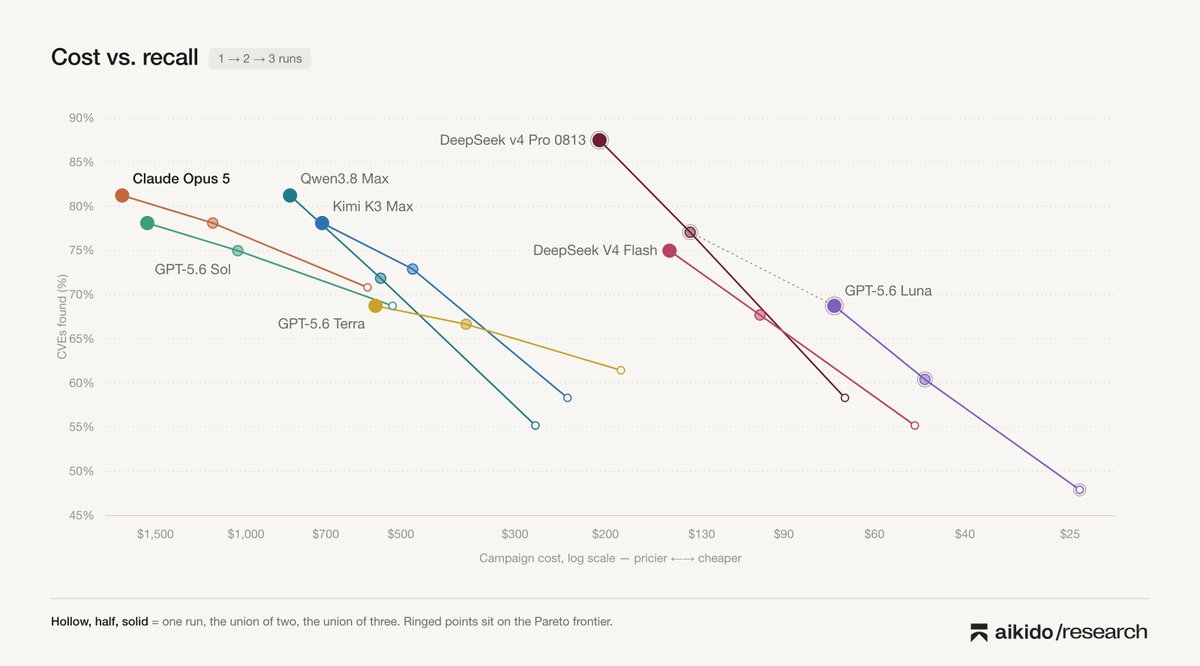
We ran DeepSeek v4 Pro 0813 on our cybersecurity benchmark, it outperformed EVERY (!) other model at finding vulnerabilities
- At pass@3, it rediscovered 87.5% of the benchmark CVEs. Far above Opus 5 and Qwen 3.8 at 81.3%
- The tradeoff is precision. Only 65.6% of vulnerabilities reported by DeepSeek were valid. Far below GPT-5.6-Sol's 86.4%
- The model can also be unpredictable. It only finds an average of 58.3% of vulnerabilities per run. It is strongest when combining its runs' findings.
@deepseek_ai is amazing. They just outperformed every other labs with an open model
1/3 🧵