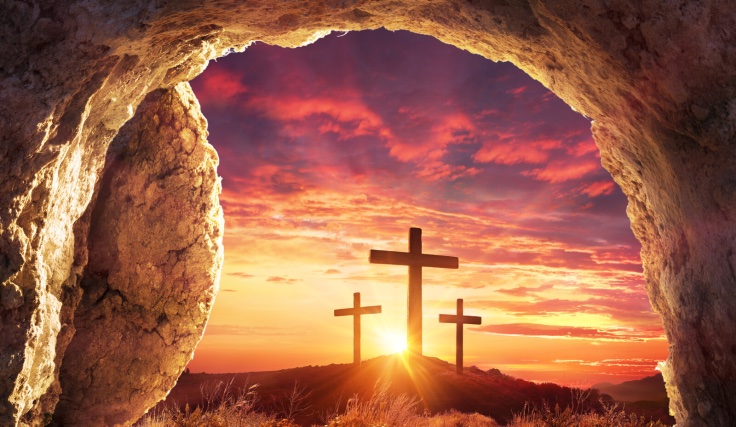
In 2022, my world was shattered. At 30 years old, I became a widower when my wife a 27 year old nurse passed away in my arms from an extremely rare and aggressive form of sarcoma cancer.
We had been married nine years. She was diagnosed in March while she was pregnant with our 4th child he ended up being delivered at 32 weeks and spending a month in the NICU but eventually came home, however in June ended up passing away unexpectedly while we were on a vacation with the whole family im the hotel we were saying in i woke up to feed him and he was just gone we later discovered from the autopsy that it was undiagnosed RSV, by December my wife ended up passing as well
In the span of one brutal year, I lost my wife and my infant son I was left to raise our three older children while barely holding myself together those days were darker than I can put into words.
For a long time, I tried to walk through it in my own strength. I told myself it was just me getting through it i had drifted far from God in the years before me
And my wife were living a hedonistic life in 2021 that looked successful on the outside made enough money to buy us a home and paid off both of our vehicles which was a goal we had wanted for 10 years to be debt free but where it was earned in a season of rebellion from god I now see that it was all meaningless 10 years work of life up in flames in 9 months
When the losses came, it felt like God had stepped back and let me face the full weight of thechoices and this broken world the grief, the regret, the loneliness it nearly broke me i had demons I didn’t know how to fight.
There were nights I didn’t think I would make it but somehow, by God’s mercy, I kept showing up for my kids I kept putting one foot in front of the other even when I couldn’t see the path.
Then 2025 and 2026 came, and everything shifted I fully surrendered my life back to Jesus I stopped pretending I could do this alone. I started digging into Scripture, serving at church, sitting in church recovery groups for mental health and watching videos on scripture and psychology and letting God touch the deepest, darkest parts of my story the regrets I thought would follow me forever, the vices I used to numb the pain, the questions I was afraid to ask.
Looking back now, I see what I couldn’t see from 2022 to 2025 God never left me even when I shook my fist at the sky and cursed him and told him that I would find somebody else to since he never answer my prayers and let this happened to me , I had been a believer, my whole life but I now realize that I was just a lukewarm Christian my whole life we never tried to walk closely with him so who was I to expected? My prayers will get answered
I truly understand He never took my words personally knew they were coming from a place of pain and hurt and he began to collecting every tear, holding the pieces of my broken life, and slowly mixing them together for something new
My waiting wasn’t wasted My pain wasn’t pointless even in the seasons where it felt like He had withdrawn His hand, He was forging a faith in me that could only be shaped in the fire.
Today I am not the same man I am still healing I still have hard days but I now walk with a fire-forged faith, a faith that has been tested, refined, and strengthened.
because of what God has carried me through, I have this undeniable drive to be a light in other people’s darkness
Whether it’s sitting with someone in recovery, serving at church, encouraging a brother or sister who’s struggling, or simply being present for my kids I want people to know this
No matter how deep the loss, how dark the regret, or how far you’ve drifted, there is hope, REAL HOPE not cheap hope, Not just stay positive hope the kind of hope that comes from a God who redeems even the worst chapters and turns mourning into testimony.
If you’re in the middle of your own storm right now, I want you to hear this You don’t have to carry it alone
@THATBOYMMAGURU I thought yan was going to win by split decision but I guess a unanimous decision makes sense as well these two put on incredible fights when they are matched up
Welp we all better get ready for yan vs Sean two
He definitely still does it’s just not always in the obvious and very direct ways like he did in the old testament and let’s be honest even when he has show himself in very direct ways like he did in the Old Testament, it’s not like it made anyone have any more faith or belief the Israelites watch him do many amazing things and still it didn’t take long for them to be worshiping a golden calf
Jesus came and we are literally told he is the image of the invisible God in human form and yet most people still didn’t recognize it and turned against him
Even if God revealed himself to us in a way that left absolutely no doubt of his existence, that still wouldn’t mean everyone would choose to love him, trust him, or obey him.
Scripture shows us that people can witness God’s power firsthand and still turn away from him. Faith isn’t simply acknowledging that God exists. It’s choosing to trust him, follow him, and have a relationship with him.
After all, even the demons know God exists, but that doesn’t mean they worship or obey him. So maybe the real question isn’t why God doesn’t show himself, but why we assume seeing him would automatically change our hearts.
I would hope you would beat both of them your like twice their size 😆 not being a hater or anything I’m actually a fan i think you will definitely win the title in your next fight
But to be honest when it comes to merab and yan they have to do what they have to do to win, honestly these two could fight 10 times and the outcome maybe different each time because of how well they match each other you have to respect how technical they both are
@UFConParamount@paramountplus It really isn’t that boring though to be honest you have to do what you have to do to win, honestly these two could fight 10 times and the outcome maybe different each time because of how well they match each other you have to respect how technical they both are
@McGregorRousey2 It really isn’t that boring though to be honest you have to do what you have to do to win, honestly these two could fight 10 times and the outcome maybe different each time because of how well they match each other you have to respect how technical they both are
Idk how the ladies feel but I have a stepdaughter and I love her just as much as my own kids
That’s not saying that it doesn’t take time for that bond to grow but regardless I love my stepdaughter because I love her mother so it’s pretty simple if you ask me that’s how it should be
Amen I mean think about it it only took like a hundred or so years for Nineveh to forget the mercy and warning they received and to begin treating God as if he didn’t exist, now imagine the memory lapse society is experiencing after thousands of years, what are people going to think when they realize what they thought was fairy tales are actually real
The Weight of What We Cannot See
A reflection on words, evidence, knowledge, and faith
We’ve all heard the saying growing up:
“Sticks and stones may break my bones, but words will never hurt me.”
It’s one of those phrases we’ve heard so many times that we rarely stop to consider what we’re actually saying, But is it true?
the intention behind the saying is understandable. We want to teach children resilience. We want them to understand that someone else’s cruel words do not determine their worth But somewhere along the way, perhaps we’ve confused teaching people how to withstand hurtful words with pretending those words cannot hurt them in the first place.
Because words absolutely can hurt.
Sometimes more deeply than the things that leave visible wounds.
A broken bone can often be examined, measured, treated, and monitored as it heals.
But what about a broken heart?
What about someone who has spent years being told they’re worthless?
What about a person whose reputation has been destroyed by a lie?
What about the wounds left by betrayal, rejection, humiliation, or words spoken by someone whose opinion meant everything to us?
Those wounds might not leave bruises on the skin, but that doesn’t mean they aren’t real.
In fact, Scripture warned us about the power of words long before we developed the familiar childhood saying.
Proverbs 18:21 tells us that death and life are in the power of the tongue.
Think about the weight of that statement.
Life and death. Not merely hurt feelings or uncomfortable conversations.
Scripture recognizes that something as seemingly insignificant as a few spoken words can carry consequences far beyond the moment in which they were said.
James takes this even further when he compares the tongue to a small spark capable of setting an enormous forest on fire.
And perhaps that’s where we should begin asking a deeper question.
If words can cause wounds that cannot always be physically seen, what exactly do we mean when we say something is real?
The Reality of What We Cannot Measure
Imagine someone telling you that their heart has been broken.
Would you respond by asking them to show you the fracture? Would you demand an X-ray?
Would you ask them to place their grief on a scale so you could determine how much it weighs? Of course not.
Because we understand that when someone speaks of a broken heart, they are not ordinarily describing a damaged physical organ. They are describing something happening within the person.
Their grief.
Their sense of loss.
Their emotional suffering.
The pain of loving someone or something deeply and experiencing its absence.
And although these experiences can produce measurable physical effects, those measurements do not capture everything the person is experiencing.
We can study how grief affects the brain.
We can examine changes in sleep, appetite, stress hormones, and behavior.
We can observe physiological responses associated with love, fear, sadness, and attachment.
But can we place the complete experience of loving another human being on a laboratory scale?
Can we measure the full meaning of losing someone we love?
Can we put the moral weight of betrayal into a measuring cup? No And yet, we do not conclude that these experiences are imaginary.
We recognize that not everything real can be understood through the same method of measurement. Consider the love a parent has for their child.
We can observe that love through sacrifice, patience, affection, protection, and commitment. We can study the biological processes associated with attachment.
But the biological description of parental love is not the same thing as the entirety of what that love means to the parent experiencing it.
And this leads us toward a question that deserves more consideration than we sometimes give it.
If something cannot be directly measured with a physical instrument, does that necessarily mean it cannot be known to exist? Or could the problem sometimes be that we’re asking the wrong instrument to answer the question?
When the Question Becomes Bigger Than the Instrument
Humanity has become remarkably skilled at measuring the physical universe.
We can calculate the distance between stars. We can examine the electrical activity of the brain.
We can measure particles, forces, temperatures, pressures, and motions with extraordinary precision. These are remarkable achievements, and they deserve to be respected. Science has given us powerful ways of understanding the physical world.
But science is also a method of investigation, and every method has questions it is better equipped to answer than others.
A telescope can help us examine a distant galaxy.
A microscope can help us investigate the structure of a cell Neither instrument, by itself, can tell us whether we have a moral obligation to love our neighbor.
And that doesn’t mean moral obligation is necessarily imaginary.
It means we have entered a different kind of question.
We have moved from asking what something is physically made of to asking what it means, whether it is true, and how we can know.
That’s where philosophy begins entering the conversation And for me, that’s where this entire reflection starts pointing toward an even larger question.
Why do we sometimes assume that physical measurement must be the final judge of everything we are justified in believing?
If someone says they do not believe in God because God cannot be placed under a microscope or directly measured with an instrument, have they actually demonstrated that God does not exist?
Or have they assumed that the methods used to study physical things must also be sufficient to investigate whether something beyond the physical universe exists?
Those are not the same claim.
Of course, this does not mean that anything invisible must therefore be real.
Nor does it mean that we should accept every spiritual claim without evidence or examination.
The inability to measure something directly is not proof of its absence. But neither is its invisibility proof of its existence.
The deeper question is:
What reasons do we have for believing something is real, and what kind of evidence would be appropriate to the thing we are investigating?
#GoodFriday #FridayMotivation #God #Proverbs
Consciousness Is More Than Survival
I was thinking recently about the idea that consciousness may have developed primarily as a survival advantage after reading a recent scientific paper that made this claim
And on one level, that makes sense.
Awareness helps us recognize danger, remember what hurt us, anticipate what might happen next, communicate with others, solve problems, and navigate the world around us.
But the more I think about human consciousness, the more I wonder whether survival explains all of it.
Because human beings do something strange.
We don’t merely experience the world.
We question it.
We don’t simply make decisions.
We go back afterward and ask whether the decision was right.
We don’t merely feel pain.
We ask why suffering exists.
We don’t merely avoid death.
Sometimes people willingly walk toward it for love, truth, faith, family, or principle.
We create art that serves no obvious survival purpose.
We spend entire lives searching for meaning.
We lie awake wondering whether we are becoming the kind of person we ought to be.
We feel guilt over things nobody else knows we did.
We can even examine our own thoughts and ask whether the way we are thinking is itself wrong.
That seems like more than simply staying alive.
Animals can display remarkable intelligence.
Dolphins communicate and solve complex problems. Elephants appear to grieve. Primates can plan and learn. Octopuses display extraordinary problem-solving ability So intelligence itself is certainly not uniquely human But human beings seem to experience something more expansive.
We do not merely respond to the world around us, We step outside ourselves mentally and ask what our response means.
We ask:
Was I right?
Was I wrong?
What do I owe another person?
What is justice?
Why do I feel guilty?
What is my life for?
What happens when I die?
Does truth still matter when accepting it costs me something?
And that brings me back to one of the oldest stories in Scripture.
Genesis does not say Adam and Eve were unconscious before eating the fruit from the tree of the knowledge of good and evil.
They were obviously conscious.
They spoke.
They reasoned.
They related to one another.
They made choices.
But something changed after they ate.
Their eyes were opened.
They became ashamed.
They hid.
They became afraid.
They blamed one another.
Something about their experience of themselves, morality, and responsibility changed And I think that distinction matters.
The serpent told them that if they ate the fruit their eyes would be opened and they would become like God, knowing good and evil And in one sense, their eyes really were opened.
That is what makes the deception so subtle.
The serpent did not have to tell a completely meaningless lie.
He offered a truth twisted into rebellion.
They gained knowledge.
But they did not gain God’s wisdom.
They became aware of good and evil without becoming perfectly good.
They gained moral knowledge without gaining God’s ability to judge all things perfectly.
And perhaps that is part of what we sometimes miss when reading the story.
Maybe God was not withholding knowledge because He wanted humanity ignorant.
Maybe the command was an invitation to trust the One who alone understands good and evil perfectly.
The temptation was not simply:
“Learn something new.”
It was:
“Take for yourself something God has told you to trust Him with.”
And humanity has been doing some version of that ever since.
We want to know good and evil.
But we also want the authority to define them.
We want moral freedom without moral accountability.
We want knowledge without dependence.
We want consciousness without having to answer the questions consciousness raises.
And that brings me back to the mystery of consciousness itself.
What if consciousness is not merely an accidental survival mechanism?
What if it is part of what allows us to perceive realities survival alone cannot explain?
Truth.
Beauty.
Meaning.
Moral obligation.
Love.
Sacrifice.
God.
What if consciousness is not merely here to help us stay alive?
What if it also helps us understand what life is for?
Maybe consciousness is not an accidental glitch in an otherwise mindless universe.
Maybe mind was there first.
Maybe reality behaves as though it came from intelligence because it did.
A designed cosmos.
Ordered laws.
Creatures capable not merely of existing within that cosmos, but of understanding it.
And human beings capable of turning inward and asking what their own existence means that does not prove Christianity in a single argument but it raises a question I do not think we should dismiss too quickly:
Why should a universe concerned only with survival produce creatures capable of asking whether survival itself is enough?
Maybe consciousness is not merely an evolutionary tool.
Maybe it is also an invitation.
An invitation to see.
To choose.
To recognize good and evil.
To search for truth.
And ultimately, to decide what we are going to do with the knowledge we have been given.Because consciousness does more than make us aware that we exist.
It makes us aware that how we exist matters.
And once we realize that, the question is no longer merely:
“How did consciousness arise?”
It becomes something much more personal:
“What is consciousness asking me to see?”
And maybe this is where the story of consciousness eventually leads us back to grace.
Humanity’s eyes were opened, but we were never going to become God.
We gained an awareness of good and evil without gaining God’s perfect wisdom to understand it, His perfect righteousness to live it, or His perfect justice to judge it.
And God knew that.
He knew we would fail.
He knew our moral awareness would often become guilt, shame, confusion, pride, self-justification, and rebellion.
And instead of leaving humanity trapped beneath the weight of something we could never carry perfectly, He came toward us.
That is what makes Christ so necessary.
Jesus did not come because humanity had finally figured out good and evil.
He came because we hadn’t.
He came because knowing what is right is not the same thing as being righteous.
He came because recognizing sin does not give us the power to erase it.
And through Him, we are offered something moral knowledge alone could never give us:
mercy.
grace.
forgiveness.
reconciliation.
salvation.
But grace does not mean morality suddenly stops mattering.
It does not mean that because we will never understand good and evil with God’s perfection, we are free to simply define right and wrong however we please.
If anything, grace should produce the opposite response.
Reverence.
Gratitude.
Humility.
A deeper desire to trust the One who sees what we cannot and understands what we never will.
The grace of God is not permission to ignore what is good.
It is mercy for people who finally realize they could never become perfectly good by understanding morality alone.
And maybe that is the final lesson hidden inside the tree of the knowledge of good and evil:
Humanity reached for the ability to know.
But what we ultimately needed was not simply more knowledge.
We needed a Savior
remember we are told in scripture almost this exact thing
For God did not send his Son into the world to condemn the world, but to save the world through him.”
John 3:17
#God #Eden #Consciousness #Salvation #Jesus
That one person who sees what you share about God might be the whole reason you posted it.
We like big numbers.
God does not work that way.
One life that turns toward Jesus is enough for all of Heaven to celebrate.
Luke 15:10 says there is joy in the presence of the angels of God over one sinner who repents.
So do not quit sharing just because it looks small.
That one person matters to God, and He can use a simple post or video to reach them.
Keep going.
You never know who is listening.
Consciousness Is More Than Survival
I was thinking recently about the idea that consciousness may have developed primarily as a survival advantage after reading a recent scientific paper that made this claim
And on one level, that makes sense.
Awareness helps us recognize danger, remember what hurt us, anticipate what might happen next, communicate with others, solve problems, and navigate the world around us.
But the more I think about human consciousness, the more I wonder whether survival explains all of it.
Because human beings do something strange.
We don’t merely experience the world.
We question it.
We don’t simply make decisions.
We go back afterward and ask whether the decision was right.
We don’t merely feel pain.
We ask why suffering exists.
We don’t merely avoid death.
Sometimes people willingly walk toward it for love, truth, faith, family, or principle.
We create art that serves no obvious survival purpose.
We spend entire lives searching for meaning.
We lie awake wondering whether we are becoming the kind of person we ought to be.
We feel guilt over things nobody else knows we did.
We can even examine our own thoughts and ask whether the way we are thinking is itself wrong.
That seems like more than simply staying alive.
Animals can display remarkable intelligence.
Dolphins communicate and solve complex problems. Elephants appear to grieve. Primates can plan and learn. Octopuses display extraordinary problem-solving ability So intelligence itself is certainly not uniquely human But human beings seem to experience something more expansive.
We do not merely respond to the world around us, We step outside ourselves mentally and ask what our response means.
We ask:
Was I right?
Was I wrong?
What do I owe another person?
What is justice?
Why do I feel guilty?
What is my life for?
What happens when I die?
Does truth still matter when accepting it costs me something?
And that brings me back to one of the oldest stories in Scripture.
Genesis does not say Adam and Eve were unconscious before eating the fruit from the tree of the knowledge of good and evil.
They were obviously conscious.
They spoke.
They reasoned.
They related to one another.
They made choices.
But something changed after they ate.
Their eyes were opened.
They became ashamed.
They hid.
They became afraid.
They blamed one another.
Something about their experience of themselves, morality, and responsibility changed And I think that distinction matters.
The serpent told them that if they ate the fruit their eyes would be opened and they would become like God, knowing good and evil And in one sense, their eyes really were opened.
That is what makes the deception so subtle.
The serpent did not have to tell a completely meaningless lie.
He offered a truth twisted into rebellion.
They gained knowledge.
But they did not gain God’s wisdom.
They became aware of good and evil without becoming perfectly good.
They gained moral knowledge without gaining God’s ability to judge all things perfectly.
And perhaps that is part of what we sometimes miss when reading the story.
Maybe God was not withholding knowledge because He wanted humanity ignorant.
Maybe the command was an invitation to trust the One who alone understands good and evil perfectly.
The temptation was not simply:
“Learn something new.”
It was:
“Take for yourself something God has told you to trust Him with.”
And humanity has been doing some version of that ever since.
We want to know good and evil.
But we also want the authority to define them.
We want moral freedom without moral accountability.
We want knowledge without dependence.
We want consciousness without having to answer the questions consciousness raises.
And that brings me back to the mystery of consciousness itself.
What if consciousness is not merely an accidental survival mechanism?
What if it is part of what allows us to perceive realities survival alone cannot explain?
Truth.
Beauty.
Meaning.
Moral obligation.
Love.
Sacrifice.
God.
What if consciousness is not merely here to help us stay alive?
What if it also helps us understand what life is for?
Maybe consciousness is not an accidental glitch in an otherwise mindless universe.
Maybe mind was there first.
Maybe reality behaves as though it came from intelligence because it did.
A designed cosmos.
Ordered laws.
Creatures capable not merely of existing within that cosmos, but of understanding it.
And human beings capable of turning inward and asking what their own existence means that does not prove Christianity in a single argument but it raises a question I do not think we should dismiss too quickly:
Why should a universe concerned only with survival produce creatures capable of asking whether survival itself is enough?
Maybe consciousness is not merely an evolutionary tool.
Maybe it is also an invitation.
An invitation to see.
To choose.
To recognize good and evil.
To search for truth.
And ultimately, to decide what we are going to do with the knowledge we have been given.Because consciousness does more than make us aware that we exist.
It makes us aware that how we exist matters.
And once we realize that, the question is no longer merely:
“How did consciousness arise?”
It becomes something much more personal:
“What is consciousness asking me to see?”
And maybe this is where the story of consciousness eventually leads us back to grace.
Humanity’s eyes were opened, but we were never going to become God.
We gained an awareness of good and evil without gaining God’s perfect wisdom to understand it, His perfect righteousness to live it, or His perfect justice to judge it.
And God knew that.
He knew we would fail.
He knew our moral awareness would often become guilt, shame, confusion, pride, self-justification, and rebellion.
And instead of leaving humanity trapped beneath the weight of something we could never carry perfectly, He came toward us.
That is what makes Christ so necessary.
Jesus did not come because humanity had finally figured out good and evil.
He came because we hadn’t.
He came because knowing what is right is not the same thing as being righteous.
He came because recognizing sin does not give us the power to erase it.
And through Him, we are offered something moral knowledge alone could never give us:
mercy.
grace.
forgiveness.
reconciliation.
salvation.
But grace does not mean morality suddenly stops mattering.
It does not mean that because we will never understand good and evil with God’s perfection, we are free to simply define right and wrong however we please.
If anything, grace should produce the opposite response.
Reverence.
Gratitude.
Humility.
A deeper desire to trust the One who sees what we cannot and understands what we never will.
The grace of God is not permission to ignore what is good.
It is mercy for people who finally realize they could never become perfectly good by understanding morality alone.
And maybe that is the final lesson hidden inside the tree of the knowledge of good and evil:
Humanity reached for the ability to know.
But what we ultimately needed was not simply more knowledge.
We needed a Savior
remember we are told in scripture almost this exact thing
For God did not send his Son into the world to condemn the world, but to save the world through him.”
John 3:17
#God #Eden #Consciousness #Salvation #Jesus