This illustrates the importance of parallel routing in global trade systems. When a significant share of flows is concentrated through a single chokepoint, disruptions do not remain localized; they propagate rapidly across interconnected sectors, from energy to agriculture and, ultimately, food security.
The underlying logic of the Belt and Road Initiative reflects this principle: not the reliance on a single corridor, but the development of a networked system capable of sustaining flows when individual nodes come under strain.
Fertilizer prices have surged since shipping disruptions in the Strait of Hormuz in late February 2026. A large share of key inputs - ammonia, urea and sulphur moves through this route, pushing prices up quickly.
Higher fertilizer costs are forcing farmers to cut back or delay usage, which affects yields in the months ahead. The United Nations has warned that the knock-on effects could push tens of millions more people into food insecurity, particularly in countries already under strain.
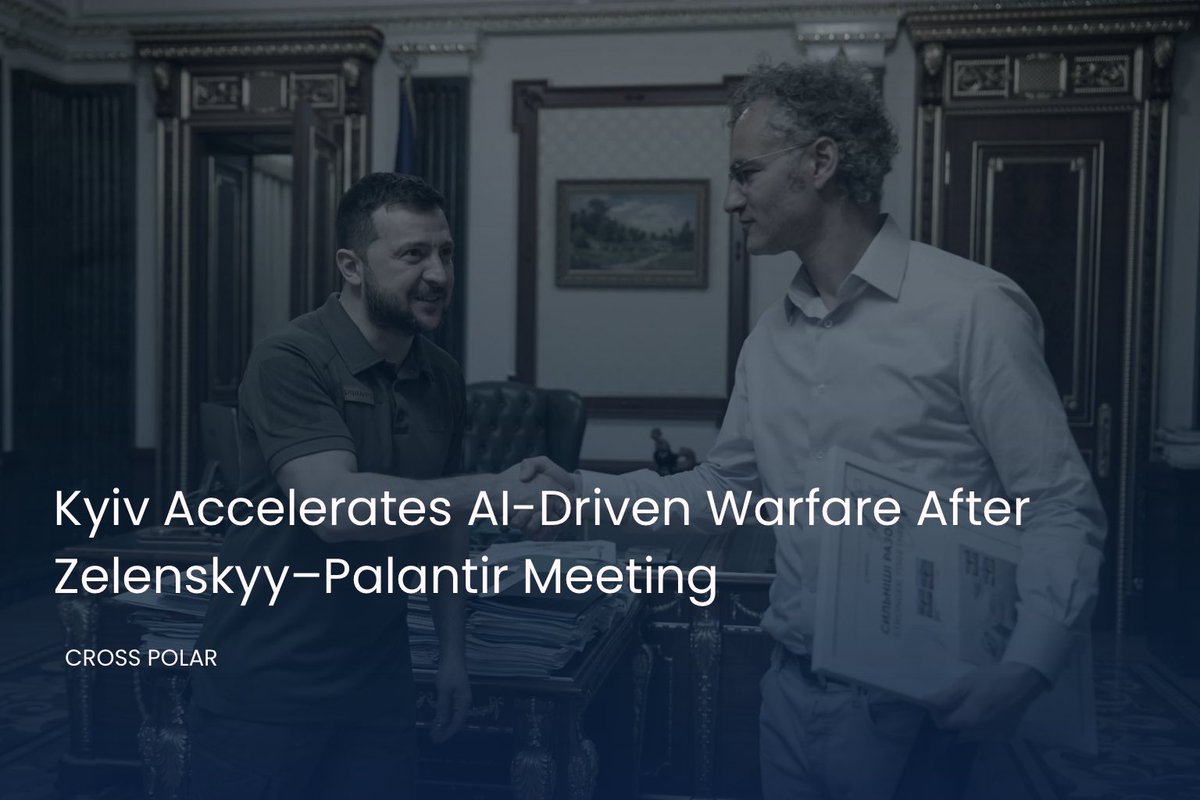
Ukrainian President Volodymyr Zelenskyy has met Palantir CEO Alex Karp in Kyiv as Ukraine rapidly expands AI integration across the battlefield.
Ukrainian officials say more than 80 AI models are now being trained using real combat data to support drone detection, battlefield analysis, intelligence processing, and strike coordination.
Kyiv described the shift as the growing role of the “mathematics of warfare”where algorithms, data fusion, and machine-speed targeting increasingly shape combat outcomes.
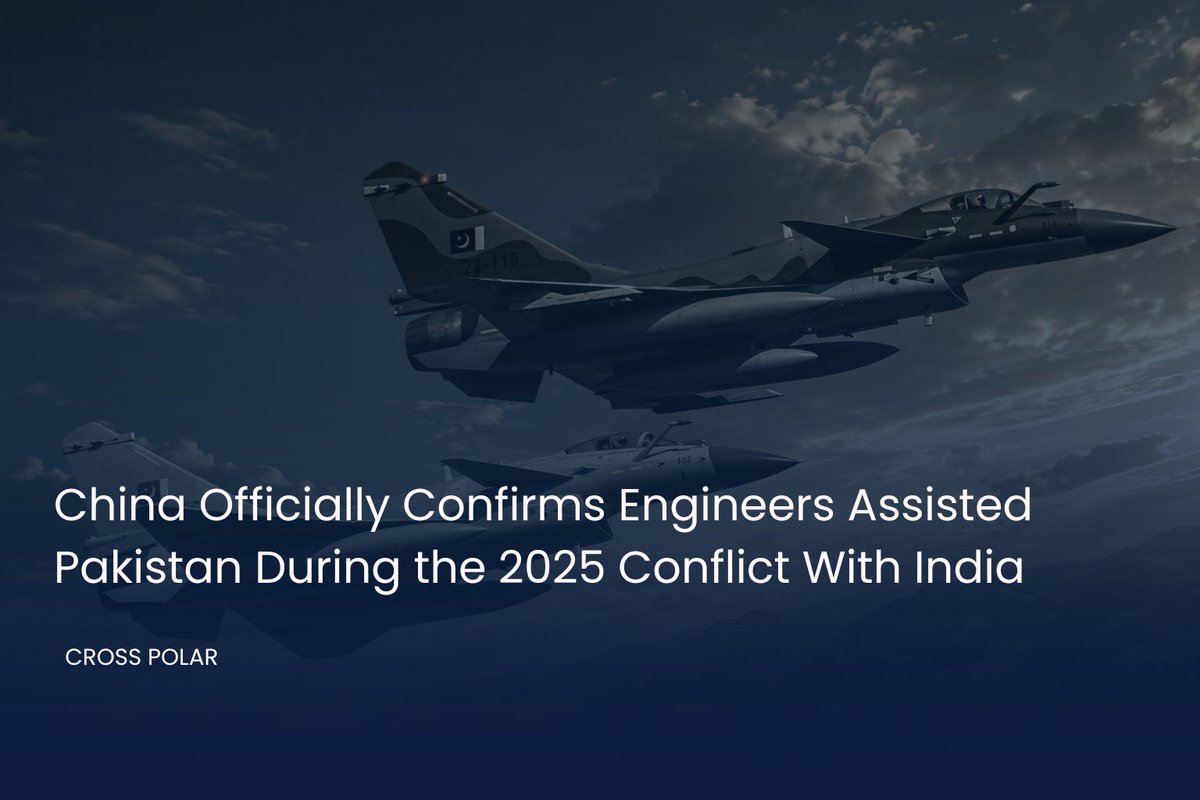
For the first time, China has publicly acknowledged that Chinese engineers were present in Pakistan during last year’s India-Pakistan conflict, providing on-site technical support for Chinese-origin military systems.
According to a report by South China Morning Post, engineers from AVIC’s Chengdu Aircraft Design and Research Institute said they operated from a “support base” during the fighting to ensure Pakistani systems maintained “full combat potential.”
Chinese defence exports are evolving from simple hardware transfers into long-term operational partnerships, especially with states positioned along critical trade corridors and strategic chokepoints. Pakistan’s role in that architecture is uniquely important offering Arabian sea access, the Gwadar Port, and a logistics bridge between the Middle East, Central Asia, and China.
Cross Polar CITY Profiles | ALEPPO
Syria’s strategic importance did not emerge in the modern era. It is rooted in its geography. For thousands of years, the Syrian corridor linked the Mediterranean to Mesopotamia, Anatolia, Persia and the overland trade routes stretching deeper into Asia toward China. Empires repeatedly converged on this geography because influence over Syria meant influence over the movement of trade, armies, taxation and later energy flows between continents.
Few cities embodied this reality more than #Aleppo. At one point, Aleppo was so strategically important that European powers established permanent merchant colonies there centuries before modern globalization even existed. Major powers remain fixated on this geography even today, reflected in the continuing military and political competition involving the United States, Russia, Israel, Türkiye and regional actors across Syrian territory.
Positioned at the western end of the Silk Roads, Aleppo became one of the principal exchange points between Asia and the Mediterranean world. Chinese silk, Central Asian horses, Persian carpets, Indian spices and Arabian goods moved through caravan networks into the city before being redistributed toward Europe and the Mediterranean basin.
By the 16th and 17th centuries, English merchants from the Levant Company operated directly from Aleppo, while Venice, France and the Dutch competed for influence there because access to the city meant access to eastern trade itself.
Its covered markets stretched for more than 13 kilometres, making them among the largest historic souqs on earth.Caravanserais across the city were purpose-built to accommodate merchants arriving from across Eurasia with camels, guards, translators and high-value goods moving between continents.
Even modern infrastructure followed the same strategic logic. The #Berlin–#Baghdad Railway project passed through #Aleppo because industrial powers recognized the same reality caravan traders had understood centuries earlier, that the city functioned as a Eurasian transit hinge linking Anatolia, Mesopotamia and the Eastern Mediterranean.
The destruction of #Aleppo therefore carried geopolitical significance far beyond Syria itself. Competing visions for the region, whether integration into eastward Eurasian networks involving Iran, Iraq and potentially China’s Belt and Road Initiative, or continued incorporation into a Western-dominated regional order all intersected around Syrian geography. One of the oldest continuously functioning commercial crossroads in human civilization was shattered in the process.
Yet the geography that made Aleppo strategically valuable never disappeared. Which is why modern projects of Eurasian integration continue to circle back toward the same corridors, junctions and chokepoints that made cities like #Aleppo central to world trade centuries ago.
Pakistan has issued an official response to reports that Iranian aircraft were parked at Pakistani airbases during the recent U.S.-Iran war.
#Islamabad rejected claims that Iranian aircraft were being sheltered as part of any “military contingency or preservation arrangement,” calling such reports “misleading and sensationalised.” But the statement simultaneously appears to acknowledge that Iranian aircraft were indeed present in Pakistan during and after the ceasefire period.
Pakistan says the aircraft were linked to diplomatic logistics surrounding the Islamabad talks process, including the movement of personnel, security teams and administrative staff tied to mediation efforts between Tehran and Washington.
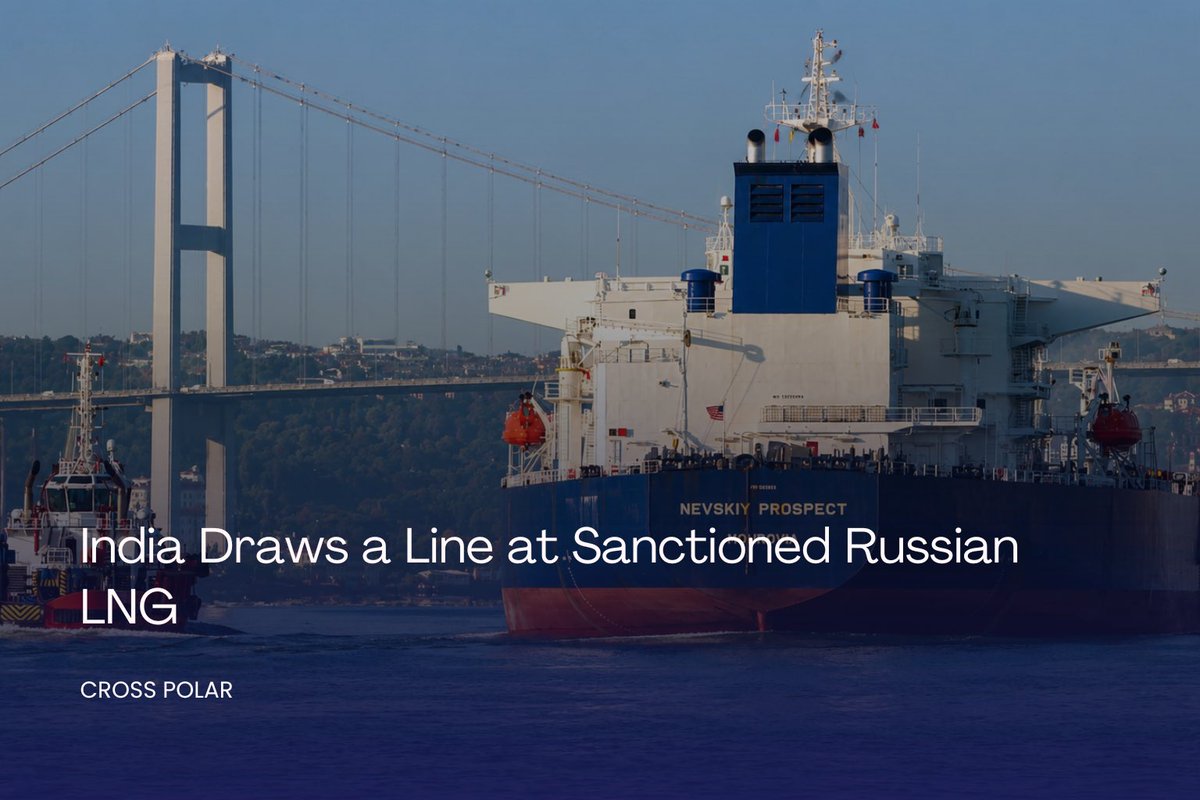
India has reportedly declined Russian LNG cargoes linked to U.S. sanctions, even as Russian crude oil continues flowing into the country at large scale. One tanker, the Kunpeng, is now sitting near Singapore after failing to discharge its cargo originally intended for India. (Reuters)
The episode reveals a growing divide inside Russia’s own energy exports.
Oil has proven far easier for #Moscow to reroute through shadow shipping networks, ship-to-ship transfers and intermediary traders. LNG is different. The infrastructure is more centralized, the tankers are easier to track and the supply chains remain deeply tied to Western-controlled insurance, financing and monitoring systems. (Reuters)
New Delhi is still one of the largest buyers of Russian seaborne crude. But LNG appears to be crossing a different threshold of sanctions exposure and compliance risk.
The result is an emerging split within Eurasian energy trade itself: Russian oil continues finding buyers across alternative markets, while sanctioned Russian LNG remains significantly more constrained despite rising demand and Middle East supply disruptions.
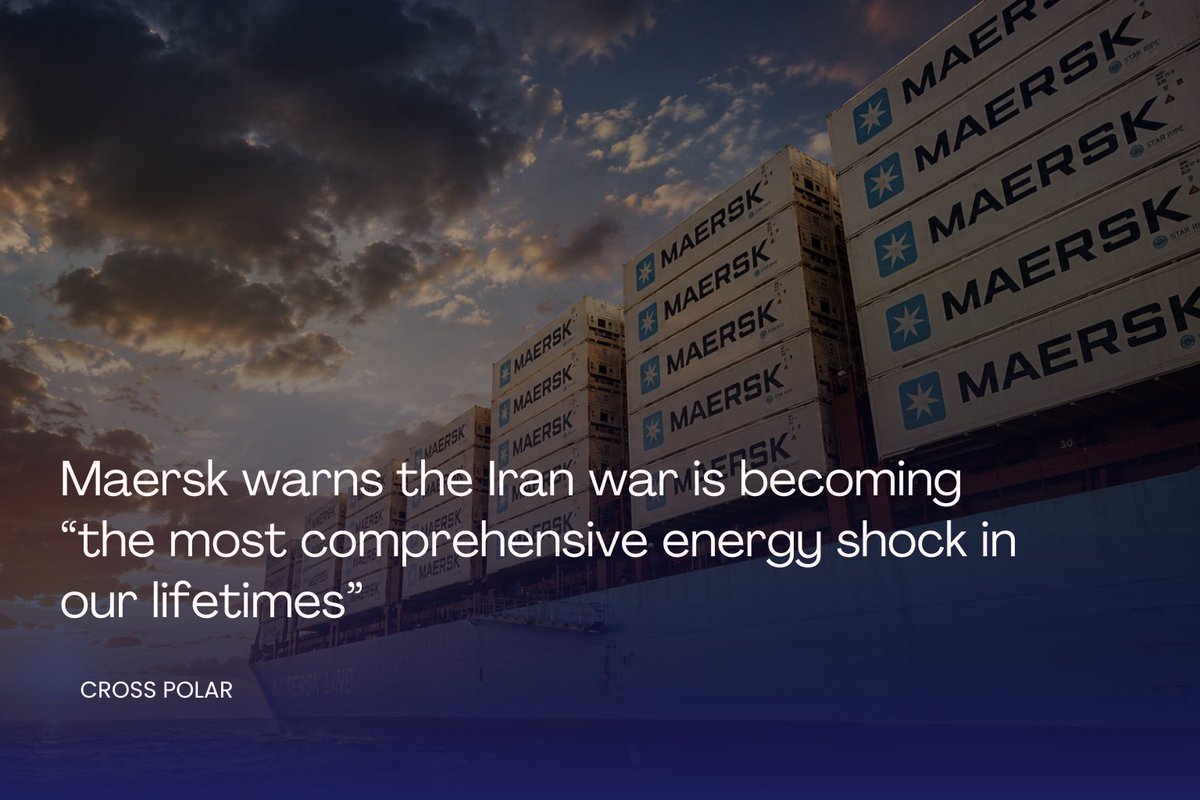
#Maersk, the world’s second-largest shipping company says the Iran war is now costing it an extra $500 million every single month and those costs are being passed directly onto the global economy.
Maersk CEO Vincent Clerc says soaring fuel prices and disruptions around the Strait of Hormuz are dramatically increasing shipping costs as the war destabilizes one of the most critical arteries in global trade.
#Iran #Maersk #GeoEconomics #Geopolitics
As the battlefield around Iran is increasingly shifting from missiles to financial infrastructure, a Chinese fuel trader sued #JPMorgan and #Citi over $40 million in blocked payments tied to Iranian oil. The lawsuit, filed by Chinese trader HY Energy, alleges the banks froze payments linked to oil transactions before formal U.S. sanctions were even imposed on the entities involved.
At the center of the dispute is a deeper structural reality where modern sanctions no longer target states alone but also target the transaction systems surrounding them. The pressure now extends across banks, insurers, commodity traders, shipping networks and intermediary firms.
For years, Iranian oil continued flowing through a fragmented system of re-export hubs, offshore entities, and Asian refining networks. But the growing use of anticipatory compliance by major financial institutions suggests #Washington is moving beyond direct sanctions enforcement toward pre-emptive financial containment.
#Iran #OilMarkets #Geopolitics #EnergySecurity #GeoEconomics
Russia has become Syria’s dominant oil supplier with shipments rising roughly 75% to around 60,000 barrels per day, according to Reuters. At the same time, Syria cannot meet its own energy demand, which sits far higher. So the country is structurally dependent on external supply. This means Syria cannot be purely Western aligned and it is not purely Russian-controlled either. Syria is now becoming an energy-dependent corridor space sitting between two competing systems.
On the other side is the emerging Turkey-Russia energy system. Turkey functions as a corridor state, converting geographic position into economic leverage. Russian gas is rerouted through Turkish infrastructure with pipelines such as Blue Stream and TurkStream materialising this arrangement.
On one side is the EastMed/Western-aligned corridor which includes Greece, Cyprus and Israel, backed by the European Union and the United States. Its function is straightforward which is to reorganize Eastern Mediterranean gas flows so that they enter European markets without passing through Turkey or Russia. Projects like the EastMed pipeline, subsea electricity interconnectors and LNG export routes are attempts to restructure dependency within European energy consumption. The aim is to shift the terms of dependence away from Russian supply and away from Turkish transit rents.
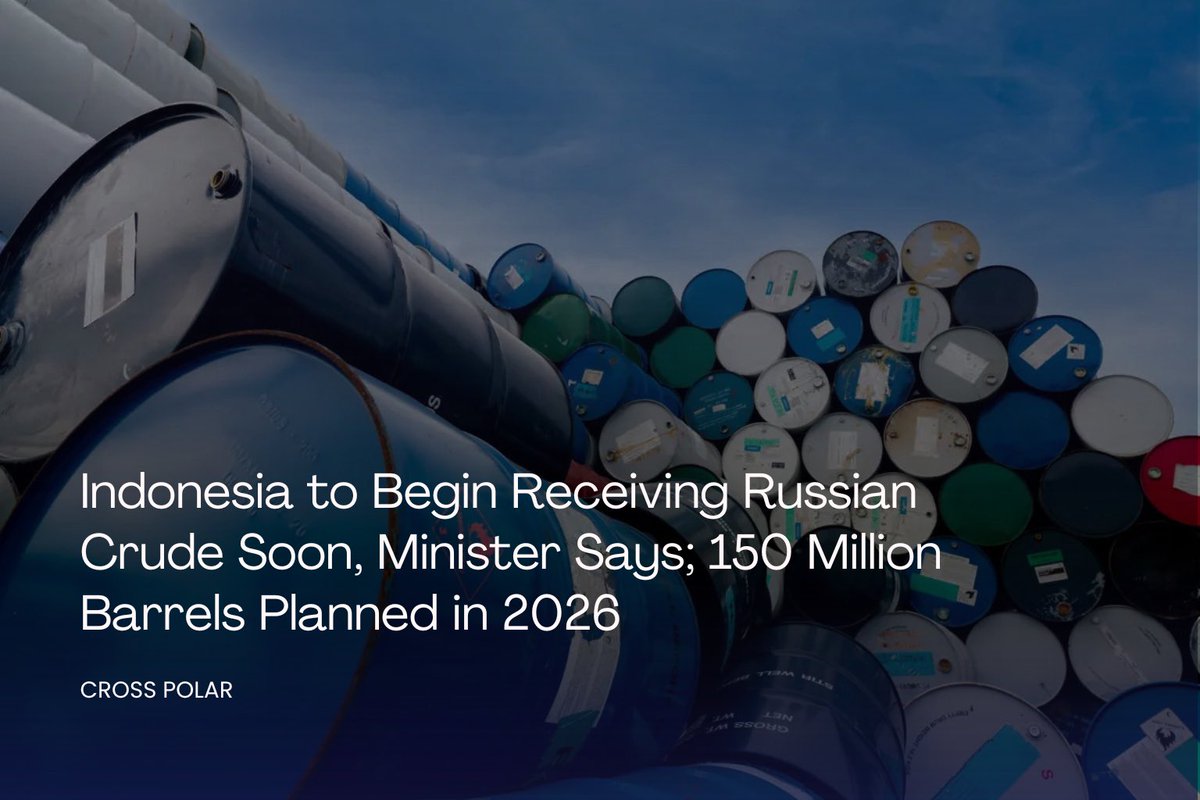
Russian crude oil shipments to Indonesia are expected to begin in the near term, Energy Minister Bahlil Lahadalia said, signalling a significant expansion in energy ties with Russia.
He said Indonesia is planning to import up to 150 million barrels of Russian oil by the end of 2026, with supplies to be delivered gradually.
Lahadalia added that #Jakarta is also exploring imports of liquefied petroleum gas (LPG) from Russia, though discussions remain ongoing.
Iran’s Deputy Foreign Minister Kazem Gharibabadi says #Tehran has presented a plan to end the war to Pakistan.
He added that the next step now lies with the United States, which must decide whether to pursue diplomacy or continue with a confrontational approach.
The proposal has been delivered through Pakistan, positioning #Islamabad as a key channel in the latest push to de-escalate the conflict.
#Dhaka has approved a series of emergency energy exploration projects, awarding contracts to CNPC Chuanqing Drilling Engineering and Sinopec International Petroleum Service Corporation to drill three oil and gas wells at a combined cost of roughly $86 million. The decision comes as supply disruptions linked to West Asia place renewed pressure on Bangladesh’s fuel system, accelerating the need to develop domestic reserves.
With limited in-house drilling capacity, the country is moving through external partnerships that combine financing, technical expertise, and rapid execution. Chinese firms, already embedded across regional energy and infrastructure networks, offer a ready framework through which projects can be initiated without delay.
Venezuela’s oil exports rose 14% in April to 1.23 million barrels per day - the highest level in more than seven years.
The increase is being driven through joint ventures involving #Chevron and other external partners, where capital, technology, and operational control sit largely outside the country. The resource remains Venezuelan, but the conditions under which it is extracted are no longer determined solely within it.
Once produced, crude is moved through global trading networks led by firms such as Vitol and Trafigura, which finance, route, and place shipments across international markets. Control over circulation allows these actors to capture a disproportionate share of the value. Sanctions had previously constrained this structure. Their easing has not simply reopened exports - it has enabled external capital and trading networks to re-enter at scale, expanding their reach across both production and distribution.
Venezuelan crude now flows simultaneously to the United States, Europe, and India, linking the country back into global demand centers, as external actors consolidate their position across the system.
The modern struggle for labor rights traces back, in part, to Australian stonemasons strike of 1856 where workers first organized around the demand for an eight-hour workday. What began in Australia quickly evolved into a recurring cycle of seasonal strikes, embedding labor agitation into the industrial calendar.
By 1886, the movement had reached the United States. On May 1, mass strikes erupted across industrial centers, culminating days later in the Haymarket affair in #Chicago - a violent confrontation that left workers dead and injured, and transformed labor unrest into a global political question.
In the aftermath, May 1 was institutionalized by labor movements worldwide, not merely as a commemoration, but as a signal of collective power within rapidly industrializing economies.
In South Asia, then under the British Empire, these developments did not immediately translate into organized labor movements. The region’s workforce remained largely agrarian or tied to colonial extraction systems. However, as industrial centers emerged in cities like #Bombay and #Calcutta, the influence of global labor struggles began to take root.
By the early 20th century, labor organizing in South Asia was gaining momentum, culminating in the region’s first May Day observance in 1923, led by Singaravelu Chettiar. Here, the meaning of labor struggle evolved beyond industrial rights becoming intertwined with anti-colonial movements and the broader fight for political independence.
The United States is falling behind in the race for Central Asia’s critical minerals, according to a recent analysis in The Diplomat, a region increasingly shaping the supply chains behind global technological and industrial power.
China and Russia already dominate the landscape. China accounts for roughly 49% of Central Asia’s critical mineral exports, while Russia holds around a fifth, reflecting entrenched positions across extraction, infrastructure and regional connectivity. The U.S., by contrast, remains marginal.
Central Asia’s reserves including uranium, rare earths and other strategic minerals sit upstream of industries ranging from semiconductors to defence systems. Control here is less about extraction alone and more about long-term positioning within supply chains that underpin technological capacity.
China’s approach has been sustained and integrated, combining investment, processing and transport networks. Russia’s role continues to draw on legacy systems and geographic proximity.
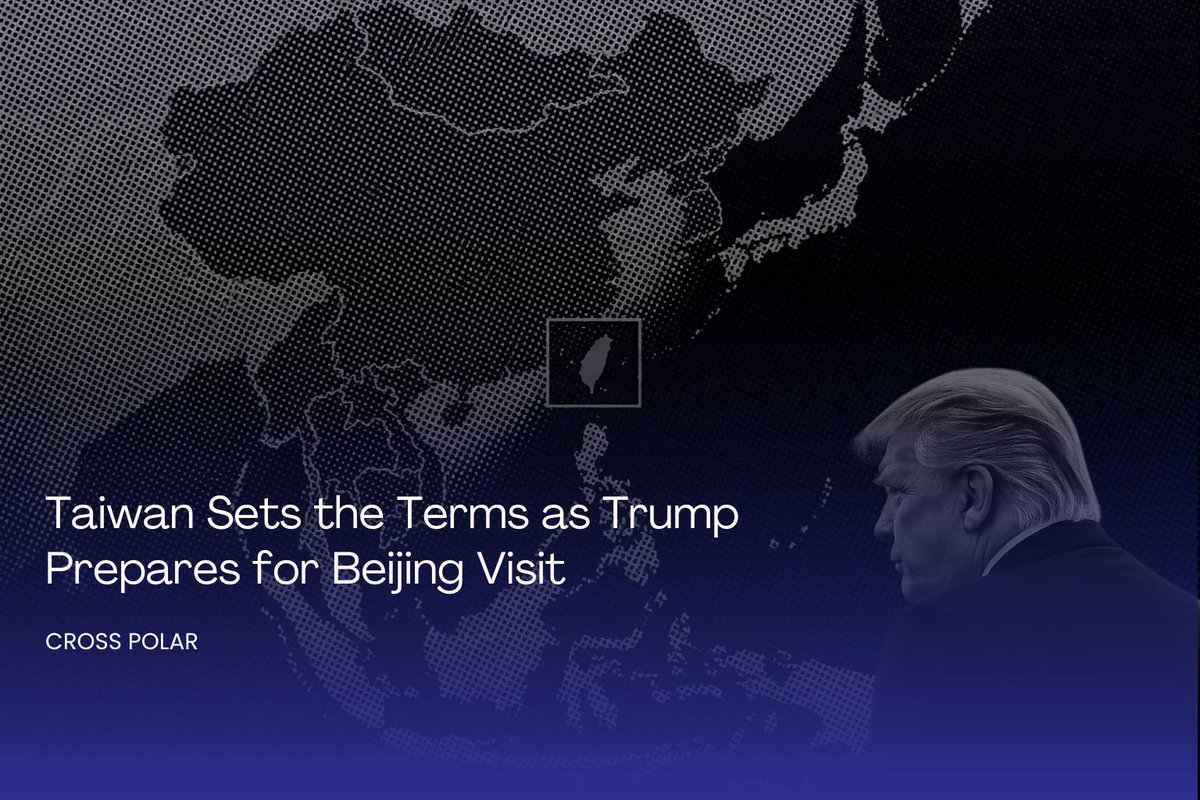
Trump is set to visit #Beijing on May 14–15 for talks with Xi Jinping, marking his first trip to China since returning to office. The visit follows a year of renewed tensions, with #Washington and #Beijing clashing over tariffs before agreeing to a fragile truce in October after their meeting in South Korea.
Ahead of the talks, Wang Yi described Taiwan as “the biggest point of risk” in the relationship, underscoring the limits within which any broader cooperation can take place.
Taiwan’s significance extends beyond the immediate dispute. It sits at the intersection of core structural pressures shaping the current system: a sovereignty claim Beijing considers non-negotiable, a security commitment Washington is unwilling to dilute, a strategic position influencing access to the Pacific, and a central role in the global semiconductor supply chain.
Saudi Industry Minister Bandar Alkhorayef says current disruptions are reshaping logistics and supply chains across the region. Speaking to Anadolu in Istanbul, he argued the crisis is also creating opportunity: “What we are witnessing today will create very significant opportunities for the entire region,” he said, drawing parallels with the COVID-19 period, when Saudi Arabia accelerated domestic production and strengthened self-sufficiency.
A proposed railway linking Saudi Arabia to Türkiye via Jordan and Syria forms part of a broader push to rebuild regional transport networks through Syria after years of conflict. The effort gained momentum on April 7, when Türkiye, Jordan and Syria signed a transport cooperation memorandum in Amman aimed at boosting trade and improving road and rail connectivity.
Science is being redefined as territory: In the aftermath of the war, Iran is explicitly framing its scientific and technological capabilities - from biotechnology to missile systems as national assets to be protected in the same manner as territorial borders. This follows direct and indirect pressure on research infrastructure, within a war where technological capacity proved as decisive as geography in shaping resilience. As Xi Jinping recently described basic research as the “master switch” of innovation, states are moving to either build and retain control over foundational knowledge, or to secure and defend it against external disruption.
China Xinhua News: Shanghai, April 30: Xi Jinping called for stronger focus on basic research, describing it as the foundation of the entire scientific system and the “master switch” behind technological breakthroughs.
As global competition in technology intensifies, the emphasis is shifting away from short-term application toward control over the underlying science itself - the layer where future industries are shaped.
Xi’s remarks focused on building that foundation systematically: expanding funding for basic research, strengthening universities and national labs, integrating industry with research, and developing talent pipelines. There was also a push for deeper participation in global scientific networks, even as competition increases.
Starting May 1, China expands zero-tariff access to all 53 African partners, bringing 20 additional countries into the policy through 2028.
This builds on a 2024 move that already removed tariffs across all goods for 33 least-developed countries, extending duty-free access across the continent.
For quota-based goods, only in-quota tariffs drop to zero.
The rollout comes alongside plans for a long-term China-Africa Economic Partnership, positioning China as the first major economy to offer near full-coverage zero-tariff access at this scale.