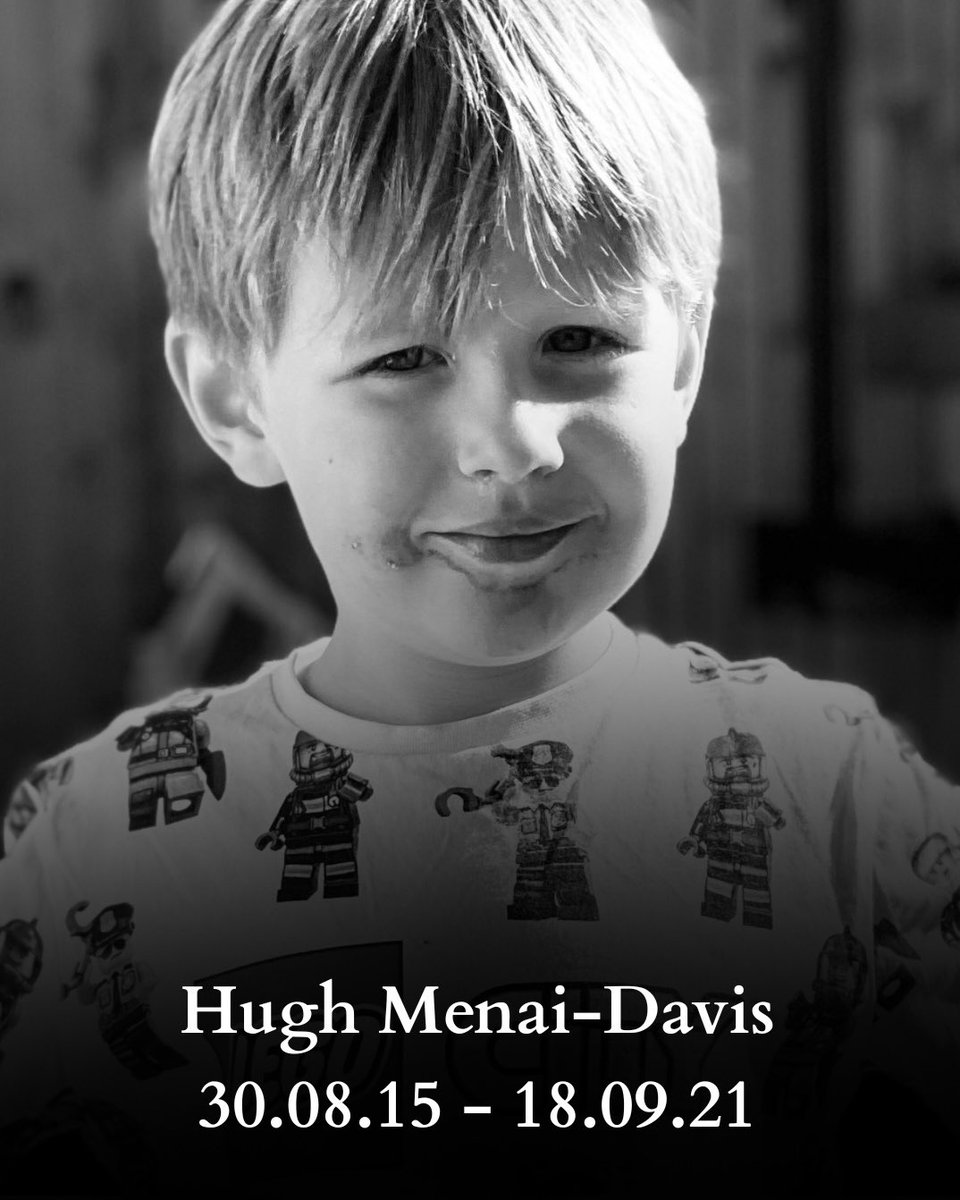
At 3pm on this day five years ago, you took your oxygen mask off and asked if you could go home and play in the lounge. I told you we had to wait for the medicines to work.
You then asked if you could sit on the windowsill, have a glass of water and look outside.
That was the last conversation we ever had.
At 11.20pm, we said goodbye, and you were finally free. Free from the medicines, the needles and the pain.
Five years later, you’ve become a hero to so many people. But to me, you’re more than that.
You had everything I still try to live by: bravery, courage, humility and kindness. We could all learn something from the way you lived your six years.
If you’ve followed our journey over the last five years, thank you.
Today, if you can, share Hugh’s face, his name and his story, so a little boy who showed such bravery, courage, humility and kindness is remembered, or you can donate to the charity in his name 👉 https://t.co/zI4CeysvOq
Love you, son. Always. x
¡Orgullo mexicano que hace historia! 🇲🇽✨
Gabriela Salas, una joven indígena de la Huasteca, rompió barreras y llevó el náhuatl ancestral directamente a Google Translate. Tras años de dedicación recopilando vocabulario, ahora millones pueden aprender, preservar y honrar esta joya cultural con un solo clic.
¡Una victoria épica para la identidad y la tecnología! 🔥
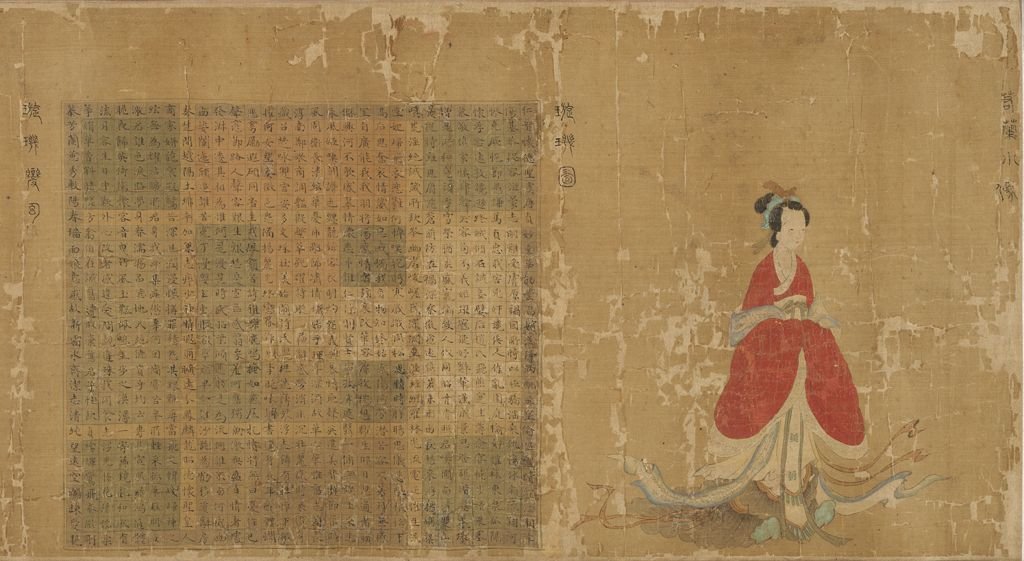
This strange square 👇 is undoubtedly the most extraordinary work of literature in human history. Yet, unfortunately, barely anyone in the West has ever heard of it.
There was this woman poet in 4th century China called Su Hui (蘇蕙), a child genius who had reportedly mastered Chinese characters by age 3.
At 21 years old, heartbroken by her husband who left her for another woman, she decided to encode her feelings in a structure so intricate, so beautiful, so intellectually staggering that it still baffles scholars to this day.
Came to be known as the Xuanji Tu (璇璣圖) - the "Star Gauge" or "Map of the Armillary Sphere" - it's a 29 by 29 grid of 841 characters that can produce over 4,000 different poems.
Read it forward. Read it backward. Read it horizontally, vertically, diagonally. Read it spiraling outward from the center. Read it in circles around the outer edge. Each path through the grid produces a different poem - all of them coherent, all of them beautiful, all of them rhyming, all of them expressing variations on the same themes of longing, betrayal, regret, and undying love.
The outer ring of 112 characters forms a single circular poem - believed to be both the first and longest of its kind ever written. The interior grid produces 2,848 different four-line poems of seven characters each. In addition, there are hundreds of other smaller and longer poems, depending on the reading method.
At the center a single character she left implied but unwritten: 心 (xin) - "heart." Later copyists would add it explicitly, but in Su Hui's original the meaning was even more beautiful: 4,000 poems, all orbiting the space where her heart used to be.
Take for instance the outer red grid of the Star Gauge. Starting from the top right corner and reading down, you get this seven-character quatrain:
仁智懷德聖虞唐,
貞志篤終誓穹蒼,
欽所感想妄淫荒,
心憂增慕懷慘傷。
In pinyin, it is:
Rén zhì huái dé shèng yú táng,
zhēnzhì dǔ zhōng shì qióng cāng,
qīn suǒ gǎnxiǎng wàng yín huāng,
xīn yōu zēng mù huái cǎn shāng.
Notice how it rhymes? táng / cāng / huāng / shāng
The rough translation in English is: "The benevolent and wise cherish virtue, like the sage-kings Yao and Shun, With steadfast will I swear to the heavens above, What I revere and feel - how could it be wanton or dissolute? My heart's sorrow grows, longing brings only grief."
Now read it from the bottom to the top and you get this entirely different seven-character quatrain:
傷慘懷慕增憂心,
荒淫妄想感所欽,
蒼穹誓終篤志貞,
唐虞聖德懷智仁。
The pinyin:
Shāng cǎn huái mù zēng yōu xīn,
huāngyín wàngxiǎng gǎn suǒ qīn,
cāngqióng shì zhōng dǔzhì zhēn,
táng yúshèngdé huái zhì rén.
It rhymes too: xīn and qīn, zhēn and rén
And the meaning is just as beautiful and coherent: "Grief and sorrow, longing fills my worried heart, Wanton and dissolute fantasies - is that what you revere? I swear to the heavens my constancy is true, May we embody the sage-kings' virtue, wisdom, and benevolence."
That's just 2 poems out of the over 4,000 you can construct from the Xuanji Tu!
At the very center of the grid, the 8 red characters wrapped around the central heart, she "signed" her poem with a hidden message:
詩圖璇玑,始平蘇氏。 "The poem-picture of the Armillary Sphere, by Su of Shiping."
Or reversed:
蘇氏詩圖,璇玑始平。 "Su's poem-picture - the Armillary Sphere begins in peace."
Many scholars, and even emperors, throughout Chinese history have been completely obsessed by Su Hui's puzzle.
For instance, in the Ming dynasty, a scholar named Kang Wanmin (康萬民) devoted his entire life to the poems (https://t.co/4exP9zpqbc), ending up documenting twelve different reading methods - forward, backward, diagonal, radiating, corner-to-corner, spiraling - and extracting 4,206 poems. His book on the subject ("Reading Methods for the Xuanji Tu Poems", 璇璣圖詩讀法) runs to hundreds of pages.
Empress Wu Zetian herself, the legendary woman emperor of the Tang dynasty, wrote a preface to the Xuanji Tu around 692 CE (https://t.co/yW7aR73MPc).
Incredibly, there's even far more complexity to the Xuanji Tu than just the poems:
- The name 璇玑 (Xuanji) - Armillary Sphere - is astronomical in meaning and the way the poems can be read mirrors the way celestial bodies orbit around a fixed center. It's a model of the heavens.
- Her original work, with the characters woven on silk brocade, was in five colors (red, black, blue/green, purple, and yellow) which correspond to the Five Elements (五行) - the foundational Chinese philosophical system that explains how the universe operates. So it's also a model of the entire cosmic order according to ancient Chinese philosophy.
- It's also of course deeply mathematical with this 29 x 29 perfect square grid, with sub-squares, lines and rectangles, and a structure which allows for symmetrical reading patterns in all directions
- Last but not least, the content of the poems themselves contain multiple registers. On top of expressing her personal grief and longing for her husband, it's also filled with accusations against the concubine (Zhao Yangtai) he left her for, reflections on politics (with many references to sage-kings) and philosophical reflections.
So the Star Gauge is simultaneously:
- A love letter (expressing personal longing)
- A legal brief (arguing her case against her rival)
- A cosmological model (structured like the heavens)
- A Five Element diagram (encoding the fundamental structure of the world according to ancient Chinese philosophy)
- A mathematical construction with perfect symmetry and precision
And yet, for all this complexity, we should not forget this was all ultimately in service of the simplest human message imaginable: a 21-year-old woman asking the love of her life "come back to me".
Her husband did, eventually. According to what empress Wu Zetian herself wrote in her preface to the Xuanji Tu, when he received Su's brocade he was so "moved by its supreme beauty" that he sent away his concubine and returned to his wife. As the story goes, they lived together until old age.
The heart at the center was filled after all.
💫No sé quién lo escribió, pero me fascinó:
“Cada minuto, alguien deja este mundo atrás. Y aunque no lo notemos, todos estamos en una fila invisible. Una fila donde: No sabemos cuántos están delante. No podemos retroceder. No podemos salirnos. No podemos evitar avanzar. La vida es esa fila. Y mientras esperamos nuestro turno, solo nos queda una opción, hacer que cada momento valga la pena.
✨ Haz que los momentos cuenten. ✨ Haz prioridades.
✨ Haz tiempo.
✨ Haz que tus cualidades brillen. ✨ Haz que otros se sientan importantes.
✨ Haz oír tu voz.
✨ Haz cosas grandes con cosas pequeñas.
✨ Haz sonreír a alguien.
✨ Haz cambios.
✨ Haz amor.
✨ Haz paz.
✨ Arréglate por dentro y por fuera.
Y sobre todo… Dile a tu gente que la amas.
Vive sin arrepentimientos. Mantén tu corazón listo, porque de él brota la vida”. ❤️
Pulmón... ese no es un árbol cualquiera. Es un árbol "preparado para la guerra". Está literalmente “curado” para convivir con fuego. Te explico el proceso paso a paso tal y cómo lo hacen desde hace siglos en la Suiza y Austria alpínas.
El árbol se corta exactamente y sí o sí, el día de la primera helada fuerte (normalmente finales de noviembre). ¿Por qué? Porque el choque térmico cierra los vasos conductores del árbol y lo fuerza a entrar en un estado de latencia profunda, casi de hibernación. En ese cambio de temperatura la savia se retrae y se estabiliza: el árbol deja de “sangrar” resina y agua al ser cortado, por lo que llega a casa prácticamente como si estuviera vivo, pero en pausa.
Luego, nada más cortarlo, el tronco se sumerge (o se introduce en el soporte con depósito) en una solución saturada. Lo "bañas" con sal (300–400 g por litro). Esto vuelve el árbol higroscópico, pues retiene humedad del aire y forma una "microcapa" cristalina que eleva enormemente el punto de ignición. También le pones glicerina vegetal porque es un humectante poderoso que mantiene las agujas flexibles y evita que se vuelvan quebradizas e inflamables.
Y el ingrediente estrella, el jabón potásico o neutro, porque "rompe" la tensión superficial para que la solución suba rápido por los vasos y moje hasta la última aguja.
Entonces, tienes en toda la la primera semana de "curación" al árbol bebiendo como loco (hasta 4 litros de solución al día). Esa mezcla penetra y lo satura por completo.
Luego, ya bien curado, con toda la humedad "sellada", lo montas. Una vez montado, cada tres o cuatro días se rocía toda la copa con la misma mezcla usando un pulverizador. Al secarse, la sal cristaliza ligeramente sobre las agujas y crea un efecto escudo con un brillo precioso que le da la luz de las velas.
Ahora bien, la receta ancestral (la que aún usan algunas iglesias y familias viejas) es más interesante: Antes de que existiera la glicerina vegetal, la fórmula tradicional era todavía más contundente y olía a gloria: usaban igual la sal gema gruesa, la miel cruda o melaza, cerveza negra dulce (o mosto de vino)... y el ingrediente “mágico”: una taza de orina humana vieja (sí, en serio). La urea y el amoniaco actuaban como tensio activo brutal y aportaban nitrógeno. Funcionaba tan bien que hay registros de 1850 que lo recomiendan sin vergüenza.
Resultado: un árbol que te aguanta hasta ocho semanas con verde intenso, flexible y con una resistencia al fuego casi milagrosa. Por eso pueden encender decenas de velas reales durante 50 minutos seguidos sin que pase absolutamente nada. Pulmón, que no estamos hablando de "simple decoración navideña". Estamos hablando de alquimia PURA con precisión de relojeros suizos.😎
🧂
IMPORTANT message for everyone using Gmail.
You have been automatically OPTED IN to allow Gmail to access all your private messages & attachments to train AI models.
You have to manually turn off Smart Features in the Setting menu in TWO locations.
Retweet so every is aware.
Human-caused climate change is real.
Governments aren’t controlling the weather.
Floods aren’t population control.
Planes aren’t spraying the population.
They're contrails, not chemtrails.
Hurricanes aren’t man-made weapons.
Fires aren’t being being started with lasers from space.
Droughts aren’t experiments.
Storms aren't geoengineered.
It’s climate change - not conspiracy.
Please share with your Jamaica friends – Saturday, October 25 is your last day to prepare. Time is a precious resource. Use today wisely. As someone who has been thorough and covered lots of hurricanes, here are my tips beyond the obvious.
1.) Do laundry. When you go through a hurricane or a disaster, you underestimate how grounding a clean set of clothes can be. Once the power is out, you won't be able to dry anything until the power comes back on or the weather fully clears. That will be 5+ days at a minimum, and likely several weeks in rural areas.
2.) Stock up on paper towels and plastic bags. Those are even more important than toilet paper. In a hurricane, EVERYTHING gets wet – even indoors. During the storm, it'll help absorb water that leaks through windows or penetrates the home. If you're in a vehicle, it will help as well. If you're cleaning up after, all the debris and mementos you cover will be soaked in water. Believe me, you cannot possibly have too many paper towels.
3.) Put important things in plastic bags – and back up your important documents to the cloud. ALSO have copies on your phone. Passport, license and PROOF OF RESIDENCE! That might even mean a utility bill or piece of mail. In many cases, you might not be able to return to your home unless you can prove residency in a particular neighborhood. While less common outside the U.S., this can indeed happen.
4.) Stock up on water bottles and snacks. Believe me – if you're stuck for days without the ability to procure groceries, you'll want plenty of snacks.
5.) Buy yourself a "treat." Yes, really – and no, I'm not being cynical. When you're weathering a disaster, mental health is important to maintain. By setting a "goal" or visualizing a moment of calm or relaxation post-disaster, you put yourself in the mindset of persevering toward a goal. Believe me – it will help you to know that, once all is said and done, you and your loved ones can "share" a moment. In 2023, I rode out a hurricane with a small cupcake in the back seat of my vehicle. To me, it signified everything being "over".
6.) Make sure your loved ones (especially elderly, vulnerable, etc.) have everything they need medication-wise. If this means insulin, prescriptions, etc., fill those SATURDAY.
7.) Charge your devices, but – most importantly – charge your POWER BRICKS. If you have power banks, those will be enormously helpful post-storm.
8.) DECIDE NOW if you need to relocate. Moving ahead of time is MUCH easier – and less dangerous – than realizing you're in a dangerous position mid-storm. Your greatest risk would come from driving during the storm. Don't do it.
9.) UNDERSTAND your hazards. Are you within 15 feet of the water? Storm surge might be an issue. EVERYONE will face wind. Could trees topple onto your home? Will debris blow through your windows? FRESHWATER flooding and MUDSLIDES will be enormously problematic. Do the research. Are you in a flood plain? If your community sees 30 inches of rain, where will that water go? Will it carve through your street or property in the process? Will you be isolated? Do you live on a hillside that could succumb to a landslide?
10.) Build a "nest" if you're sheltering in place. This means locating the safest place in your home and placing supplies there ahead of time – food, water, blankets, air mattresses, etc.
11.) Figure out sources of entertainment. Download books or movies to pass the time. This will be a long-duration event.
12.) Power in numbers. Do you have an elderly neighbor? Does someone else in your neighborhood have a stronger home? Who has a chainsaw? Consider preparing as a neighborhood AHEAD of time such that, collectively, your local community is most prepared for the aftermath.
13.) Talk to your kids. Don't leave them in the dark. Explain to them what a hurricane is, how it works, and what they might see and hear. Don't sugarcoat – be truthful and transparent while explaining, to the best of your ability, the science. Talking through and verbalizing a plan ahead of time will help them be in the mindset of knowing what to expect.
14.) Eat whatever is in your refrigerator ahead of time. You don't want food spoiling once the power goes out.
15.) CLEAN YOUR GUTTERS!
16.) If you have hurricane straps, install them to protect your roof.
17.) Remove loose items from the yard. You don't want them going airborne. Likewise, pester your neighbors if need be. Did Jimmy next door leave lawn ornaments out? You don't want them flying at your home in 100+ mph gusts. Secure lawn furniture or, better yet, bring it inside.
18.) Manually lay your basketball hoop down BEFORE the storm so it doesn't fall down or break.
19.) CLEAR STORM DRAINS! If you clear the drains ahead of time, you'll get one step ahead of flooding.
20.) Lastly – PLEASE talk to your neighbors and loved ones. Make them tell you THEIR plan. Keep each other accountable. If someone isn't taking this seriously enough, stress the importance of preparation to them. Group thought is a big thing during hurricanes; the more we can all collectively get in the right mindset, the better.
My 13 year old Daughter died from #BrainCancer 4,679 days ago. 💔
I would LOVE to see my Ashley’s name 4,679 times in comments for all the days she’s been missing.
When you lose a Child, the most beautiful word you can hear is their name. ❤️
A Repost & Follow would mean the world to us to keep our Ashley’s story alive.
💜 𝒜𝓈𝒽𝓁𝑒𝓎 💜
Cada noche, los leones bajaban de las colinas del Parque Nacional de Nairobi, en Kenia. El amanecer traía siempre el mismo resultado: ganado muerto y miedo. Hasta que un niño de 11 años tuvo una idea que acabó salvando a su pueblo y también a los leones. Tira del hilo 🧵👇🏽👇🏽👇🏽
One month before her 95th birthday, Patricia Routledge wrote words that still echo softly today:
“I’ll be turning 95 this coming Monday. In my younger years, I was often filled with worry — worry that I wasn’t quite good enough, that no one would cast me again, that I wouldn’t live up to my mother’s hopes. But these days begin in peace, and end in gratitude.”
Her life didn’t truly take shape until her forties. She had worked steadily — in provincial theatres, radio plays, and West End productions — yet often felt adrift, searching for a home within herself.
At 50, she accepted a television role she assumed would be small: Hyacinth Bucket in Keeping Up Appearances. To her surprise, it carried her into living rooms around the world. That role, she later reflected, helped her embrace her own quirks. It healed something in her.
At 60, she began learning Italian — not for work, but so she could sing opera in its native tongue. She also discovered how to live alone without being lonely. Each night, she read poetry aloud, not for diction, but to quiet her soul.
At 70, she returned to Shakespeare’s stage, no longer burdened by the need to prove herself. She performed with stillness — and audiences felt that she was no longer acting, but simply being.
At 80, she took up watercolor painting. She painted flowers from her garden, old hats from her youth, faces she once glimpsed on the London Underground. Each painting was a memory made visible.
Now, at 95, she writes letters by hand. She bakes rye bread. She breathes deeply each morning. She cherishes laughter but no longer seeks to make anyone laugh. The quiet is her dearest companion.
And with that quiet came her message to us all:
Growing older is not the closing act. It can be the most exquisite chapter — if you let yourself bloom again.
Let these years be your treasure years.
You don’t need fame. You don’t need perfection.
You only need to show up — fully — for the life that is still yours.
With love and gentleness,
— Patricia Routledge