@saliencexbt yea kinda waiting them to get nationalized
not even sure if that's the answer but it'll change their stance from playing puppeteer i assume
Polymarket scammed 1,868 traders, including me, for $6.5M on the Microstrategy market.
Fact: the average YES share was purchased at 58.6 cents.
Meaning? Almost ALL of the meaningful volume of the Microstrategy market was AFTER the 8K was filed.
The ENTIRE market was a scam.
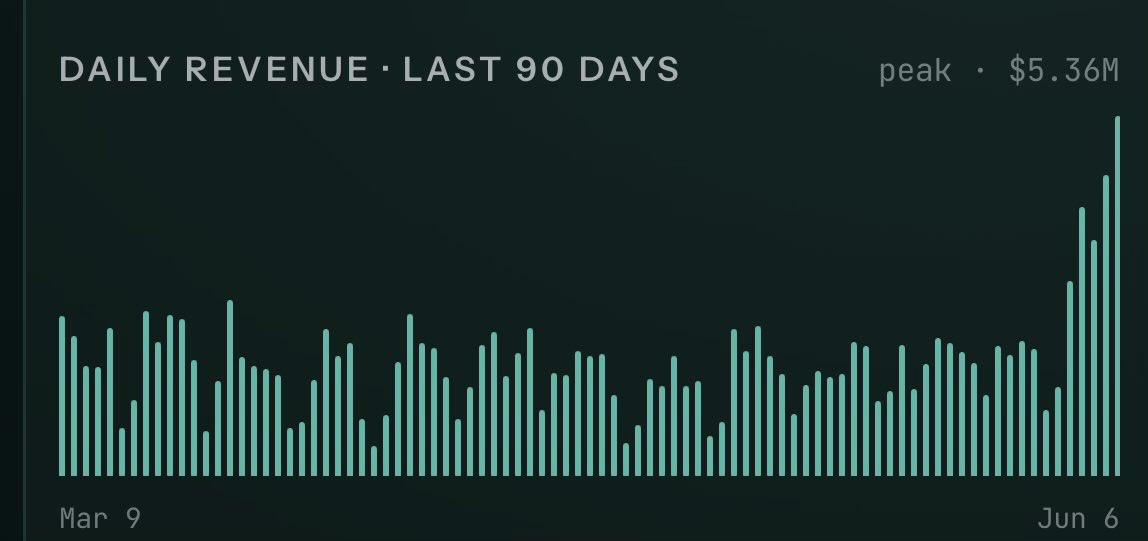
By community request, 15 new dashboards are live on https://t.co/WaFSSsVwBa:
Price-to-Earnings: HYPE valued like a stock, its trailing P/E on one line next to Robinhood, Nasdaq, CME, ICE and Interactive Brokers.
HYPE Holders: how many wallets hold and stake HYPE, how fast that base is growing, and how concentrated the supply is across the top holders.
Daily Active Users: how many people actually trade on Hyperliquid, and how fast that number is growing.
Open-Interest Dominance: HL's share of total perp open interest over time, against Binance, Bybit, OKX, Bitget, HTX, Bitfinex, Kraken and Coinbase.
Builder Codes: cumulative volume curves, head-to-head builder comparisons, a 24h revenue leaderboard, and a searchable directory of every builder code platform.
ETF Buying Pressure: net inflows measured against float, HYPE beside BTC, ETH and SOL.
HIP-4: prediction-market growth by category, and a fee calculator against Polymarket and Kalshi.
Validator Decentralization: stake concentration by operator, and a world map of where the L1's nodes physically run.
Digital Asset Treasuries: unrealized P&L of HYPE treasury companies, now side-by-side in compare mode.
HYPE at the Market Cap of X: the price it implies if HYPE carried any large-cap's size.
Grayscale HYPG: the third HYPE spot ETF, now tracked.
Protocol-Specific Dashboards: dedicated deep-dives for HyperLend, Hyperbeat, Project X, and Liminal.
Light Mode.
And https://t.co/WaFSSsVwBa can now be installed as an app on your phone or desktop.
Hyperliquid.
The cheapest way to cut your AI bill isn't a faster chip, a smaller model, or a clever quantization scheme. It's giving the model a cleaner desk to work from.
Karpathy described his own setup: an Obsidian knowledge base, clean markdown folders, a wiki the model can pull from instead of being handed the same sprawling context over and over. The reported result was a 70 to 90% cut in token burn, replicable in an afternoon, with no new infrastructure at all.
The reason it works is the same memory truth that runs under everything in inference. You pay for every token of context you send, every time you send it. If your context is bloated, redundant, and rebuilt from scratch on every call, you're buying the same thought again and again.
Caching and reusing that state, or just structuring it so the model only sees what it needs, is pure margin.
This is the lever most teams miss. Routing simple work to cheap models, caching aggressively, and controlling context will save more, durably, than waiting for the per-token price to drop another notch.
Price drops are out of your hands but context discipline is entirely in them.
Everyone wants to optimize the model but the money is in optimizing what you feed it.
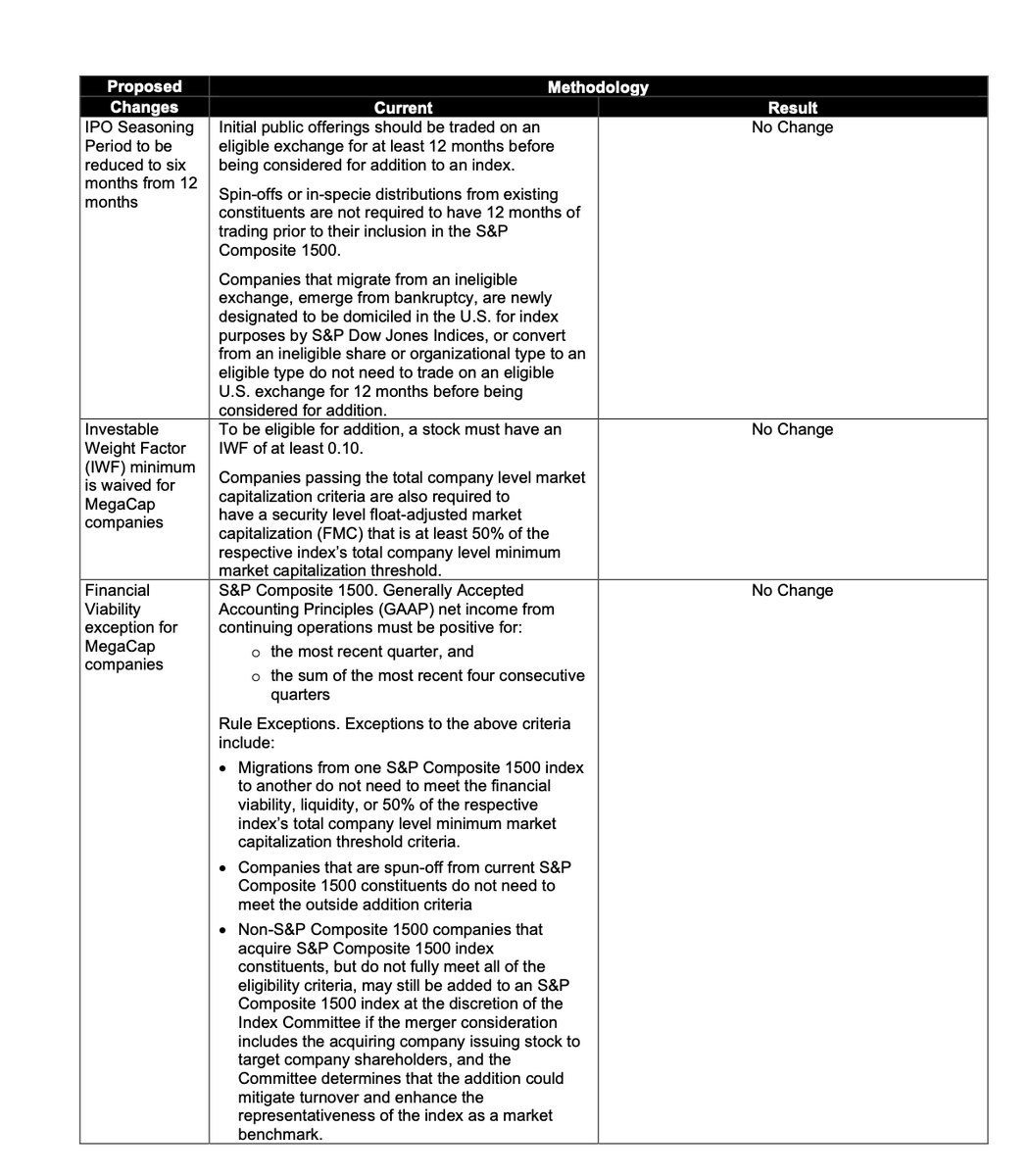
Wow, the S&P Dow Jones Indices has just officially announced that they will NOT be changing their inclusion rules to make it easier for “MegaCap” companies (such as @SpaceX) to be fast-tracked into the S&P 500.
Their reasoning:
"S&P DJI determined that exceptions to the financial viability, seasoning, and IWF requirements should not be granted solely based on market capitalization. The decision not to adopt the proposed exceptions preserves core index principles by maintaining consistent application of these key requirements. Although there may be trade-offs between strict adherence to these eligibility requirements and broad representativeness, the current methodology provides substantial market coverage and sector balance. As a result, the indices can continue to meet their stated objectives while preserving their role as representative and investable benchmarks for the U.S. equity market.
No changes will be made to the eligibility criteria including financial viability screens, seasoning period, or minimum IWF, for the S&P 500, S&P MidCap 400, or S&P SmallCap 600 as a result of the S&P Dow Jones Indices consultation on the treatment of MegaCap companies. Accordingly, there will be no changes to existing methodology for this index family."
This means that the earliest @SpaceX could be eligible to be added to the S&P 500 would now be June 2027.
The requirements that will now remain in place are:
• No changes to S&P 500 eligibility rules for mega-cap companies.
• Mega-cap companies will still need to wait 12 months after their IPO before being considered for S&P 500 inclusion.
• S&P will not waive profitability requirements for mega-cap companies. The company must have positive GAAP net income in the most recent quarter, and the sum of the most recent four consecutive quarters.
• S&P will not waive minimum public float requirements for mega-cap companies. At least 10% of a company's shares must be publicly tradable ("free float").
The S&P rejected proposals that would have:
• Reduced the IPO seasoning period from 12 months to 6 months
• Waived profitability requirements
• Waived minimum public float requirements
so interesting that privacy coins will have this verifiability issue
like yeah what if $ZEC does
- have a huge supply alr minted (can't verify)
- have unknown future exploits where more supply is minted (can't verify)
jokes aside, going to sign off on this note before going to bed:
im one of the bigger crypto believers i know, and these past six months have tested me like no other bear has, mainly for the fact that i don't see any easy way out/reason it'd turn around quickly
people are leaving who wont come back right away, capital continues to choose better opportunities with more certainty, dat overhangs will cast a long shadow
and thats coming from a position of strength, spot/cash - those who believed on leverage or picked the wrong coins are going through worse trials
its going to get worse before it gets better
but it will get better, it always does, theres a finite supply of btc in an infinite money printing world, and some day in the next year after leaving and not paying attn those people will realize btc is 80k again, and if it can survive saylor it can survive anything