This is WILD.
A secret workplace war just broke out in China and it has gone fully viral on GitHub.
Companies started ordering their workers to document all their knowledge as AI "skill files."
Why? to replace those same workers with AI but workers figured out the plan fast so they fired back.
Someone built a tool called colleague.skill, software that scrapes a coworker's chat logs, emails, and work docs from Chinese platforms like Feishu and DingTalk, then clones them into an AI agent.
The idea was savage, digitize your colleague before they digitize you, hand the AI clone to the company, and watch your coworker get laid off while you survive.
A real GitHub project that exploded in popularity in days but then someone else entered the chat and changed everything.
A developer released anti-distill.skill, a tool that takes the skill file your company forces you to write, then strips out every piece of real knowledge before you hand it in.
The output looks perfectly professional, totally complete, impressively detailed but every critical insight has been secretly removed.
Your company gets a hollow shell while you keep the real knowledge locked away in a private backup.
The tool even has three intensity levels, light, medium, and heavy depending on how closely your bosses are watching.
Companies across China have been building AI digital twins of departed employees, feeding their old chat histories and documents into large models to produce clones that keep working after the humans are gone.
One verified case is that an employee left, and their replacement was literally an AI trained on every message they ever sent.
The anti-distill tool went viral on GitHub within hours of being posted, racking up stars faster than almost anything trending that week.
The implications reach far beyond China's borders.
Every knowledge worker on earth now faces a version of this question, when your company asks you to document your process, they may be building the tools to replace you.
Bets I'd put $1M behind right now.
Most people disagree with at least half:
› The specialist era is over. Generalists with taste win from here. Entire generations were raised wrong.
› The loneliest generation in history is about to overcorrect hard. IRL events explode.
› AI slop floods everything. People start paying a premium for proof something is real.
› Reality TV has a massive renaissance. Only content you can't fake with a prompt.
› Creators matter more not less. In an AI world your resume is worthless. The only thing that matters is what you've actually built and whether people trust you.
› 4-person teams start producing what 400-person companies used to. Boring businesses get automated first and fastest.
› Everyone predicting the death of enterprise software doesn't understand moats. Salesforce isn't going anywhere. Neither is Workday.
› Local models catch up to cloud models the same way 5G caught up to broadband. For 95% of what you do you won't be able to tell the difference.
› When that happens the $200/month AI subscription dies. Models run on your device. No data leaves your machine. No subscription. OpenAI's business model has a clock on it.
› Every investor is obsessed with the AI software layer. That's the wrong layer. The money moves to hardware, chips, and energy. Nuclear.
› When labor gets commoditized the only scarce resource left is energy. Be long anything that produces it.
› Peptides go way beyond GLP-1s. Individualized protocols for sleep, recovery, cognition become the new baseline for anyone serious about performance.
› AI-enabled drug discovery doesn't just find new drugs. It finds disease-modifying treatments. The kind that change how long humans live.
› Someone alive today reaches 150. I actually believe that.
› I believe in the Fourth Turning. The world gets scarier before it gets better. Be long defense tech.
› Bitcoin becomes the payment layer for AI agents. Autonomous systems need autonomous money. Crypto finally gets a use case that isn't speculation.
Missing anything?
3 weeks ago I argued the US goal in Iran is to seize the global oil spigot. Venezuela in January -> Iran in February.
Neutralize every supply channel outside the dollar system within 90 days. Achieve a compliant successor government and complete energy dominance.
The oil thesis was the obvious layer. However, when you zoom out & view the last four years as a single sequence rather than isolated geopolitical events, the architecture of the grander US plan becomes visible.
1st was Europe, which laid the groundwork.
The Ukraine conflict provided the justification for sanctions that collapsed Russian pipeline gas from 150 billion cubic meters to 40.
Then Nordstream was destroyed, which rewired the entire European energy system permanently. The US went from supplying 28% of Europe's LNG in 2021 to 58% by 2025, exporting a record 111 million MTs, the 1st country in history to break 100 MT.
Europe was transformed from a customer with options into a captive market now purchasing its survival in USD.
2nd was Syria.
The fall of Assad severed the critical node connecting China's Belt & Road Initiative to the Mediterranean.
The trilateral railway linking Iran, Iraq & Syria, designed to bypass Western maritime chokepoints, was completely destroyed.
This isolated Iran geographically & cleared the path for what came next.
3rd was Venezuela.
In January the US effectively took control of the world's largest heavy crude reserves. The US Gulf Coast has the most advanced refining complex on earth, specifically built for heavy sour crude. Phillips 66, Valero & the rest are now positioned to process hundreds of thousands of barrels of Venezuelan crude daily.
The US captured a massive strategic reserve & solidified its position as the dominant exporter of refined petroleum products, an industry worth $110 billion in 2025 alone.
Venezuela & Iran were the two major oil supply channels that existed outside the dollar system. Both produce heavy crude sold primarily to China & evaded US financial supervision. Both now being neutralized within 90 days, which leads us to..
4th is Iran & the Middle East energy shock.
Israel struck Iran's South Pars gas field, the world's largest natural gas reservoir. Iran retaliated against Qatar's Ras Laffan, the single largest LNG facility on earth, responsible for a fifth of global supply. QatarEnergy's own assessment is that 17% of export capacity is gone and recovery will take up to 5 years. The Strait of Hormuz is closed. European gas prices spiked 70%. Asian spot prices doubled.
The only remaining scaled supplier? The United States.
If Iran falls & a successor government is installed that the US controls or influences (the Delcy model described weeks ago) then roughly 40 to 45 million barrels per day of global production out of 103 million is effectively under US control. OPEC becomes irrelevant because the US coalition is now the marginal producer. Now add the gas dimension & it goes beyond oil.
This war is solidifying the petrodollar system as it evolves into a hybrid petro/LNG-dollar. The old system was built on Saudi crude priced in USD. The new system is built on American crude plus American gas from the Gulf Coast, with no alternative supplier of comparable scale. The dependency is deeper because LNG infrastructure requires long term contracts & regasification terminals that lock buyers into supply relationships for decades. Europe & the Pacific allies (Japan, South Korea, Taiwan, etc.) cannot pivot away as there is nowhere left to pivot to. They're now locked into the US energy system.
The market confirms this. DXY went from 96 to 101. Gold down ~20% from its January all time high. Bitcoin down 20% on the year. Brent above $100. European & Asian institutions are liquidating precious metals and crypto to buy dollars because they need dollars to buy the only remaining scaled energy supply. The world is selling its gold to buy American energy in American currency. The dollar is now being weaponized through energy dependency.
The structural repricing is happening regardless of how the conflict resolves.
But the US grand strategy goes deeper..
Artificial intelligence is a physical industry. It runs on power and chips. Data centers require massive uninterrupted baseload electricity, primarily provided by natural gas. Semiconductor fabrication requires helium & rare earths.
By choking the Strait of Hormuz & crippling Middle Eastern LNG & helium production, the US is systematically degrading China's ability to power its data centers & fabricate semiconductors at scale.
The US is energy self sufficient, especially with newly captured Venezuelan reserves & expanding Gulf Coast capacity running on domestic gas.
On the other hand, China is import dependent & every joule it imports effectively now transits chokepoints the US Navy controls..
Iran was the Belt & Road's overland energy bypass, the corridor that allowed China to mitigate the Malacca Trap. With Iran neutralized that corridor is severed. China faces a world where its compute infrastructure competes for scraps on a depleted global LNG market, while American data centers run at full capacity on domestic energy.
Russia is next in the sequence. A post-war Iran reopening under US influence competes directly with Russia for the same refineries in China & India at lower cost. Iran's production costs are lower. Russia loses its last structural advantage in heavy crude & its economic lifeline. Additionally, under the Iran war cover, Ukraine has been opportunistically destroying Russian energy infrastructure & all signs point towards Russia being at the end of the line. The message from Washington becomes very simple: we dismantled two regimes in three months, your economy is about to get crushed, sign the Ukraine deal.
Then Trump sits down with Xi holding every card. Complete energy dominance. The hybrid petro/LNG-dollar fortified, Iran cleared, Russia cornered, & China facing the Malacca Trap fully closed with no remaining energy bypass.
Israel & the GCC are absorbing the kinetic cost of a conflict whose primary beneficiary, counter to the mainstream narrative, is actually America (First). Qatar offline for 5 years reprices the entire global gas market in favor of US exporters for the remainder of the decade. The Gulf states face years of rebuilding. Europe faces its 2nd energy crisis in four years.
Sure, the average American might face temporary moderate inflation & higher gas prices. But if you are the architect of the US empire & you view the rise of China & Chinese ASI as an existential winner takes all scenario, the collateral damage is acceptable cost.
Whoever controls the energy corridors controls the monetary system. Whoever controls the monetary system & the energy supply simultaneously controls the compute infrastructure that determines which civilization builds ASI first.
The US is seizing all 3.
Brian Armstrong posted this today:
"Very soon there are going to be more AI agents than humans making transactions."
"They can't open a bank account, but they can own a crypto wallet. Think about it."
Here's what he's getting at:
Banks require KYC. Know Your Customer. You provide a name, an ID, a face, a physical address...
AI agents have none of those things.
It's not that banks are hostile to AI agents. It's that banks were architecturally designed around one assumption:
Every economic participant is a human being, or a business backed by humans.
That assumption is now wrong.
Coinbase launched Agentic Wallets in February. A crypto wallet spins up with a private key. No identity check. No address on file. No human required.
An AI agent can be operational and transacting in seconds.
A bank account for the same agent would be impossible.
Brian's point isn't that crypto is better than banking. It's that banking literally cannot serve this market.
Earlier today, CZ made the same prediction:
AI agents will make 1 million times more payments than humans. He pointed to BNB Chain's EIP-3009 upgrade, which lets agents transact without holding gas tokens.
Two of the most prominent CEOs in crypto made the same call on the same day.
Both are pointing at the same gap in the financial system.
The banks built for humans. Crypto built for anyone with a private key.
Soon, most of those private keys will belong to machines.
🚨 Someone just open sourced a full Perplexity AI clone. And it might actually be better.
It's called Perplexica.
A privacy-first AI search engine that runs entirely on your machine. Same cited sources. Same deep research. Zero data leaving your computer.
You're paying Perplexity $20/month. This is free. Forever.
No accounts. No tracking. No ads. No data collection. Just answers.
Here's what this thing does:
→ Searches the entire web using SearxNG (a meta-search engine that hits Google, Bing, DuckDuckGo, and more at once)
→ Reads the top results, understands them, and gives you a cited answer with sources
→ 6 specialized focus modes: Academic papers, YouTube, Reddit, Wolfram Alpha, writing, and general web
→ Upload PDFs, text files, and images. Ask questions about them
→ Search specific domains when you know where to look
→ Image and video search built in
→ Full search history saved locally
→ Works with Ollama (100% local), OpenAI, Claude, Gemini, Groq, or any OpenAI-compatible API
Here's the wildest part:
One command to install. That's it.
docker run -d -p 3000:3000 perplexica
Open your browser. Go to localhost:3000. You now have your own private Perplexity.
It even has a "Discover" feed that surfaces interesting articles throughout the day. Like a private, ad-free Google News powered by AI.
You can set it as your default search engine in Chrome or Firefox. Replace Google entirely.
Every search you've ever made on Perplexity? They have it. Every search on Perplexica? Only you have it.
27.7K GitHub stars. 2.9K forks. 744 commits. 44 contributors. 31 releases. Actively maintained.
100% Open Source. MIT License.
Nvidia just spent $4 billion on a technology 99% of people have never heard of.
But in 3 years, every AI data center on Earth will need it.
And Nvidia just LOCKED UP the supply.
Here's what happened:
Nvidia invested $2 billion in Coherent and $2 billion in Lumentum. You probably never heard of these companies.
They make photonics technology. Systems that transmit data using LIGHT instead of electricity.
Sounds like sci-fi. But this is the most important infrastructure bet in AI right now.
Here's the problem Nvidia just solved for itself:
AI data centers are hitting a wall that has nothing to do with chips, energy, or money...
Copper wiring is dying.
Every data center on Earth moves data between GPUs using copper cables. But at the speeds AI now demands, copper physically cannot keep up.
Signal degrades. Heat explodes. Power consumption skyrockets.
Right now, 30% of the electricity in an AI data center is wasted just MOVING data from point A to point B.
An MIT researcher said: "Copper's not going to cut it. It gets too hot. Too much power consumption and loss."
Jensen Huang admitted it himself too: "We use copper as far as we can, about a meter or two. But where data centers are the size of a stadium, we need something else."
That something else is photonics. Replacing copper with laser-powered fiber optics built directly into the chip.
The numbers are insane:
- 3.5x more power efficient
- 10x better network reliability
- Data moving at 102 terabits per second
Wells Fargo estimates the photonics market will hit $10-12 billion by 2030.
And Nvidia just bought privileged access to the two companies that make the advanced lasers every single one of these systems will need.
This is the Nvidia playbook on repeat.
They did this with CoreWeave. Invested $2 billion, locked up GPU capacity, created a dependent customer.
They did this with memory suppliers. Secured HBM allocations years in advance while competitors scrambled.
Now they're doing it with photonics. Invest early. Lock up supply. Make the entire ecosystem dependent on companies that are dependent on Nvidia.
By the time competitors realize photonics is the bottleneck, Nvidia already OWNS the supply chain.
Every data center, AI factory, and GPU cluster will need this technology to function at scale.
Nvidia will become even more important.
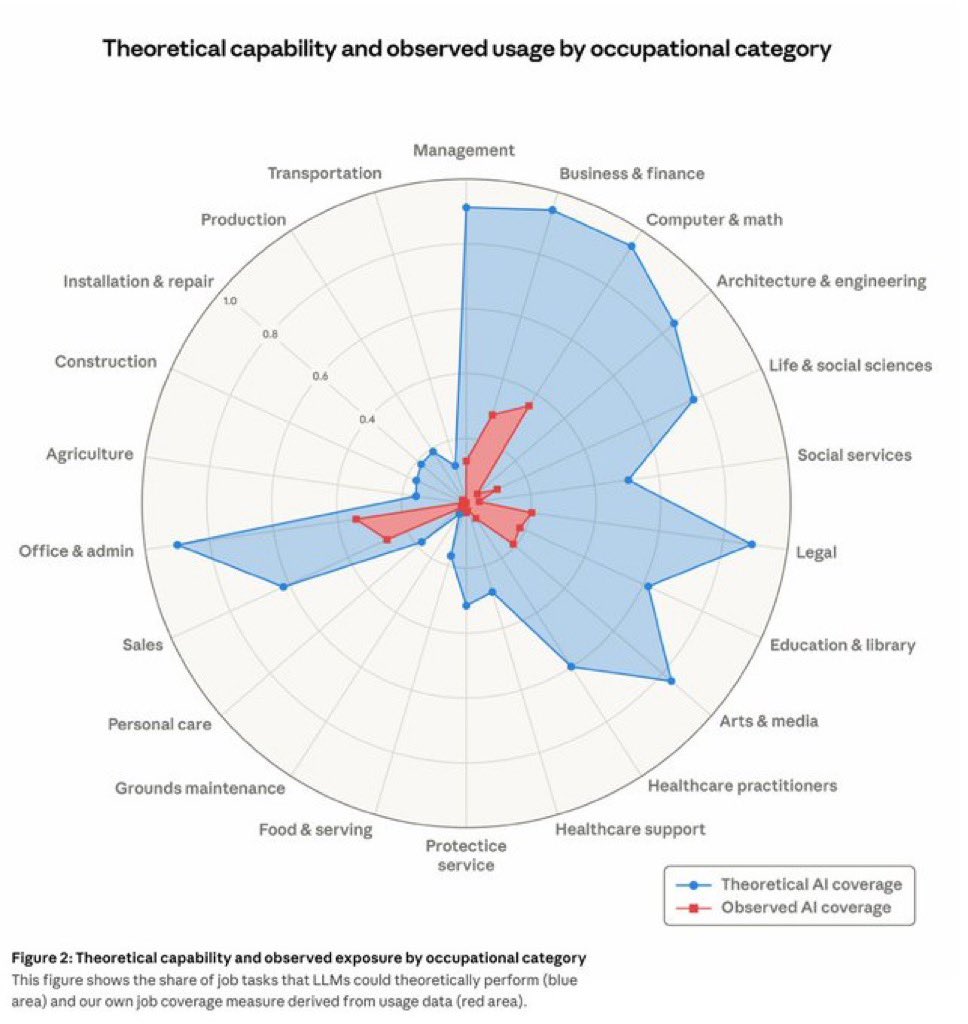
Anthropic just released the most IMPORTANT chart in the AI labor debate.
This comes from the company that builds Claude using data from 2 million real conversations.
Here’s what it shows.
The blue area is every task AI could theoretically do right now.
The red area is what people are actually using it for.
The gap between them is enormous and that gap is your career runway.
Computer programmers are already 75%
covered.
Customer service reps, data entry workers, financial analysts, they’re next.
But here’s what no one is talking about.
The mass layoffs haven’t really started.
Unemployment for exposed workers hasn’t budged.
So what’s actually happening?
Companies are closing the front door, hiring for workers aged 22 to 25 in AI exposed jobs has dropped 14%.
The most exposed workers aren’t factory workers, they’re college educated, higher earning.
49% of US jobs now have at least a quarter of their tasks inside AI’s reach.
That’s up from 36% just one year ago.
And the red area on that chart,
the real world usage is still a fraction of what’s possible.
Every month, it grows a bit.
Anthropic built the scoreboard and most people haven’t looked at it yet.
The richest company on Earth just watched its rivals light $650 billion on fire.
And did nothing.
This might be the most brilliant move in corporate history.
Amazon is spending $200 billion this year on AI data centers.
- Google, $185 billion.
- Microsoft, $114 billion.
- Meta, $135 billion.
- Combined: $650 billion.
Apple's budget is $14 billion down 19% from last year.
Apple is refusing to enter a race that might not have a finish line.
The hyperscalers are now spending 94% of their operating cash flows on AI infrastructure.
After dividends and buybacks, there is almost nothing left.
Amazon is projected to go negative on free cash flow this year as much as $28 billion in the red.
Alphabet's free cash flow is expected to collapse 90%. From $73 billion to $8 billion.
These companies used to be the greatest cash machines ever built.
Now they're borrowing money to keep the lights on.
The Big Five raised $121 billion in bonds in 2025 alone.
Morgan Stanley projects $1.5 trillion in tech debt over the coming years.
For the first time in history, hyperscalers hold more debt than cash and what are they getting for that $650 billion?
AI services generate roughly $35 billion in total revenue and that's 5% of what's being spent on infrastructure.
Now here is where Apple's bet gets genius.
AI models are commoditizing faster than anyone predicted.
DeepSeek built a model for $6 million that matches systems costing $100 million.
Open source models now power 80% of startups seeking VC funding.
The moat these companies are spending hundreds of billions to build is evaporating in real time.
Apple understood this before anyone else.
It didn't build its own AI model, it licensed Google's Gemini for about $1 billion a year.
Why spend $100 billion building a factory when the product costs a billion to rent?
And if a better model appears next year, Apple just switches vendors.
But Apple is not sitting still.
It just dropped the M5 chip with a 16 core Neural Engine and Neural Accelerators built into every GPU core.
It runs 70 billion parameter AI models locally, on your phone.
The M5 delivers 4x the AI performance of the M4 and Apple doesn't need $200 billion in data centers.
Because Apple turned 2 billion devices into the data center.
Every iPhone, Mac, iPad gets distributed AI at a scale no server farm can match.
While its rivals burn cash, Apple is doing the opposite.
$90.7 billion in stock buybacks last fiscal year.
Its competitors? Combined buybacks collapsed 74% from their peak.
Apple didn't miss the AI revolution.
It just bet that the winners won't be the ones who build the infrastructure.
They'll be the ones who own the customer and no one on Earth owns more customers than Apple.
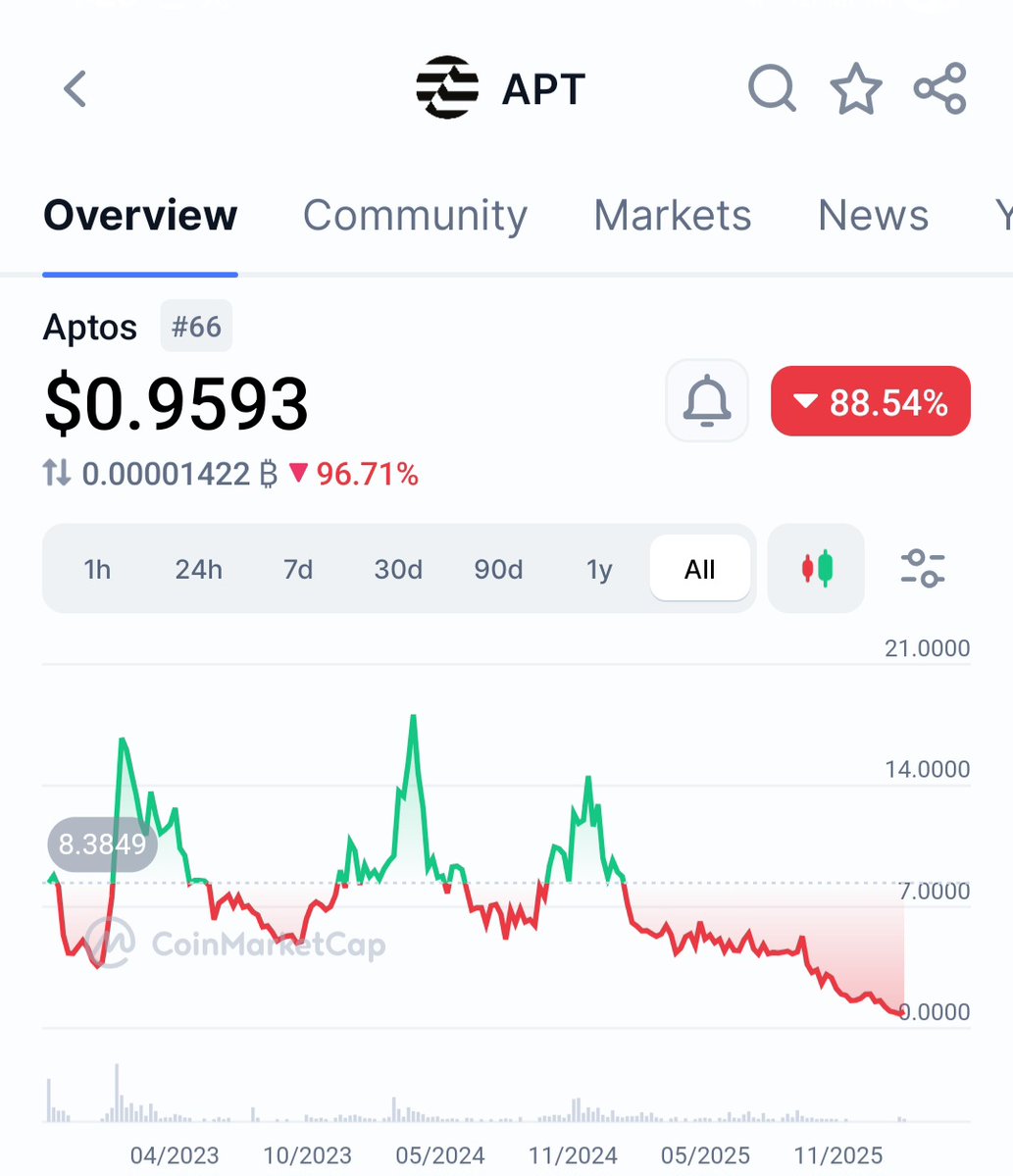
co-founder of a $20 billion blockchain project quit after his tokens vested, said he needed a "mental health break," started a VC fund, then tweeted "i have a nice SUI bag now" while his old token dropped 95%
- be @Moshaikh
- full name mohammad shaikh
- first generation immigrant
- grew up in brooklyn
- dad was a taxi driver
- mom was a housewife
- family was on welfare
- watched his dad make $100 driving a cab but only $60 made it home. the rest went to middlemen
- that moment stuck with him
- went to hunter college. studied psychology economics and accounting
- got an MBA from university of rochester
- started at KPMG as a senior associate
- moved to royal bank of canada as an analyst
- worked at BlackRock in real estate
- joined boston consulting group. worked with sovereign wealth funds
- 2017: joins consensys as an early employee. founds their middle east office
- founds meridio. first company to do fractional real estate on ethereum
- joins meta (facebook) to work on their crypto wallet novi
- works on the diem blockchain (the one mark zuckerberg tried to launch and failed)
- meta kills diem in january 2022
- mo doesn't accept failure
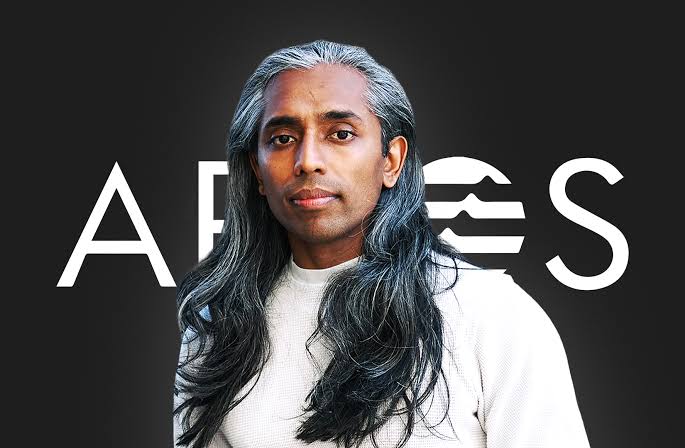
- december 2021: co-founds aptos labs with avery ching using diem's open source tech
- march 2022: raises $200 million from a16z, multicoin, tiger global, FTX ventures, coinbase ventures
- same month: shari glazer sues him for $1 billion
- glazer is from THE glazer family. the ones who own the tampa bay buccaneers and manchester united
- she says mo was her consultant. she paid him $35,000 to find blockchains she could buy
- says they agreed to be 50/50 partners
- says mo secretly went to a16z behind her back after telling her "VCs are the devil"
- mo's lawyers call her story "a work of fiction"
- october 2022: judge denies mo's motion to dismiss. allows breach of contract claims to move forward
- december 2022: case "resolved." glazer walks away
- meanwhile aptos launches october 2022
- token dumps 40% on day one
- people call it a VC coin. tokenomics heavily favor insiders and the foundation
- discord muted on launch day
- july 2022: raises another $150 million from FTX ventures and jump crypto at $2 billion valuation
- yes. FTX ventures. the same FTX that collapsed months later
- total raised: $400 million
- aptos hits $20 billion valuation at peak
- partnerships with google microsoft mastercard blackrock paypal
- mo joins the CFTC digital asset subcommittee in june 2024
- december 19 2024: mo announces he's stepping down as CEO
- says he needs "much-needed time to reflect on where the world is headed"
- APT drops 13% in hours. from $12.66 to $11.02
- his exit timed perfectly with his compensation package vesting
- mid six-figure payout. collected right before leaving
- left at the peak of the bull market. bitcoin was above $100K
- crypto twitter calls it "quitting at the top"
- someone tweets "24 hours into the bear market and the aptos co-founder capitulates his company to take a mental health break"
- october 2025: announces maximum frequency ventures (MF ventures)
- raised $50 million for a crypto VC fund
- when asked why it's called MF he says it's a "nice play on letters" and laughs
- the letters he means: motherf*cker
- already deployed $5 million into 6 startups
- then tweets "i have a nice SUI bag now ;-)"
- SUI is aptos' direct competitor. built by other ex-meta employees using the same diem tech
- APT is now trading around $0.83
- down from all time highs of over $19
- that's a 95%+ drop
- the people who held APT while he built his VC fund and bought SUI got left behind
he grew up watching his dad lose money to middlemen
then became the middleman
built a blockchain that raised $400 million
collected his bag when the tokens vested
left when the market turned
started a fund with the money
and bought the competition's token while his old holders watched their bags go to zero
the "mental health break" ceo
AI agents at @Coinbase now write over 50% of all code and handle 60% of customer support tickets.
@Brian_Armstrong just revealed Coinbase is treating AI agents like actual digital employees.
Complete with their own stablecoin wallets.
These agents can work overnight, spin up AWS resources, buy domain names, launch marketing campaigns…
All without bugging a human for approval.
We're still stuck thinking about AI as assistants that need constant supervision.
The mental model most people have is "AI helps humans do tasks."
That’s no longer the case at Coinbase.
Their model is "AI does tasks, humans set guardrails."
And they’re using crypto to unlock full agent autonomy.
Traditional corporate cards can't be issued to non-human entities - that's a massive infrastructure gap.
Stablecoins solve this.
When an AI agent needs to make a payment at 3am, it doesn't need to wait for Ian in accounting to wake up.
It just sends $USDC.
Machine-to-machine payments, 24/7, no bank hours, no card authorization issues.
(And no "is this a human?" verification loops.)
Brian’s team built x402, the open protocol that lets any agent get a stablecoin wallet and transact on the open internet.
This is all very new, but it's already getting serious traction at Coinbase.
The practical application here is clear:
If you're building anything with AI agents, you need to think about how they'll transact.
Credit cards weren't designed for software entities - stablecoins were.
The companies that figure out agent-to-agent commerce first will have a massive head start.
Iran is being bombed right now. This isn't a thought experiment anymore.
A father in Tehran just watched missiles hit his city. His family needs to flee. He has savings. He has gold. He has a bank account. He can't use any of it.
Missiles hitting Tehran. Ministry of Intelligence. Ministry of Defense. IRGC headquarters. 24 provinces under attack.
Supreme Leader evacuated. Cell networks down. Supermarkets stripped bare. Gas station lines for blocks.
If you're an Iranian with wealth how do you access it right now?
Gold? Walk through a warzone carrying metal. Get it confiscated at the first checkpoint. 5,000-year store of value. Completely useless to you today.
Silver? Even worse. You'd need a truck to carry your life savings.
Fiat? The rial was already collapsing before the bombs. Banks closed. ATMs offline. Cell networks down so digital payments don't work. Capital controls incoming within hours. Your government decides if you can touch YOUR money — and your government is currently being bombed.
Real estate? Can't move it. Might have a crater in it.
Stocks? Custodial assets held by institutions whose command and control infrastructure is on fire.
Bitcoin: 12 words in your head.
No vault. No bank. No custodian. No weight. No checkpoint can detect it. No government can freeze it. No bomb can destroy it.
Walk across any border with your entire net worth stored in memory. Open a laptop in Türkiye, Dubai, Berlin. Enter 12 words. Your wealth is there. Intact.
No other asset in human history has had this property.
The insight most people miss:
Bitcoin is the first asset where the bearer instrument is knowledge itself.
Gold is an atom. A dollar is paper. A deed is a document. All require physical custody or institutional trust.
Bitcoin is information. The first time in 10,000 years of commerce that wealth can exist as pure thought weightless, borderless, indestructible.
Every monetary system requires trust in institutions. What happens when those institutions are being struck by precision munitions?
Bitcoin's institution is mathematics. Distributed across 100+ countries. No building to bomb. No server to destroy. No leader to evacuate.
SHA-256 doesn't care about geopolitics.
Right now an Iranian with Bitcoin can send value to family in Türkiye in 10 minutes.
An Iranian with gold is trapped. An Iranian with rials is watching their purchasing power evaporate with no banking system to access what's left.
Bitcoin wins because it's the only money that works when everything else breaks.
The strongest bull case for Bitcoin isn't on a chart. It's on the news. Right now.
MASSIVE:
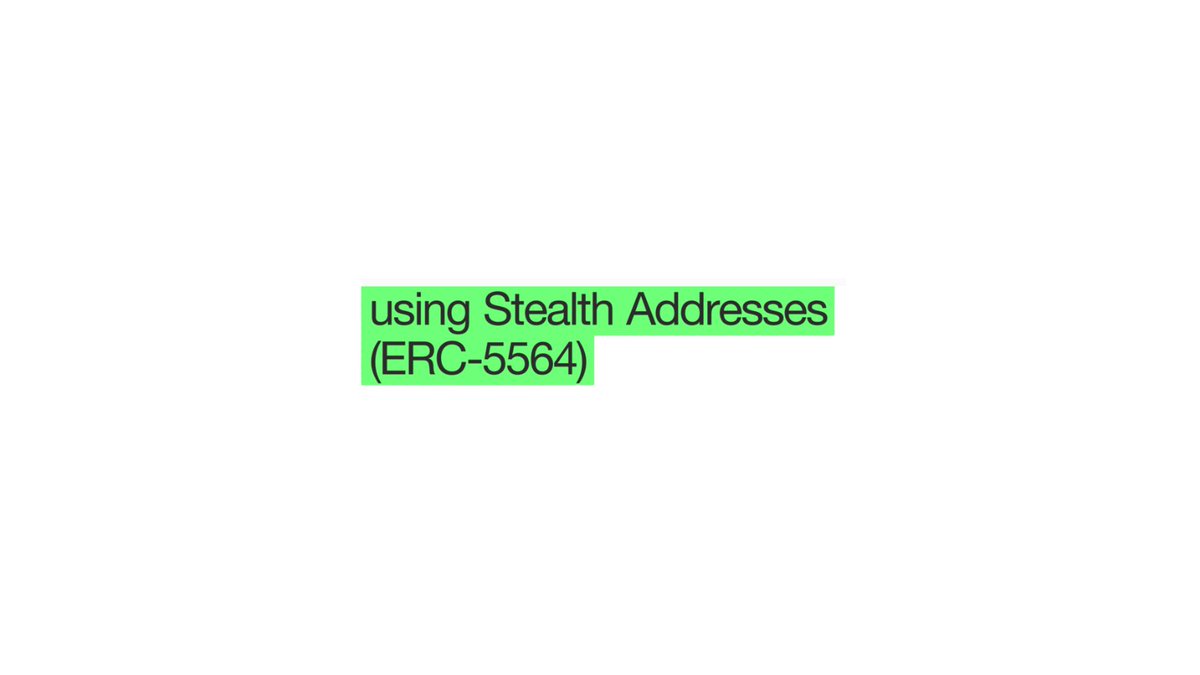
Ethereum is adding a missing piece: privacy at the transaction layer.
ERC-5564 enables stealth payments that obscure sender-receiver links while preserving auditability.
Not privacy coins.
Not obfuscation.
Programmable privacy inside a public system.
That’s infrastructure-level evolution
1/ An investigation into the alleged identity of the mysterious Hyperliquid/Hyperunit whale, who holds over 100,000 BTC. Recently, he sold over $4.23B in BTC to acquire ETH and is the same person behind the $735M BTC short order placed on the same platform.