Quant Fusion mainnet is now open for public access 🚀
Create a Quant Connect account, complete KYC and start using the world's first multi-ledger rollup today.
Hold unified assets like uUSDC across Ethereum, Polygon and Besu, and use ready-built Flow Applications.
Learn more and get started: https://t.co/IJkTTBEH3W
#QuantFusion #Blockchain #Tokenisation
👀 The right question for 2026 is not just “how do we build wallet infrastructure?” It is “how do we connect that infrastructure to a settlement layer that can match it?” 👀
#QNT#settlement
Most of the digital asset conversation has focused on wallets and custody. That work matters.
The harder problem is #settlement: what happens when assets need to move.
Learn why settlement is the critical gap, and what it takes to close it: https://t.co/g2NsJ0Sy1x
#DigitalAssets #Interoperability
Our CEO @gverdian joined Sal Karakaplan, Chief Strategy Officer at @TCHtweets, live at Sibos Miami for the Payments Nerds® podcast.
They discuss The Clearing House's On-Chain Money initiative, a new interoperable network for clearing and settling tokenised deposits between banks, and what Quant is building as its technology partner.
Listen to the full episode: https://t.co/JoIJw1LV7V
#ProgrammableMoney #Payments
🧿💥 $QNT Gilbert Verdian;
"We build and run the financial infrastructure that banks use globally"
'We're what everyone depends upon, right'
Enough said. 🔥
The @USOCC has published its final rules for implementing the #GENIUSAct. It sets out requirements for stablecoin issuers under its supervision, along with rules for custody activities at OCC-supervised banks.
For US banks, this establishes a clear framework for one form of regulated #digitalmoney. Many will now be weighing #stablecoins, #tokeniseddeposits, or both.
Whichever route they take, the same questions follow: how these assets connect to existing systems, how they move between institutions, and how #payments can be programmed and settled synchronously.
That's where Quant steps in; creating corridors for the world's digital money.
Read the full release here: https://t.co/nH6Q1Yzc9q
The rule and the Act will take effect on 18 January 2027. The OCC will confirm separately when it opens applications, and rules on AML and sanctions will follow in a separate rulemaking with the US Treasury.
@alexwg Great thought provoking read AWG!!👏 I’m no polymath so forgive the question: In your axiom does 'known' mean anything more than 'distilled'? If not, a link is known whenever another link forms with it, and nothing anywhere does the knowing. Is that what your axiom says?
👀 With ten to fifteen systems already at pilot stage or beyond, the industry is in a phase of proliferation. The practical next step is connecting regional networks so they can work together. 👀
Quant is enabling infrastructure for the future of finance
#QNT#tokeniseddeposits
Tokenised deposits have moved quickly from concept to execution. A couple of years ago, a single US bank issuing its own #tokeniseddeposit was a talking point.
Today, a growing number of banks are building their own, and the question facing the industry has changed.
In this article, we explore how tokenised deposits differ from #stablecoins, where they are gaining traction, how #settlement models vary across networks, and what banks are learning as they move from pilot to production: https://t.co/PCdx9aG0eD
#DigitalMoney
👀 The only company with proven, production-grade capability to connect blockchain networks and regulated financial institutions at scale 👀
#QuantNetwork#QNT
$QNT READ THIS 2 TRILLION TIMES AND UNDERSTAND THE MAGNITUDE OF THIS!!
💥💥💥
CHIPS (The Clearing House) clears ~$2T+ daily in high-value USD payments among 43 major banks, including JPMorgan, Bank of America, Citi, Wells Fargo, HSBC, Deutsche Bank, Barclays, and BNP Paribas.
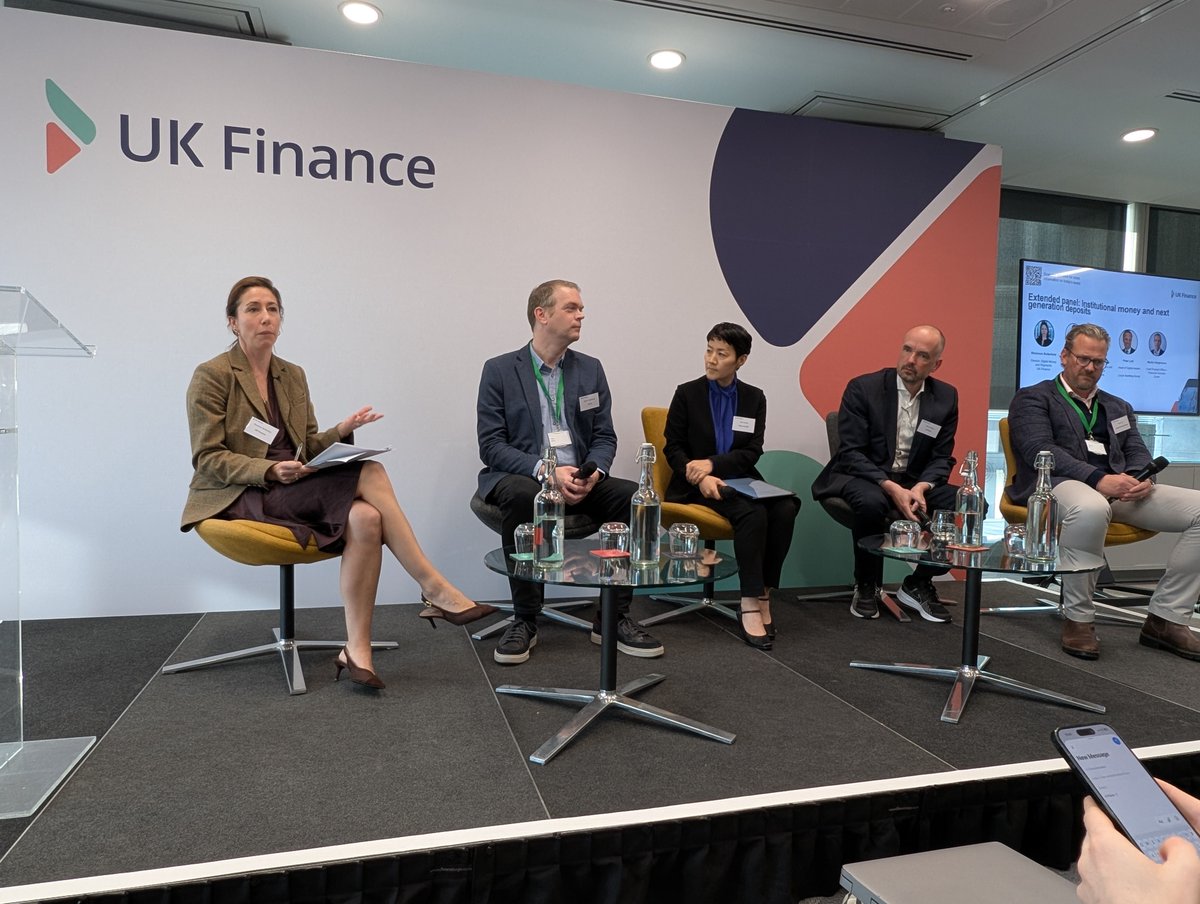
Yesterday at @UKFtweets's Tokenised Markets and Money Conference 2026, our Chief Product Officer, Martin Hargreaves, joined a panel exploring how #tokeniseddeposit initiatives from the UK, Japan, the US and Germany can connect across borders.
“Connecting tokenised deposit networks across borders comes down to standards, rulebooks and overlapping participation to create commercial corridors. It’s a more complex journey than #stablecoins, but tokenised deposits bring advantages stablecoins don’t, so it’s worth the work,” said Martin.
Thanks to @UKFtweets for hosting. Look out for our key takeaways article next week.
#DigitalAssets #ProgrammableMoney
👀 Multiple forms of digital money, DLT environments and domestic industry initiatives exist. Quant is the neutral orchestration layer to reach settlement rails, coordinate both legs simultaneously and enforce synchronised execution logic across different underlying systems 👀
Banks and payment infrastructures have invested in new rails and standards. Yet #settlement still lags behind messaging.
Most #crossborderpayments settle sequentially: leg one, then leg two. In the gap between them, risk, cost, and failed settlement can creep in.
Synchronised settlement closes that gap. Both legs settle together, or neither does.
Live deployments across the UK, Europe, and Latin America show it’s already possible.
https://t.co/H12RIQySKe
👀 #Tokeniseddeposits are moving from single-bank pilots into shared networks and how quickly that happens depends on how well those networks connect. Quant’s infrastructure for the future of finance is what will give them the chance. Built on rails banks already trust. 👀 $QNT
Tokenised deposits have moved quickly from concept to execution. Issuing them inside one bank is now well understood. The harder part is moving them between banks, across borders and onto the settlement rails the financial system already relies on.
In our latest article, our Chief Product Officer, Martin Hargreaves, looks at how #tokeniseddeposits and #stablecoins do different jobs, where use cases are taking hold, from intragroup liquidity to the cash leg of securities transactions, and how funds earmarking could connect regional networks: https://t.co/PCdx9aG0eD
#Programmability #DigitalMoney
👀 Every Transaction Banking head asks the same question: whose fabric is this? The only workable answer is that it belongs to no single institution. 👀
#quantfusion is enabling infrastructure for the future of #tokenisedfinance#QNT
Tokenised finance is fragmenting fast. Every bank, market infrastructure and fintech is building its own chain, and connecting them one bridge at a time gets harder with every network added.
Quant Fusion takes a different approach: one neutral fabric that connects permissioned networks and public chains, without asking anyone to migrate.
🔗 One canonical bridge per network, built and secured by Quant
🏦 Assets keep their origin-chain trust
⚖️ No single institution owns the fabric
Why neutrality is the precondition for core infrastructure: https://t.co/myXRvTHWna
#QuantFusion #FinancialInfrastructure
Tokenised assets are ready to move. If the cash leg doesn’t move with them, the risk stays.
Our recent paper with Murex shows how #programmablesettlement synchronises cash and asset across ledgers, while teams keep working in MX.3.
Read the paper here: https://t.co/We0Jbjm8mC
#Tokenisation
👀 Fusion replaces a web of bilateral connections with a single interoperable layer.
Connect to the fabric to reach everything the fabric reaches: own permissioned networks, public chains with deep liquidity, every other institution connected.
The��‘network of networks.’ 👀
Tokenised finance is fragmenting fast. Every bank, market infrastructure and fintech is building its own chain, and connecting them one bridge at a time gets harder with every network added.
Quant Fusion takes a different approach: one neutral fabric that connects permissioned networks and public chains, without asking anyone to migrate.
🔗 One canonical bridge per network, built and secured by Quant
🏦 Assets keep their origin-chain trust
⚖️ No single institution owns the fabric
Why neutrality is the precondition for core infrastructure: https://t.co/myXRvTHWna
#QuantFusion #FinancialInfrastructure
🌐Things are moving fast w TCH x $QNT
Tomorrow the 2 are discussing the On-Chain Money Initiative via US Faster Payments Council.
This is an industry led consortium with leaders in payments & finance.
Key founding members include:
• JP Morgan
• US Fed
• BNY
• Goldman
• Mastercard
• Walmart
And a short list of other F500 organizations.
The discussion here specifically focuses on how TCH will connect on-chain activity with established legacy payments networks.
And if you've been following along...
You'd already know Overledger will be orchestrating all of that connectivity & more
5 Quant explainers. 1 map. 🗺️
Overledger, Fusion, PayScript, Quant Flow, SATP: I covered each one alone. This video puts them together, layer by layer, plus the 3 places $QNT shows up.
10 min, straight from the docs 🧵👇
Which layer do you know least about?
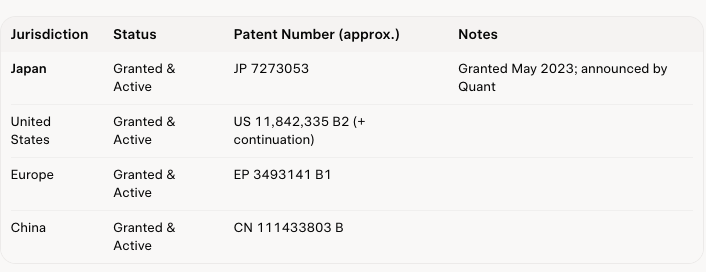
I just found that Quant Network has it Overledger technology patented not only in the US and Europe, but also Japan and China.
Wow. Just wow. 🔥 ethereum:0x4a220e6096b25eadb88358cb44068a3248254675
Links in comments.
Quant Flow is the world’s first product that offers programmable payments to all types of money, including legacy fiat rails🏦
This truly transformative technology unlocks value immediately where 98% of the current payment value lies (fiat rails)🔥
The demand for Quant Flow is extremely high, and there are no competitive products available⛓️
solana:qntUzPUsJ51abNP7VYNxkmsQ4RnvEZAhavUxsCxpxH4
$QNT now has 12 institutional engagements across central banks, market infrastructure and enterprise tech.
The last 30 days alone:
• The Clearing House picked Quant for its tokenized deposit network, targeting a launch in H1 2027.
• UK Finance confirmed live customer transactions on Quant for tokenised sterling.
Earlier in 2026, it was selected for the Bank of England's Synchronisation Lab
(1 of 18 firms) and integrated with Murex MX.3.
Most of the RWA conversation is about which assets get tokenised. Very little of it is about who connects the ledgers.
That's the layer Quant is building.
Yesterday in London, our CEO @gverdian joined @TheFCA, @Tandem_Bank, @awscloud, @OpenPayd and @HLCGlobal at @InnFin’s FinTech as a Force for Good Forum to discuss operational resilience in an always-on digital economy.
3 takeaways:
➡️ Outsource capability, keep accountability
➡️ 24/7 money changes the risk profile
➡️ Build resilience in from day one
As Gilbert put it: “For the first time in probably 30 years, we’re able to design what we need for the next 30. It’s very encouraging to have so many banks and regulators at the table to do this together.”
#OperationalResilience #TokenisedDeposits #DigitalFinance #AI