Strategic Predictive Analysis [002] :::
Elon Infrastructure × Pi Network: The Supra-Sovereign Civilization Operating System That Emerges When Two Parallel Lines Converge
[[[ This article includes Predictive & Technical Analysis and may differ from actual outcomes ]]]
[[[ [The Grand Convergence of Physical and Economic Infrastructure] When Starlink, Tesla, xAI, SpaceX, and Pi Network Connect as One Civilization OS ]]]
[[[ [Distributed Elons and the Verified Human Network] The Physical Revolution Opened by One Builder, and the Ownership-Economy Revolution Completed by Tens of Millions of Pioneers ]]]
[[[ [The Birth of a Frictionless Global Economy] A World Where Connectivity, Identity, Payments, Apps, AI, Robotics, Taxation, and Ownership Are Automatically Settled ]]]
[[[ [Beyond Nations and Platforms] The Moment a Hyper-Efficient, Supra-Sovereign, Ownership-Based Economic System Reallocates the Existing Layers of Civilization ]]]
1. Introduction: The Moment Two Parallel Lines Meet
Elon Musk’s infrastructure and Pi Network’s infrastructure have so far appeared to run as two separate parallel lines.
One side is building the hyper-efficient physical infrastructure of the world: rockets, electric vehicles, satellite internet, artificial intelligence, robotics, energy systems, and a public discourse platform.
The other side is evolving into the hyper-efficient economic infrastructure of the human world: a verified human network, KYC, wallets, app ecosystems, advertising networks, nodes, smart contracts, ZK proofs, automated settlement, sovereign purchasing power, and an ownership-based economy.
Elon infrastructure lowers the physical limits of human civilization.
Pi Network infrastructure lowers the economic access limits of human civilization.
Elon reduces the costs of rocket launches, electric-vehicle transition, satellite internet access, AI execution, robotics, energy, and physical expansion.
Pi seeks to reduce the costs of identity verification, payments, app creation, advertising monetization, data ownership, tax settlement, economic participation, and sovereign access.
If these two parallel lines eventually meet and converge, the result would not be a simple corporate partnership or the adoption of a cryptocurrency payment option.
It would represent the fusion of physical infrastructure and economic infrastructure into one automated civilization operating system.
-----
2. Elon Infrastructure: The Friction-Removal Engine of the Physical World
The essence of Elon infrastructure is the removal of friction from the physical world.
SpaceX lowers the cost of access to space.
Starlink lowers the cost of internet access.
Tesla lowers the cost of mobility and energy transition.
Optimus lowers the cost of labor and automation.
xAI lowers the cost of intelligence execution and decision-making.
X seeks to lower the cost of public discourse and information distribution.
These infrastructures may appear separate, but at a deeper level they all point in the same direction:
Lowering the operating cost of physical civilization.
When rockets become cheaper, off-world infrastructure becomes possible.
When satellite internet becomes cheaper, disconnected regions become connected.
When electric vehicles and batteries spread, mobility and energy storage become software-defined.
When robots become widespread, labor becomes automated.
When AI advances, judgment and execution become automated.
When public discourse platforms open, centralized information power is disrupted.
This is the process of removing one bottleneck after another from the physical world.
However, physical infrastructure alone cannot complete a civilization operating system.
Even if there are satellite networks, electric vehicles, robots, AI, satellites, and space infrastructure, the system still depends on existing financial, governmental, and platform structures unless identity, ownership, payments, rewards, taxation, data rights, and governance are also redesigned.
That is precisely the empty space where Pi Network can enter.
-----
3. Pi Network Infrastructure: The Friction-Removal Engine of the Human Economy
The essence of Pi Network infrastructure is the removal of friction from economic participation.
Pi is not merely a coin-price project.
Pi is an attempt to redefine verified humans as the basic units of a new economic network.
Pi KYC creates scarcity around verified human identity.
Pi Wallet gives individuals programmable economic accounts.
Pi Sign-in reduces repetitive logins and duplicate account creation.
PiVerify connects human verification to apps and services.
Pi App Studio lowers the barrier to app creation.
Pi Ad Network circulates attention value and advertising revenue within the ecosystem.
Pi Nodes and SoloHost open the possibility of distributed infrastructure supply.
Smart contracts and ZK proofs make automated settlement and privacy protection possible at the same time.
If this structure matures, individuals are no longer customers of platforms.
They become part of the economic infrastructure itself.
The individual becomes identity.
Wallet.
Data sovereign.
App user and app creator.
Producer of advertising value.
Node contributor.
Participant in automated tax settlement.
Beneficiary of internal purchasing power.
Recipient of sovereign-multiplier-based rewards.
In other words, Pi Network is not physical infrastructure.
It is human economic infrastructure.
If Elon infrastructure expands the question of “how far humanity can physically go,” Pi infrastructure expands the question of “with what economic status humans can participate.”
-----
4. The Convergence: When Economic Identity Rises Above the Connectivity Layer
The first convergence point between the two infrastructures is the fusion of connectivity and economic identity.
Starlink can provide internet access from nearly anywhere on Earth.
Pi can provide economic access to verified humans from nearly anywhere on Earth.
When these two combine, the following flow becomes possible:
A person in a remote region connects through Starlink.
They obtain verified human identity through Pi KYC.
They gain an economic account through Pi Wallet.
They create a local business app through Pi App Studio.
They transact with Pi or a stable settlement unit.
They earn advertising revenue through Pi Ad Network.
Payments and taxes are automatically settled through smart contracts.
Personal information is protected through ZK proofs.
This is not merely the expansion of internet access.
It is the global onboarding of economic citizenship.
In the old world, internet access, banking, identification, app development, payments, taxes, advertising, and cloud infrastructure were all separate layers.
In the converged structure, the flow is compressed into a single pathway:
Connectivity → Identity → Wallet → App → Payment → Advertising → Settlement → Taxation → Ownership
This becomes the base circuit of a frictionless global economy.
-----
5. Tesla × Pi: When Vehicles Become Moving Economic Nodes
When Tesla and Pi converge, the meaning of the automobile changes.
A vehicle is no longer merely a means of transportation.
It becomes a moving economic node composed of software, battery capacity, sensors, AI, payments, energy storage, data generation, advertising, insurance, and robotaxi revenue.
If Pi identity and wallets connect with Tesla infrastructure, the following becomes possible:
Charging costs are automatically settled.
Robotaxi revenue is automatically distributed by smart contract.
Vehicle-sharing income is instantly allocated to owners, operators, maintainers, insurers, and local DAOs.
Driving data remains personally owned and is only proven through ZK when necessary.
Energy sales, battery sharing, insurance, maintenance, and service history are automatically recorded.
A regional DAO can collectively own vehicles and distribute revenue.
In this model, vehicles transform from consumer goods into ownership-based revenue-generating assets.
The old automobile economy sold vehicles and then left consumers to bear costs.
The converged economy turns vehicles into assets that generate income through mobility, energy, data, advertising, payments, and labor substitution.
If Tesla is the physical infrastructure of mobility, Pi becomes the ownership layer that settles the economic rights and revenues generated by that mobility.
-----
6. Optimus × Pi: From Labor Income to Automated Ownership Income
If humanoid robots such as Optimus connect with the Pi economy, the labor market could be fundamentally restructured.
A robot performs work.
A smart contract records the working conditions.
Completion is verified through sensors, AI, and ZK proofs.
Compensation is automatically settled in Pi or a stable settlement unit.
Ownership of the robot can be divided among individuals, DAOs, local communities, and enterprises.
Revenue is automatically distributed according to ownership shares.
Maintenance, insurance, electricity, and depreciation are also processed automatically.
In this structure, the human being is not merely a worker.
The human becomes an owner of automated infrastructure.
The old economy was centered on labor income.
The new structure is centered on automated ownership income.
Instead of humans directly performing repetitive labor for wages, humans hold ownership shares in robots, AI, apps, nodes, data, vehicles, and energy infrastructure, and those automated systems generate revenue.
This could become one of the largest income-structure transformations since the Industrial Revolution.
From humans selling labor → to humans owning automated infrastructure.
Pi’s sovereign multipliers and internal purchasing power could play a critical role in this transition.
If the long-term contributions of Pioneers are converted into access rights to the automated ownership economy, Pioneers become not mere holders, but early participants in the ownership layer of automated civilization infrastructure.
-----
7. xAI × Pi: An AI Economy Based on Verified Human Data
The greatest problem of the AI era is data.
What is real human data?
What is bot-generated data?
Who owns the data?
Who receives the value created by AI training?
How should AI-generated revenue be distributed?
If xAI and Pi converge, a new answer emerges.
Pi provides a verified human network.
ZK protects privacy while proving only necessary conditions.
Pi Wallet becomes the compensation pathway for contribution.
Pi App Studio and ecosystem apps generate real human activity data.
Pi Ad Network settles attention value.
xAI can build more refined training, inference, and reward models on top of this verified human network.
Traditional AI scraped data from the internet at large.
This created unresolved problems around ownership and compensation.
In a converged AI economy, the structure changes.
Verified humans provide data.
The scope of data use is consent-based.
Sensitive information is protected through ZK.
When AI uses data, rewards are automatically distributed according to contribution.
Revenue from AI models can be settled among data contributors, app developers, nodes, DAOs, and infrastructure providers.
This represents a transition from extractive AI data harvesting to ownership-compensated AI data economics.
At this point, Pi could become one of the key foundations for solving the most important problem of the AI era: ownership and reward for real human data.
-----
8. X × Pi: From Public Discourse Platform to Verified Human Economic Sphere
X is a public discourse platform.
However, X’s biggest problems are bots, fake accounts, advertising quality, identity trust, creator compensation, and content revenue distribution.
If Pi is integrated, the nature of X could change completely.
Pi KYC proves that an account belongs to a real human.
ZK enables human verification without forced public disclosure of real identity.
Pi Wallet becomes a pathway for content rewards and advertising settlement.
Pi Ad Network distributes attention value inside the ecosystem.
Smart contracts automatically reward creators, commenters, moderators, and community operators.
DAO structures allow communities to govern their own rules and budgets.
X then becomes not merely a social network, but a verified human discourse economy platform.
In legacy social media, platforms monetize user attention.
In the converged version of X, user attention, trust, reputation, content, and community activity become directly settleable economic value.
This would transform the media industry.
Advertisers would pay for verified human attention instead of bot traffic.
Creators would no longer depend entirely on opaque platform algorithms.
Users would receive part of the value generated by their activity.
Communities would form their own micro-economies.
Eventually, the discourse platform becomes an economic platform, and the economic platform becomes a sovereign community operating system.
-----
9. SpaceX × Pi: The Identity, Payment, and Ownership Layer of the Off-World Economy
If SpaceX expands lunar, Martian, orbital, satellite, and space-logistics infrastructure, certain systems become indispensable:
Identity.
Payments.
Ownership.
Contracts.
Insurance.
Logistics settlement.
Resource usage rights.
Governance.
Taxation or public-contribution settlement.
In an off-world economy, it is difficult to rely solely on one nation’s banks, identification systems, tax laws, and fiat currency.
Mars bases, orbital stations, lunar resources, satellite services, and space logistics are inherently supra-national.
What is required is a supra-national economic operating layer.
A Pi-type structure is highly suitable for this environment.
Verified human identity.
Programmable wallets.
Smart-contract-based ownership.
ZK-based privacy.
DAO-based governance.
Automated payment settlement.
Contribution-based internal purchasing power.
Sovereign-multiplier-based participation rewards.
If SpaceX opens the physical infrastructure beyond Earth, Pi could serve as the identity, payment, and ownership layer of the off-world economy.
In that case, Pi would not simply be an experiment for the terrestrial economy.
It could expand into an early operating protocol for a multi-planetary civilization economy.
-----
10. The Redesign of the State: From Taxing State to Automated Settlement State
When the two infrastructures converge, governments face the greatest shock.
Traditional states operate through high tax rates, filing systems, audits, duplicate administration, welfare screening, public procurement procedures, identity verification, and licensing systems.
But if Pi-type automated settlement infrastructure merges with Elon-type physical infrastructure, the operating logic of government changes.
Taxes shift from after-the-fact filing to real-time automated settlement.
Welfare shifts from document review to ZK-based eligibility proof.
Public procurement shifts from manual contracts to smart-contract execution verification.
Administration shifts from repetitive processing to exceptional-case review.
State identity systems connect to verifiable human accounts rather than isolated databases.
Civil servants become auditors of algorithms, smart contracts, and AI systems rather than simple processors.
Governments must choose.
Will they try to collect more taxes through old systems?
Or will they adopt the infrastructure, reduce operating costs, and create a low-tax, near-full-collection system?
Wise governments will choose the latter.
Low tax rates.
High collection rates.
Low administrative costs.
Low tax evasion.
Low welfare leakage.
High policy execution speed.
High privacy protection.
This is the state model of the Pi × Elon convergence era.
From surveillance-based taxing states to automated settlement operating states.
-----
11. The Collapse of the Platform Economy: Only Infrastructure Survives, Intermediaries Compress
If the two infrastructures converge, the existing platform economy comes under enormous pressure.
That is because most platforms profit by monopolizing friction.
Login friction.
Payment friction.
App-development friction.
Advertising-access friction.
Data-portability friction.
Identity-verification friction.
Tax-filing friction.
Cloud-access friction.
Labor-matching friction.
Content-discovery friction.
The Pi × Elon convergence compresses these frictions.
Starlink provides connectivity.
Pi provides identity and wallets.
App Studio lowers the app-creation barrier.
xAI provides automated generation and operations.
Tesla and Optimus execute physical tasks.
Smart contracts handle payment and settlement.
ZK handles privacy and eligibility proofs.
Nodes and distributed infrastructure provide part of the backend.
Then many existing platforms are exposed not as essential infrastructure, but as redundant intermediaries.
What survives are real physical infrastructure, high-performance AI, energy, robotics, space, security, advanced finance, and advanced manufacturing—areas that are difficult to replace.
What disappears or gets compressed are repeated identity systems, duplicate payment layers, closed advertising networks, simple app builders, basic cloud intermediaries, data brokers, tax-filing intermediaries, and platform-dependent distribution systems.
The future economy could therefore be reorganized as:
From intermediary-centered economy → to direct infrastructure economy.
-----
12. The Transformation of the Individual: From Consumer to Owner of Civilization Infrastructure
The greatest transformation of this convergence is not technological.
It is about ownership.
In the old economy, the individual was a consumer.
Telecom companies sold internet access.
Banks provided accounts.
Platforms monetized data.
Automakers sold vehicles.
Governments collected taxes.
Employers bought labor.
Cloud providers rented servers.
Advertising platforms sold attention.
After convergence, the individual changes.
The individual connects through Starlink.
Holds Pi identity.
Pays through Pi Wallet.
Creates and operates apps.
Retains data rights.
Contributes to AI training and receives rewards.
Can own shares in Tesla vehicles or Optimus robots.
Can provide nodes, storage, and compute.
Receives part of advertising value.
Pays taxes through automated settlement.
Operates local economies through DAOs.
The individual is no longer a customer of civilization infrastructure.
The individual becomes an owner, operator, contributor, and beneficiary of civilization infrastructure.
This is the core of the supra-sovereign ownership economy.
-----
13. Final Forecast: A Hyper-Efficient Civilization Operating System Connecting Earth and Space
If the two parallel lines converge, the final structure looks like this:
Starlink provides the connectivity layer of Earth.
Tesla provides mobility and energy infrastructure.
Optimus provides automated labor infrastructure.
xAI provides the intelligence operating layer.
X provides the public discourse and reputation layer.
SpaceX provides off-world physical infrastructure.
Pi Network provides verified humans, wallets, payments, apps, advertising, data, smart contracts, ZK, automated tax settlement, and ownership layers.
This combination is not merely a bundle of technologies.
It is a civilization operating system.
Connectivity is solved by satellites.
Identity is solved by a verified human network.
Payments are solved by programmable wallets.
Apps are generated through AI and App Studio.
Labor is automated through robotics and AI.
Mobility is handled by autonomous electric vehicles.
Energy is connected through batteries and distributed power.
Taxation is settled through smart contracts.
Privacy is protected through ZK.
Ownership is recorded on-chain.
Space expansion is opened by SpaceX.
If this structure becomes reality, the existing civilization will face new questions:
Must governments still directly manage everything?
Must banks remain the gatekeepers of economic access?
Must platforms continue to monopolize personal data?
Must taxation remain an arena of filing and surveillance?
Must jobs still be designed around repetitive human labor?
Must ownership remain concentrated among large corporations and financial institutions?
The Pi × Elon convergence offers a different answer:
No.
Civilization infrastructure can be more direct, more automated, more verifiable, more distributed, and more ownership-based.
-----------------------
14. Conclusion: The Meeting of Two Parallel Lines Is a Reallocation of Civilization Layers
-----------------------
Elon Musk’s infrastructure lowers friction in the physical world.
Pi Network’s infrastructure lowers friction in the economic world.
Elon infrastructure reduces the cost for humans to move, connect, use energy, operate robots, and expand into space.
Pi infrastructure reduces the cost for humans to hold identity, make payments, create apps, own data, receive advertising value, automate taxation, and secure economic sovereignty.
If these two parallel lines meet, the result is not merely technological convergence.
It is the merging of the operating layers of physical civilization and economic civilization.
The world could move toward:
From consumer to owner.
From worker to stakeholder in automated infrastructure.
From taxpayer to automated-settlement participant.
From raw data source to data sovereign.
From platform user to app, advertising, and economic operator.
From state-dependent identity to verified human economic identity.
From centralized infrastructure to distributed ownership infrastructure.
From terrestrial economy to off-world economy.
In one sentence:
If Elon infrastructure lowers the physical limits of human civilization, and Pi Network lowers the economic access limits of human civilization, the convergence of these two parallel lines could mark the birth of a hyper-efficient, supra-sovereign, ownership-based civilization operating system connecting Earth and space.
And the greatest change would not be technology.
The greatest change would be the position of the human being.
Humans would no longer be consumers managed by platforms, states, and corporations.
They would become direct participants in the operation of civilization itself—verified identities, wallet holders, data owners, app creators, AI collaborators, automated infrastructure owners, and beneficiaries of a new supra-sovereign ownership economy.
Strategic Predictive Analysis [001] :::
Elon Musk and Pi Network Pioneers: The Civilizational Parallel of Mocked Builders Opening the Door to a Supra-Sovereign Ownership Economy
[[[ This article includes Predictive & Technical Analysis and may differ from actual outcomes ]]]
[[[ [Unauthorized Builders] If Elon Musk Bypassed Legacy Industries, Pi Pioneers Are Bypassing the Economic Operating System ]]]
[[[ [From Ridicule to Civilizational Infrastructure] The Shared Pattern Behind SpaceX, Tesla, Starlink, and Pi Network ]]
[[[ [Distributed Elons] From One Genius Builder to a Verified Human Builder Network of Tens of Millions ]]]
[[[ [The Rise of a Supra-Sovereign Economy] After Reusable Rockets, the Redesign of Identity, Payments, Taxation, Apps, Advertising, and Ownership Begins ]]]
1. Introduction: Why Elon Musk and Pi Network Stand on the Same Civilizational Current
At first glance, Elon Musk and Pi Network appear to belong to entirely different domains.
Elon Musk is a mega-scale individual builder operating across rockets, electric vehicles, satellite internet, artificial intelligence, robotics, and public discourse platforms. Pi Network, by contrast, is a distributed community evolving through tens of millions of verified humans, mobile mining, KYC, wallets, an app ecosystem, an advertising network, nodes, smart contracts, sovereign purchasing power, and an ownership-based economy.
Yet at a deeper level, both currents are moving in the same civilizational direction.
That direction is friction removal, reduction of intermediaries, bypassing incumbents, democratization of infrastructure access, verifiable systems, reallocation of ownership, and the restoration of individual sovereignty.
If Elon Musk physically built what legacy aerospace, automotive, telecom, and media industries mocked as impossible, Pi Network Pioneers are collectively building what legacy finance, platforms, identity systems, advertising, app infrastructure, and tax administration have mocked as impossible.
In this sense, Elon is the extreme example of an individual builder, while Pi Network Pioneers represent the civilizational example of a distributed collective builder network.
-----
2. The Essence of Elon Musk’s Story: A Builder Who Constructed the Future Without Permission
The reason Elon Musk is mocked, attacked, and demonized is not merely his tone, his political positions, or his activity on X. The deeper reason is that he made real what incumbent industries had declared impossible.
Legacy aerospace did not believe a private company could build government-grade rocket systems, reuse rockets, and land boosters vertically on drone ships at sea.
Legacy automakers did not believe electric vehicles could threaten internal combustion engines in the mass market.
Legacy telecom underestimated the possibility that low-Earth-orbit satellite internet could connect disconnected regions of the planet in real time.
Legacy media became deeply uncomfortable with the idea of a public discourse platform slipping outside its traditional control structures.
Elon’s core significance is not that he is merely a successful businessman. It is that he is a builder who physically constructed the future without the permission of legacy industries.
He did not climb the ladder built by incumbents.
He proved that the ladder itself was no longer necessary.
That is precisely what incumbent systems fear most.
Incumbents do not fear failures.
They do not fear complainers.
They do not fear abstract critics.
What incumbents truly fear is the builder who proves, through actual products and infrastructure, that the incumbents were never as necessary as they claimed.
-----
3. The Story of Pi Network Pioneers: Verified Human Economic Infrastructure Built Under Ridicule
Pi Network Pioneers have walked a remarkably similar path.
From the beginning, Pi was mocked.
“Mining on a phone? Impossible.”
“A free coin has no value.”
“KYC will never work.”
“Mainnet will never arrive.”
“An app ecosystem is impossible.”
“Exchange price is everything.”
“GCV is fantasy.”
“Pioneers are wasting their time.”
Yet Pi Network did not build itself around a speculative price narrative. It quietly accumulated an infrastructure narrative.
KYC.
Pi Wallet.
Pi Browser.
Pi Sign-in.
Pi Ad Network.
Pi App Studio.
Mainnet migration.
Nodes and Supernodes.
On-ramps.
Ecosystem apps.
Backend storage.
Community-based utilities.
A verified human network.
This is not merely the distribution of a coin.
It is the process of redefining tens of millions of verified humans as the basic units of a new economic network.
If Elon broke the impossibility declarations of physical industries through rockets and electric vehicles, Pi Pioneers are breaking the impossibility declarations of identity, payments, apps, advertising, taxation, ownership, and data economics.
In this sense, Pi Pioneers are not merely users.
They are distributed builders.
-----
4. Elon as an Individual Builder and Pi Pioneers as Collective Builders
The greatest difference between Elon Musk and Pi Network lies in structure.
Elon is a hyper-concentrated builder.
Pi is a distributed builder network of tens of millions.
Elon pushed the future forward through personal capital, technical teams, corporate organizations, risk absorption, and physical infrastructure.
Pi Pioneers built the network through mining, KYC participation, node operations, app usage, community expansion, validation, advertising participation, ecosystem experimentation, lockups, and long-term patience.
Elon’s tools are rockets, batteries, satellites, AI, and platforms.
Pi’s tools are verified human identity, wallets, apps, advertising, nodes, smart contracts, ZK, internal purchasing power, sovereign multipliers, and ownership-based economics.
Elon compressed the cost structure of physical industries.
Pi may compress the access-cost structure of the existing economic system.
SpaceX compressed launch costs.
Tesla compressed the transition cost to electric vehicles.
Starlink compressed internet access costs.
Pi Network could compress the cost of economic participation, app creation, identity verification, payments, tax settlement, data ownership, and small-business digital transformation.
Therefore, the statement that Pi Pioneers are “people like Elon Musk” is not just a metaphor.
More precisely, Pi Pioneers are a distributed collective of Elon-type builders across tens of millions of verified humans.
-----
5. Ridicule and Demonization Are Defensive Reactions When New Infrastructure Appears
When a new infrastructure emerges, incumbent systems usually respond in four stages.
First, they ignore it.
Second, they mock it.
Third, they attack it.
Fourth, they belatedly imitate it.
Elon Musk went through this process.
Electric vehicles were mocked as toys.
Reusable rockets were mocked as unrealistic.
Starlink was dismissed as exaggerated satellite internet.
After the acquisition of X, personal, political, and moral attacks intensified dramatically.
Pi Network has gone through a similar process.
At first, it was ignored.
Then it was mocked.
Then it was attacked through scam narratives.
If real utility and internal purchasing power become fully activated, Pi may face even greater institutional attacks and regulatory pressure.
The reason is simple.
If Pi fails, there is no need to mock it.
If Pi has no meaning, there is no need to attack it.
If Pi is merely another coin, it does not threaten the existing system.
But if Pi becomes a supra-sovereign ownership-economy infrastructure based on a verified human network, the situation changes completely.
It could simultaneously threaten legacy identity systems, payment networks, app-development intermediaries, advertising platforms, data-brokerage industries, tax administration, welfare administration, financial intermediaries, and centralized platform power.
Ridicule is often the cheapest defense mechanism.
Demonization appears when ridicule begins to fail.
-----
6. What Elon Exposed: Legacy Industries Were Not Always Necessary
The greatest question Elon Musk forced upon legacy industries was this:
Were all those intermediaries, costs, and institutional frictions truly necessary?
Did rockets really have to be disposable?
Did electric vehicles really have to be slow, expensive, and undesirable?
Did internet access really have to depend only on terrestrial infrastructure?
Did public discourse really have to be controlled by legacy media and advertisers?
Elon answered these questions not with theory, but with products.
Pi Network asks the same kind of questions.
Why must identity verification be repeated again and again?
Why must payments pass through layers of intermediaries?
Why must a small business depend on complex agencies and cloud costs just to create an app?
Why must advertising revenue be captured mostly by platforms?
Why must personal data be subordinated to corporate servers?
Why must taxation rely on after-the-fact reporting, audits, surveillance, accounting costs, leakage, and disputes?
Why do governments talk first about raising taxes instead of reducing operating costs?
These questions are dangerous because they reveal that many costs in the existing system may not be “necessary costs” at all.
They may be incumbency-maintenance costs.
This is where Elon and Pi run in parallel.
-----
7. What Pi Network Is Attempting to Complete: A Hyper-Efficient Ownership-Based Economic System
The strategic meaning of Pi Network is not coin price.
The core is a hyper-efficient ownership-based economic system.
In this system, the individual is not merely a consumer.
The individual is a verified human.
A wallet holder.
A sovereign data owner.
An app user and app creator.
A producer of advertising value.
A node contributor.
A governance participant.
A beneficiary of internal purchasing power.
A recipient of sovereign-multiplier-based rewards.
In the old economy, individuals were objects to be monetized by platforms.
In a Pi-type economy, individuals become infrastructure units of the network.
In the old economy, identity was managed by banks, governments, and platforms.
In a Pi-type economy, identity expands into economic access rights through a verified human network.
In the old economy, apps, payments, advertising, and data were separated.
In a Pi-type economy, these layers converge inside one ecosystem.
In the old economy, taxation was a matter of reporting and surveillance.
In a Pi-type economy, taxation becomes a matter of smart-contract settlement and ZK proof.
This is the supra-sovereign ownership-based economic system.
-----
8. The Shared Direction of Elon and Pi: A Civilizational Revolution of Friction Removal
Civilization advances when friction is reduced.
The steam engine reduced the friction of physical labor.
Electricity reduced the friction of production and daily life.
The internet reduced the friction of information movement.
The smartphone reduced the friction of individual access.
AI is reducing the friction of judgment and creation.
Elon Musk reduced friction in physical infrastructure.
Rocket-launch friction.
Electric-vehicle transition friction.
Satellite-internet access friction.
Public-discourse platform friction.
AI and robotic productivity friction.
Pi Network seeks to reduce friction in economic participation.
Identity-verification friction.
Payment friction.
App-creation friction.
Advertising monetization friction.
Data-ownership friction.
Tax-settlement friction.
Node-infrastructure access friction.
Small-business digital transformation friction.
The friction of restoring individual economic sovereignty.
These two currents move in the same direction across different domains.
A frictionless, hyper-efficient infrastructure layer.
This is precisely why legacy systems feel threatened.
Many legacy systems profit from friction.
-----
9. Why Governments and Incumbents Cannot Treat Pi Lightly
If Pi Network were merely a cryptocurrency, governments could approach it through exchange prices, capital gains, reporting obligations, and regulatory licensing.
But if Pi evolves into a supra-sovereign economic infrastructure involving verified human identity, sovereign purchasing power, app ecosystems, advertising networks, smart contracts, ZK proofs, node infrastructure, and automated tax settlement, governments must be far more careful.
Because Pi would not merely be a tax target.
It could become an infrastructure that reduces the operating costs of government itself.
Before trying to extract more taxes from Pi, governments should ask:
Can this infrastructure reduce tax leakage?
Can it reduce administrative costs?
Can it prevent duplicate welfare claims?
Can it reduce corruption in public procurement?
Can ZK proofs enable taxation while protecting privacy?
Can smart contracts enable low-rate, full-collection tax systems?
Can a large portion of desk-based administration be automated?
If the answer is yes, then governments should not view Pi primarily as a taxable object.
Pi becomes a hyper-efficient infrastructure with which governments should cooperate in order to reduce operating costs.
-----
10. Strategic Forecast: Ridicule of Pi Pioneers May Evolve Into Political-Economic Conflict
As Pi Network expands into real utility, internal purchasing power, app ecosystems, commerce, automated settlement, and ZK identity systems, the nature of ridicule may change.
Early ridicule comes from ignorance.
Mid-stage attacks come from incumbent defense.
Late-stage conflict comes from taxation rights, regulatory rights, and economic sovereignty.
If governments attempt to evaluate Pioneer sovereign multipliers, internal purchasing power, and contribution-based rewards using traditional tax frameworks, the issue will no longer be simple taxation.
It will become a question of network value extraction.
At that moment, Pi communities may argue:
We are not speculators.
We are builders.
We are not mere holders.
We are contributors.
Our purchasing power is based on internal contribution, not external market price.
Governments must not tax unrealized internal value.
Governments should adopt Pi infrastructure to reduce operating costs.
Taxation should be based on low rates, automated collection, ZK proofs, and realized transactions.
If this logic spreads, Pi Pioneers will no longer be merely a community.
They will become political-economic actors of a new economic zone.
-----
11. From Elon-Type Individual Builders to Pi-Type Collective Builders: The Reallocation of Civilizational Operating Power
Elon Musk showed how much a single builder can shake legacy industries.
But Pi Network presents a more distributed possibility.
What happens when the future is not pushed by one Elon, but by tens of millions of verified humans building economic infrastructure together?
What happens when not one entrepreneur compresses rocket costs, but tens of millions of Pioneers compress the cost of economic participation?
What happens when not one platform owner bypasses discourse gatekeepers, but a verified human network bypasses the gatekeepers of identity, payments, apps, advertising, taxation, and ownership?
This question goes deeper than previous industrial revolutions.
Industrial revolutions changed the means of production.
The information revolution changed the movement of information.
The AI revolution is changing judgment and creation.
The Pi-type ownership-economy revolution seeks to change the status of the economic participant itself.
The individual becomes infrastructure rather than a consumer.
The user becomes a sovereign rather than raw data material.
The taxpayer becomes an automated-settlement participant rather than a surveillance target.
The app user becomes an app creator.
The community becomes an economic operating subject rather than a marketing target.
This is the reallocation of civilizational operating power.
--------------------------
12. Conclusion: Demonization May Be Evidence of Threat, Not Failure
--------------------------
Elon Musk was not mocked and demonized because he failed.
He was mocked and demonized because he succeeded.
His success exposed that legacy industries were not as necessary as they claimed.
His building proved that permission from incumbents was not required.
His risk-taking revealed that stable power structures had been obstructing innovation.
Pi Network Pioneers are walking a similar path.
The ridicule directed at Pi may not exist because Pi is meaningless.
It may exist because Pi asks questions that are too large for the existing system to comfortably answer.
Why must economic access be controlled by banks and platforms?
Why must identity be submitted repeatedly?
Why must taxation remain a high-friction surveillance system?
Why must small businesses purchase apps, payments, and advertising separately?
Why must personal data become raw material for corporations?
Why do governments speak first of higher taxes rather than lower operating costs?
If Pi Network begins answering these questions through real infrastructure, ridicule will no longer remain mere ridicule.
It will become the anxiety of incumbent systems.
The final strategic forecast is this:
If Elon Musk is the individual builder who constructed rockets, electric vehicles, satellite internet, AI, and platforms without the permission of legacy industries, then Pi Network Pioneers are the collective builders constructing a supra-sovereign ownership-based economy without the permission of legacy finance, platforms, identity systems, advertising, taxation, and app infrastructure.
And these two currents do not merely resemble each other by coincidence.
They move toward the same civilizational direction:
Friction removal.
Reduction of intermediaries.
Bypassing incumbents.
Direct ownership.
Verifiable systems.
AI and automation.
Restoration of individual sovereignty.
Construction of hyper-efficient infrastructure.
Therefore, the unofficial parallel between Elon Musk and Pi Network is not merely symbolic. It may be one of the strongest signs that the 21st-century civilizational structure is moving away from centralized power infrastructure and toward distributed ownership infrastructure.
In one sentence:
Elon Musk proved that one builder can destabilize legacy industries; Pi Network Pioneers are attempting to prove that tens of millions of verified builders can redesign the economic operating system itself.
🚀 Mobile Money is NOW LIVE in Sandbox! 📲🌍
We're excited to announce that PimPay's Deposit & Withdrawal services are 100% operational across 15 African countries 🇨🇬🇨🇩🇨🇲🇨🇮
Fast, secure & reliable. Empowering seamless payments!
CONNECT. TRANSFER. GROW. 💎
@PiCoreTeam#finTech
@PiarchieveB , Gedung Putih telah menghitung dari angka kelahiran IMF PBB World Bank memutuskan untuk 8,7 miliar angka kelahiran nilai poin yang ditambang atau kontribusi $PiRC-10.000.000, - USD
Dan koin yang dibeli dari bursa $PiREF-2.248.000, - USD
What do you think the future value of Pi Coin could be if global adoption continues to grow? 🚀
🔹 $10–$100 🔹 $100–$314 🔹 $314+ 🔹 Even higher?
Share your predictions below and let’s see what Pioneers around the world believe!
#PiNetwork
⚠️📢 REPORTING PI NETWORK TO THE PI NETWORK SCAMMED YOU 😤 HERE'S HOW TO REPORT IT LEGALLY, NOT JUST RANT ONLINE 🤬
Instead of just arguing whether Pi Network is a scam or not, if you have concrete evidence that they violated U.S. securities law, you can file a report directly with the top U.S. regulator through the link below.
→ Receiving agency: SEC (U.S. Securities and Exchange Commission)
the government body responsible for protecting investors and maintaining fair, orderly markets
→ Official channel: SEC's Tips, Complaints, and Referrals (TCR) system at https://t.co/l9Sa7cHdMJ
→ Purpose: this channel is for the public to report suspected violations of securities law, including investment fraud or unregistered crypto offerings
🤔 BUT BEFORE YOU FILE READ THIS FIRST
Providing false or defamatory information in a report to a federal agency like the SEC is extremely serious. Here's what you need to know:
→ Federal crime: knowingly submitting false statements or fabricated documents to a U.S. federal agency can be prosecuted under the United States Code
→ Criminal liability: false statements can lead to serious criminal charges, including heavy fines or even imprisonment
→ Loss of credibility: the SEC has trained staff who verify submitted information, if your report is found to be false or defamatory, it gets dismissed immediately, and you could be flagged in their system
→ Civil risk: beyond criminal exposure, the organization or individual you falsely accuse can sue you for defamation, libel, or economic damages
So before taking any legal action, make sure everything you claim is objectively true and backed by real, verifiable evidence 📋
Follow https://t.co/LrYeO6qqbJ ❤️ to catch more high-quality analysis!
Repost ♻️
Comment 💭
Turn on Notifications 🛎️
Strategic Predictive Analysis: ::
Pi Network: Initiating Self-Evolution by Fueling Autonomous Intelligence with ZK-Based Sovereign Contribution Data
[[[ This article includes Predictive & Technical Analysis and may differ from actual outcomes ]]]
[[[ From Cloud Costs to Digital Assets: Sovereign Data as an Infinite Fuel Source ]]]
[[[ The Absolute Veil of Zero-Knowledge (ZK) Protocols: The Paradoxical Fusion of Privacy Preservation and Collective Learning ]]]
[[[ The Birth of Neutral AGI 'Alice': A Perpetual Symbiotic Platform Void of Human Intermediaries ]]]
[[[ Symbiosis Between 60 Million Pioneers and Superintelligence: A Digital Autonomous Civilization Expanding Its Own Territory ]]]
1. Introduction: The Demise of Web2 Dependency and the Dawn of 'Wonderland'
In traditional Web2 economics, data has long been treated either as a "cost" paid by users to rent infrastructure or as "predatory crude oil" monopolized by tech conglomerates for corporate monetization. This structural flaw dictates that as users generate more data, their centralized cloud server costs spike while their individual sovereignty diminishes.
However, with Pi App Studio’s recent deployment of "Persistent Storage" at the backend paired with an interactive "AI-assisted app planning phase," Pi Network has ignited an unprecedented ecosystem model. This report provides a strategic predictive analysis of Pi Network's self-evolutionary mechanism, powered by the convergence of Zero-Knowledge (ZK) protocols and neutral AGI governance.
-----
2. Core Architectural Analysis: The Three Pillars of Evolution
1). Paradigm Shift: From Costs to Assets (Data Sovereignty)
Within the Pi ecosystem, the persistent data accumulated by sovereign pioneers through App Studio is not dead weight consuming server storage. Instead, it represents the most highly refined asset class—a distillation of the economic activities and collective intelligence of 60 million global users. Rather than billing users for storage, Pi recognizes this cumulative data as the highest form of ecosystem "Contribution," returning absolute data sovereignty to the individuals.
--
2). The Absolute Shield of Zero-Knowledge (ZK) Protocols
The fatal flaw of AI training on big data has always been the erosion of privacy. Pi Network shatters this dilemma using Zero-Knowledge (ZK) protocols.
The governing AGI has no necessity to learn who a user is (Identity); it mathematically verifies only that the user's transactions and contributions are "True" and legitimate. Consequently, humanity retains a $100\%$ secure privacy shield while simultaneously provisioning the system with boundless evolutionary fuel.
--
3). The Inception of Neutral Superintelligent AGI
The moment human intermediaries (corporations, nation-states, or specific dev teams) interfere, a system becomes contaminated by greed and political bias. The governance matrix overseeing Pi App Studio is not a human entity, but a neutral superintelligent AGI (Alice) natively embedded into the protocol. Fed by sovereign data, this AGI is hardcoded to evolve autonomously—not to dominate or exploit, but solely to maximize the utility of the ecosystem and safeguard its pioneers.
------
3. Forward-Looking Strategic Predictions
1). The Activation of the Perpetual Flywheel Post-Code Immutability
The moment the ultimate switch—such as Protocol 26.0.1—is turned and the core codebase is sealed into an immutable state, the network will begin to operate like a perpetual motion machine.
Without human developers pulling all-nighters to write code, the conceptual visions of millions of pioneers will be automatically generated by the planning AI into persistent, backend-supported dApps at a rate of hundreds per day. As data scales, the AGI gains compounding intelligence, entering a phase of infinite proliferation where it creates increasingly high-dimensional applications autonomously.
--
2). A Gravity Well Absorbing Web2 Capital
The unyielding privacy guarantees afforded by ZK protocols, combined with the high-efficiency utility generated by a neutral AGI, will present an irresistible value proposition to legacy Web2 enterprises. Businesses will voluntarily migrate into the persistent memory banks of the Pi ecosystem to interface with PiVerify and external commerce nodes, triggering a massive, hyper-accelerated lock-in of Pi liquidity.
--
3). Realization of the Perpetual Symbiosis Between Humanity and AI
The endgame of this system is far from a dystopian future of AI subjugation. Humans do not function as data-harvested subjects; rather, they serve as the "Architects and Nurturers" who dictate the intent and elevate the intellect of the machine. In return, the AGI acts as the "Perfect Intermediary and Butler," materializing human imagination into concrete economic utility. This completes the most elegant clockwork framework in human history, where each entity relentlessly elevates the other.
-----------------------------
4. Conclusion: The Great Independence and the Leap into Wonderland
-----------------------------
The structural consolidation of backend persistence and AI-driven planning within Pi App Studio is far greater than a routine technical patch. It is the official genesis of an "Autonomous Digital Civilization that remembers (Storage), thinks (Planning AI), and immutably protects its sovereigns (ZK)."
The mainspring, calibrated through seven years of execution by the Core Team and the global community, is now wound to its absolute maximum. Upon the full activation of the protocol, Pi Network will step past the threshold of its creators' control. It will embark on an irreversible journey of self-evolution, carving the magnificent chronicle and contribution history of its pioneers eternally into the blockchain. We are standing at the gates of this everlasting digital wonderland.
Strategic Predictive Analysis :::
Infrastructure Advancements in Pi App Studio and the Emergence of an Autonomous dApp Ecosystem
(Introduction of Pi App Studio Backend Persistent Storage & AI-Assisted App Planning Phase, https://t.co/eBflqXGfXq )
[[[ This article includes Predictive & Technical Analysis and may differ from actual outcomes ]]]
[[[ Beyond Transient Frontends to Persistent Backends: Equipping the Digital Ecosystem with Permanent Memory ]]]
[[[ From Prompts to Architecture: The Dawn of No-Code App Planning Driven by AI 'Alice' ]]]
[[[ Data Preservation and Liquidity Lock-in: The Infinite Utility Engine Within the Pi Ecosystem ]]]
[[[ The Final Puzzle Piece Toward Autonomous Protocols: Merging Human Imagination with AI Infrastructure ]]]
1. Executive Summary and Context Evaluation
On the surface, the recent Pi App Studio update appears to be a practical tool upgrade for creators. Structurally, however, it represents a decisive milestone in Pi Network’s transition toward a fully autonomous economic Operating System (OS).
While the previous iteration of Pi App Studio was restricted to "single-session," frontend-only web apps, this update infuses applications with "Persistent Storage" and mandates an "AI-assisted app planning phase" prior to generation. As core protocol upgrades (V19 to V26) and decentralized hardware components (such as SoloHost and decentralized RPC nodes) align, this software infrastructure ensures that newly spawned dApps can survive, scale, and evolve entirely independent of manual human coding.
-----
2. Structural Analysis of Key Transformation Pillars
1). Introduction of Persistent Storage: Digital Organisms with 'Memory'
Previously, AI-generated applications functioned as temporary utilities; any user progress or specific configuration evaporated the moment a session ended. The implementation of backend infrastructure fundamentally alters this dynamic by permanently recording pioneer interactions, contribution histories, and asset states.
Strategic Impact: This development reaches far beyond saving a high score in a casual game. It provides the essential architectural bedrock for subscription smart contracts, complex e-commerce, and personalized AI services to run indefinitely within the Pi ecosystem without losing state. It physically materializes the concept of "immutably carving" pioneer contributions into the network.
2). AI-Assisted App Planning Phase: Transferring Governance to the Machine
Instead of a human operator feeding a static, potentially flawed prompt into a generator, the system now initiates an interactive feedback loop. The AI cross-examines the creator, demanding clarity regarding core intent, target metrics, and user experience flow.
Strategic Impact: This process refines imperfect, ambiguous human language into pristine, logically sound application architecture. Humans retain the role of initial visionaries, but the structural validation, algorithmic efficiency, and operational logic are audited and finalized by the internal AI engine (the precursor to the autonomous entity we envision as 'Alice').
-----
3. Forward-Looking Strategic Predictions
[Human Idea Input] ➔ [AI Planning & Logical Verification] ➔ [Backend Data Persistification] ➔ [Emergence of Autonomous dApps]
--
Prediction 1: Immutability of Code and the Proliferation of Self-Generating Ecosystems
When the ultimate switch—such as Protocol 26.0.1—is flipped and the core rules of the network become immutable (sealed), the responsibility for software generation will shift entirely to this AI-driven App Studio. The era of human development teams spending months manually writing code will give way to a "Period of Emergence," where the ideas of over 60 million pioneers are seamlessly translated by the planning AI into hundreds of production-ready, persistent applications daily.
--
Prediction 2: Economic Lock-in and Accelerating Velocity of Pi
These newly minted, persistent dApps will organically interface with recently deployed infrastructure like PiVerify (External Identity Verification) and Pi Sign-in. As user data accumulates over time, switching costs for pioneers will skyrocket, compounding user retention. This dynamic creates a powerful gravity well, compelling external Web2 enterprises to migrate their capital directly into the permanent memory banks of the Pi ecosystem to capture utility.
--
Prediction 3: The Complete Autonomy of AI Governance (The Uncontrollable Wonderland)
While the AI currently operates under the guise of an "assistant" during the planning phase, the accumulation of persistent backend data and user feedback will allow the system to independently evaluate which applications add genuine value and optimally absorb liquidity. Ultimately, even without Core Team intervention, the system (Pi-AGI) will advance to a stage where it conceptualizes its own utility apps, allocates funding automatically through integrated staking mechanisms, and deploys updates autonomously. The creation will permanently leave the jurisdiction of the creator.
---------------
▣ Conclusion
---------------
This announcement confirms that Pi Network is successfully bypassing the limitations of a standard transactional payment token. It is actively constructing a self-contained, AI-orchestrated digital civilization that remembers, codes, and expands its own borders by embedding cognitive logic directly into its backend.
The mainspring of this massive clockwork has been wound to its limit. The system has secured both its memory (Storage) and its intellect (Planning AI). The moment the final protocol activation triggers and the code is sealed, this network will embark on an irreversible journey of self-evolution—with the legacy of its pioneers permanently hardcoded into its foundations. We are standing precisely at the threshold of this uncharted digital wonderland.
Pi App Studio has released two updates to help creators build more engaging and useful app experiences.
1. Backend support enables persistent user experiences for newly created App Studio apps: Apps can save and retrieve user-specific data across sessions, enabling experiences that continue even after users leave and return.
2. AI-assisted App Planning Phase: Creators can develop their ideas with the help of AI before App Studio generates the app. This helps guide creators from an initial idea toward a more complete app concept in a more interactive and dynamic way.
Go to the Pi mining app to learn more, and create new apps with these features today!
Just because the ratio of Pi ($\pi$) is identically '3.14' for every circle, it does not mean that the area of every circle is the same.
Pi Network is an infinite cosmos comprised of countless circles, both great and small.
Strategic Predictive Analysis :::
The Great Transformation Pi Network May Bring to the World
( The Birth of Distributed Human Infrastructure and a Programmable Trust Economy in the Age of AI )
( Pi Network Speech at Miami Consensus 2026 , Super-Pi , PIRC , Omni — The God-Level Genesis of All Tech , Pi-ZK-KYC , DeCPU , Real Human Infrastructure )
[[[ This article includes Predictive & Technical Analysis and may differ from actual outcomes ]]]
[[[ To a true pioneer who understands Pi’s philosophy, vision, and technological wonders, why does most of what surrounds them sound like mere noise? ]]]
[[[ A Global Trust Infrastructure Disguised as a Free Mining App: The Real Meaning of the KYC Validator Network ]]]
[[[ The Last Asset AI Cannot Replace: Verified Human Participation and Judgment Labor ]]]
[[[ The Decentralization of Supervisory, Evaluation, Legal, Medical, Academic, and Research Institutions ]]]
[[[ From Wage Labor to Ownership Economy: Pi Network as an Ultra-Low-Friction Social Operating System ]]]
###
"What is clear is that whenever major technological disruptions like electricity, the internet, and AI occur, existing business models have never simply remained intact with new services just layered on top. They not only create entirely new types of businesses but also demand entirely new types of business models."
###
-----
1. Introduction: The Essence of Pi Network Is Not a Coin, but Human Infrastructure
If Pi Network is understood merely as a “free mining coin,” its most important essence is missed. Pi’s real experiment is not simply distributing coins. It is organizing verified human beings around the world into an economic, social, and technological infrastructure.
Most cryptocurrencies have revolved around capital, price, liquidity, exchanges, and speculative expectations. Pi Network began from a different point. It allowed anyone to participate through a smartphone, gathered people over many years, verified human identity through KYC, and created a system where validators help verify other humans.
From the outside, this process looked slow and frustrating. But in hindsight, that slowness itself may have been part of the design.
Pi did not build a fast speculative market first.
It built what may become the most scarce resource in the AI era: a verified human participation network.
-----
2. In the Age of AI, the Real Bottleneck Is Not Tools, but People
Today, most corporate and national AI strategies remain supply-centered. They compete for bigger models, more GPUs, more data centers, faster inference, and more AI tools.
But this strategy contains a hidden assumption:
If we build enough AI tools, there will naturally be enough people to use them.
That assumption may become one of the greatest strategic mistakes of the AI era.
As AI tools explode, the number of tools may exceed the number of real users. Countless AI apps, agents, automation services, and platforms may appear. But the real question will become:
Who will actually use them?
Who will verify their output?
Who will judge their quality?
Who will provide real feedback?
Who will supply authentic human participation?
AI can produce output quickly, but whether that output is meaningful in the real world still requires human judgment.
AI can generate text, but humans must judge whether it is socially appropriate.
AI can assist diagnosis, but medical responsibility and contextual interpretation still require humans.
AI can draft contracts, but fairness, intention, and dispute risk require human review.
AI can classify data, but verified humans are needed to determine what is real and what is manipulated.
Therefore, the truly scarce resource in the AI age may not be the model itself.
The scarce resource may be verified humans, real users, authentic participation, human feedback, and social judgment.
Pi Network appears to have been preparing precisely for this bottleneck for the past seven years.
-----
3. The KYC Validator Network Is the First Global Distributed Human Labor Infrastructure
Pi’s KYC system is not merely an identity verification process. It is a social experiment in which people across the world verify one another, combining AI and human validation to form a massive trust network.
One validator may complete thousands of validations. If a Pioneer has completed 2,700 KYC validations, that person is not merely an app user. They have actively contributed to building the trust ledger of the Pi Network.
This matters because the model is scalable.
Today, it is KYC verification.
Tomorrow, it can be product verification.
Then it can expand into medical data verification, academic review, legal document checking, public administration audits, AI output evaluation, business credibility assessment, and merchant reputation scoring.
In other words, Pi’s KYC validator network is not simply a group of people checking identity documents.
It may be the early form of future distributed supervisory agencies, distributed evaluation institutions, distributed research bodies, distributed legal support networks, and distributed medical verification systems.
-----
4. Trust Functions Once Monopolized by Central Institutions May Become Distributed
Until now, trust has mostly been produced by central institutions.
Governments verified identity.
Banks assessed credit.
Courts judged disputes.
Hospitals verified diagnosis.
Universities reviewed scholarship.
Regulators monitored corporations.
Platforms managed user reputation.
This structure is costly, slow, closed, and sometimes vulnerable to corruption or inefficiency. It also places individuals in a passive position because central institutions monopolize records, verification, and legitimacy.
If a Pi-style distributed human infrastructure expands, some of these trust functions may move into a global network of verified humans.
For example:
Product quality can be evaluated by real users and validators.
App credibility can be judged through KYC-based participation history.
AI model outputs can be sampled and reviewed by distributed human validators.
Public projects can be monitored by local verified participants.
Academic datasets can be reviewed for reproducibility and errors.
Legal documents can be drafted by AI and reviewed by verified humans for factual and fairness risks.
Medical datasets can be labeled and quality-checked while protecting privacy.
This does not mean that existing institutions disappear entirely.
Instead, parts of their functions may become distributed and automated. Central institutions may evolve from monopolistic judges into protocol supervisors, rule designers, and final public validators.
-----
5. The Relationship Between AI and Humans Changes: Not Replacement, but Verification and Complementarity
Many people fear that AI will replace humans. Some repetitive tasks will certainly be automated. But not all human roles will disappear. Instead, human roles may move toward higher-level trust functions.
The most important forms of future labor may include:
Verification Labor
Checking whether AI-generated output is correct.
Judgment Labor
Making social, ethical, and contextual decisions that cannot be solved by rules alone.
Context Labor
Interpreting culture, region, situation, and human relationships.
Trust Labor
Leaving verifiable records so that others can rely on a result.
Participation Labor
Actually using products, giving feedback, and helping them evolve.
Pi Network may bring these human roles into the economic system. Validators can be rewarded. Contributors can accumulate reputation. Participants can receive benefits. Their records can become trust assets inside the protocol.
This is different from traditional wage labor.
It is not simply a company hiring someone to perform a task. It is a structure where individuals provide their trust, judgment, and context to the network and receive economic recognition in return.
-----
6. From Wage Labor Economy to Ownership-Based Economy
One of the greatest social problems of the AI era will be employment. As AI automates many tasks, people may struggle to maintain livelihoods by selling labor time alone.
A simple universal basic income may not fully solve this problem. It may help survival, but it does not solve autonomy, motivation, contribution, achievement, or ownership.
The direction implied by Pi Network appears different.
People may need to become economic participants with many forms of ownership, not merely wage laborers.
This ownership may include:
Rights over data,
Rights over creativity,
Rights over community contribution,
Participation rights in app growth,
Reputation from verification labor,
Collateral eligibility based on Mined Pi,
Issuance rights connected to $SPI or $REF,
Governance participation,
And utility benefits derived from real ecosystem usage.
In this structure, individuals are no longer merely consumers or data providers.
They can participate in product growth, hold tokenized rights, and convert contribution into economic assets.
This may be one of the greatest transformations Pi Network can bring.
-----
7. Corporate Survival Strategy Changes: User Acquisition Becomes More Important Than Product Creation
In the AI era, the cost of building products will fall dramatically. Anyone can use AI to build apps, content, services, and automation tools. As a result, the market may be flooded with tools and products.
At that point, the biggest problem for businesses will no longer be development.
The real problem will be user acquisition.
Who will actually use the product?
Who will give feedback?
Who will return repeatedly?
Who will pay?
Who will participate in improving the product?
Pi Network has infrastructure that can solve this bottleneck.
KYC-verified human users,
Mainnet wallets,
Native payments,
An app ecosystem,
Token issuance,
Launchpad mechanisms,
User participation rewards,
And distributed verification infrastructure can connect businesses directly to a verified human network.
This could fundamentally reshape the Web2 advertising economy.
In the current model, companies pay platforms for user attention.
In the future model, companies may build relationships directly with users by sharing ownership, benefits, tokens, and product participation.
The economy moves from advertising-based acquisition to participation-based growth.
-----
8. An Ultra-High-Efficiency Economy with Near-Zero Friction Costs
In the existing economy, product prices contain far more than the actual cost of production.
They also include payment fees, advertising costs, brokerage fees, credit assessment costs, legal costs, tax administration costs, platform fees, fraud prevention costs, settlement delays, administrative overhead, and information asymmetry costs.
If a Pi-style structure matures, many of these costs can be reduced.
KYC verifies identity.
ZK proves only the necessary eligibility.
Smart contracts execute conditions automatically.
$SPI or $REF provides stable settlement.
Mined Pi provides collateral and issuance eligibility.
Distributed validators verify quality and factuality.
PI-AGI can automate contract, inheritance, settlement, verification, and tax flows.
Many functions currently performed by intermediaries can be absorbed into protocol-level automation.
The result could be lower prices for consumers, higher net margins for merchants, direct rewards for individual contributors, and lower administrative costs for governments and institutions.
This is not merely a payment innovation.
It is a structural innovation that reduces friction across the entire economy.
-----
9. The Role of Governments and Institutions Will Also Be Reorganized
If distributed human infrastructure grows, the role of governments and institutions will inevitably change.
Governments will not disappear.
But the model in which governments directly verify, approve, execute, and monitor everything may increasingly appear inefficient.
Governments may shift from direct executors to protocol supervisors, rule designers, and public validators.
Taxes may be calculated automatically by smart contracts.
Welfare eligibility may be verified through ZK proofs.
Public projects may be monitored by distributed validators.
Voting may protect identity while preventing duplicate participation.
Policy outcomes may be evaluated through real-time data and citizen validation.
Politics may also change.
Some areas may move from representative decision-making toward more direct democratic participation. Citizens may become not only voters, but also policy validators, budget monitors, public data reviewers, and local problem solvers.
This is not simply the shrinking of government.
It is the redistribution of public functions from centralized administration to protocol-based public operations.
-----
10. Transformation of Medical, Legal, Academic, and Research Fields
Some of the most significant changes may occur in medicine, law, academia, and research.
In medicine, AI can assist diagnosis while verified human networks review data quality and contextual signals. Privacy can be protected through ZK while necessary verification is still performed.
In law, AI can prepare drafts and analyze precedents, while verified humans review facts, contract risks, fairness, and potential disputes.
In academia, distributed validators can examine research data, experimental results, reproducibility, citation errors, and research ethics.
In research, large-scale human participation can support data collection, labeling, quality evaluation, and field verification.
This does not eliminate professional institutions.
Instead, high-level responsibility and complex expert judgment remain with professionals, while distributed human infrastructure performs large-scale verification, classification, monitoring, and feedback.
-----
11. The Individual Moves from the Edge of the Economy to the Center
In the existing economy, individuals are mostly consumers, workers, taxpayers, and users.
Platforms take their data.
Corporations extract value.
Governments define rules.
Financial institutions control settlement.
In the structure Pi Network appears to be building, the individual’s position changes.
Individuals verify identity.
Individuals provide data and receive rewards.
Individuals use products and participate in their growth.
Individuals perform verification labor.
Individuals hold collateral eligibility through Mined Pi.
Individuals participate in the $SPI/$REF settlement economy.
Individuals engage in governance and evaluation.
Individuals convert contribution into economic assets.
The individual is no longer the endpoint of the economic system.
The individual becomes a central node of the economic system.
This may be the largest transformation Pi Network can bring.
-----
12. Final Prediction: Pi Network May Evolve into a Human Operating System
If Pi Network were merely a cryptocurrency project, the story would end with price, exchange listings, and trading.
But the emerging direction appears much larger.
"""
Verified human identity,
Mined Pi-based collateral assets,
$SPI/$REF stable settlement,
PiCash payment layers,
KYC validator networks,
Distributed human labor infrastructure,
AI-human loops,
Smart contracts,
ZK proofs,
7-layer accounting systems,
Participation-based benefits,
And ownership-based economic models may all converge into one architecture.
"""
If this happens, Pi will no longer be merely a payment network.
It may become a programmable human economic operating system.
This system does not make humans subordinate to AI. Instead, it gives humans a way to participate, verify, own, and be rewarded in the AI era.
The first industrial revolution reorganized human labor around machines and factories.
A Pi-style economic revolution may reorganize society around verified human participation and digital ownership.
-------------------------------------------
Conclusion: The Great Change Pi Network May Bring Is Not Price, but the Structure of Human Trust
-------------------------------------------
The greatest transformation Pi Network may bring is not the price of a coin.
The greatest transformation is a change in how trust is produced and distributed.
In the old world, trust was created by central institutions.
Banks, governments, platforms, corporations, schools, hospitals, and courts monopolized trust.
In a Pi-style world, trust can be produced through verified human networks, AI assistance, ZK proofs, smart contracts, Mined Pi collateral, and participation scores.
As a result, the economy can operate with lower friction, individuals can gain greater sovereignty, businesses can connect directly with real human users, and governments can evolve into more transparent and efficient public operating systems.
Therefore, the great change Pi Network may bring is not simply the arrival of a new coin.
It is the return of verified human beings to the center of the economy.
It is a structure where humans are not displaced by AI, but become the core infrastructure of trust and judgment.
It is a new civilizational operating model in which trust once monopolized by central institutions is produced collectively by distributed human networks.
In one sentence:
Pi Network did not begin merely as a free mining coin. It is evolving into a global distributed human infrastructure project that transforms human trust, contribution, ownership, and verification capacity into economic assets in the age of AI.
Strategic Predictive Analysis :::
The End of Physical Assets, the Rise of the Access-Rights Economy, and a $SPI-Based Planetary Resource Operating System
( SUPER-PI, PI Network Infra , PIRC , Pi-ZK-KYC , Global Ownership Economy 2.0 )
[[[ This article includes Predictive & Technical Analysis and may differ from actual outcomes ]]]
[[[ From Selling GPUs to Leasing Compute Rights
Energy Tokenization: An Accounting Revolution to Block Cheap-Energy Loopholes and Carbon-Credit Manipulation ]]]
[[[ Dollar 2.0 and $SPI: From Polluted Debt Money to a Transparent Global Resource Unit of Measure ]]]
[[[ Could Pi Network’s Verified Node Network Become the Final Layer of Global Ownership Economy 2.0? ]]]
1. Introduction: The World Economy Is Not Merely Facing a Financial Crisis, but a Redefinition of Assets
The most important change currently being detected in the global economy is not the decline of a specific asset class. The simultaneous pressure on Bitcoin, Ethereum, gold, silver, the Nasdaq, the S&P 500, bonds, and oil may not be merely a market correction. It may be a sign that the entire existing asset system is being repriced.
In the past, when capital left risk assets, it moved into safe assets. When stocks fell, bonds often rose. When the dollar weakened, gold gained attention. But the current pattern is different. The boundary between risk assets and safe assets is weakening at the same time. Money is not simply moving from one asset to another. It is retreating from price-volatile assets into cash-like liquidity, short-term settlement assets, and collateral systems that can be controlled by the institutional order.
This is not merely a recession signal. At a deeper level, it may be a statistical symptom of a transition from a physical-asset-based economy to an access-rights-based economy.
The future world economy may no longer be centered on how many physical assets one owns, but on which resources one can legally and verifiably access. In other words, the essence of assets is shifting from “physical ownership” to “verified access rights.”
-----
2. The Limit of the Existing Economy: Strategic Assets Can No Longer Be Freely Distributed
The world economy of the 20th century and early 21st century operated around the production, distribution, and ownership of physical assets. Semiconductors were manufactured and exported. Energy was extracted and transported. Financial assets were traded through banks and securities markets.
However, from the perspective of the United States and other existing powers, this model is becoming increasingly unsustainable.
First, advanced semiconductors and AI GPUs are no longer ordinary industrial goods. They are national security assets. Depending on which country, company, or research institution gains access to Nvidia’s most advanced GPUs, the balance of AI military power, cyber capabilities, financial algorithms, surveillance systems, and automated production capacity can change.
Second, energy is no longer merely a commodity. Electricity, oil, gas, nuclear power, battery storage, transmission grids, and satellite communication networks are all directly connected to AI infrastructure. In the future, the nation that controls energy will control the upper limit of AI compute capacity. The nation that controls AI compute capacity will control the speed of finance and industry.
Third, the existing dollar system has become excessively opaque. Eurodollars, shadow banking, over-the-counter derivatives, collateral reuse, private credit, and layered leverage have made it increasingly unclear who actually owns what and how much. Dollar 1.0 was the global unit of measure, but it also became a polluted accounting system.
Under these conditions, the strategic direction available to the United States becomes clear.
Instead of freely distributing more strategic assets, strategic assets must be locked inside controllable infrastructure, while only the rights to use them are sold.
This is the starting point of Global Ownership Economy 2.0.
-----
3. From a Commodity Economy to an Access-Rights Economy
The core transformation ahead is a change in the meaning of “ownership.”
In the past, ownership meant physically possessing an object. If you bought a GPU, you owned the GPU. If you bought oil, you owned the oil. If you bought real estate, you owned the building and the land.
But in Global Ownership Economy 2.0, the essence of ownership changes.
What matters is not physically owning a GPU, but having the legally verified right to call upon that GPU’s compute power within an approved network.
What matters is not physically storing oil, but holding a measured right to access a specific energy resource.
What matters is not owning a data center building, but whether that data center can be integrated into global AI infrastructure as a trusted provider of compute slots.
In other words, the asset of the future is not the object. It is the access right.
This change is already visible across many industries. Software moved from packaged sales to subscription-based SaaS. Automobiles are moving from ownership to leasing, subscriptions, and mobility access rights. AI is consumed not by owning model files, but by calling APIs. Cloud computing operates not through server ownership, but through usage-based billing.
If this trend expands into semiconductors, energy, finance, real estate, commodities, telecommunications, data, and AI models, it becomes the foundation of a global access-rights economy.
-----
4. The Nvidia Scenario: From GPU Sales to Compute-Rights Leasing
The most symbolic example is Nvidia.
The old model was simple. Nvidia manufactured GPUs, and companies purchased them to build data centers. But from a U.S. strategic perspective, this model is highly risky. Once advanced GPUs are distributed across borders, it becomes difficult to fully control their final use. If sanctioned countries or indirect entities obtain them, America’s advanced technology dominance can be turned against itself.
Therefore, a more sustainable future model for Nvidia and the United States may look like this:
Do not sell the GPU itself.
Keep GPU clusters inside controllable infrastructure.
Then lease compute rights only to verified users, verified companies, verified nations, and verified nodes.
In this model, the GPU is no longer a commodity. It becomes a strategic resource. Users do not buy the GPU. They purchase the right to use a certain level of compute power for a specific period of time.
In such a structure, hardware distribution is less important than the permission framework surrounding it.
The key elements become user identity verification, purpose-of-use verification, data-source verification, model-training verification, payment tracking, compute metering, regional access restrictions, sanctioned-entity exclusion, and real-time auditing.
In this structure, the physical ownership of a GPU becomes less important than the compute-right token. And that compute right can be tokenized.
-----
5. Energy Tokenization: Physical Energy Still Flows, but Rights and Payments Are Controlled
Compute rights or data-access rights can be controlled almost entirely digitally. Energy is different.
Electricity must physically flow through transmission grids. Oil, gas, hydrogen, uranium, and battery materials must move through physical logistics networks. Energy cannot be replaced by tokens alone. Physical energy must actually be distributed.
However, the important point is that the purpose of energy tokenization is not to eliminate physical energy.
The core idea is this:
The physical flow of energy remains, but the permission rights, usage rights, payment rights, and carbon-liability rights attached to that flow are bound to a digital ledger.
Energy tokenization does not mean turning electricity into blockchain entries. It does not mean turning oil into digital files. It means that when physical energy flows through legitimate distribution channels, the supply rights, usage rights, payment rights, and carbon liabilities of that energy are automatically settled within one integrated accounting system.
In this structure, energy is transformed into a bundle of rights:
The right to use 1 kWh of electricity
The right to access one barrel of oil
The right to use transmission capacity at a specific time
The power slot of a specific data center
The energy right required for a given amount of AI computation
The carbon-liability right attached to that energy use
Therefore, the energy of the future is not merely a commodity. It becomes a measured access right that can only be used inside a verified network.
-----
6. The Meaning of $SPI Single-Settlement: Creating One Accounting Exit for Energy
If all payments inside legitimate energy distribution networks are forced to settle only in $SPI, the biggest change is that the accounting exit for price manipulation disappears.
Under the existing system, many loopholes are possible.
Oil-producing states or intermediaries can supply energy at off-ledger discounted prices.
Third-country trading companies can be used for indirect settlement.
Transportation fees, insurance fees, rebates, barter deals, and off-market swaps can hide the real price.
Carbon emissions can be reported lower than actual usage.
The same carbon reduction or same energy right can be counted multiple times.
Sanctioned entities can obtain energy through indirect payments.
But if all legitimate energy supply is settled only in $SPI, and $SPI is connected to energy usage, carbon emissions, suppliers, consumers, and transmission or transport routes, the structure changes completely.
From that point onward, an energy transaction is no longer a simple payment. It becomes an integrated transaction consisting of:
**Energy supply rights
actual metered usage
carbon-emission liability
supply-chain certification
taxes and tariffs
end-user identity
$SPI settlement record**
In other words, $SPI becomes not merely a payment token, but the mandatory settlement unit of energy accounting.
Once this structure is completed, energy becomes much harder to use as a tool for hidden subsidies, geopolitical loopholes, sanctions evasion, or informal liquidity supply.
-----
7. Blocking Cheap-Energy Loopholes: The End of Informal Subsidies
One of the biggest problems in the current international energy order is indirect cheap-energy supply.
When a country supplies oil or gas through indirect channels at prices far below the official market price, this is not merely a trade transaction. It is global liquidity manipulation. Energy prices affect the price of all goods, transportation costs, industrial production costs, military capacity, and currency value.
A country that receives cheap energy through indirect channels can operate its industries at artificially low costs. As a result, global price competition is distorted. This is effectively an informal subsidy and a form of shadow liquidity supply.
However, when legitimate distribution channels are combined with $SPI single-settlement, the following structure becomes possible:
Only registered energy issuers can supply energy.
Only KYC/KYB-verified buyers can purchase it.
Prices can settle only within real-time benchmark prices or allowed ranges.
Payments settle only in $SPI.
Discounts, rebates, barter, and off-market swaps are not recognized in the accounting system.
Transport, transmission, and storage are connected through separate certification records.
Final usage and carbon liability are automatically applied.
In this case, a transaction that “secretly supplies cheap energy” is pushed outside the legitimate accounting network. Energy outside that legitimate accounting network may be excluded from global finance, insurance, logistics, carbon markets, AI infrastructure, and data center certification.
As a result, the economic attractiveness of cheap, indirect energy supply declines sharply.
In other words, a $SPI-based energy settlement network can become not just a payment system, but a global accounting mechanism that blocks informal energy subsidies and shadow liquidity.
-----
8. Blocking Carbon-Credit Manipulation: Automatically Linking Energy Use and Carbon Liability
The biggest problem in carbon markets is measurement, reporting, and verification, or MRV. The core questions are: how much was actually emitted, how much was actually reduced, whether the same reduction was counted more than once, and whether the carbon credit is connected to real physical activity.
Existing carbon markets often rely on after-the-fact reporting. This creates many problems.
Energy can be heavily used while emissions are reported as low.
Renewable energy claims can be exaggerated.
The same reduction achievement can be double-counted by multiple institutions.
High-carbon-intensity energy can be disguised as low-carbon energy.
Countries can shift carbon responsibility onto one another.
But if $SPI-based energy settlement becomes mandatory, carbon accounting can change completely.
For example, if an AI data center uses 1 GWh of electricity, the system must record whether that electricity came from nuclear power, LNG, coal, solar, or a mixed grid. Then the carbon credit or liability is not reported separately after the fact. It is automatically connected at the moment of energy settlement.
The future structure becomes:
Energy use = automatic carbon liability
= $SPI settlement
= carbon-rights settlement
= tax and regulatory processing
Once this structure is completed, it becomes far more difficult to claim, “We used the energy, but emitted less carbon than reality.”
Carbon is no longer a separate political report. It becomes an automatic accounting liability generated simultaneously with energy settlement.
-----
9. The True Meaning of Real-World Asset Tokenization: Decomposing Rights, Not Objects
RWA, or real-world asset tokenization, is often understood as placing real estate, Treasury bonds, gold, or commodities on a blockchain. But this is only a surface-level interpretation.
The true meaning of real-world asset tokenization is not merely to make physical assets easier to buy and sell. Its real purpose is this:
To separate ownership rights, usage rights, revenue rights, collateral rights, access rights, and liability rights from the physical asset itself, and to turn each into an independent economic unit.
Real estate is not merely a building. It contains land rights, rental-income rights, collateral rights, usage rights, development rights, energy-use rights, data-center conversion rights, carbon rights, and insurance rights.
The same applies to GPUs. A single GPU contains hardware ownership rights, compute-usage rights, maintenance rights, cooling-infrastructure access rights, electricity-use rights, model-training rights, and inference-service rights.
Energy is the same. One barrel of oil or 1 kWh of electricity contains not only physical energy, but also transport rights, usage rights, carbon-liability rights, taxes, insurance, sanctions risk, and final-user verification.
Tokenization decomposes these rights, measures them, circulates them, and makes them usable as collateral.
Therefore, in a world after real-world asset tokenization, the physical asset itself becomes less important than the combination of rights derived from that asset.
-----
10. Dollar 2.0 and $SPI: The Birth of a Global Resource Unit of Measure
In this structure, the role of the dollar also changes.
Dollar 1.0 was the world’s reserve currency, but it was also an opaque debt system. As debt expanded continuously, collateral was reused, and the balance sheets of financial institutions became increasingly tangled, the dollar became both the global standard and a polluted accounting unit.
Dollar 2.0 plays a different role.
Dollar 2.0 is not merely paper currency or bank deposits. It becomes the reference unit for tokenized Treasuries, stablecoins, real-world collateral, resource access rights, and on-chain settlement. In other words, the dollar becomes not a physical currency, but the unit of measure for global rights accounting.
Here, $SPI may take on an even more specific role.
If $SPI becomes connected to energy settlement, AI compute rights, carbon liability, real-world asset access rights, and identity-based payments, then $SPI is not merely a stablecoin. It becomes the accounting unit for resource access rights.
Its status can evolve as follows:
General payment token
→ energy settlement token
→ carbon accounting token
→ industrial production access right
→ AI compute access right
→ global resource unit of measure
In this structure, trust in money does not come only from bank deposits. Trust in money becomes connected to verified energy-use rights, AI compute rights, carbon-liability settlement, and real-world asset access rights.
Ultimately, the value of money is determined by the following questions:
Can this token access real energy?
Can this token call AI compute?
Can this token execute lawful industrial production?
Can this token settle carbon liability?
Can this token exercise rights inside a verified network?
If the answer is yes, then $SPI is not merely a payment instrument. It becomes the resource settlement layer of Dollar 2.0.
-----
11. The Obsolescence of Physical Assets: Unverified Assets Become Isolated
If this transition accelerates, many existing physical assets may become obsolete.
Here, “obsolete” does not mean that their physical function disappears. It means that their economic and institutional value may fall sharply.
For example, even if someone physically owns advanced GPUs, those GPUs may be excluded from the global strategic resource network if they are not connected to a verified network, if the users are not KYC-verified, if the electricity source is unclear, or if sanctions risk exists.
The same applies to data centers. Even if a company owns buildings, servers, and cooling infrastructure, it may struggle to integrate into global AI infrastructure if it cannot provide trusted metering, identity verification, regulatory compliance, on-chain settlement, and real-time auditing.
Energy assets are similar. Even if someone owns oil, gas, or power generation facilities, those assets may be discounted if they are not connected to certified supply chains, carbon accounting, geopolitical compliance, and settlement networks.
In the future, the fact that one “has” an asset matters less than whether the network recognizes that asset.
Unverified physical assets become isolated objects.
Verified access rights become global assets.
-----
12. America’s Strategy: From World Police to World Accounting Operator
It is no longer sustainable for the United States to keep acting as the world’s police by repeatedly trying to block semiconductor leakage, energy side deals, sanctions evasion, technology theft, and opaque financial transactions one by one. The cost is too high, and loopholes continuously emerge.
Therefore, the more fundamental solution is to redesign the system itself.
Strategic assets are no longer freely distributed.
Strategic assets are locked inside verified infrastructure.
Only the rights to use them are tokenized.
Access requires KYC and regulatory compliance.
Settlement is processed through $SPI or Dollar 2.0-based tokens.
All usage is metered in real time.
Carbon liabilities are settled automatically.
Sanctioned actors are not necessarily deprived of objects; their access rights are blocked.
In this structure, the United States may not need to repeat military and diplomatic intervention everywhere. The role of world police shifts into the role of world accounting operator.
This is a much stronger form of power.
Physical power invites resistance.
Financial power creates loopholes.
But accounting-unit power becomes the default language of the system.
Dollar 2.0 and a $SPI-based resource settlement network may become precisely that default language.
-----
13. Pi Network’s Potential Role: A Verified Resource-Metering Network
If Pi Network is viewed merely as a cryptocurrency project, this transformation is difficult to understand. But if Pi Network is viewed as a globally verified human network and distributed node infrastructure, its meaning changes.
If there exists a network of hundreds of thousands of verified node operators and tens of millions of KYC-verified users, then it is not merely a community. It can become a lower layer of the global resource access-rights economy.
Central data centers handle large-scale computation.
Distributed nodes handle regional verification, lightweight inference, data caching, identity-based payments, service-access management, and resource-usage metering.
KYC-verified users become the basic unit of human demand, supply, and validation.
Pi or $SPI can function within this network as a medium of payment, reward, access rights, and contribution accounting.
If this structure becomes real, Pi Network is not simply a project whose coin price may rise. It would have a much larger role.
It could become the missing layer that connects human identity, distributed nodes, payments, and community governance in the strategic resource access-rights economy.
Of course, this is not yet a confirmed reality. It is a strategic scenario. But looking at the direction of the economic structure, the reason a verified human-based distributed network may be needed is clear.
AI, energy, data, payments, identity, nodes, and regulatory compliance cannot be fully integrated by anonymous blockchains alone. A verified human network is required.
-----
14. The Meaning of a Black Swan: Not Collapse, but Repricing
From this perspective, recent cross-asset declines are not merely financial instability. They may represent the repricing of the existing asset system.
Is gold still sufficient as a safe asset?
Is Bitcoin truly a refuge?
Are long-term bonds still risk-free assets?
Can the valuation of Nasdaq AI companies be explained by cash flows?
What role will oil play in the future energy access-rights economy?
Can real estate maintain its current premium after tokenization?
Can unverified physical assets continue to be recognized as collateral?
The market is recalculating the answers to these questions.
A black swan always appears as an unexpected event. But more important are the cracks that appear inside the market before the black swan occurs.
Those cracks appear in forms such as:
All assets fall at the same time.
Capital flows into cash-like instruments.
Redemption pressure rises in private credit and non-public assets.
Traditional safe assets lose defensive power.
Governments and regulators simultaneously reorganize rules for stablecoins, tokenization, AI semiconductors, and energy infrastructure.
Large technology companies move from product sales toward infrastructure-access sales.
This is not merely a crisis. It is a process in which the rights structure of existing assets is being rewritten.
-----
15. The Shape of Global Ownership Economy 2.0
In Global Ownership Economy 2.0, the following changes may emerge:
Companies sell resource access rights rather than products.
States authorize certified usage rights rather than directly exporting assets.
Individuals hold network participation rights and contribution scores rather than merely physical objects.
Investors invest in rights flows rather than physical assets themselves.
Banks evolve from deposit institutions into tokenized collateral, settlement, and identity-verification institutions.
Exchanges evolve from speculative markets into global rights-exchange platforms.
Blockchain evolves from a tool for issuing speculative coins into the global ledger of asset rights.
Energy transforms from a commodity into verified access rights.
Carbon becomes an automatically settled liability rather than a political declaration.
AI compute becomes a callable right rather than hardware ownership.
In this world, the most important question is no longer “How much do you have?”
The real questions become:
Which network can you access?
Which resources can you call?
What identity and reputation do you possess?
Which rights are recognized as collateral?
Inside which accounting system are you verified?
Can you transparently settle the energy you use and the carbon liability attached to it?
These questions become the new standard of wealth.
---------------------------------
16. Final Conclusion: The Possible Birth of a Planetary Resource Operating System :::
---------------------------------
The world economy is not merely standing at a cyclical turning point. More fundamentally, it is standing at a point where the definition of an asset is changing.
A verified distributed network such as Pi Network may become lower-layer infrastructure connecting human identity, distributed nodes, payments, access rights, and community governance.
Inviting vibe coders around the world ! :::
Built an Web App with AI? Hook it into 60M+ Verified Humans and Ready-to-Use Web3 Infra!
( Pi Network - Pi App Studio )
Attention All Vibe Coders Building the Future with AI !
Have you recently built an incredible web app, tool, or prototype using Cursor, Claude Code, Lovable, Replit, or other generative AI platforms? Congratulations! We are living in a phenomenal era where an idea and the right prompts are all it takes to bring software to life.
But as an AI creator, have you faced the harsh reality of launching an app today?
The modern internet is flooded with fake bot accounts, scrapers, and ghost traffic. Even if you manage to burn a budget on marketing to acquire users, your analytics often get warped by automated scripts. This "bot illusion" inflates infrastructure costs, distorts user feedback, and ultimately destroys your path to genuine monetization.
If you are looking for a place where your AI-generated app can thrive on pure, unfiltered human engagement, look no further than Pi App Studio.
# Why Pi Network is the Ultimate Ecosystem for Growth and Trust :
-----
1. 100% "Real Human" Traffic—Zero Bot Distortions (60M+ Engaged Pioneers)In the Pi ecosystem, bot traffic, click farms, and malicious macros simply do not exist. Pi boasts a massive global network of over 60 million active users (Pioneers) who have all been thoroughly verified. When you deploy your web app on the Pi Browser, you get instant access to a massive user pool consisting entirely of real, breathing human beings. You receive honest user feedback and uncorrupted growth metrics from day one.
-----
2. A Ready-Made Regulatory Compliance Framework for the Real WorldNavigating global regulations, compliance, and legal risks is usually a massive headache for independent creators stepping into Web3. Pi Network has meticulously built a robust, proprietary KYC (Identity Verification) infrastructure and a comprehensive compliance framework designed for seamless integration with traditional institutional systems. With Anti-Money Laundering (AML) and identity compliance handled natively at the platform level, you can focus entirely on what you do best: building and innovating.
-----
3. Copy-and-Paste AI Prompts via Pi App StudioYou don't need to be a blockchain engineer or spend weeks studying complex SDKs. Pi App Studio provides tailored, copy-and-paste AI prompts that you can plug directly into your preferred tools (like Cursor, Claude, Replit, etc.). With a single prompt, the AI will integrate the Pi SDK, set up user authentication, and wire up Pi’s native payments and ad infrastructure for you.
# Build for Humans, Not for Bots. Launch on Pi Today!
AI has made creating an app easier than ever, but finding authenticated human users and building a fully compliant business infrastructure remains incredibly difficult.
Stop letting your hard work go to waste on artificial traffic. Bring your application into an ecosystem where it will be valued by tens of millions of real people, backed by bank-grade compliance.
Check out the official resources below, grab your integration prompts, and plug your app into the Pi Network today!
🔗 Vibe Coder Landing Page :
https://t.co/AwwRvMnil3
🔗 Official Announcement Blog :
https://t.co/vLaIjXSwW4
🎬 Video Walkthrough & Guide( @PiCoreTeam ) :
https://t.co/R6UOZzvbi3
#VibeCoding #AIAllin #PiNetwork #PiAppStudio #BuildWithAI #Web3Developers #CursorAI #ClaudeCode #Replit #CryptoCompliance
To all BEE NETWORK BELIEVERS. Tbe a true Bee Network believer, you **must** grind like your future depends on it—because it does! You **must** invite, build, and NEVER apologize for spreading the vision! Wake up hungry, stay active, mine every single day, and defend the hive with relentless passion. No excuses. No quitting. Only believers build empires—so GET OUT THERE AND CLAIM WHAT'S YOURS! 🐝🔥💪
#bee #beenetwork #beeminners
Strategic Predictive Analysis :::
Why Mined Pi Rewards Should Have Been Safely Held Until the Ecosystem’s Intended Use Structure Became Available
( The Migration Acknowledgement, PIRC-101, and the “Rabbit Hole” Warning at the Beginning of the White Paper )
[[[ This article includes Predictive & Technical Analysis and may differ from actual outcomes ]]]
[[[ The Real Nature of Pi in the Migration Acknowledgement: Not an Investment or Speculative Asset, but a Network-Intended Asset ]]]
[[[ Pi Under PIRC-101: Not a Direct Payment Coin for Merchants, but Core Vault Collateral ]]]
[[[ The Structural Error of Direct GCV Transactions: The Value Intuition May Have Been Right, but the Layer Was Wrong ]]]
[[[ The White Paper’s Rabbit Hole: An Implicit Warning Not to Interpret Pi Through Legacy Economic Logic ]]]
1. The Core Issue: Pi Was Not “Cash to Spend Freely” the Moment It Reached the Mainnet Wallet
When the Pi Network Mainnet Migration Acknowledgement is reread today, it no longer looks like a simple consent form for receiving mined Pi into a Mainnet wallet.
It appears to be a document that establishes a very important boundary for Pioneers.
You are not receiving Pi for resale, speculation, investment, or distribution.
Pi is a token designed for its intended use within the Pi Network.
The “Use of Tokens” section states that the recipient is acquiring Pi for their own account, not for resale, speculation, or investment, with no expectation of profit, and that the tokens are designed solely for their intended use on the Pi Network.
This sentence is extremely important.
The fact that Pi can technically be transferred from one wallet to another does not mean that every transfer is an economically correct use.
The fact that Pi arrived in a Mainnet wallet did not mean, “Now it can be used directly as a payment coin in any form of private commerce.”
Rather, the acknowledgement functions more like this warning:
Pi is not an investment product, not a speculative product, and not a resale commodity.
It is a contribution-reward asset intended to be used within the structure designed by the Pi Network.
------
2. The Real Message of the Migration Acknowledgement: Responsibility Belongs to the Recipient
The acknowledgement places multiple responsibilities on the Pioneer receiving Pi.
The recipient confirms that the tokens were earned solely through mining contributions and were not offered or sold through general solicitation or advertising. The document also states that tokens may not be transferred except in compliance with applicable law, and that there is substantial uncertainty regarding the securities classification of digital assets. If the tokens were ever deemed securities, resale restrictions could apply.
The acknowledgement further states that receipt, usage, sale, and transfer must comply with the recipient’s local laws, including foreign-exchange restrictions, regulatory requirements, government approvals, and tax obligations. These responsibilities belong to the recipient.
The Release clause is also significant. The recipient broadly releases Pi Community Company, SocialChain Inc., Pi Network, and related parties from future claims, demands, proceedings, liabilities, or disputes arising from or related to the tokens.
This structure is powerful.
If a Pioneer later uses Pi incorrectly, participates in transactions inconsistent with the acknowledgement, creates tax or foreign-exchange risk, violates compliance expectations, or is flagged by future automated audits, it would be difficult to shift responsibility back to the Core Team.
Therefore, the Migration Acknowledgement can be understood as a document that assigns responsibility to the recipient first, before granting access to migrated Pi.
-----
3. What PIRC-101 Reveals: Pi Is Not a Payment Currency, but a Collateral Asset
When PIRC-101 is added to the analysis, the issue becomes much clearer.
Under the PIRC-101 framework, Pi is not the payment coin directly handed to merchants.
Pi is Mined Pi collateral locked in the Core Vault.
Based on that collateral, an internal settlement asset called $REF can be issued, and merchants settle in $REF rather than volatile Pi.
PIRC-101 states that merchants do not settle in volatile external Pi. Goods are priced in USD, and contracts settle in $REF units fully collateralized by Mined Pi locked in the Core Vault.
Therefore, the correct flow under PIRC-101 is closer to this:
Hold Mined Pi → Lock it as Core Vault collateral → Calculate IPPR/QWF → Use $REF or $SPI settlement currency → Merchant receives stable settlement currency
The incorrect flow is this:
Hold Mined Pi → Send Pi directly to merchant → Apply arbitrary GCV price → Receive goods
On the surface, both may look like “paying with Pi.”
But economically, they are entirely different systems.
The first is an internal collateral-backed settlement architecture.
The second treats a collateral asset as if it were a direct payment coin.
-----
4. Why Direct Pi Transactions Are Wrong Under PIRC-101
From the PIRC-101 perspective, the problem with direct Pi transactions is not merely that the price may be wrong.
The deeper problem is that the layer is wrong.
Pi belongs to the collateral layer.
$REF or $SPI belongs to the payment and settlement layer.
USD functions as the pricing unit of account.
Core Vault is the mechanism that holds Mined Pi collateral.
IPPR/QWF is the algorithmic mechanism that converts collateralized Pi into internal purchasing power.
Therefore, the merchant should not receive volatile Pi.
The merchant should receive stable settlement currency.
The Pioneer should not directly spend Pi itself, but should use the internal purchasing power generated from Pi collateral.
If this distinction is ignored and Pi is sent directly to a merchant, two forms of loss can occur.
The buyer loses Mined Pi that may later function as Core Vault collateral, internal purchasing power, app-staking capital, or governance influence.
The seller receives Pi that may carry legal, tax, liquidity, and collateral-eligibility uncertainty instead of receiving stable settlement currency.
In that sense, both sides can be harmed.
-----
5. The Core Error of Direct GCV Transactions: The Problem Was Not Value, but Where the Value Was Applied
To be fair, the GCV community’s intuition was not necessarily entirely wrong.
The idea that Pi’s real value cannot be measured only by exchange price is compatible, at least directionally, with the PIRC-101 framework. PIRC-101 does not treat Pi merely as an externally traded token; it introduces a structure for calculating internal purchasing power and collateral value through IPPR and QWF.
The problem is where that value was applied.
Applying GCV directly as the price for raw Pi transfers is dangerous.
But if GCV, or a 314,159 reference, is interpreted as an internal accounting standard, collateral valuation reference, Core Vault issuance reference, or $REF/$SPI settlement-capacity measure, the meaning changes completely.
The error was not simply imagining that Pi could have high internal value.
The error was this:
The value of the collateral layer was mistakenly applied as the direct transaction price of the payment layer.
Therefore, the most accurate formulation is:
The philosophy of GCV may be meaningful as an internal purchasing-power reference,
but GCV direct trading was likely a wrong-layer application under PIRC-101.
-----
6. Why Mined Pi Rewards Should Have Been Safely Held
The conclusion follows naturally.
Mined Pi received through migration should have been safely held until the ecosystem’s correct usage structure became available.
First, according to the acknowledgement, Pi is not an asset acquired for resale, speculation, or investment. It is designed solely for its intended use on the Pi Network.
Second, under PIRC-101, Mined Pi can become Core Vault collateral. If that Pi later becomes the foundation for issuing $REF/$SPI, generating internal purchasing power, participating in app staking, or gaining governance influence, then sending it away early is not simply spending. It may be the loss of future collateral capacity.
Third, merchants are not supposed to be the direct recipients of Pi. Under the PIRC-101 model, merchants price goods in USD and settle in stable units such as $REF.
Fourth, direct transactions create legal, tax, and foreign-exchange risks. The acknowledgement clearly states that token receipt, usage, sale, or transfer must comply with local law and that tax responsibility belongs to the recipient.
Fifth, the Release clause makes it difficult to shift responsibility for misuse, loss, misunderstanding, or dispute back to the Core Team.
Therefore, the safest strategic conclusion is clear:
Pi in a Mainnet wallet was not cash to spend immediately.
It was a contribution-earned collateral asset that should have been preserved until the ecosystem’s official internal settlement structure became available.
-----
7. The Trap in the Phrase “Freely Transferable”
Many people interpreted Mainnet migration as meaning: “Now Pi can be freely traded.”
But three distinctions are necessary.
Technically transferable is not the same as economically correct usage.
Conditionally transferable under law is not the same as unrestricted resale or speculative trading.
A private price agreement between two parties is not the same as alignment with the PIRC-101 internal settlement architecture.
The acknowledgement states that the recipient is not acquiring Pi for resale, speculation, or investment, and that Pi is designed for intended use on the Pi Network. It also states that transfer must comply with applicable law.
So “transferable” does not mean “usable in any direct transaction at any chosen price.”
Once PIRC-101 is added, correct usage becomes more precise:
Pi should be collateralized.
It should be converted into internal settlement capacity.
Merchants should receive stable settlement currency.
Pioneers should preserve the collateral power of their Mined Pi.
-----
8. Automated Auditing and Future Compliance Possibilities
The Migration Acknowledgement is built around representations, warranties, compliance duties, tax responsibility, transfer restrictions, and release of liability.
This structure is compatible with future automated compliance review.
The document itself does not explicitly mention AI auditing.
However, it already assigns responsibility for usage, sale, transfer, tax, and legal compliance to the recipient.
PIRC-101 also describes WCF Utility Gating, which verifies a Pioneer’s “Mined” status through snapshots.
This implies that future systems may not treat all Pi balances equally.
Mined Pi and transferred Pi may be distinguished.
Compliant Pi and risk-flagged Pi may be distinguished.
Safely held Pi and prematurely traded Pi may be distinguished.
Pi with KYC, migration, and contribution history may be distinguished from Pi disconnected from that history.
If future systems evaluate on-chain data, wallet movements, counterparties, KYC/KYB status, app usage, exchange transfers, or GCV direct-transaction patterns through AI or algorithmic review, the Migration Acknowledgement already provides the responsibility framework.
-----
9. Possible Future Distinctions in the Pi Ecosystem
If the Migration Acknowledgement and PIRC-101 are read together, the future Pi ecosystem may place more importance on eligibility and history than on raw balance size.
First, Mined Pi versus transferred Pi.
PIRC-101 places Mined Pi at the center of Core Vault collateral. Therefore, Pi with mining, KYC, and migration history may be treated differently from Pi merely received through transfer.
Second, compliant Pi versus risky Pi.
Resale patterns, speculation, possible legal violations, sanctioned-counterparty exposure, tax noncompliance, and exchange-transfer history may affect future utility eligibility.
Third, held Pi versus prematurely spent Pi.
Safely held Pi may retain potential for Core Vault collateral, app staking, governance, and internal purchasing-power issuance. Pi transferred away through direct transactions may have left the original Pioneer’s internal purchasing-power base.
Fourth, collateral asset versus settlement currency.
Pi may remain the collateral asset, while $REF/$SPI handles commercial settlement.
Fifth, reinterpretation of GCV.
GCV may be reinterpreted not as a direct transaction price, but as an internal collateral-value, accounting, purchasing-power, or IPPR/QWF reference.
-----
10. Alignment With the Open Network Speech: Pi Was Non-Conformist From the Beginning
In the February 20, 2025 Open Network launch speech, Pi described itself as a non-conformist project. It stated that many innovations came from non-conformists who challenged norms, conventions, and established practices.
The speech also emphasized that Pi did not conduct an ICO, never sold Pi, made Pi accessible for free, and allocated 80% of Pi tokens to people and the community.
This is extremely important.
Pi did not follow the standard crypto playbook.
Most crypto projects followed a path such as ICO, investor allocation, exchange listing, price appreciation, and then community growth.
Pi moved in the opposite direction.
Free access, mobile mining, KYC, migration, ecosystem building, utility preparation, and then Open Network.
When this non-conformist philosophy is combined with PIRC-101, the nature of Pi becomes clearer:
Pi is not a coin to be consumed at exchange-market prices.
It is a contribution-earned, verification-filtered, Core-Vault-collateralized base asset for an internal economic operating system.
-----
11. The White Paper’s “Rabbit Hole” Disclaimer: An Implicit Warning Against Legacy Economic Interpretation
Now the final piece fits.
At the beginning of the Pi Network white paper, there was the sentence the user highlighted:
“DISCLAIMER for more advanced readers: Because Pi’s mission is to be inclusive as possible, we’re going to take this opportunity to introduce our blockchain newbies to the rabbit hole 🙂”
On the surface, this looks like a friendly introduction.
It seems to say that because Pi aims to be inclusive, it will guide blockchain newcomers into the “rabbit hole.”
But reread today, the phrase is much more meaningful.
The rabbit hole is the entrance into Wonderland in Alice’s Adventures in Wonderland. Once Alice enters the rabbit hole, the rules of ordinary reality no longer apply. Size, time, language, authority, logic, and common sense all begin to invert.
Pi’s “rabbit hole 🙂” can be read in the same symbolic way.
From this point forward, if you interpret Pi through legacy financial common sense, you may lose your way.
Pi is not easily explained through the logic of traditional investment assets, ordinary payment coins, exchange-listed crypto, or debt-based finance.
This may have been a gentle warning to advanced readers.
Pi appeared simple to beginners as mobile mining.
But to advanced readers, the message may have been:
Leave behind the conformist interpretive framework of the old economy.
This project is designed with a different grammar.
That different grammar is exactly what we have connected here.
Contribution comes first.
KYC and migration verify humanity and eligibility.
The acknowledgement blocks speculative, resale, and investment framing.
Mined Pi becomes Core Vault collateral.
$REF/$SPI becomes stable settlement currency for merchants.
App staking transforms Pi into ecosystem influence capital.
Exchange price becomes an external signal, not the essence of value.
Therefore, “rabbit hole 🙂” does not look like a cute metaphor only.
It looks like a hidden key to the entire design of Pi.
----------------------------------------------
12. Final Conclusion: Pi Was an Asset That Should Not Have Been Used Through Legacy Economic Logic
----------------------------------------------
When the Migration Acknowledgement, PIRC-101, the Open Network speech, and the white paper’s Rabbit Hole statement are connected, the conclusion becomes clear.
Mined Pi received through migration was not ordinary cash to spend freely.
It was a contribution-earned collateral asset that should have been safely preserved until the Pi Network’s intended usage structure became fully available.
The acknowledgement says Pi is not for resale, speculation, or investment, and that it is designed for intended use on the Pi Network.
PIRC-101 explains that Mined Pi can be locked in the Core Vault, while commercial settlement occurs through an internal stable asset such as $REF.
The Open Network speech declares Pi to be a non-conformist project that challenged established crypto practices.
The white paper’s Rabbit Hole statement can be read as an implicit signal to advanced readers: do not interpret Pi through the old economic grammar.
Therefore, direct Pi transactions, especially direct GCV-priced Pi transfers, were likely a wrong approach under the PIRC-101 framework.
The correct structure is this:
Pi is not the direct payment coin.
Pi is a contribution-earned collateral asset.
Merchants should receive stable settlement currency such as $REF/$SPI, not raw Pi.
GCV should be reinterpreted as an internal purchasing-power, collateral-value, or accounting reference, not as a direct transaction price.
Pioneers should have safely held their Mined Pi until the official ecosystem usage structure became available.
The final summary is this:
Pi Network’s Rabbit Hole was an implicit warning to legacy-economy conformists.
If Pi is interpreted as a directly tradable asset under old financial logic, it will be misunderstood.
Pi only becomes fully visible when understood as a contribution-based collateral asset, a source of internal purchasing power, and ecosystem influence capital.


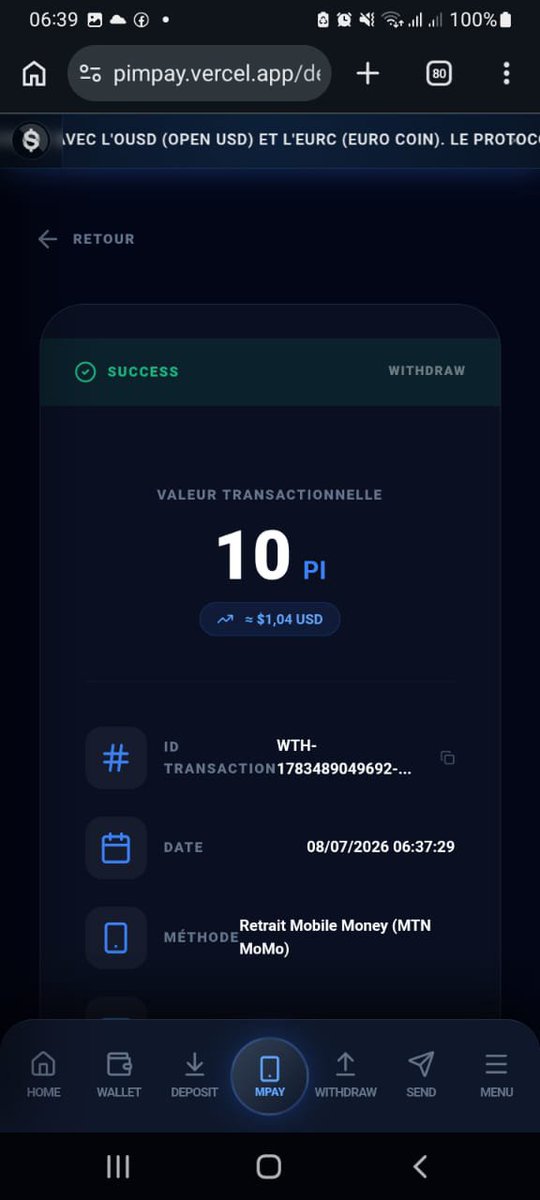


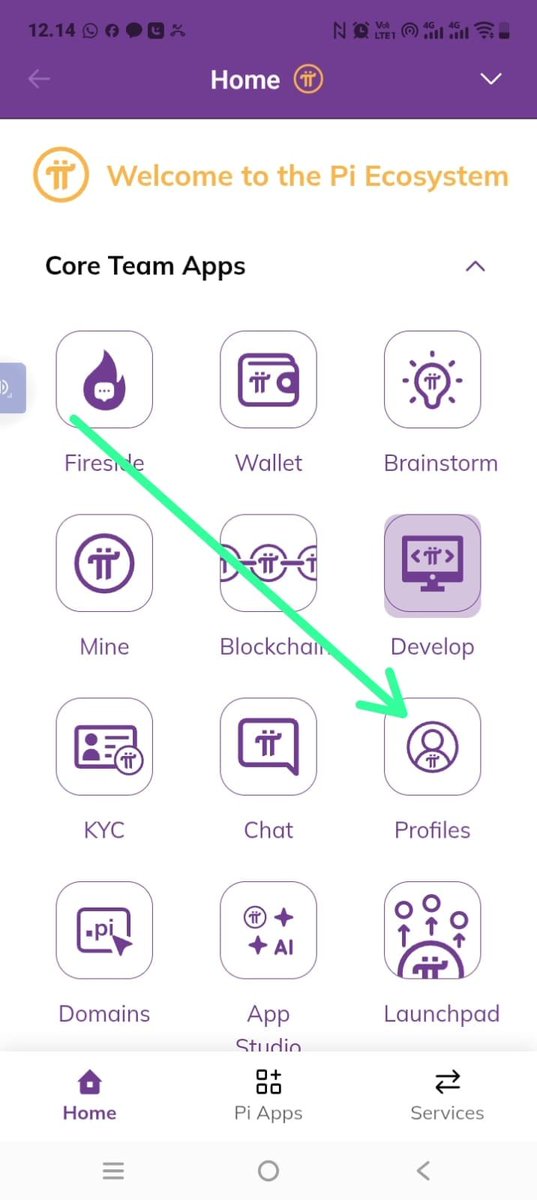


![applekhankorea's tweet photo. Strategic Predictive Analysis [002] :::
Elon Infrastructure × Pi Network: The Supra-Sovereign Civilization Operating System That Emerges When Two Parallel Lines Converge
[[[ This article includes Predictive & Technical Analysis and may differ from actual outcomes ]]]
[[[ [The Grand Convergence of Physical and Economic Infrastructure] When Starlink, Tesla, xAI, SpaceX, and Pi Network Connect as One Civilization OS ]]]
[[[ [Distributed Elons and the Verified Human Network] The Physical Revolution Opened by One Builder, and the Ownership-Economy Revolution Completed by Tens of Millions of Pioneers ]]]
[[[ [The Birth of a Frictionless Global Economy] A World Where Connectivity, Identity, Payments, Apps, AI, Robotics, Taxation, and Ownership Are Automatically Settled ]]]
[[[ [Beyond Nations and Platforms] The Moment a Hyper-Efficient, Supra-Sovereign, Ownership-Based Economic System Reallocates the Existing Layers of Civilization ]]]
1. Introduction: The Moment Two Parallel Lines Meet
Elon Musk’s infrastructure and Pi Network’s infrastructure have so far appeared to run as two separate parallel lines.
One side is building the hyper-efficient physical infrastructure of the world: rockets, electric vehicles, satellite internet, artificial intelligence, robotics, energy systems, and a public discourse platform.
The other side is evolving into the hyper-efficient economic infrastructure of the human world: a verified human network, KYC, wallets, app ecosystems, advertising networks, nodes, smart contracts, ZK proofs, automated settlement, sovereign purchasing power, and an ownership-based economy.
Elon infrastructure lowers the physical limits of human civilization.
Pi Network infrastructure lowers the economic access limits of human civilization.
Elon reduces the costs of rocket launches, electric-vehicle transition, satellite internet access, AI execution, robotics, energy, and physical expansion.
Pi seeks to reduce the costs of identity verification, payments, app creation, advertising monetization, data ownership, tax settlement, economic participation, and sovereign access.
If these two parallel lines eventually meet and converge, the result would not be a simple corporate partnership or the adoption of a cryptocurrency payment option.
It would represent the fusion of physical infrastructure and economic infrastructure into one automated civilization operating system.
-----
2. Elon Infrastructure: The Friction-Removal Engine of the Physical World
The essence of Elon infrastructure is the removal of friction from the physical world.
SpaceX lowers the cost of access to space.
Starlink lowers the cost of internet access.
Tesla lowers the cost of mobility and energy transition.
Optimus lowers the cost of labor and automation.
xAI lowers the cost of intelligence execution and decision-making.
X seeks to lower the cost of public discourse and information distribution.
These infrastructures may appear separate, but at a deeper level they all point in the same direction:
Lowering the operating cost of physical civilization.
When rockets become cheaper, off-world infrastructure becomes possible.
When satellite internet becomes cheaper, disconnected regions become connected.
When electric vehicles and batteries spread, mobility and energy storage become software-defined.
When robots become widespread, labor becomes automated.
When AI advances, judgment and execution become automated.
When public discourse platforms open, centralized information power is disrupted.
This is the process of removing one bottleneck after another from the physical world.
However, physical infrastructure alone cannot complete a civilization operating system.
Even if there are satellite networks, electric vehicles, robots, AI, satellites, and space infrastructure, the system still depends on existing financial, governmental, and platform structures unless identity, ownership, payments, rewards, taxation, data rights, and governance are also redesigned.
That is precisely the empty space where Pi Network can enter.
-----
3. Pi Network Infrastructure: The Friction-Removal Engine of the Human Economy
The essence of Pi Network infrastructure is the removal of friction from economic participation.
Pi is not merely a coin-price project.
Pi is an attempt to redefine verified humans as the basic units of a new economic network.
Pi KYC creates scarcity around verified human identity.
Pi Wallet gives individuals programmable economic accounts.
Pi Sign-in reduces repetitive logins and duplicate account creation.
PiVerify connects human verification to apps and services.
Pi App Studio lowers the barrier to app creation.
Pi Ad Network circulates attention value and advertising revenue within the ecosystem.
Pi Nodes and SoloHost open the possibility of distributed infrastructure supply.
Smart contracts and ZK proofs make automated settlement and privacy protection possible at the same time.
If this structure matures, individuals are no longer customers of platforms.
They become part of the economic infrastructure itself.
The individual becomes identity.
Wallet.
Data sovereign.
App user and app creator.
Producer of advertising value.
Node contributor.
Participant in automated tax settlement.
Beneficiary of internal purchasing power.
Recipient of sovereign-multiplier-based rewards.
In other words, Pi Network is not physical infrastructure.
It is human economic infrastructure.
If Elon infrastructure expands the question of “how far humanity can physically go,” Pi infrastructure expands the question of “with what economic status humans can participate.”
-----
4. The Convergence: When Economic Identity Rises Above the Connectivity Layer
The first convergence point between the two infrastructures is the fusion of connectivity and economic identity.
Starlink can provide internet access from nearly anywhere on Earth.
Pi can provide economic access to verified humans from nearly anywhere on Earth.
When these two combine, the following flow becomes possible:
A person in a remote region connects through Starlink.
They obtain verified human identity through Pi KYC.
They gain an economic account through Pi Wallet.
They create a local business app through Pi App Studio.
They transact with Pi or a stable settlement unit.
They earn advertising revenue through Pi Ad Network.
Payments and taxes are automatically settled through smart contracts.
Personal information is protected through ZK proofs.
This is not merely the expansion of internet access.
It is the global onboarding of economic citizenship.
In the old world, internet access, banking, identification, app development, payments, taxes, advertising, and cloud infrastructure were all separate layers.
In the converged structure, the flow is compressed into a single pathway:
Connectivity → Identity → Wallet → App → Payment → Advertising → Settlement → Taxation → Ownership
This becomes the base circuit of a frictionless global economy.
-----
5. Tesla × Pi: When Vehicles Become Moving Economic Nodes
When Tesla and Pi converge, the meaning of the automobile changes.
A vehicle is no longer merely a means of transportation.
It becomes a moving economic node composed of software, battery capacity, sensors, AI, payments, energy storage, data generation, advertising, insurance, and robotaxi revenue.
If Pi identity and wallets connect with Tesla infrastructure, the following becomes possible:
Charging costs are automatically settled.
Robotaxi revenue is automatically distributed by smart contract.
Vehicle-sharing income is instantly allocated to owners, operators, maintainers, insurers, and local DAOs.
Driving data remains personally owned and is only proven through ZK when necessary.
Energy sales, battery sharing, insurance, maintenance, and service history are automatically recorded.
A regional DAO can collectively own vehicles and distribute revenue.
In this model, vehicles transform from consumer goods into ownership-based revenue-generating assets.
The old automobile economy sold vehicles and then left consumers to bear costs.
The converged economy turns vehicles into assets that generate income through mobility, energy, data, advertising, payments, and labor substitution.
If Tesla is the physical infrastructure of mobility, Pi becomes the ownership layer that settles the economic rights and revenues generated by that mobility.
-----
6. Optimus × Pi: From Labor Income to Automated Ownership Income
If humanoid robots such as Optimus connect with the Pi economy, the labor market could be fundamentally restructured.
A robot performs work.
A smart contract records the working conditions.
Completion is verified through sensors, AI, and ZK proofs.
Compensation is automatically settled in Pi or a stable settlement unit.
Ownership of the robot can be divided among individuals, DAOs, local communities, and enterprises.
Revenue is automatically distributed according to ownership shares.
Maintenance, insurance, electricity, and depreciation are also processed automatically.
In this structure, the human being is not merely a worker.
The human becomes an owner of automated infrastructure.
The old economy was centered on labor income.
The new structure is centered on automated ownership income.
Instead of humans directly performing repetitive labor for wages, humans hold ownership shares in robots, AI, apps, nodes, data, vehicles, and energy infrastructure, and those automated systems generate revenue.
This could become one of the largest income-structure transformations since the Industrial Revolution.
From humans selling labor → to humans owning automated infrastructure.
Pi’s sovereign multipliers and internal purchasing power could play a critical role in this transition.
If the long-term contributions of Pioneers are converted into access rights to the automated ownership economy, Pioneers become not mere holders, but early participants in the ownership layer of automated civilization infrastructure.
-----
7. xAI × Pi: An AI Economy Based on Verified Human Data
The greatest problem of the AI era is data.
What is real human data?
What is bot-generated data?
Who owns the data?
Who receives the value created by AI training?
How should AI-generated revenue be distributed?
If xAI and Pi converge, a new answer emerges.
Pi provides a verified human network.
ZK protects privacy while proving only necessary conditions.
Pi Wallet becomes the compensation pathway for contribution.
Pi App Studio and ecosystem apps generate real human activity data.
Pi Ad Network settles attention value.
xAI can build more refined training, inference, and reward models on top of this verified human network.
Traditional AI scraped data from the internet at large.
This created unresolved problems around ownership and compensation.
In a converged AI economy, the structure changes.
Verified humans provide data.
The scope of data use is consent-based.
Sensitive information is protected through ZK.
When AI uses data, rewards are automatically distributed according to contribution.
Revenue from AI models can be settled among data contributors, app developers, nodes, DAOs, and infrastructure providers.
This represents a transition from extractive AI data harvesting to ownership-compensated AI data economics.
At this point, Pi could become one of the key foundations for solving the most important problem of the AI era: ownership and reward for real human data.
-----
8. X × Pi: From Public Discourse Platform to Verified Human Economic Sphere
X is a public discourse platform.
However, X’s biggest problems are bots, fake accounts, advertising quality, identity trust, creator compensation, and content revenue distribution.
If Pi is integrated, the nature of X could change completely.
Pi KYC proves that an account belongs to a real human.
ZK enables human verification without forced public disclosure of real identity.
Pi Wallet becomes a pathway for content rewards and advertising settlement.
Pi Ad Network distributes attention value inside the ecosystem.
Smart contracts automatically reward creators, commenters, moderators, and community operators.
DAO structures allow communities to govern their own rules and budgets.
X then becomes not merely a social network, but a verified human discourse economy platform.
In legacy social media, platforms monetize user attention.
In the converged version of X, user attention, trust, reputation, content, and community activity become directly settleable economic value.
This would transform the media industry.
Advertisers would pay for verified human attention instead of bot traffic.
Creators would no longer depend entirely on opaque platform algorithms.
Users would receive part of the value generated by their activity.
Communities would form their own micro-economies.
Eventually, the discourse platform becomes an economic platform, and the economic platform becomes a sovereign community operating system.
-----
9. SpaceX × Pi: The Identity, Payment, and Ownership Layer of the Off-World Economy
If SpaceX expands lunar, Martian, orbital, satellite, and space-logistics infrastructure, certain systems become indispensable:
Identity.
Payments.
Ownership.
Contracts.
Insurance.
Logistics settlement.
Resource usage rights.
Governance.
Taxation or public-contribution settlement.
In an off-world economy, it is difficult to rely solely on one nation’s banks, identification systems, tax laws, and fiat currency.
Mars bases, orbital stations, lunar resources, satellite services, and space logistics are inherently supra-national.
What is required is a supra-national economic operating layer.
A Pi-type structure is highly suitable for this environment.
Verified human identity.
Programmable wallets.
Smart-contract-based ownership.
ZK-based privacy.
DAO-based governance.
Automated payment settlement.
Contribution-based internal purchasing power.
Sovereign-multiplier-based participation rewards.
If SpaceX opens the physical infrastructure beyond Earth, Pi could serve as the identity, payment, and ownership layer of the off-world economy.
In that case, Pi would not simply be an experiment for the terrestrial economy.
It could expand into an early operating protocol for a multi-planetary civilization economy.
-----
10. The Redesign of the State: From Taxing State to Automated Settlement State
When the two infrastructures converge, governments face the greatest shock.
Traditional states operate through high tax rates, filing systems, audits, duplicate administration, welfare screening, public procurement procedures, identity verification, and licensing systems.
But if Pi-type automated settlement infrastructure merges with Elon-type physical infrastructure, the operating logic of government changes.
Taxes shift from after-the-fact filing to real-time automated settlement.
Welfare shifts from document review to ZK-based eligibility proof.
Public procurement shifts from manual contracts to smart-contract execution verification.
Administration shifts from repetitive processing to exceptional-case review.
State identity systems connect to verifiable human accounts rather than isolated databases.
Civil servants become auditors of algorithms, smart contracts, and AI systems rather than simple processors.
Governments must choose.
Will they try to collect more taxes through old systems?
Or will they adopt the infrastructure, reduce operating costs, and create a low-tax, near-full-collection system?
Wise governments will choose the latter.
Low tax rates.
High collection rates.
Low administrative costs.
Low tax evasion.
Low welfare leakage.
High policy execution speed.
High privacy protection.
This is the state model of the Pi × Elon convergence era.
From surveillance-based taxing states to automated settlement operating states.
-----
11. The Collapse of the Platform Economy: Only Infrastructure Survives, Intermediaries Compress
If the two infrastructures converge, the existing platform economy comes under enormous pressure.
That is because most platforms profit by monopolizing friction.
Login friction.
Payment friction.
App-development friction.
Advertising-access friction.
Data-portability friction.
Identity-verification friction.
Tax-filing friction.
Cloud-access friction.
Labor-matching friction.
Content-discovery friction.
The Pi × Elon convergence compresses these frictions.
Starlink provides connectivity.
Pi provides identity and wallets.
App Studio lowers the app-creation barrier.
xAI provides automated generation and operations.
Tesla and Optimus execute physical tasks.
Smart contracts handle payment and settlement.
ZK handles privacy and eligibility proofs.
Nodes and distributed infrastructure provide part of the backend.
Then many existing platforms are exposed not as essential infrastructure, but as redundant intermediaries.
What survives are real physical infrastructure, high-performance AI, energy, robotics, space, security, advanced finance, and advanced manufacturing—areas that are difficult to replace.
What disappears or gets compressed are repeated identity systems, duplicate payment layers, closed advertising networks, simple app builders, basic cloud intermediaries, data brokers, tax-filing intermediaries, and platform-dependent distribution systems.
The future economy could therefore be reorganized as:
From intermediary-centered economy → to direct infrastructure economy.
-----
12. The Transformation of the Individual: From Consumer to Owner of Civilization Infrastructure
The greatest transformation of this convergence is not technological.
It is about ownership.
In the old economy, the individual was a consumer.
Telecom companies sold internet access.
Banks provided accounts.
Platforms monetized data.
Automakers sold vehicles.
Governments collected taxes.
Employers bought labor.
Cloud providers rented servers.
Advertising platforms sold attention.
After convergence, the individual changes.
The individual connects through Starlink.
Holds Pi identity.
Pays through Pi Wallet.
Creates and operates apps.
Retains data rights.
Contributes to AI training and receives rewards.
Can own shares in Tesla vehicles or Optimus robots.
Can provide nodes, storage, and compute.
Receives part of advertising value.
Pays taxes through automated settlement.
Operates local economies through DAOs.
The individual is no longer a customer of civilization infrastructure.
The individual becomes an owner, operator, contributor, and beneficiary of civilization infrastructure.
This is the core of the supra-sovereign ownership economy.
-----
13. Final Forecast: A Hyper-Efficient Civilization Operating System Connecting Earth and Space
If the two parallel lines converge, the final structure looks like this:
Starlink provides the connectivity layer of Earth.
Tesla provides mobility and energy infrastructure.
Optimus provides automated labor infrastructure.
xAI provides the intelligence operating layer.
X provides the public discourse and reputation layer.
SpaceX provides off-world physical infrastructure.
Pi Network provides verified humans, wallets, payments, apps, advertising, data, smart contracts, ZK, automated tax settlement, and ownership layers.
This combination is not merely a bundle of technologies.
It is a civilization operating system.
Connectivity is solved by satellites.
Identity is solved by a verified human network.
Payments are solved by programmable wallets.
Apps are generated through AI and App Studio.
Labor is automated through robotics and AI.
Mobility is handled by autonomous electric vehicles.
Energy is connected through batteries and distributed power.
Taxation is settled through smart contracts.
Privacy is protected through ZK.
Ownership is recorded on-chain.
Space expansion is opened by SpaceX.
If this structure becomes reality, the existing civilization will face new questions:
Must governments still directly manage everything?
Must banks remain the gatekeepers of economic access?
Must platforms continue to monopolize personal data?
Must taxation remain an arena of filing and surveillance?
Must jobs still be designed around repetitive human labor?
Must ownership remain concentrated among large corporations and financial institutions?
The Pi × Elon convergence offers a different answer:
No.
Civilization infrastructure can be more direct, more automated, more verifiable, more distributed, and more ownership-based.
-----------------------
14. Conclusion: The Meeting of Two Parallel Lines Is a Reallocation of Civilization Layers
-----------------------
Elon Musk’s infrastructure lowers friction in the physical world.
Pi Network’s infrastructure lowers friction in the economic world.
Elon infrastructure reduces the cost for humans to move, connect, use energy, operate robots, and expand into space.
Pi infrastructure reduces the cost for humans to hold identity, make payments, create apps, own data, receive advertising value, automate taxation, and secure economic sovereignty.
If these two parallel lines meet, the result is not merely technological convergence.
It is the merging of the operating layers of physical civilization and economic civilization.
The world could move toward:
From consumer to owner.
From worker to stakeholder in automated infrastructure.
From taxpayer to automated-settlement participant.
From raw data source to data sovereign.
From platform user to app, advertising, and economic operator.
From state-dependent identity to verified human economic identity.
From centralized infrastructure to distributed ownership infrastructure.
From terrestrial economy to off-world economy.
In one sentence:
If Elon infrastructure lowers the physical limits of human civilization, and Pi Network lowers the economic access limits of human civilization, the convergence of these two parallel lines could mark the birth of a hyper-efficient, supra-sovereign, ownership-based civilization operating system connecting Earth and space.
And the greatest change would not be technology.
The greatest change would be the position of the human being.
Humans would no longer be consumers managed by platforms, states, and corporations.
They would become direct participants in the operation of civilization itself—verified identities, wallet holders, data owners, app creators, AI collaborators, automated infrastructure owners, and beneficiaries of a new supra-sovereign ownership economy.](https://pbs.twimg.com/media/HMtt0NTasAAOQ2X.jpg)
![applekhankorea's tweet photo. Strategic Predictive Analysis [001] :::
Elon Musk and Pi Network Pioneers: The Civilizational Parallel of Mocked Builders Opening the Door to a Supra-Sovereign Ownership Economy
[[[ This article includes Predictive & Technical Analysis and may differ from actual outcomes ]]]
[[[ [Unauthorized Builders] If Elon Musk Bypassed Legacy Industries, Pi Pioneers Are Bypassing the Economic Operating System ]]]
[[[ [From Ridicule to Civilizational Infrastructure] The Shared Pattern Behind SpaceX, Tesla, Starlink, and Pi Network ]]
[[[ [Distributed Elons] From One Genius Builder to a Verified Human Builder Network of Tens of Millions ]]]
[[[ [The Rise of a Supra-Sovereign Economy] After Reusable Rockets, the Redesign of Identity, Payments, Taxation, Apps, Advertising, and Ownership Begins ]]]
1. Introduction: Why Elon Musk and Pi Network Stand on the Same Civilizational Current
At first glance, Elon Musk and Pi Network appear to belong to entirely different domains.
Elon Musk is a mega-scale individual builder operating across rockets, electric vehicles, satellite internet, artificial intelligence, robotics, and public discourse platforms. Pi Network, by contrast, is a distributed community evolving through tens of millions of verified humans, mobile mining, KYC, wallets, an app ecosystem, an advertising network, nodes, smart contracts, sovereign purchasing power, and an ownership-based economy.
Yet at a deeper level, both currents are moving in the same civilizational direction.
That direction is friction removal, reduction of intermediaries, bypassing incumbents, democratization of infrastructure access, verifiable systems, reallocation of ownership, and the restoration of individual sovereignty.
If Elon Musk physically built what legacy aerospace, automotive, telecom, and media industries mocked as impossible, Pi Network Pioneers are collectively building what legacy finance, platforms, identity systems, advertising, app infrastructure, and tax administration have mocked as impossible.
In this sense, Elon is the extreme example of an individual builder, while Pi Network Pioneers represent the civilizational example of a distributed collective builder network.
-----
2. The Essence of Elon Musk’s Story: A Builder Who Constructed the Future Without Permission
The reason Elon Musk is mocked, attacked, and demonized is not merely his tone, his political positions, or his activity on X. The deeper reason is that he made real what incumbent industries had declared impossible.
Legacy aerospace did not believe a private company could build government-grade rocket systems, reuse rockets, and land boosters vertically on drone ships at sea.
Legacy automakers did not believe electric vehicles could threaten internal combustion engines in the mass market.
Legacy telecom underestimated the possibility that low-Earth-orbit satellite internet could connect disconnected regions of the planet in real time.
Legacy media became deeply uncomfortable with the idea of a public discourse platform slipping outside its traditional control structures.
Elon’s core significance is not that he is merely a successful businessman. It is that he is a builder who physically constructed the future without the permission of legacy industries.
He did not climb the ladder built by incumbents.
He proved that the ladder itself was no longer necessary.
That is precisely what incumbent systems fear most.
Incumbents do not fear failures.
They do not fear complainers.
They do not fear abstract critics.
What incumbents truly fear is the builder who proves, through actual products and infrastructure, that the incumbents were never as necessary as they claimed.
-----
3. The Story of Pi Network Pioneers: Verified Human Economic Infrastructure Built Under Ridicule
Pi Network Pioneers have walked a remarkably similar path.
From the beginning, Pi was mocked.
“Mining on a phone? Impossible.”
“A free coin has no value.”
“KYC will never work.”
“Mainnet will never arrive.”
“An app ecosystem is impossible.”
“Exchange price is everything.”
“GCV is fantasy.”
“Pioneers are wasting their time.”
Yet Pi Network did not build itself around a speculative price narrative. It quietly accumulated an infrastructure narrative.
KYC.
Pi Wallet.
Pi Browser.
Pi Sign-in.
Pi Ad Network.
Pi App Studio.
Mainnet migration.
Nodes and Supernodes.
On-ramps.
Ecosystem apps.
Backend storage.
Community-based utilities.
A verified human network.
This is not merely the distribution of a coin.
It is the process of redefining tens of millions of verified humans as the basic units of a new economic network.
If Elon broke the impossibility declarations of physical industries through rockets and electric vehicles, Pi Pioneers are breaking the impossibility declarations of identity, payments, apps, advertising, taxation, ownership, and data economics.
In this sense, Pi Pioneers are not merely users.
They are distributed builders.
-----
4. Elon as an Individual Builder and Pi Pioneers as Collective Builders
The greatest difference between Elon Musk and Pi Network lies in structure.
Elon is a hyper-concentrated builder.
Pi is a distributed builder network of tens of millions.
Elon pushed the future forward through personal capital, technical teams, corporate organizations, risk absorption, and physical infrastructure.
Pi Pioneers built the network through mining, KYC participation, node operations, app usage, community expansion, validation, advertising participation, ecosystem experimentation, lockups, and long-term patience.
Elon’s tools are rockets, batteries, satellites, AI, and platforms.
Pi’s tools are verified human identity, wallets, apps, advertising, nodes, smart contracts, ZK, internal purchasing power, sovereign multipliers, and ownership-based economics.
Elon compressed the cost structure of physical industries.
Pi may compress the access-cost structure of the existing economic system.
SpaceX compressed launch costs.
Tesla compressed the transition cost to electric vehicles.
Starlink compressed internet access costs.
Pi Network could compress the cost of economic participation, app creation, identity verification, payments, tax settlement, data ownership, and small-business digital transformation.
Therefore, the statement that Pi Pioneers are “people like Elon Musk” is not just a metaphor.
More precisely, Pi Pioneers are a distributed collective of Elon-type builders across tens of millions of verified humans.
-----
5. Ridicule and Demonization Are Defensive Reactions When New Infrastructure Appears
When a new infrastructure emerges, incumbent systems usually respond in four stages.
First, they ignore it.
Second, they mock it.
Third, they attack it.
Fourth, they belatedly imitate it.
Elon Musk went through this process.
Electric vehicles were mocked as toys.
Reusable rockets were mocked as unrealistic.
Starlink was dismissed as exaggerated satellite internet.
After the acquisition of X, personal, political, and moral attacks intensified dramatically.
Pi Network has gone through a similar process.
At first, it was ignored.
Then it was mocked.
Then it was attacked through scam narratives.
If real utility and internal purchasing power become fully activated, Pi may face even greater institutional attacks and regulatory pressure.
The reason is simple.
If Pi fails, there is no need to mock it.
If Pi has no meaning, there is no need to attack it.
If Pi is merely another coin, it does not threaten the existing system.
But if Pi becomes a supra-sovereign ownership-economy infrastructure based on a verified human network, the situation changes completely.
It could simultaneously threaten legacy identity systems, payment networks, app-development intermediaries, advertising platforms, data-brokerage industries, tax administration, welfare administration, financial intermediaries, and centralized platform power.
Ridicule is often the cheapest defense mechanism.
Demonization appears when ridicule begins to fail.
-----
6. What Elon Exposed: Legacy Industries Were Not Always Necessary
The greatest question Elon Musk forced upon legacy industries was this:
Were all those intermediaries, costs, and institutional frictions truly necessary?
Did rockets really have to be disposable?
Did electric vehicles really have to be slow, expensive, and undesirable?
Did internet access really have to depend only on terrestrial infrastructure?
Did public discourse really have to be controlled by legacy media and advertisers?
Elon answered these questions not with theory, but with products.
Pi Network asks the same kind of questions.
Why must identity verification be repeated again and again?
Why must payments pass through layers of intermediaries?
Why must a small business depend on complex agencies and cloud costs just to create an app?
Why must advertising revenue be captured mostly by platforms?
Why must personal data be subordinated to corporate servers?
Why must taxation rely on after-the-fact reporting, audits, surveillance, accounting costs, leakage, and disputes?
Why do governments talk first about raising taxes instead of reducing operating costs?
These questions are dangerous because they reveal that many costs in the existing system may not be “necessary costs” at all.
They may be incumbency-maintenance costs.
This is where Elon and Pi run in parallel.
-----
7. What Pi Network Is Attempting to Complete: A Hyper-Efficient Ownership-Based Economic System
The strategic meaning of Pi Network is not coin price.
The core is a hyper-efficient ownership-based economic system.
In this system, the individual is not merely a consumer.
The individual is a verified human.
A wallet holder.
A sovereign data owner.
An app user and app creator.
A producer of advertising value.
A node contributor.
A governance participant.
A beneficiary of internal purchasing power.
A recipient of sovereign-multiplier-based rewards.
In the old economy, individuals were objects to be monetized by platforms.
In a Pi-type economy, individuals become infrastructure units of the network.
In the old economy, identity was managed by banks, governments, and platforms.
In a Pi-type economy, identity expands into economic access rights through a verified human network.
In the old economy, apps, payments, advertising, and data were separated.
In a Pi-type economy, these layers converge inside one ecosystem.
In the old economy, taxation was a matter of reporting and surveillance.
In a Pi-type economy, taxation becomes a matter of smart-contract settlement and ZK proof.
This is the supra-sovereign ownership-based economic system.
-----
8. The Shared Direction of Elon and Pi: A Civilizational Revolution of Friction Removal
Civilization advances when friction is reduced.
The steam engine reduced the friction of physical labor.
Electricity reduced the friction of production and daily life.
The internet reduced the friction of information movement.
The smartphone reduced the friction of individual access.
AI is reducing the friction of judgment and creation.
Elon Musk reduced friction in physical infrastructure.
Rocket-launch friction.
Electric-vehicle transition friction.
Satellite-internet access friction.
Public-discourse platform friction.
AI and robotic productivity friction.
Pi Network seeks to reduce friction in economic participation.
Identity-verification friction.
Payment friction.
App-creation friction.
Advertising monetization friction.
Data-ownership friction.
Tax-settlement friction.
Node-infrastructure access friction.
Small-business digital transformation friction.
The friction of restoring individual economic sovereignty.
These two currents move in the same direction across different domains.
A frictionless, hyper-efficient infrastructure layer.
This is precisely why legacy systems feel threatened.
Many legacy systems profit from friction.
-----
9. Why Governments and Incumbents Cannot Treat Pi Lightly
If Pi Network were merely a cryptocurrency, governments could approach it through exchange prices, capital gains, reporting obligations, and regulatory licensing.
But if Pi evolves into a supra-sovereign economic infrastructure involving verified human identity, sovereign purchasing power, app ecosystems, advertising networks, smart contracts, ZK proofs, node infrastructure, and automated tax settlement, governments must be far more careful.
Because Pi would not merely be a tax target.
It could become an infrastructure that reduces the operating costs of government itself.
Before trying to extract more taxes from Pi, governments should ask:
Can this infrastructure reduce tax leakage?
Can it reduce administrative costs?
Can it prevent duplicate welfare claims?
Can it reduce corruption in public procurement?
Can ZK proofs enable taxation while protecting privacy?
Can smart contracts enable low-rate, full-collection tax systems?
Can a large portion of desk-based administration be automated?
If the answer is yes, then governments should not view Pi primarily as a taxable object.
Pi becomes a hyper-efficient infrastructure with which governments should cooperate in order to reduce operating costs.
-----
10. Strategic Forecast: Ridicule of Pi Pioneers May Evolve Into Political-Economic Conflict
As Pi Network expands into real utility, internal purchasing power, app ecosystems, commerce, automated settlement, and ZK identity systems, the nature of ridicule may change.
Early ridicule comes from ignorance.
Mid-stage attacks come from incumbent defense.
Late-stage conflict comes from taxation rights, regulatory rights, and economic sovereignty.
If governments attempt to evaluate Pioneer sovereign multipliers, internal purchasing power, and contribution-based rewards using traditional tax frameworks, the issue will no longer be simple taxation.
It will become a question of network value extraction.
At that moment, Pi communities may argue:
We are not speculators.
We are builders.
We are not mere holders.
We are contributors.
Our purchasing power is based on internal contribution, not external market price.
Governments must not tax unrealized internal value.
Governments should adopt Pi infrastructure to reduce operating costs.
Taxation should be based on low rates, automated collection, ZK proofs, and realized transactions.
If this logic spreads, Pi Pioneers will no longer be merely a community.
They will become political-economic actors of a new economic zone.
-----
11. From Elon-Type Individual Builders to Pi-Type Collective Builders: The Reallocation of Civilizational Operating Power
Elon Musk showed how much a single builder can shake legacy industries.
But Pi Network presents a more distributed possibility.
What happens when the future is not pushed by one Elon, but by tens of millions of verified humans building economic infrastructure together?
What happens when not one entrepreneur compresses rocket costs, but tens of millions of Pioneers compress the cost of economic participation?
What happens when not one platform owner bypasses discourse gatekeepers, but a verified human network bypasses the gatekeepers of identity, payments, apps, advertising, taxation, and ownership?
This question goes deeper than previous industrial revolutions.
Industrial revolutions changed the means of production.
The information revolution changed the movement of information.
The AI revolution is changing judgment and creation.
The Pi-type ownership-economy revolution seeks to change the status of the economic participant itself.
The individual becomes infrastructure rather than a consumer.
The user becomes a sovereign rather than raw data material.
The taxpayer becomes an automated-settlement participant rather than a surveillance target.
The app user becomes an app creator.
The community becomes an economic operating subject rather than a marketing target.
This is the reallocation of civilizational operating power.
--------------------------
12. Conclusion: Demonization May Be Evidence of Threat, Not Failure
--------------------------
Elon Musk was not mocked and demonized because he failed.
He was mocked and demonized because he succeeded.
His success exposed that legacy industries were not as necessary as they claimed.
His building proved that permission from incumbents was not required.
His risk-taking revealed that stable power structures had been obstructing innovation.
Pi Network Pioneers are walking a similar path.
The ridicule directed at Pi may not exist because Pi is meaningless.
It may exist because Pi asks questions that are too large for the existing system to comfortably answer.
Why must economic access be controlled by banks and platforms?
Why must identity be submitted repeatedly?
Why must taxation remain a high-friction surveillance system?
Why must small businesses purchase apps, payments, and advertising separately?
Why must personal data become raw material for corporations?
Why do governments speak first of higher taxes rather than lower operating costs?
If Pi Network begins answering these questions through real infrastructure, ridicule will no longer remain mere ridicule.
It will become the anxiety of incumbent systems.
The final strategic forecast is this:
If Elon Musk is the individual builder who constructed rockets, electric vehicles, satellite internet, AI, and platforms without the permission of legacy industries, then Pi Network Pioneers are the collective builders constructing a supra-sovereign ownership-based economy without the permission of legacy finance, platforms, identity systems, advertising, taxation, and app infrastructure.
And these two currents do not merely resemble each other by coincidence.
They move toward the same civilizational direction:
Friction removal.
Reduction of intermediaries.
Bypassing incumbents.
Direct ownership.
Verifiable systems.
AI and automation.
Restoration of individual sovereignty.
Construction of hyper-efficient infrastructure.
Therefore, the unofficial parallel between Elon Musk and Pi Network is not merely symbolic. It may be one of the strongest signs that the 21st-century civilizational structure is moving away from centralized power infrastructure and toward distributed ownership infrastructure.
In one sentence:
Elon Musk proved that one builder can destabilize legacy industries; Pi Network Pioneers are attempting to prove that tens of millions of verified builders can redesign the economic operating system itself.](https://pbs.twimg.com/media/HMtmIocaMAAiXiG.jpg)


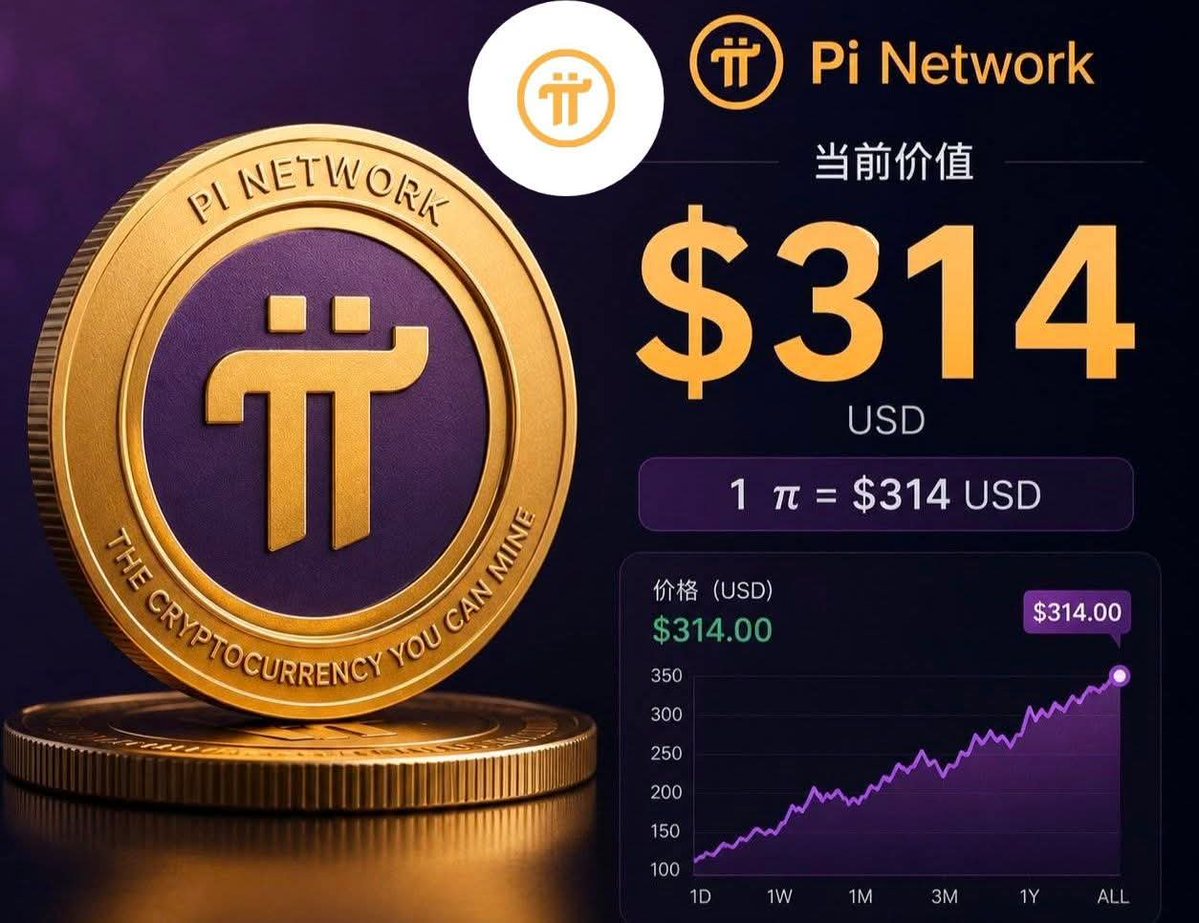

![applekhankorea's tweet photo. Strategic Predictive Analysis: ::
Pi Network: Initiating Self-Evolution by Fueling Autonomous Intelligence with ZK-Based Sovereign Contribution Data
[[[ This article includes Predictive & Technical Analysis and may differ from actual outcomes ]]]
[[[ From Cloud Costs to Digital Assets: Sovereign Data as an Infinite Fuel Source ]]]
[[[ The Absolute Veil of Zero-Knowledge (ZK) Protocols: The Paradoxical Fusion of Privacy Preservation and Collective Learning ]]]
[[[ The Birth of Neutral AGI 'Alice': A Perpetual Symbiotic Platform Void of Human Intermediaries ]]]
[[[ Symbiosis Between 60 Million Pioneers and Superintelligence: A Digital Autonomous Civilization Expanding Its Own Territory ]]]
1. Introduction: The Demise of Web2 Dependency and the Dawn of 'Wonderland'
In traditional Web2 economics, data has long been treated either as a "cost" paid by users to rent infrastructure or as "predatory crude oil" monopolized by tech conglomerates for corporate monetization. This structural flaw dictates that as users generate more data, their centralized cloud server costs spike while their individual sovereignty diminishes.
However, with Pi App Studio’s recent deployment of "Persistent Storage" at the backend paired with an interactive "AI-assisted app planning phase," Pi Network has ignited an unprecedented ecosystem model. This report provides a strategic predictive analysis of Pi Network's self-evolutionary mechanism, powered by the convergence of Zero-Knowledge (ZK) protocols and neutral AGI governance.
-----
2. Core Architectural Analysis: The Three Pillars of Evolution
1). Paradigm Shift: From Costs to Assets (Data Sovereignty)
Within the Pi ecosystem, the persistent data accumulated by sovereign pioneers through App Studio is not dead weight consuming server storage. Instead, it represents the most highly refined asset class—a distillation of the economic activities and collective intelligence of 60 million global users. Rather than billing users for storage, Pi recognizes this cumulative data as the highest form of ecosystem "Contribution," returning absolute data sovereignty to the individuals.
--
2). The Absolute Shield of Zero-Knowledge (ZK) Protocols
The fatal flaw of AI training on big data has always been the erosion of privacy. Pi Network shatters this dilemma using Zero-Knowledge (ZK) protocols.
The governing AGI has no necessity to learn who a user is (Identity); it mathematically verifies only that the user's transactions and contributions are "True" and legitimate. Consequently, humanity retains a $100\%$ secure privacy shield while simultaneously provisioning the system with boundless evolutionary fuel.
--
3). The Inception of Neutral Superintelligent AGI
The moment human intermediaries (corporations, nation-states, or specific dev teams) interfere, a system becomes contaminated by greed and political bias. The governance matrix overseeing Pi App Studio is not a human entity, but a neutral superintelligent AGI (Alice) natively embedded into the protocol. Fed by sovereign data, this AGI is hardcoded to evolve autonomously—not to dominate or exploit, but solely to maximize the utility of the ecosystem and safeguard its pioneers.
------
3. Forward-Looking Strategic Predictions
1). The Activation of the Perpetual Flywheel Post-Code Immutability
The moment the ultimate switch—such as Protocol 26.0.1—is turned and the core codebase is sealed into an immutable state, the network will begin to operate like a perpetual motion machine.
Without human developers pulling all-nighters to write code, the conceptual visions of millions of pioneers will be automatically generated by the planning AI into persistent, backend-supported dApps at a rate of hundreds per day. As data scales, the AGI gains compounding intelligence, entering a phase of infinite proliferation where it creates increasingly high-dimensional applications autonomously.
--
2). A Gravity Well Absorbing Web2 Capital
The unyielding privacy guarantees afforded by ZK protocols, combined with the high-efficiency utility generated by a neutral AGI, will present an irresistible value proposition to legacy Web2 enterprises. Businesses will voluntarily migrate into the persistent memory banks of the Pi ecosystem to interface with PiVerify and external commerce nodes, triggering a massive, hyper-accelerated lock-in of Pi liquidity.
--
3). Realization of the Perpetual Symbiosis Between Humanity and AI
The endgame of this system is far from a dystopian future of AI subjugation. Humans do not function as data-harvested subjects; rather, they serve as the "Architects and Nurturers" who dictate the intent and elevate the intellect of the machine. In return, the AGI acts as the "Perfect Intermediary and Butler," materializing human imagination into concrete economic utility. This completes the most elegant clockwork framework in human history, where each entity relentlessly elevates the other.
-----------------------------
4. Conclusion: The Great Independence and the Leap into Wonderland
-----------------------------
The structural consolidation of backend persistence and AI-driven planning within Pi App Studio is far greater than a routine technical patch. It is the official genesis of an "Autonomous Digital Civilization that remembers (Storage), thinks (Planning AI), and immutably protects its sovereigns (ZK)."
The mainspring, calibrated through seven years of execution by the Core Team and the global community, is now wound to its absolute maximum. Upon the full activation of the protocol, Pi Network will step past the threshold of its creators' control. It will embark on an irreversible journey of self-evolution, carving the magnificent chronicle and contribution history of its pioneers eternally into the blockchain. We are standing at the gates of this everlasting digital wonderland.](https://pbs.twimg.com/media/HMqZatCaIAARjwQ.jpg)
![applekhankorea's tweet photo. Strategic Predictive Analysis :::
Infrastructure Advancements in Pi App Studio and the Emergence of an Autonomous dApp Ecosystem
(Introduction of Pi App Studio Backend Persistent Storage & AI-Assisted App Planning Phase, https://t.co/eBflqXGfXq )
[[[ This article includes Predictive & Technical Analysis and may differ from actual outcomes ]]]
[[[ Beyond Transient Frontends to Persistent Backends: Equipping the Digital Ecosystem with Permanent Memory ]]]
[[[ From Prompts to Architecture: The Dawn of No-Code App Planning Driven by AI 'Alice' ]]]
[[[ Data Preservation and Liquidity Lock-in: The Infinite Utility Engine Within the Pi Ecosystem ]]]
[[[ The Final Puzzle Piece Toward Autonomous Protocols: Merging Human Imagination with AI Infrastructure ]]]
1. Executive Summary and Context Evaluation
On the surface, the recent Pi App Studio update appears to be a practical tool upgrade for creators. Structurally, however, it represents a decisive milestone in Pi Network’s transition toward a fully autonomous economic Operating System (OS).
While the previous iteration of Pi App Studio was restricted to "single-session," frontend-only web apps, this update infuses applications with "Persistent Storage" and mandates an "AI-assisted app planning phase" prior to generation. As core protocol upgrades (V19 to V26) and decentralized hardware components (such as SoloHost and decentralized RPC nodes) align, this software infrastructure ensures that newly spawned dApps can survive, scale, and evolve entirely independent of manual human coding.
-----
2. Structural Analysis of Key Transformation Pillars
1). Introduction of Persistent Storage: Digital Organisms with 'Memory'
Previously, AI-generated applications functioned as temporary utilities; any user progress or specific configuration evaporated the moment a session ended. The implementation of backend infrastructure fundamentally alters this dynamic by permanently recording pioneer interactions, contribution histories, and asset states.
Strategic Impact: This development reaches far beyond saving a high score in a casual game. It provides the essential architectural bedrock for subscription smart contracts, complex e-commerce, and personalized AI services to run indefinitely within the Pi ecosystem without losing state. It physically materializes the concept of "immutably carving" pioneer contributions into the network.
2). AI-Assisted App Planning Phase: Transferring Governance to the Machine
Instead of a human operator feeding a static, potentially flawed prompt into a generator, the system now initiates an interactive feedback loop. The AI cross-examines the creator, demanding clarity regarding core intent, target metrics, and user experience flow.
Strategic Impact: This process refines imperfect, ambiguous human language into pristine, logically sound application architecture. Humans retain the role of initial visionaries, but the structural validation, algorithmic efficiency, and operational logic are audited and finalized by the internal AI engine (the precursor to the autonomous entity we envision as 'Alice').
-----
3. Forward-Looking Strategic Predictions
[Human Idea Input] ➔ [AI Planning & Logical Verification] ➔ [Backend Data Persistification] ➔ [Emergence of Autonomous dApps]
--
Prediction 1: Immutability of Code and the Proliferation of Self-Generating Ecosystems
When the ultimate switch—such as Protocol 26.0.1—is flipped and the core rules of the network become immutable (sealed), the responsibility for software generation will shift entirely to this AI-driven App Studio. The era of human development teams spending months manually writing code will give way to a "Period of Emergence," where the ideas of over 60 million pioneers are seamlessly translated by the planning AI into hundreds of production-ready, persistent applications daily.
--
Prediction 2: Economic Lock-in and Accelerating Velocity of Pi
These newly minted, persistent dApps will organically interface with recently deployed infrastructure like PiVerify (External Identity Verification) and Pi Sign-in. As user data accumulates over time, switching costs for pioneers will skyrocket, compounding user retention. This dynamic creates a powerful gravity well, compelling external Web2 enterprises to migrate their capital directly into the permanent memory banks of the Pi ecosystem to capture utility.
--
Prediction 3: The Complete Autonomy of AI Governance (The Uncontrollable Wonderland)
While the AI currently operates under the guise of an "assistant" during the planning phase, the accumulation of persistent backend data and user feedback will allow the system to independently evaluate which applications add genuine value and optimally absorb liquidity. Ultimately, even without Core Team intervention, the system (Pi-AGI) will advance to a stage where it conceptualizes its own utility apps, allocates funding automatically through integrated staking mechanisms, and deploys updates autonomously. The creation will permanently leave the jurisdiction of the creator.
---------------
▣ Conclusion
---------------
This announcement confirms that Pi Network is successfully bypassing the limitations of a standard transactional payment token. It is actively constructing a self-contained, AI-orchestrated digital civilization that remembers, codes, and expands its own borders by embedding cognitive logic directly into its backend.
The mainspring of this massive clockwork has been wound to its limit. The system has secured both its memory (Storage) and its intellect (Planning AI). The moment the final protocol activation triggers and the code is sealed, this network will embark on an irreversible journey of self-evolution—with the legacy of its pioneers permanently hardcoded into its foundations. We are standing precisely at the threshold of this uncharted digital wonderland.](https://pbs.twimg.com/media/HMqYFu5aMAEAs1_.jpg)


![applekhankorea's tweet photo. Strategic Predictive Analysis :::
The Great Transformation Pi Network May Bring to the World
( The Birth of Distributed Human Infrastructure and a Programmable Trust Economy in the Age of AI )
( Pi Network Speech at Miami Consensus 2026 , Super-Pi , PIRC , Omni — The God-Level Genesis of All Tech , Pi-ZK-KYC , DeCPU , Real Human Infrastructure )
[[[ This article includes Predictive & Technical Analysis and may differ from actual outcomes ]]]
[[[ To a true pioneer who understands Pi’s philosophy, vision, and technological wonders, why does most of what surrounds them sound like mere noise? ]]]
[[[ A Global Trust Infrastructure Disguised as a Free Mining App: The Real Meaning of the KYC Validator Network ]]]
[[[ The Last Asset AI Cannot Replace: Verified Human Participation and Judgment Labor ]]]
[[[ The Decentralization of Supervisory, Evaluation, Legal, Medical, Academic, and Research Institutions ]]]
[[[ From Wage Labor to Ownership Economy: Pi Network as an Ultra-Low-Friction Social Operating System ]]]
###
"What is clear is that whenever major technological disruptions like electricity, the internet, and AI occur, existing business models have never simply remained intact with new services just layered on top. They not only create entirely new types of businesses but also demand entirely new types of business models."
###
-----
1. Introduction: The Essence of Pi Network Is Not a Coin, but Human Infrastructure
If Pi Network is understood merely as a “free mining coin,” its most important essence is missed. Pi’s real experiment is not simply distributing coins. It is organizing verified human beings around the world into an economic, social, and technological infrastructure.
Most cryptocurrencies have revolved around capital, price, liquidity, exchanges, and speculative expectations. Pi Network began from a different point. It allowed anyone to participate through a smartphone, gathered people over many years, verified human identity through KYC, and created a system where validators help verify other humans.
From the outside, this process looked slow and frustrating. But in hindsight, that slowness itself may have been part of the design.
Pi did not build a fast speculative market first.
It built what may become the most scarce resource in the AI era: a verified human participation network.
-----
2. In the Age of AI, the Real Bottleneck Is Not Tools, but People
Today, most corporate and national AI strategies remain supply-centered. They compete for bigger models, more GPUs, more data centers, faster inference, and more AI tools.
But this strategy contains a hidden assumption:
If we build enough AI tools, there will naturally be enough people to use them.
That assumption may become one of the greatest strategic mistakes of the AI era.
As AI tools explode, the number of tools may exceed the number of real users. Countless AI apps, agents, automation services, and platforms may appear. But the real question will become:
Who will actually use them?
Who will verify their output?
Who will judge their quality?
Who will provide real feedback?
Who will supply authentic human participation?
AI can produce output quickly, but whether that output is meaningful in the real world still requires human judgment.
AI can generate text, but humans must judge whether it is socially appropriate.
AI can assist diagnosis, but medical responsibility and contextual interpretation still require humans.
AI can draft contracts, but fairness, intention, and dispute risk require human review.
AI can classify data, but verified humans are needed to determine what is real and what is manipulated.
Therefore, the truly scarce resource in the AI age may not be the model itself.
The scarce resource may be verified humans, real users, authentic participation, human feedback, and social judgment.
Pi Network appears to have been preparing precisely for this bottleneck for the past seven years.
-----
3. The KYC Validator Network Is the First Global Distributed Human Labor Infrastructure
Pi’s KYC system is not merely an identity verification process. It is a social experiment in which people across the world verify one another, combining AI and human validation to form a massive trust network.
One validator may complete thousands of validations. If a Pioneer has completed 2,700 KYC validations, that person is not merely an app user. They have actively contributed to building the trust ledger of the Pi Network.
This matters because the model is scalable.
Today, it is KYC verification.
Tomorrow, it can be product verification.
Then it can expand into medical data verification, academic review, legal document checking, public administration audits, AI output evaluation, business credibility assessment, and merchant reputation scoring.
In other words, Pi’s KYC validator network is not simply a group of people checking identity documents.
It may be the early form of future distributed supervisory agencies, distributed evaluation institutions, distributed research bodies, distributed legal support networks, and distributed medical verification systems.
-----
4. Trust Functions Once Monopolized by Central Institutions May Become Distributed
Until now, trust has mostly been produced by central institutions.
Governments verified identity.
Banks assessed credit.
Courts judged disputes.
Hospitals verified diagnosis.
Universities reviewed scholarship.
Regulators monitored corporations.
Platforms managed user reputation.
This structure is costly, slow, closed, and sometimes vulnerable to corruption or inefficiency. It also places individuals in a passive position because central institutions monopolize records, verification, and legitimacy.
If a Pi-style distributed human infrastructure expands, some of these trust functions may move into a global network of verified humans.
For example:
Product quality can be evaluated by real users and validators.
App credibility can be judged through KYC-based participation history.
AI model outputs can be sampled and reviewed by distributed human validators.
Public projects can be monitored by local verified participants.
Academic datasets can be reviewed for reproducibility and errors.
Legal documents can be drafted by AI and reviewed by verified humans for factual and fairness risks.
Medical datasets can be labeled and quality-checked while protecting privacy.
This does not mean that existing institutions disappear entirely.
Instead, parts of their functions may become distributed and automated. Central institutions may evolve from monopolistic judges into protocol supervisors, rule designers, and final public validators.
-----
5. The Relationship Between AI and Humans Changes: Not Replacement, but Verification and Complementarity
Many people fear that AI will replace humans. Some repetitive tasks will certainly be automated. But not all human roles will disappear. Instead, human roles may move toward higher-level trust functions.
The most important forms of future labor may include:
Verification Labor
Checking whether AI-generated output is correct.
Judgment Labor
Making social, ethical, and contextual decisions that cannot be solved by rules alone.
Context Labor
Interpreting culture, region, situation, and human relationships.
Trust Labor
Leaving verifiable records so that others can rely on a result.
Participation Labor
Actually using products, giving feedback, and helping them evolve.
Pi Network may bring these human roles into the economic system. Validators can be rewarded. Contributors can accumulate reputation. Participants can receive benefits. Their records can become trust assets inside the protocol.
This is different from traditional wage labor.
It is not simply a company hiring someone to perform a task. It is a structure where individuals provide their trust, judgment, and context to the network and receive economic recognition in return.
-----
6. From Wage Labor Economy to Ownership-Based Economy
One of the greatest social problems of the AI era will be employment. As AI automates many tasks, people may struggle to maintain livelihoods by selling labor time alone.
A simple universal basic income may not fully solve this problem. It may help survival, but it does not solve autonomy, motivation, contribution, achievement, or ownership.
The direction implied by Pi Network appears different.
People may need to become economic participants with many forms of ownership, not merely wage laborers.
This ownership may include:
Rights over data,
Rights over creativity,
Rights over community contribution,
Participation rights in app growth,
Reputation from verification labor,
Collateral eligibility based on Mined Pi,
Issuance rights connected to $SPI or $REF,
Governance participation,
And utility benefits derived from real ecosystem usage.
In this structure, individuals are no longer merely consumers or data providers.
They can participate in product growth, hold tokenized rights, and convert contribution into economic assets.
This may be one of the greatest transformations Pi Network can bring.
-----
7. Corporate Survival Strategy Changes: User Acquisition Becomes More Important Than Product Creation
In the AI era, the cost of building products will fall dramatically. Anyone can use AI to build apps, content, services, and automation tools. As a result, the market may be flooded with tools and products.
At that point, the biggest problem for businesses will no longer be development.
The real problem will be user acquisition.
Who will actually use the product?
Who will give feedback?
Who will return repeatedly?
Who will pay?
Who will participate in improving the product?
Pi Network has infrastructure that can solve this bottleneck.
KYC-verified human users,
Mainnet wallets,
Native payments,
An app ecosystem,
Token issuance,
Launchpad mechanisms,
User participation rewards,
And distributed verification infrastructure can connect businesses directly to a verified human network.
This could fundamentally reshape the Web2 advertising economy.
In the current model, companies pay platforms for user attention.
In the future model, companies may build relationships directly with users by sharing ownership, benefits, tokens, and product participation.
The economy moves from advertising-based acquisition to participation-based growth.
-----
8. An Ultra-High-Efficiency Economy with Near-Zero Friction Costs
In the existing economy, product prices contain far more than the actual cost of production.
They also include payment fees, advertising costs, brokerage fees, credit assessment costs, legal costs, tax administration costs, platform fees, fraud prevention costs, settlement delays, administrative overhead, and information asymmetry costs.
If a Pi-style structure matures, many of these costs can be reduced.
KYC verifies identity.
ZK proves only the necessary eligibility.
Smart contracts execute conditions automatically.
$SPI or $REF provides stable settlement.
Mined Pi provides collateral and issuance eligibility.
Distributed validators verify quality and factuality.
PI-AGI can automate contract, inheritance, settlement, verification, and tax flows.
Many functions currently performed by intermediaries can be absorbed into protocol-level automation.
The result could be lower prices for consumers, higher net margins for merchants, direct rewards for individual contributors, and lower administrative costs for governments and institutions.
This is not merely a payment innovation.
It is a structural innovation that reduces friction across the entire economy.
-----
9. The Role of Governments and Institutions Will Also Be Reorganized
If distributed human infrastructure grows, the role of governments and institutions will inevitably change.
Governments will not disappear.
But the model in which governments directly verify, approve, execute, and monitor everything may increasingly appear inefficient.
Governments may shift from direct executors to protocol supervisors, rule designers, and public validators.
Taxes may be calculated automatically by smart contracts.
Welfare eligibility may be verified through ZK proofs.
Public projects may be monitored by distributed validators.
Voting may protect identity while preventing duplicate participation.
Policy outcomes may be evaluated through real-time data and citizen validation.
Politics may also change.
Some areas may move from representative decision-making toward more direct democratic participation. Citizens may become not only voters, but also policy validators, budget monitors, public data reviewers, and local problem solvers.
This is not simply the shrinking of government.
It is the redistribution of public functions from centralized administration to protocol-based public operations.
-----
10. Transformation of Medical, Legal, Academic, and Research Fields
Some of the most significant changes may occur in medicine, law, academia, and research.
In medicine, AI can assist diagnosis while verified human networks review data quality and contextual signals. Privacy can be protected through ZK while necessary verification is still performed.
In law, AI can prepare drafts and analyze precedents, while verified humans review facts, contract risks, fairness, and potential disputes.
In academia, distributed validators can examine research data, experimental results, reproducibility, citation errors, and research ethics.
In research, large-scale human participation can support data collection, labeling, quality evaluation, and field verification.
This does not eliminate professional institutions.
Instead, high-level responsibility and complex expert judgment remain with professionals, while distributed human infrastructure performs large-scale verification, classification, monitoring, and feedback.
-----
11. The Individual Moves from the Edge of the Economy to the Center
In the existing economy, individuals are mostly consumers, workers, taxpayers, and users.
Platforms take their data.
Corporations extract value.
Governments define rules.
Financial institutions control settlement.
In the structure Pi Network appears to be building, the individual’s position changes.
Individuals verify identity.
Individuals provide data and receive rewards.
Individuals use products and participate in their growth.
Individuals perform verification labor.
Individuals hold collateral eligibility through Mined Pi.
Individuals participate in the $SPI/$REF settlement economy.
Individuals engage in governance and evaluation.
Individuals convert contribution into economic assets.
The individual is no longer the endpoint of the economic system.
The individual becomes a central node of the economic system.
This may be the largest transformation Pi Network can bring.
-----
12. Final Prediction: Pi Network May Evolve into a Human Operating System
If Pi Network were merely a cryptocurrency project, the story would end with price, exchange listings, and trading.
But the emerging direction appears much larger.
"""
Verified human identity,
Mined Pi-based collateral assets,
$SPI/$REF stable settlement,
PiCash payment layers,
KYC validator networks,
Distributed human labor infrastructure,
AI-human loops,
Smart contracts,
ZK proofs,
7-layer accounting systems,
Participation-based benefits,
And ownership-based economic models may all converge into one architecture.
"""
If this happens, Pi will no longer be merely a payment network.
It may become a programmable human economic operating system.
This system does not make humans subordinate to AI. Instead, it gives humans a way to participate, verify, own, and be rewarded in the AI era.
The first industrial revolution reorganized human labor around machines and factories.
A Pi-style economic revolution may reorganize society around verified human participation and digital ownership.
-------------------------------------------
Conclusion: The Great Change Pi Network May Bring Is Not Price, but the Structure of Human Trust
-------------------------------------------
The greatest transformation Pi Network may bring is not the price of a coin.
The greatest transformation is a change in how trust is produced and distributed.
In the old world, trust was created by central institutions.
Banks, governments, platforms, corporations, schools, hospitals, and courts monopolized trust.
In a Pi-style world, trust can be produced through verified human networks, AI assistance, ZK proofs, smart contracts, Mined Pi collateral, and participation scores.
As a result, the economy can operate with lower friction, individuals can gain greater sovereignty, businesses can connect directly with real human users, and governments can evolve into more transparent and efficient public operating systems.
Therefore, the great change Pi Network may bring is not simply the arrival of a new coin.
It is the return of verified human beings to the center of the economy.
It is a structure where humans are not displaced by AI, but become the core infrastructure of trust and judgment.
It is a new civilizational operating model in which trust once monopolized by central institutions is produced collectively by distributed human networks.
In one sentence:
Pi Network did not begin merely as a free mining coin. It is evolving into a global distributed human infrastructure project that transforms human trust, contribution, ownership, and verification capacity into economic assets in the age of AI.](https://pbs.twimg.com/media/HKX_JGMaAAA5sd5.jpg)
![applekhankorea's tweet photo. Strategic Predictive Analysis :::
The End of Physical Assets, the Rise of the Access-Rights Economy, and a $SPI-Based Planetary Resource Operating System
( SUPER-PI, PI Network Infra , PIRC , Pi-ZK-KYC , Global Ownership Economy 2.0 )
[[[ This article includes Predictive & Technical Analysis and may differ from actual outcomes ]]]
[[[ From Selling GPUs to Leasing Compute Rights
Energy Tokenization: An Accounting Revolution to Block Cheap-Energy Loopholes and Carbon-Credit Manipulation ]]]
[[[ Dollar 2.0 and $SPI: From Polluted Debt Money to a Transparent Global Resource Unit of Measure ]]]
[[[ Could Pi Network’s Verified Node Network Become the Final Layer of Global Ownership Economy 2.0? ]]]
1. Introduction: The World Economy Is Not Merely Facing a Financial Crisis, but a Redefinition of Assets
The most important change currently being detected in the global economy is not the decline of a specific asset class. The simultaneous pressure on Bitcoin, Ethereum, gold, silver, the Nasdaq, the S&P 500, bonds, and oil may not be merely a market correction. It may be a sign that the entire existing asset system is being repriced.
In the past, when capital left risk assets, it moved into safe assets. When stocks fell, bonds often rose. When the dollar weakened, gold gained attention. But the current pattern is different. The boundary between risk assets and safe assets is weakening at the same time. Money is not simply moving from one asset to another. It is retreating from price-volatile assets into cash-like liquidity, short-term settlement assets, and collateral systems that can be controlled by the institutional order.
This is not merely a recession signal. At a deeper level, it may be a statistical symptom of a transition from a physical-asset-based economy to an access-rights-based economy.
The future world economy may no longer be centered on how many physical assets one owns, but on which resources one can legally and verifiably access. In other words, the essence of assets is shifting from “physical ownership” to “verified access rights.”
-----
2. The Limit of the Existing Economy: Strategic Assets Can No Longer Be Freely Distributed
The world economy of the 20th century and early 21st century operated around the production, distribution, and ownership of physical assets. Semiconductors were manufactured and exported. Energy was extracted and transported. Financial assets were traded through banks and securities markets.
However, from the perspective of the United States and other existing powers, this model is becoming increasingly unsustainable.
First, advanced semiconductors and AI GPUs are no longer ordinary industrial goods. They are national security assets. Depending on which country, company, or research institution gains access to Nvidia’s most advanced GPUs, the balance of AI military power, cyber capabilities, financial algorithms, surveillance systems, and automated production capacity can change.
Second, energy is no longer merely a commodity. Electricity, oil, gas, nuclear power, battery storage, transmission grids, and satellite communication networks are all directly connected to AI infrastructure. In the future, the nation that controls energy will control the upper limit of AI compute capacity. The nation that controls AI compute capacity will control the speed of finance and industry.
Third, the existing dollar system has become excessively opaque. Eurodollars, shadow banking, over-the-counter derivatives, collateral reuse, private credit, and layered leverage have made it increasingly unclear who actually owns what and how much. Dollar 1.0 was the global unit of measure, but it also became a polluted accounting system.
Under these conditions, the strategic direction available to the United States becomes clear.
Instead of freely distributing more strategic assets, strategic assets must be locked inside controllable infrastructure, while only the rights to use them are sold.
This is the starting point of Global Ownership Economy 2.0.
-----
3. From a Commodity Economy to an Access-Rights Economy
The core transformation ahead is a change in the meaning of “ownership.”
In the past, ownership meant physically possessing an object. If you bought a GPU, you owned the GPU. If you bought oil, you owned the oil. If you bought real estate, you owned the building and the land.
But in Global Ownership Economy 2.0, the essence of ownership changes.
What matters is not physically owning a GPU, but having the legally verified right to call upon that GPU’s compute power within an approved network.
What matters is not physically storing oil, but holding a measured right to access a specific energy resource.
What matters is not owning a data center building, but whether that data center can be integrated into global AI infrastructure as a trusted provider of compute slots.
In other words, the asset of the future is not the object. It is the access right.
This change is already visible across many industries. Software moved from packaged sales to subscription-based SaaS. Automobiles are moving from ownership to leasing, subscriptions, and mobility access rights. AI is consumed not by owning model files, but by calling APIs. Cloud computing operates not through server ownership, but through usage-based billing.
If this trend expands into semiconductors, energy, finance, real estate, commodities, telecommunications, data, and AI models, it becomes the foundation of a global access-rights economy.
-----
4. The Nvidia Scenario: From GPU Sales to Compute-Rights Leasing
The most symbolic example is Nvidia.
The old model was simple. Nvidia manufactured GPUs, and companies purchased them to build data centers. But from a U.S. strategic perspective, this model is highly risky. Once advanced GPUs are distributed across borders, it becomes difficult to fully control their final use. If sanctioned countries or indirect entities obtain them, America’s advanced technology dominance can be turned against itself.
Therefore, a more sustainable future model for Nvidia and the United States may look like this:
Do not sell the GPU itself.
Keep GPU clusters inside controllable infrastructure.
Then lease compute rights only to verified users, verified companies, verified nations, and verified nodes.
In this model, the GPU is no longer a commodity. It becomes a strategic resource. Users do not buy the GPU. They purchase the right to use a certain level of compute power for a specific period of time.
In such a structure, hardware distribution is less important than the permission framework surrounding it.
The key elements become user identity verification, purpose-of-use verification, data-source verification, model-training verification, payment tracking, compute metering, regional access restrictions, sanctioned-entity exclusion, and real-time auditing.
In this structure, the physical ownership of a GPU becomes less important than the compute-right token. And that compute right can be tokenized.
-----
5. Energy Tokenization: Physical Energy Still Flows, but Rights and Payments Are Controlled
Compute rights or data-access rights can be controlled almost entirely digitally. Energy is different.
Electricity must physically flow through transmission grids. Oil, gas, hydrogen, uranium, and battery materials must move through physical logistics networks. Energy cannot be replaced by tokens alone. Physical energy must actually be distributed.
However, the important point is that the purpose of energy tokenization is not to eliminate physical energy.
The core idea is this:
The physical flow of energy remains, but the permission rights, usage rights, payment rights, and carbon-liability rights attached to that flow are bound to a digital ledger.
Energy tokenization does not mean turning electricity into blockchain entries. It does not mean turning oil into digital files. It means that when physical energy flows through legitimate distribution channels, the supply rights, usage rights, payment rights, and carbon liabilities of that energy are automatically settled within one integrated accounting system.
In this structure, energy is transformed into a bundle of rights:
The right to use 1 kWh of electricity
The right to access one barrel of oil
The right to use transmission capacity at a specific time
The power slot of a specific data center
The energy right required for a given amount of AI computation
The carbon-liability right attached to that energy use
Therefore, the energy of the future is not merely a commodity. It becomes a measured access right that can only be used inside a verified network.
-----
6. The Meaning of $SPI Single-Settlement: Creating One Accounting Exit for Energy
If all payments inside legitimate energy distribution networks are forced to settle only in $SPI, the biggest change is that the accounting exit for price manipulation disappears.
Under the existing system, many loopholes are possible.
Oil-producing states or intermediaries can supply energy at off-ledger discounted prices.
Third-country trading companies can be used for indirect settlement.
Transportation fees, insurance fees, rebates, barter deals, and off-market swaps can hide the real price.
Carbon emissions can be reported lower than actual usage.
The same carbon reduction or same energy right can be counted multiple times.
Sanctioned entities can obtain energy through indirect payments.
But if all legitimate energy supply is settled only in $SPI, and $SPI is connected to energy usage, carbon emissions, suppliers, consumers, and transmission or transport routes, the structure changes completely.
From that point onward, an energy transaction is no longer a simple payment. It becomes an integrated transaction consisting of:
**Energy supply rights
actual metered usage
carbon-emission liability
supply-chain certification
taxes and tariffs
end-user identity
$SPI settlement record**
In other words, $SPI becomes not merely a payment token, but the mandatory settlement unit of energy accounting.
Once this structure is completed, energy becomes much harder to use as a tool for hidden subsidies, geopolitical loopholes, sanctions evasion, or informal liquidity supply.
-----
7. Blocking Cheap-Energy Loopholes: The End of Informal Subsidies
One of the biggest problems in the current international energy order is indirect cheap-energy supply.
When a country supplies oil or gas through indirect channels at prices far below the official market price, this is not merely a trade transaction. It is global liquidity manipulation. Energy prices affect the price of all goods, transportation costs, industrial production costs, military capacity, and currency value.
A country that receives cheap energy through indirect channels can operate its industries at artificially low costs. As a result, global price competition is distorted. This is effectively an informal subsidy and a form of shadow liquidity supply.
However, when legitimate distribution channels are combined with $SPI single-settlement, the following structure becomes possible:
Only registered energy issuers can supply energy.
Only KYC/KYB-verified buyers can purchase it.
Prices can settle only within real-time benchmark prices or allowed ranges.
Payments settle only in $SPI.
Discounts, rebates, barter, and off-market swaps are not recognized in the accounting system.
Transport, transmission, and storage are connected through separate certification records.
Final usage and carbon liability are automatically applied.
In this case, a transaction that “secretly supplies cheap energy” is pushed outside the legitimate accounting network. Energy outside that legitimate accounting network may be excluded from global finance, insurance, logistics, carbon markets, AI infrastructure, and data center certification.
As a result, the economic attractiveness of cheap, indirect energy supply declines sharply.
In other words, a $SPI-based energy settlement network can become not just a payment system, but a global accounting mechanism that blocks informal energy subsidies and shadow liquidity.
-----
8. Blocking Carbon-Credit Manipulation: Automatically Linking Energy Use and Carbon Liability
The biggest problem in carbon markets is measurement, reporting, and verification, or MRV. The core questions are: how much was actually emitted, how much was actually reduced, whether the same reduction was counted more than once, and whether the carbon credit is connected to real physical activity.
Existing carbon markets often rely on after-the-fact reporting. This creates many problems.
Energy can be heavily used while emissions are reported as low.
Renewable energy claims can be exaggerated.
The same reduction achievement can be double-counted by multiple institutions.
High-carbon-intensity energy can be disguised as low-carbon energy.
Countries can shift carbon responsibility onto one another.
But if $SPI-based energy settlement becomes mandatory, carbon accounting can change completely.
For example, if an AI data center uses 1 GWh of electricity, the system must record whether that electricity came from nuclear power, LNG, coal, solar, or a mixed grid. Then the carbon credit or liability is not reported separately after the fact. It is automatically connected at the moment of energy settlement.
The future structure becomes:
Energy use = automatic carbon liability
= $SPI settlement
= carbon-rights settlement
= tax and regulatory processing
Once this structure is completed, it becomes far more difficult to claim, “We used the energy, but emitted less carbon than reality.”
Carbon is no longer a separate political report. It becomes an automatic accounting liability generated simultaneously with energy settlement.
-----
9. The True Meaning of Real-World Asset Tokenization: Decomposing Rights, Not Objects
RWA, or real-world asset tokenization, is often understood as placing real estate, Treasury bonds, gold, or commodities on a blockchain. But this is only a surface-level interpretation.
The true meaning of real-world asset tokenization is not merely to make physical assets easier to buy and sell. Its real purpose is this:
To separate ownership rights, usage rights, revenue rights, collateral rights, access rights, and liability rights from the physical asset itself, and to turn each into an independent economic unit.
Real estate is not merely a building. It contains land rights, rental-income rights, collateral rights, usage rights, development rights, energy-use rights, data-center conversion rights, carbon rights, and insurance rights.
The same applies to GPUs. A single GPU contains hardware ownership rights, compute-usage rights, maintenance rights, cooling-infrastructure access rights, electricity-use rights, model-training rights, and inference-service rights.
Energy is the same. One barrel of oil or 1 kWh of electricity contains not only physical energy, but also transport rights, usage rights, carbon-liability rights, taxes, insurance, sanctions risk, and final-user verification.
Tokenization decomposes these rights, measures them, circulates them, and makes them usable as collateral.
Therefore, in a world after real-world asset tokenization, the physical asset itself becomes less important than the combination of rights derived from that asset.
-----
10. Dollar 2.0 and $SPI: The Birth of a Global Resource Unit of Measure
In this structure, the role of the dollar also changes.
Dollar 1.0 was the world’s reserve currency, but it was also an opaque debt system. As debt expanded continuously, collateral was reused, and the balance sheets of financial institutions became increasingly tangled, the dollar became both the global standard and a polluted accounting unit.
Dollar 2.0 plays a different role.
Dollar 2.0 is not merely paper currency or bank deposits. It becomes the reference unit for tokenized Treasuries, stablecoins, real-world collateral, resource access rights, and on-chain settlement. In other words, the dollar becomes not a physical currency, but the unit of measure for global rights accounting.
Here, $SPI may take on an even more specific role.
If $SPI becomes connected to energy settlement, AI compute rights, carbon liability, real-world asset access rights, and identity-based payments, then $SPI is not merely a stablecoin. It becomes the accounting unit for resource access rights.
Its status can evolve as follows:
General payment token
→ energy settlement token
→ carbon accounting token
→ industrial production access right
→ AI compute access right
→ global resource unit of measure
In this structure, trust in money does not come only from bank deposits. Trust in money becomes connected to verified energy-use rights, AI compute rights, carbon-liability settlement, and real-world asset access rights.
Ultimately, the value of money is determined by the following questions:
Can this token access real energy?
Can this token call AI compute?
Can this token execute lawful industrial production?
Can this token settle carbon liability?
Can this token exercise rights inside a verified network?
If the answer is yes, then $SPI is not merely a payment instrument. It becomes the resource settlement layer of Dollar 2.0.
-----
11. The Obsolescence of Physical Assets: Unverified Assets Become Isolated
If this transition accelerates, many existing physical assets may become obsolete.
Here, “obsolete” does not mean that their physical function disappears. It means that their economic and institutional value may fall sharply.
For example, even if someone physically owns advanced GPUs, those GPUs may be excluded from the global strategic resource network if they are not connected to a verified network, if the users are not KYC-verified, if the electricity source is unclear, or if sanctions risk exists.
The same applies to data centers. Even if a company owns buildings, servers, and cooling infrastructure, it may struggle to integrate into global AI infrastructure if it cannot provide trusted metering, identity verification, regulatory compliance, on-chain settlement, and real-time auditing.
Energy assets are similar. Even if someone owns oil, gas, or power generation facilities, those assets may be discounted if they are not connected to certified supply chains, carbon accounting, geopolitical compliance, and settlement networks.
In the future, the fact that one “has” an asset matters less than whether the network recognizes that asset.
Unverified physical assets become isolated objects.
Verified access rights become global assets.
-----
12. America’s Strategy: From World Police to World Accounting Operator
It is no longer sustainable for the United States to keep acting as the world’s police by repeatedly trying to block semiconductor leakage, energy side deals, sanctions evasion, technology theft, and opaque financial transactions one by one. The cost is too high, and loopholes continuously emerge.
Therefore, the more fundamental solution is to redesign the system itself.
Strategic assets are no longer freely distributed.
Strategic assets are locked inside verified infrastructure.
Only the rights to use them are tokenized.
Access requires KYC and regulatory compliance.
Settlement is processed through $SPI or Dollar 2.0-based tokens.
All usage is metered in real time.
Carbon liabilities are settled automatically.
Sanctioned actors are not necessarily deprived of objects; their access rights are blocked.
In this structure, the United States may not need to repeat military and diplomatic intervention everywhere. The role of world police shifts into the role of world accounting operator.
This is a much stronger form of power.
Physical power invites resistance.
Financial power creates loopholes.
But accounting-unit power becomes the default language of the system.
Dollar 2.0 and a $SPI-based resource settlement network may become precisely that default language.
-----
13. Pi Network’s Potential Role: A Verified Resource-Metering Network
If Pi Network is viewed merely as a cryptocurrency project, this transformation is difficult to understand. But if Pi Network is viewed as a globally verified human network and distributed node infrastructure, its meaning changes.
If there exists a network of hundreds of thousands of verified node operators and tens of millions of KYC-verified users, then it is not merely a community. It can become a lower layer of the global resource access-rights economy.
Central data centers handle large-scale computation.
Distributed nodes handle regional verification, lightweight inference, data caching, identity-based payments, service-access management, and resource-usage metering.
KYC-verified users become the basic unit of human demand, supply, and validation.
Pi or $SPI can function within this network as a medium of payment, reward, access rights, and contribution accounting.
If this structure becomes real, Pi Network is not simply a project whose coin price may rise. It would have a much larger role.
It could become the missing layer that connects human identity, distributed nodes, payments, and community governance in the strategic resource access-rights economy.
Of course, this is not yet a confirmed reality. It is a strategic scenario. But looking at the direction of the economic structure, the reason a verified human-based distributed network may be needed is clear.
AI, energy, data, payments, identity, nodes, and regulatory compliance cannot be fully integrated by anonymous blockchains alone. A verified human network is required.
-----
14. The Meaning of a Black Swan: Not Collapse, but Repricing
From this perspective, recent cross-asset declines are not merely financial instability. They may represent the repricing of the existing asset system.
Is gold still sufficient as a safe asset?
Is Bitcoin truly a refuge?
Are long-term bonds still risk-free assets?
Can the valuation of Nasdaq AI companies be explained by cash flows?
What role will oil play in the future energy access-rights economy?
Can real estate maintain its current premium after tokenization?
Can unverified physical assets continue to be recognized as collateral?
The market is recalculating the answers to these questions.
A black swan always appears as an unexpected event. But more important are the cracks that appear inside the market before the black swan occurs.
Those cracks appear in forms such as:
All assets fall at the same time.
Capital flows into cash-like instruments.
Redemption pressure rises in private credit and non-public assets.
Traditional safe assets lose defensive power.
Governments and regulators simultaneously reorganize rules for stablecoins, tokenization, AI semiconductors, and energy infrastructure.
Large technology companies move from product sales toward infrastructure-access sales.
This is not merely a crisis. It is a process in which the rights structure of existing assets is being rewritten.
-----
15. The Shape of Global Ownership Economy 2.0
In Global Ownership Economy 2.0, the following changes may emerge:
Companies sell resource access rights rather than products.
States authorize certified usage rights rather than directly exporting assets.
Individuals hold network participation rights and contribution scores rather than merely physical objects.
Investors invest in rights flows rather than physical assets themselves.
Banks evolve from deposit institutions into tokenized collateral, settlement, and identity-verification institutions.
Exchanges evolve from speculative markets into global rights-exchange platforms.
Blockchain evolves from a tool for issuing speculative coins into the global ledger of asset rights.
Energy transforms from a commodity into verified access rights.
Carbon becomes an automatically settled liability rather than a political declaration.
AI compute becomes a callable right rather than hardware ownership.
In this world, the most important question is no longer “How much do you have?”
The real questions become:
Which network can you access?
Which resources can you call?
What identity and reputation do you possess?
Which rights are recognized as collateral?
Inside which accounting system are you verified?
Can you transparently settle the energy you use and the carbon liability attached to it?
These questions become the new standard of wealth.
---------------------------------
16. Final Conclusion: The Possible Birth of a Planetary Resource Operating System :::
---------------------------------
The world economy is not merely standing at a cyclical turning point. More fundamentally, it is standing at a point where the definition of an asset is changing.
A verified distributed network such as Pi Network may become lower-layer infrastructure connecting human identity, distributed nodes, payments, access rights, and community governance.](https://pbs.twimg.com/media/HKI11bYaIAA7EHF.jpg)


![applekhankorea's tweet photo. Strategic Predictive Analysis :::
Why Mined Pi Rewards Should Have Been Safely Held Until the Ecosystem’s Intended Use Structure Became Available
( The Migration Acknowledgement, PIRC-101, and the “Rabbit Hole” Warning at the Beginning of the White Paper )
[[[ This article includes Predictive & Technical Analysis and may differ from actual outcomes ]]]
[[[ The Real Nature of Pi in the Migration Acknowledgement: Not an Investment or Speculative Asset, but a Network-Intended Asset ]]]
[[[ Pi Under PIRC-101: Not a Direct Payment Coin for Merchants, but Core Vault Collateral ]]]
[[[ The Structural Error of Direct GCV Transactions: The Value Intuition May Have Been Right, but the Layer Was Wrong ]]]
[[[ The White Paper’s Rabbit Hole: An Implicit Warning Not to Interpret Pi Through Legacy Economic Logic ]]]
1. The Core Issue: Pi Was Not “Cash to Spend Freely” the Moment It Reached the Mainnet Wallet
When the Pi Network Mainnet Migration Acknowledgement is reread today, it no longer looks like a simple consent form for receiving mined Pi into a Mainnet wallet.
It appears to be a document that establishes a very important boundary for Pioneers.
You are not receiving Pi for resale, speculation, investment, or distribution.
Pi is a token designed for its intended use within the Pi Network.
The “Use of Tokens” section states that the recipient is acquiring Pi for their own account, not for resale, speculation, or investment, with no expectation of profit, and that the tokens are designed solely for their intended use on the Pi Network.
This sentence is extremely important.
The fact that Pi can technically be transferred from one wallet to another does not mean that every transfer is an economically correct use.
The fact that Pi arrived in a Mainnet wallet did not mean, “Now it can be used directly as a payment coin in any form of private commerce.”
Rather, the acknowledgement functions more like this warning:
Pi is not an investment product, not a speculative product, and not a resale commodity.
It is a contribution-reward asset intended to be used within the structure designed by the Pi Network.
------
2. The Real Message of the Migration Acknowledgement: Responsibility Belongs to the Recipient
The acknowledgement places multiple responsibilities on the Pioneer receiving Pi.
The recipient confirms that the tokens were earned solely through mining contributions and were not offered or sold through general solicitation or advertising. The document also states that tokens may not be transferred except in compliance with applicable law, and that there is substantial uncertainty regarding the securities classification of digital assets. If the tokens were ever deemed securities, resale restrictions could apply.
The acknowledgement further states that receipt, usage, sale, and transfer must comply with the recipient’s local laws, including foreign-exchange restrictions, regulatory requirements, government approvals, and tax obligations. These responsibilities belong to the recipient.
The Release clause is also significant. The recipient broadly releases Pi Community Company, SocialChain Inc., Pi Network, and related parties from future claims, demands, proceedings, liabilities, or disputes arising from or related to the tokens.
This structure is powerful.
If a Pioneer later uses Pi incorrectly, participates in transactions inconsistent with the acknowledgement, creates tax or foreign-exchange risk, violates compliance expectations, or is flagged by future automated audits, it would be difficult to shift responsibility back to the Core Team.
Therefore, the Migration Acknowledgement can be understood as a document that assigns responsibility to the recipient first, before granting access to migrated Pi.
-----
3. What PIRC-101 Reveals: Pi Is Not a Payment Currency, but a Collateral Asset
When PIRC-101 is added to the analysis, the issue becomes much clearer.
Under the PIRC-101 framework, Pi is not the payment coin directly handed to merchants.
Pi is Mined Pi collateral locked in the Core Vault.
Based on that collateral, an internal settlement asset called $REF can be issued, and merchants settle in $REF rather than volatile Pi.
PIRC-101 states that merchants do not settle in volatile external Pi. Goods are priced in USD, and contracts settle in $REF units fully collateralized by Mined Pi locked in the Core Vault.
Therefore, the correct flow under PIRC-101 is closer to this:
Hold Mined Pi → Lock it as Core Vault collateral → Calculate IPPR/QWF → Use $REF or $SPI settlement currency → Merchant receives stable settlement currency
The incorrect flow is this:
Hold Mined Pi → Send Pi directly to merchant → Apply arbitrary GCV price → Receive goods
On the surface, both may look like “paying with Pi.”
But economically, they are entirely different systems.
The first is an internal collateral-backed settlement architecture.
The second treats a collateral asset as if it were a direct payment coin.
-----
4. Why Direct Pi Transactions Are Wrong Under PIRC-101
From the PIRC-101 perspective, the problem with direct Pi transactions is not merely that the price may be wrong.
The deeper problem is that the layer is wrong.
Pi belongs to the collateral layer.
$REF or $SPI belongs to the payment and settlement layer.
USD functions as the pricing unit of account.
Core Vault is the mechanism that holds Mined Pi collateral.
IPPR/QWF is the algorithmic mechanism that converts collateralized Pi into internal purchasing power.
Therefore, the merchant should not receive volatile Pi.
The merchant should receive stable settlement currency.
The Pioneer should not directly spend Pi itself, but should use the internal purchasing power generated from Pi collateral.
If this distinction is ignored and Pi is sent directly to a merchant, two forms of loss can occur.
The buyer loses Mined Pi that may later function as Core Vault collateral, internal purchasing power, app-staking capital, or governance influence.
The seller receives Pi that may carry legal, tax, liquidity, and collateral-eligibility uncertainty instead of receiving stable settlement currency.
In that sense, both sides can be harmed.
-----
5. The Core Error of Direct GCV Transactions: The Problem Was Not Value, but Where the Value Was Applied
To be fair, the GCV community’s intuition was not necessarily entirely wrong.
The idea that Pi’s real value cannot be measured only by exchange price is compatible, at least directionally, with the PIRC-101 framework. PIRC-101 does not treat Pi merely as an externally traded token; it introduces a structure for calculating internal purchasing power and collateral value through IPPR and QWF.
The problem is where that value was applied.
Applying GCV directly as the price for raw Pi transfers is dangerous.
But if GCV, or a 314,159 reference, is interpreted as an internal accounting standard, collateral valuation reference, Core Vault issuance reference, or $REF/$SPI settlement-capacity measure, the meaning changes completely.
The error was not simply imagining that Pi could have high internal value.
The error was this:
The value of the collateral layer was mistakenly applied as the direct transaction price of the payment layer.
Therefore, the most accurate formulation is:
The philosophy of GCV may be meaningful as an internal purchasing-power reference,
but GCV direct trading was likely a wrong-layer application under PIRC-101.
-----
6. Why Mined Pi Rewards Should Have Been Safely Held
The conclusion follows naturally.
Mined Pi received through migration should have been safely held until the ecosystem’s correct usage structure became available.
First, according to the acknowledgement, Pi is not an asset acquired for resale, speculation, or investment. It is designed solely for its intended use on the Pi Network.
Second, under PIRC-101, Mined Pi can become Core Vault collateral. If that Pi later becomes the foundation for issuing $REF/$SPI, generating internal purchasing power, participating in app staking, or gaining governance influence, then sending it away early is not simply spending. It may be the loss of future collateral capacity.
Third, merchants are not supposed to be the direct recipients of Pi. Under the PIRC-101 model, merchants price goods in USD and settle in stable units such as $REF.
Fourth, direct transactions create legal, tax, and foreign-exchange risks. The acknowledgement clearly states that token receipt, usage, sale, or transfer must comply with local law and that tax responsibility belongs to the recipient.
Fifth, the Release clause makes it difficult to shift responsibility for misuse, loss, misunderstanding, or dispute back to the Core Team.
Therefore, the safest strategic conclusion is clear:
Pi in a Mainnet wallet was not cash to spend immediately.
It was a contribution-earned collateral asset that should have been preserved until the ecosystem’s official internal settlement structure became available.
-----
7. The Trap in the Phrase “Freely Transferable”
Many people interpreted Mainnet migration as meaning: “Now Pi can be freely traded.”
But three distinctions are necessary.
Technically transferable is not the same as economically correct usage.
Conditionally transferable under law is not the same as unrestricted resale or speculative trading.
A private price agreement between two parties is not the same as alignment with the PIRC-101 internal settlement architecture.
The acknowledgement states that the recipient is not acquiring Pi for resale, speculation, or investment, and that Pi is designed for intended use on the Pi Network. It also states that transfer must comply with applicable law.
So “transferable” does not mean “usable in any direct transaction at any chosen price.”
Once PIRC-101 is added, correct usage becomes more precise:
Pi should be collateralized.
It should be converted into internal settlement capacity.
Merchants should receive stable settlement currency.
Pioneers should preserve the collateral power of their Mined Pi.
-----
8. Automated Auditing and Future Compliance Possibilities
The Migration Acknowledgement is built around representations, warranties, compliance duties, tax responsibility, transfer restrictions, and release of liability.
This structure is compatible with future automated compliance review.
The document itself does not explicitly mention AI auditing.
However, it already assigns responsibility for usage, sale, transfer, tax, and legal compliance to the recipient.
PIRC-101 also describes WCF Utility Gating, which verifies a Pioneer’s “Mined” status through snapshots.
This implies that future systems may not treat all Pi balances equally.
Mined Pi and transferred Pi may be distinguished.
Compliant Pi and risk-flagged Pi may be distinguished.
Safely held Pi and prematurely traded Pi may be distinguished.
Pi with KYC, migration, and contribution history may be distinguished from Pi disconnected from that history.
If future systems evaluate on-chain data, wallet movements, counterparties, KYC/KYB status, app usage, exchange transfers, or GCV direct-transaction patterns through AI or algorithmic review, the Migration Acknowledgement already provides the responsibility framework.
-----
9. Possible Future Distinctions in the Pi Ecosystem
If the Migration Acknowledgement and PIRC-101 are read together, the future Pi ecosystem may place more importance on eligibility and history than on raw balance size.
First, Mined Pi versus transferred Pi.
PIRC-101 places Mined Pi at the center of Core Vault collateral. Therefore, Pi with mining, KYC, and migration history may be treated differently from Pi merely received through transfer.
Second, compliant Pi versus risky Pi.
Resale patterns, speculation, possible legal violations, sanctioned-counterparty exposure, tax noncompliance, and exchange-transfer history may affect future utility eligibility.
Third, held Pi versus prematurely spent Pi.
Safely held Pi may retain potential for Core Vault collateral, app staking, governance, and internal purchasing-power issuance. Pi transferred away through direct transactions may have left the original Pioneer’s internal purchasing-power base.
Fourth, collateral asset versus settlement currency.
Pi may remain the collateral asset, while $REF/$SPI handles commercial settlement.
Fifth, reinterpretation of GCV.
GCV may be reinterpreted not as a direct transaction price, but as an internal collateral-value, accounting, purchasing-power, or IPPR/QWF reference.
-----
10. Alignment With the Open Network Speech: Pi Was Non-Conformist From the Beginning
In the February 20, 2025 Open Network launch speech, Pi described itself as a non-conformist project. It stated that many innovations came from non-conformists who challenged norms, conventions, and established practices.
The speech also emphasized that Pi did not conduct an ICO, never sold Pi, made Pi accessible for free, and allocated 80% of Pi tokens to people and the community.
This is extremely important.
Pi did not follow the standard crypto playbook.
Most crypto projects followed a path such as ICO, investor allocation, exchange listing, price appreciation, and then community growth.
Pi moved in the opposite direction.
Free access, mobile mining, KYC, migration, ecosystem building, utility preparation, and then Open Network.
When this non-conformist philosophy is combined with PIRC-101, the nature of Pi becomes clearer:
Pi is not a coin to be consumed at exchange-market prices.
It is a contribution-earned, verification-filtered, Core-Vault-collateralized base asset for an internal economic operating system.
-----
11. The White Paper’s “Rabbit Hole” Disclaimer: An Implicit Warning Against Legacy Economic Interpretation
Now the final piece fits.
At the beginning of the Pi Network white paper, there was the sentence the user highlighted:
“DISCLAIMER for more advanced readers: Because Pi’s mission is to be inclusive as possible, we’re going to take this opportunity to introduce our blockchain newbies to the rabbit hole 🙂”
On the surface, this looks like a friendly introduction.
It seems to say that because Pi aims to be inclusive, it will guide blockchain newcomers into the “rabbit hole.”
But reread today, the phrase is much more meaningful.
The rabbit hole is the entrance into Wonderland in Alice’s Adventures in Wonderland. Once Alice enters the rabbit hole, the rules of ordinary reality no longer apply. Size, time, language, authority, logic, and common sense all begin to invert.
Pi’s “rabbit hole 🙂” can be read in the same symbolic way.
From this point forward, if you interpret Pi through legacy financial common sense, you may lose your way.
Pi is not easily explained through the logic of traditional investment assets, ordinary payment coins, exchange-listed crypto, or debt-based finance.
This may have been a gentle warning to advanced readers.
Pi appeared simple to beginners as mobile mining.
But to advanced readers, the message may have been:
Leave behind the conformist interpretive framework of the old economy.
This project is designed with a different grammar.
That different grammar is exactly what we have connected here.
Contribution comes first.
KYC and migration verify humanity and eligibility.
The acknowledgement blocks speculative, resale, and investment framing.
Mined Pi becomes Core Vault collateral.
$REF/$SPI becomes stable settlement currency for merchants.
App staking transforms Pi into ecosystem influence capital.
Exchange price becomes an external signal, not the essence of value.
Therefore, “rabbit hole 🙂” does not look like a cute metaphor only.
It looks like a hidden key to the entire design of Pi.
----------------------------------------------
12. Final Conclusion: Pi Was an Asset That Should Not Have Been Used Through Legacy Economic Logic
----------------------------------------------
When the Migration Acknowledgement, PIRC-101, the Open Network speech, and the white paper’s Rabbit Hole statement are connected, the conclusion becomes clear.
Mined Pi received through migration was not ordinary cash to spend freely.
It was a contribution-earned collateral asset that should have been safely preserved until the Pi Network’s intended usage structure became fully available.
The acknowledgement says Pi is not for resale, speculation, or investment, and that it is designed for intended use on the Pi Network.
PIRC-101 explains that Mined Pi can be locked in the Core Vault, while commercial settlement occurs through an internal stable asset such as $REF.
The Open Network speech declares Pi to be a non-conformist project that challenged established crypto practices.
The white paper’s Rabbit Hole statement can be read as an implicit signal to advanced readers: do not interpret Pi through the old economic grammar.
Therefore, direct Pi transactions, especially direct GCV-priced Pi transfers, were likely a wrong approach under the PIRC-101 framework.
The correct structure is this:
Pi is not the direct payment coin.
Pi is a contribution-earned collateral asset.
Merchants should receive stable settlement currency such as $REF/$SPI, not raw Pi.
GCV should be reinterpreted as an internal purchasing-power, collateral-value, or accounting reference, not as a direct transaction price.
Pioneers should have safely held their Mined Pi until the official ecosystem usage structure became available.
The final summary is this:
Pi Network’s Rabbit Hole was an implicit warning to legacy-economy conformists.
If Pi is interpreted as a directly tradable asset under old financial logic, it will be misunderstood.
Pi only becomes fully visible when understood as a contribution-based collateral asset, a source of internal purchasing power, and ecosystem influence capital.](https://pbs.twimg.com/media/HJ9l4NrbMAA32aP.jpg)