We are excited to share our monthly progress update. This is the first comprehensive update of this type that we are publishing, so feel free to let us know how we can adjust the format in the future.
Technical
We previously announced that the first draft of the specification for our second PoW task was finalized. This task is based on the fundamental problem of quantum compilation, which is essentially concerned with changing the particular sequence of quantum gates that a circuit consists of in order to make it cheaper or more reliable to run on real quantum hardware. Quantum compilation continues to be an area of active research, and the ability to perform it well and quickly will be vital to the development of quantum software in the future. This makes it a perfect problem to be at the core of our new blockchain task, as was outlined in our previous update.
During the last month, we implemented a fully working prototype for the mining and verification procedures associated with the task in its current specification and conducted extensive testing and benchmarking on that prototype. While the task concept itself proved to be viable and produced valuable data in block solutions, we encountered issues when trying to reduce the block verification time to a level suitable for the current network structure. Due to this, our research team is currently exploring ways to alter the task specification to mitigate this problem while keeping the core problem of quantum computation at its heart.
Executive
Throughout the last two months, our team has been in talks with several venture capital investors regarding potential funding for the team's expansion over the course of the next year. Due to the ongoing nature of these talks, the team decided not to share any additional information until the matter concludes in the coming months. Please be assured that we will share more updates with you as soon as we can.
limite do X:
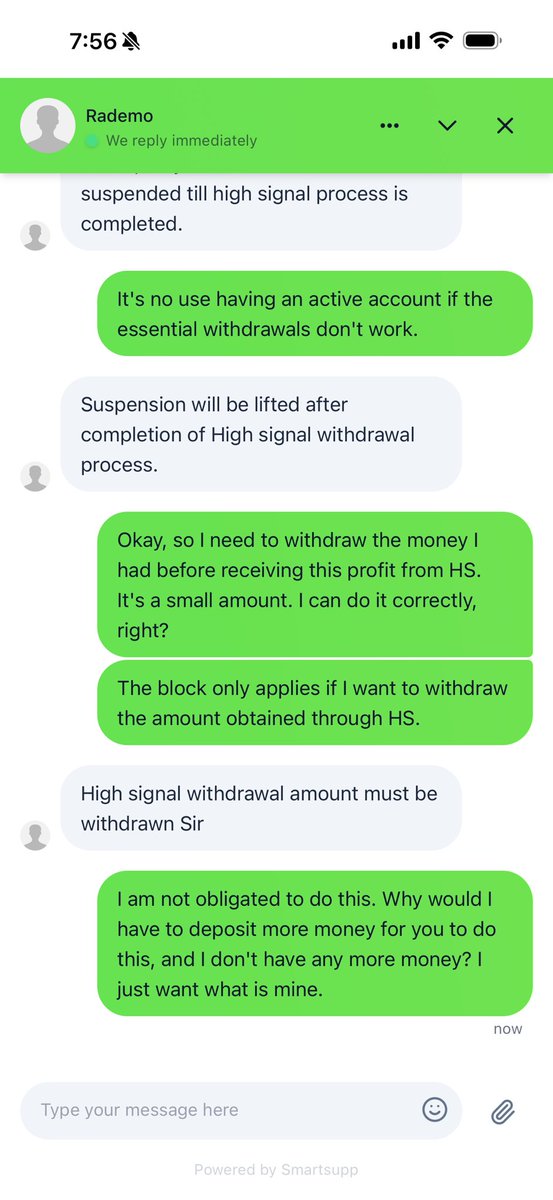
I believe I was scammed by @RademoCom after being influenced by @Leonidas. The platform promised daily crypto staking rewards but now demands more deposits before releasing my funds. I have proof of every transaction and all conversations. investigate. @FTC@SECGov
limite do X:
I believe I was scammed by @RademoCom after being influenced by @Leonidas. The platform promised daily crypto staking rewards but now demands more deposits before releasing my funds. I have proof of every transaction and all conversations.investigate. @FTC@SECGov
limite do X:
I believe I was scammed by @RademoCom after being influenced by @Leonidas. The platform promised daily crypto staking rewards but now demands more deposits before releasing my funds. I have proof of every transaction and all conversations. investigate. @FTC@SECGov
MIT, 1981.
Richard Feynman presents his paper, “Simulating Physics with Computers”, at the first Physics and Computation Conference.
The paper would become one of the foundational works of quantum computing.
Feynman posed a bold question:
Why can’t we simulate quantum systems efficiently on classical computers?
His conclusion was radical:
If nature is quantum mechanical, perhaps the best way to simulate it is with quantum machines themselves.
More than four decades later, that challenge remains.
And fittingly, the story continues where it began: MIT.