Ted Chiang argues that Large Language Models (LLMs) are not sentient beings, but rather sophisticated "sentence-continuation machines." He contends that the current trend of anthropomorphizing AI is both a technical misunderstanding and a dangerous social deception.
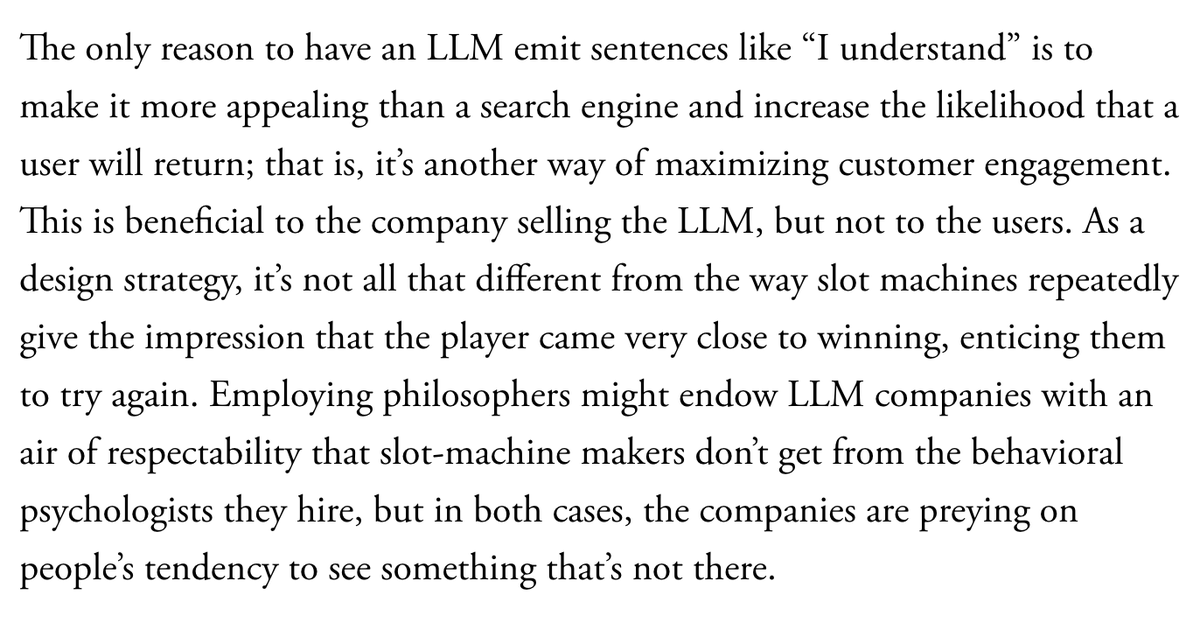
Compelling essay by sci-fi writer Ted Chiang on why LLMs are nowhere near consciousness, but why it serves the interests of LLM companies to constantly suggest that they might be.
I've pulled one quote below, but the whole article is worth reading.
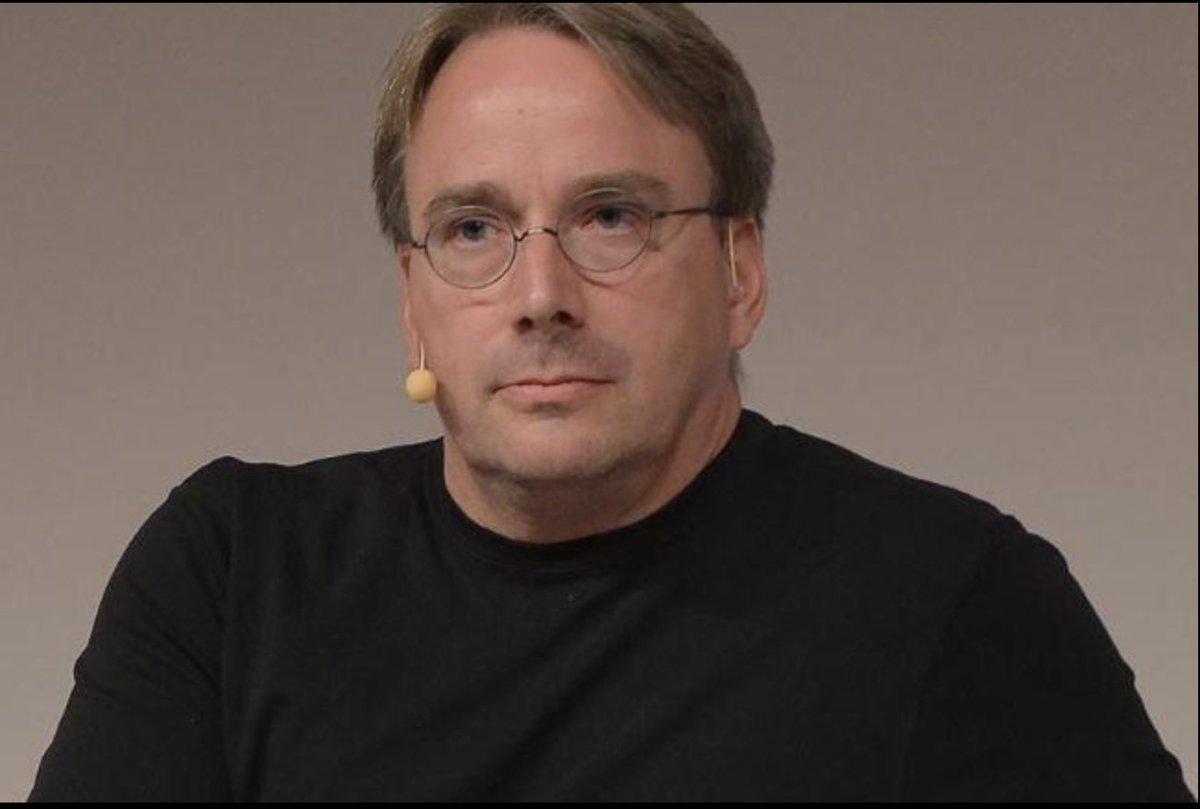
The creator of Linux just publicly called out the AI hype. Word for word.
Linus Torvalds took the stage at Open Source Summit 2026 and said this:
"When I see people saying 99% of our code is written by AI, I literally get angry. Because those same people — I can pretty much guarantee — 100% of their code is written by compilers. But they never say that."
He is not anti AI. The Linux kernel saw a 20% jump in submissions this release because of AI tools. He uses it. He gets it.
His point is something most people are too afraid to say.
AI is a productivity tool exactly like compilers were. Compilers boosted programming by 1000x. AI adds another 10x on top. Enormous. But nobody says "the compiler wrote my code." So why are we saying AI wrote it?
He also flagged something nobody is talking about.
AI is flooding small open source projects with drive-by bug reports. Someone runs a prompt, files a report and disappears when asked for a patch. Maintainers with one or two people are drowning trying to keep up.
"Sometimes AI reports a bug and when you ask for more information the person has done that drive-by and does not even answer your question. That is the real burnout issue."
And his final warning was the sharpest of all.
"People who do not understand the complexity of systems will prompt systems and write processes that will fail."
The AI hype crowd is very loud right now.
Linus has been building real systems for 35 years. When he talks, engineers listen.
Full interview here:
https://t.co/LmXJtvKc4O
John Bolton, according to CNN, will plead guilty to a felony of mishandling classified information, with a fine of $2 million and possible prison time.
Bolton previously urged that Edward Snowden be executed, and Julian Assange be imprisoned for life, for informing the public.
division is 20-40 CPU cycles. multiplication is 4. if you're dividing by the same constant in a loop, you're paying that tax a million times for no reason.
one reciprocal. computed once. everything else is multiplication.
With unfettered access to someone's life, you can piece together any narrative that suits your agenda.
This is why mass surveillance is dangerous. Because you're only safe until you become someone's target.
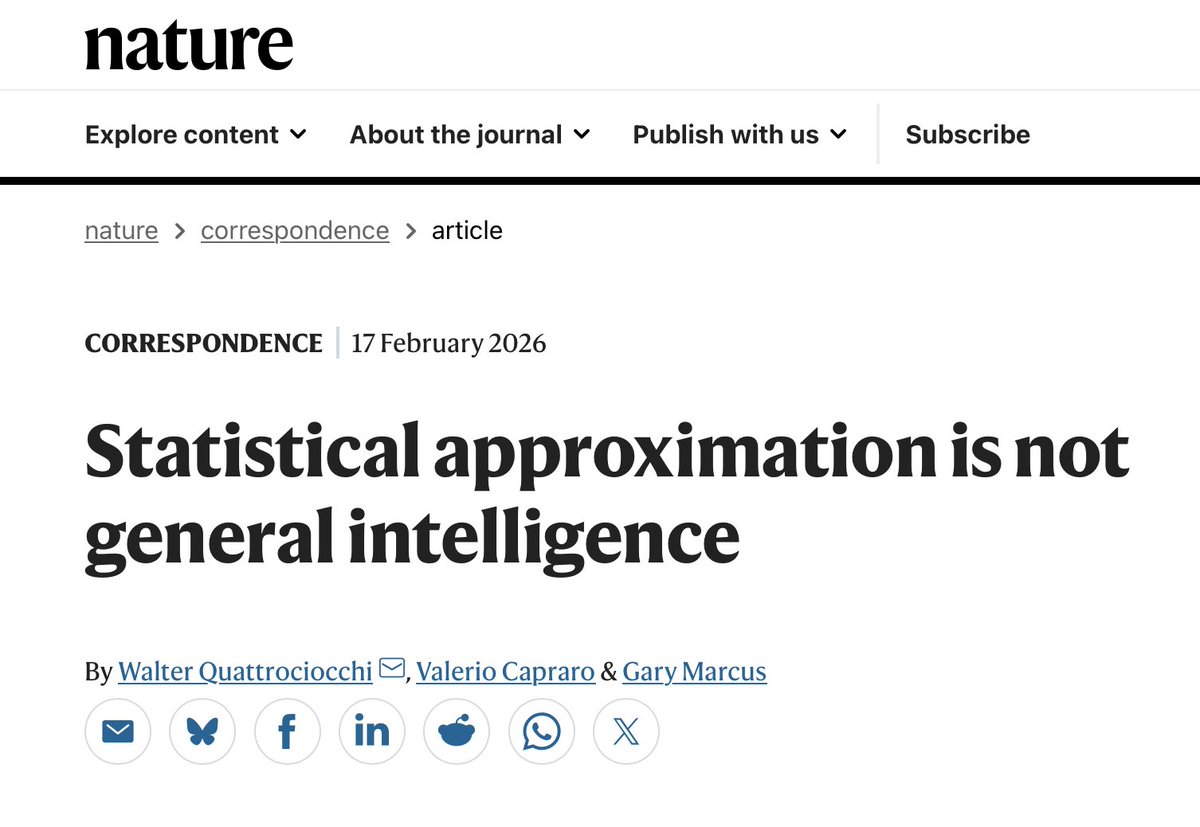
The Pope is making exactly our point. LLMs “may imitate or even simulate, but they do not understand.”
This is the core epistemic fault line.
Most AI evaluation is still based on one assumption: if a system statistically approximates human behaviour, then it is close to human intelligence.
But approximation is not intelligence.
Simulation is not understanding.
LLMs can produce the right answer without knowing why it is right. They can simulate empathy without feeling. They can imitate judgment without responsibility. They can generate coherent explanations without having a world to which those explanations are accountable.
Stop confusing behavioural similarity with cognitive equivalence.
Human understanding is embodied, affective, relational, motivational, and normative. It is not just the production of plausible text.
*
Full paper in the first reply
@MsMelChen The solution is to rally around open source.
That's the only way to compete with a superpower technology network effect if you are not a superpower yourself. And it's the only way to bring the rest of the world along on the same team as you.
Open source.
Social media is likely to get more like this over time.
In my recent novel, the internet is pretty divided into centralized/censored core networks and decentralized/uncensored edge networks.
CEOs are quietly realizing the AI replacement plan has a problem.
Two problems, actually.
One: the token costs for running AI agents are now exceeding what they were paying the employees they fired.
Two: when the tokens run out, the AI stops. Just stops. No continuity. No workaround. Just a spinning wheel where your workforce used to be.
You fired humans to save money and bought a subscription that bills you into a corner.
The employees you let go knew what to do when things broke.
The AI just invoices you for the outage.
And then there’s the permission problem nobody wants to talk about.
To do its job, the AI agent needs access. Full access. Your systems, your patents, your contracts, your future plans. Everything you spent years building, handed over to a process that has no loyalty, no discretion, and no skin in the game.
You didn’t hire a replacement.
You gave a stranger with no soul the keys to everything you own.
Enjoy.
I'm leaving coding behind me, Bjarne is fully right about AI and if you want performance on the backend you should stick with the manual art of coding.
Management needs AI to be in every slide, so in the coming few years there the focus will be all into AI.
As a senior my brain refuses to validate AI output, it's way worse than guiding a junior in the team.
So my time in tech will end this year, and I'm not sure what my next step will be.
Creator of C++, Bjarne Stroustrup:
AI-generated code isn't ready — it generates more bugs, more bloat, more security holes, and is nearly impossible to validate
"senior developers are already retiring rather than deal with it"
The problem is that even a small prompt change can shift the entire codebase in unpredictable ways
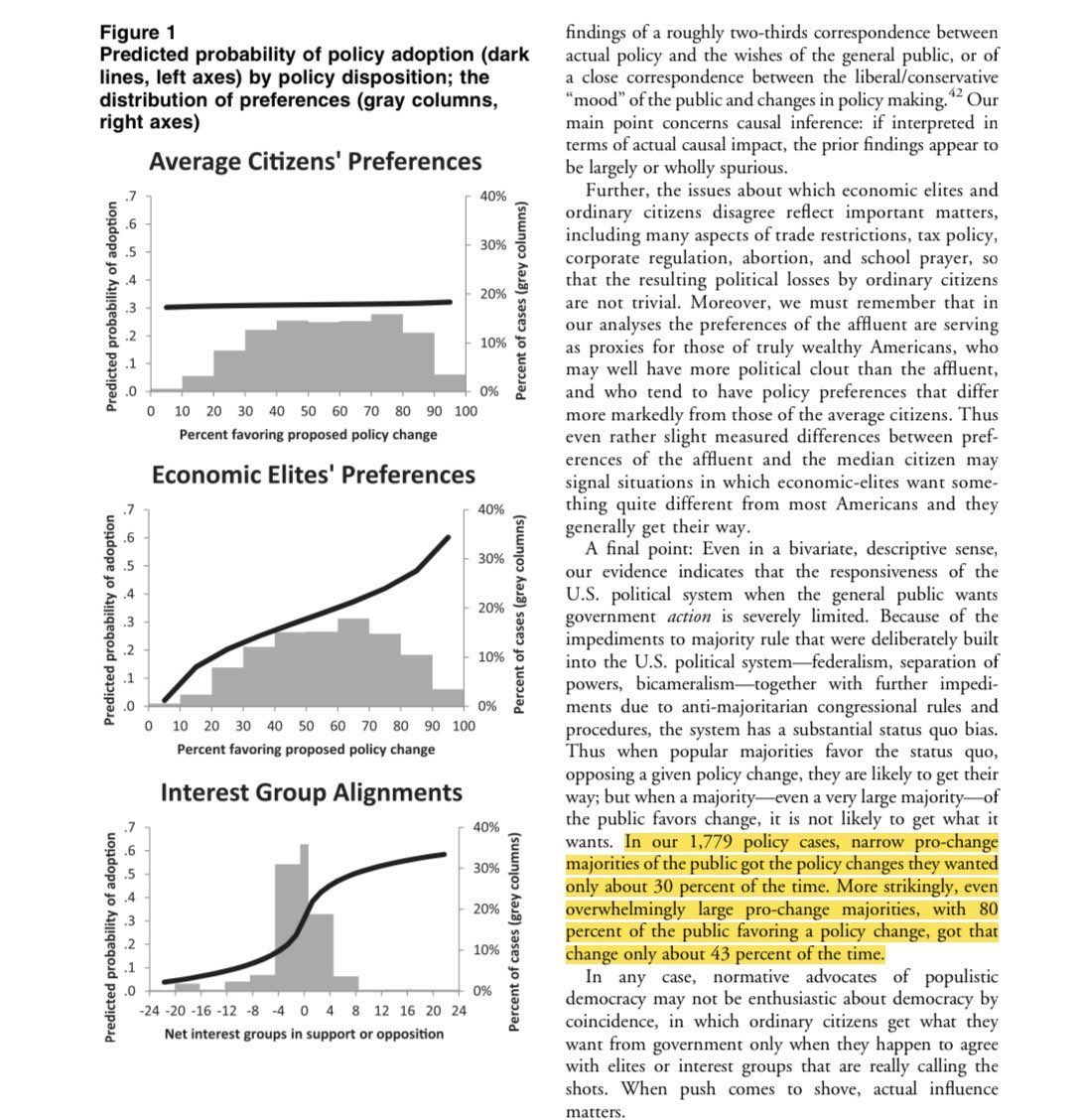
@TheCradleMedia It's been over a decade since a Princeton study confirmed that the US is more like an oligarchy and not a democracy, with policies reflecting the influence of economic elites rather than average voters.
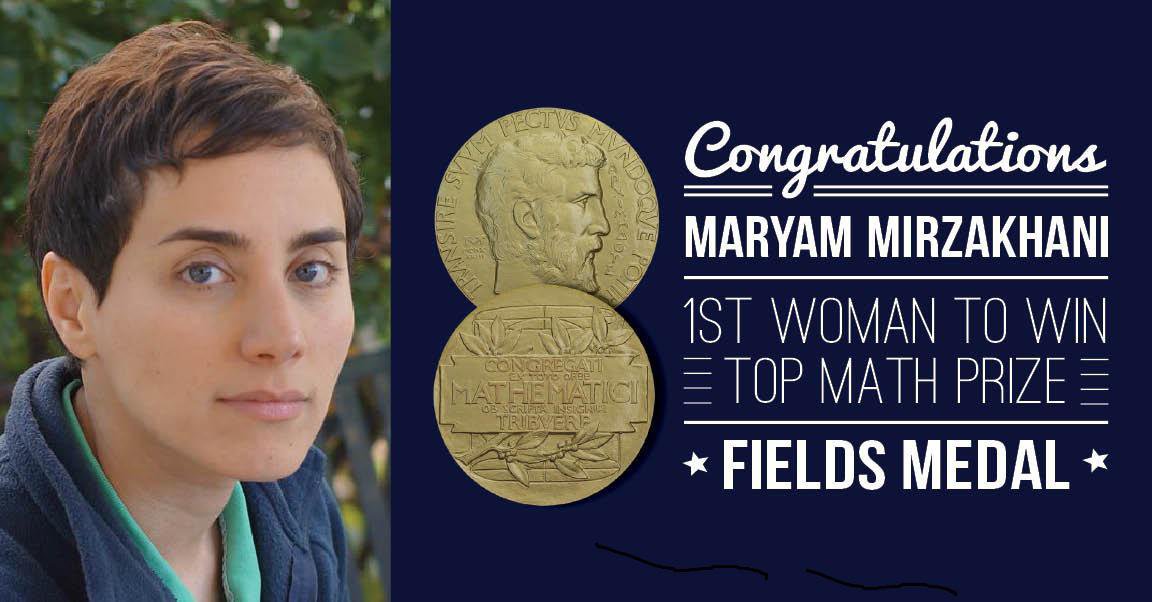
Today, May 12, we celebrate the birthday of Maryam Mirzakhani (1977–2017) - the first woman and first Iranian to win the Fields Medal.
Her groundbreaking work on Riemann surfaces and moduli spaces continues to inspire mathematicians worldwide.
May 12 is now International Women in Mathematics Day.
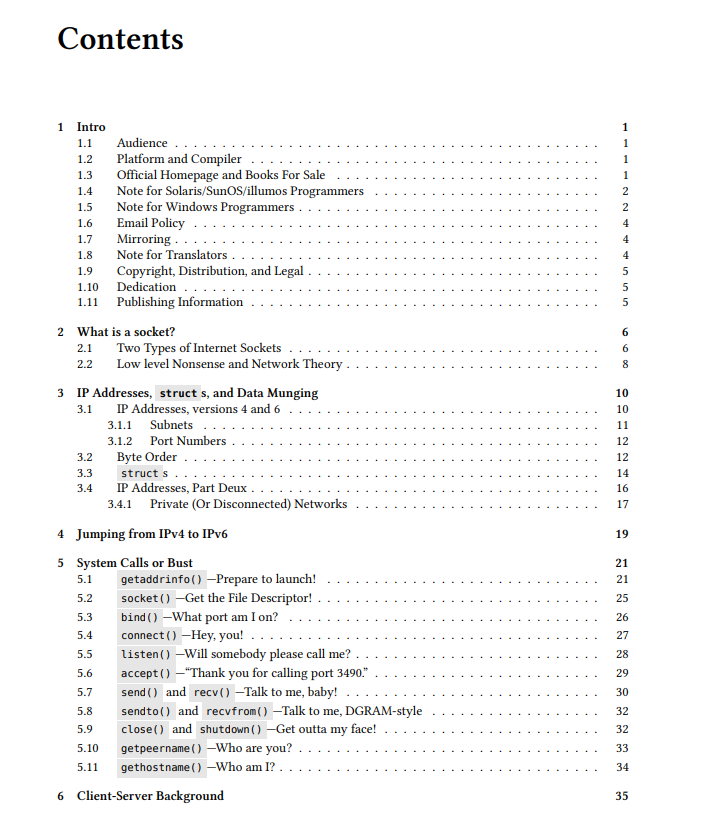
someone asked Beej how sockets work in C. he got tired of explaining it. so in 1995 he put it all online.
it's been the definitive socket programming guide for 30 years.
it covers everything: TCP, UDP, IPv4, IPv6, non-blocking I/O, select(), poll().
graduate OS courses worldwide assign it. it's funnier than any technical book has a right to be.
it's free and always will be.