Sth brewing with @unitxyz
If u have more than 5mil trading volume on @HyperliquidX, ensure you join whitelist thru below link ASAP
No harm joining anw.
Probably next alpha.
Stock dex 24/7 powered by @tradexyz 📊
$TSLA $NVDA $SPY onchain soon 👀
https://t.co/tbxedfJRCM
Equity perps now live through the main front end
Expect single name stocks (NVDA, PLTR, HOOD, TSLA etc.) to get listed soon as well.
The home for all of finance.
Generational wealth doesn’t lie in your TA, but in your social network
After all, people trading action makes the chart you viewed as well
It is always about people 👥
If you don't an edge in trading, try going all out in networking
Every conference,be there
Every meetup,show up
In bear markets,humans are much more accessible
You wouldn't believe the amt of people I've known who made it just by knowing the right person; simple advice ~GCR
Public is usually wrong. Do expect one more flush to below 101k before the shakeout completes and bull trend resumes.
See whether any reaction at 101k. Either up or down from there 👀
gm
i have been silently observing everything the last few days and watching how the trend has shifted after 10/10, with majority calling a start of the bear market
while it could be true but i am still of the opinion that we are in a bull market and BTC will make another ATH this Q4
why?
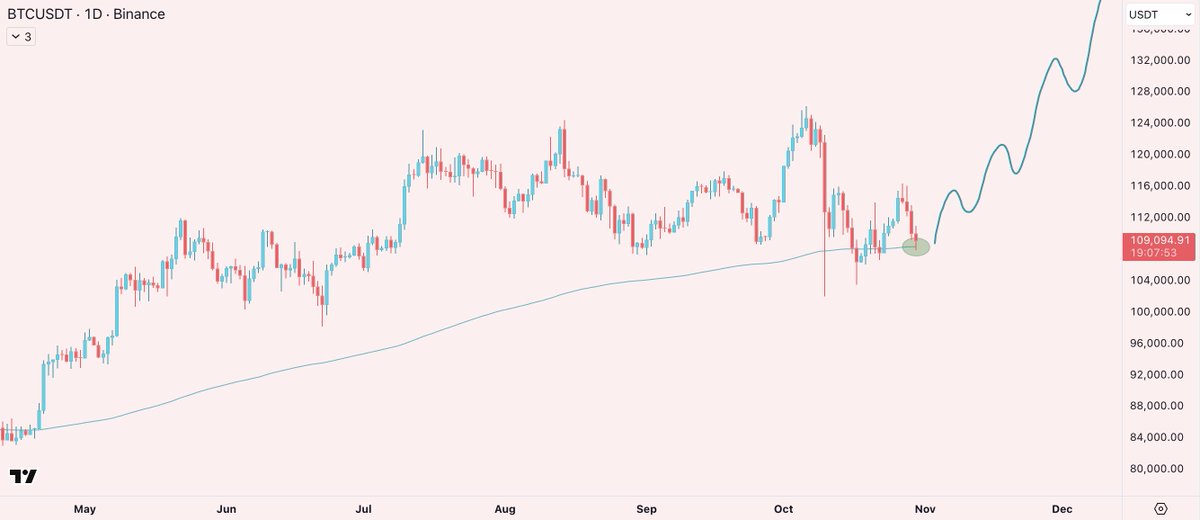
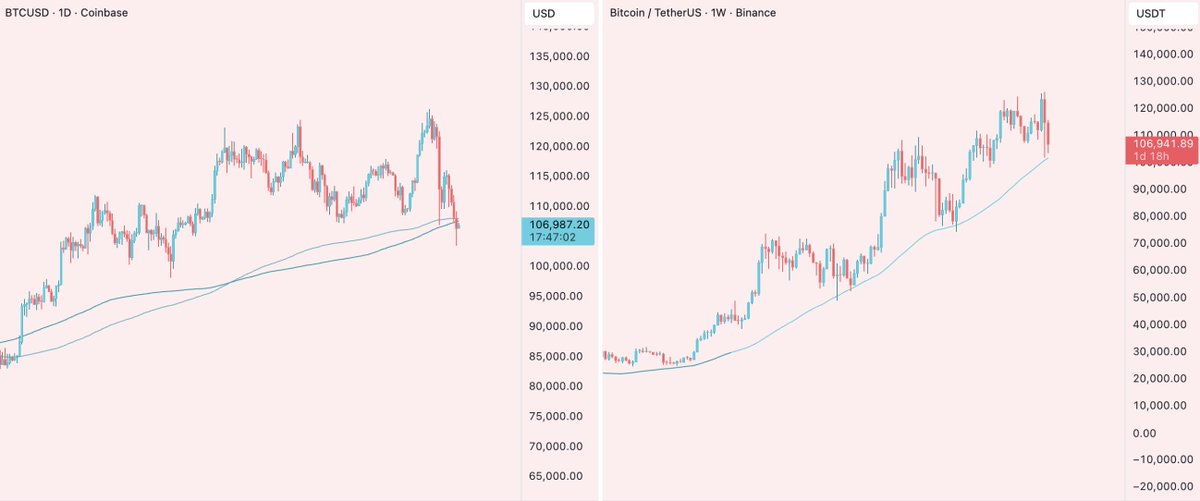
*insert 1D EMA200 and 1D MA200 here*
i have been using these magic lines for a long time and safe to say, this has worked 7 out of 10 times and provided some great entries, especially for majors
right now, we are hovering around these lines on BTC, ETH and SOL, which makes me believe we are still very much bullish and this is not the start of a bear market
i am holding all my spot bags, patiently waiting for higher prices in the next few weeks
but..
what if this is really the start of a bear market?
well, as you can see in the 2nd chart below, the line is 1W MA50 and closing below it signals the start of a bear market so, until we close weekly below 101k, im gonna assume and play this as a bull market but if/when we close below it, it would be the start of a bear market and then the logical place to bid would be 1W MA200 (more on this later)
tl;dr ~ no bear market till we are above 101k
ready for one last ride in Q4 but you do you and as always,
goodluck, have fun and don’t get liquidated
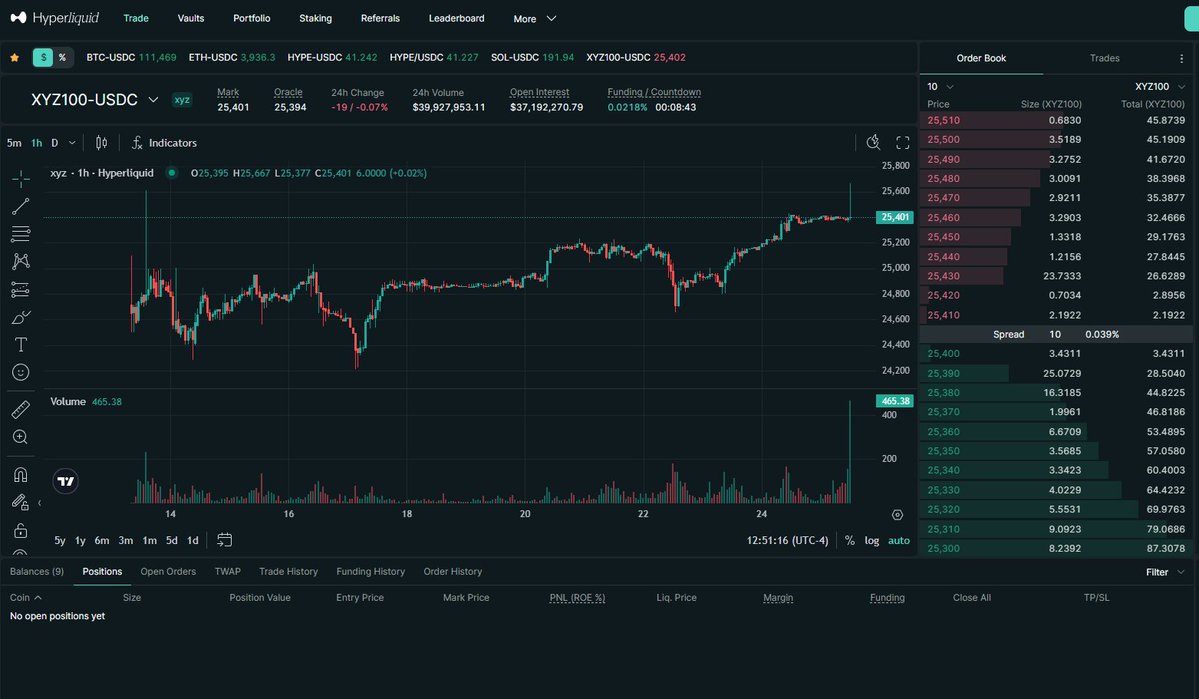
Equity perps are now live.
Trade [XYZ100] with up to 20x leverage 24/7, 365.
The XYZ US 100 Index tracks the value of the top 100 non-financial companies.
The first 100 users on the waitlist will get alpha access to https://t.co/0pSGkVZda0 today.
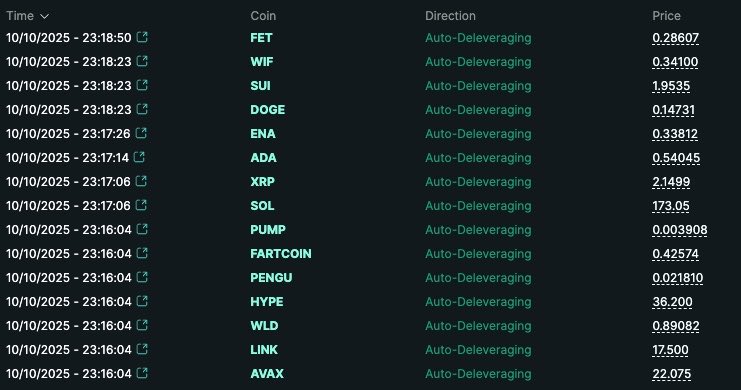
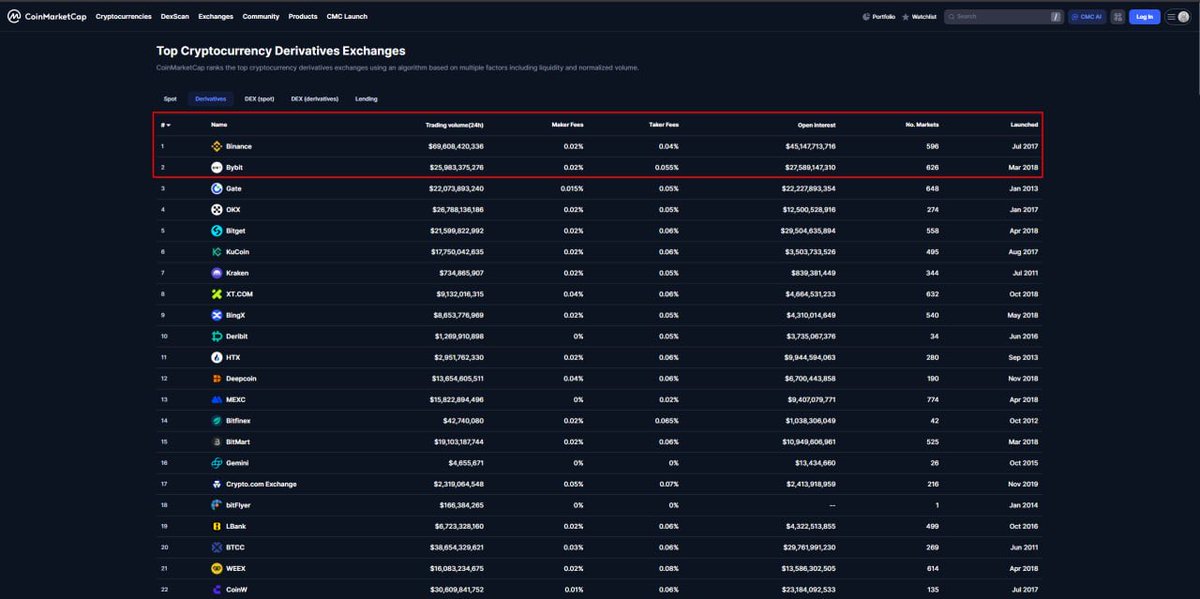
1/ Since a lot of people are waking up to see their perps positions closed and wondering what the hell “Auto-Deleveraging” means, here’s a quick and dirty primer.
What is ADL? How does it work? And why does it exist?
BTC
2 scenarios here:
first, the bad one;
we lost our bullish structure and closed below $117.5k, which signals weakness in the market and likely will lead to chop-chop
maybe we retest the lows or not but i don't think we have topped yet until we close the weekly below 98k (if we do, it's genuinely lights out)
now, the good one;
we cleaned up all the lows and bounced off the 1D EMA200, which is actually a bullish sign because nothing is hanging over our head now
it might take a few days of choppy price action and some wicks here n there but after last night's incident, i think the last phase of the market has started and we are good to go higher
i'm not gonna lie, it hurts to see our bags down and being underwater but on the bright side, i'm glad i was in no leverage trade because it would have been a blunder
the last couple of times i experienced something like this were in may 2021 and ftx crash ~ i didn't do much but bought spot (as im gonna do today as well)
hope y'all are doing well
higher in Q4 🙏
52 Trading Never-Dos: Lessons Every Trader Learns The Hard Way
1) Never oversize. That is when you start becoming irrational. Blowing up while still being right is the fastest way to ruin.
2) Never trade when tired or sleep-deprived. Decision fatigue has ended more traders than liquidation ever could.
3) Never trade without a defined edge. Entering without one is just gambling with extra steps. If you can’t explain your edge in a single sentence, you probably don’t have one.
4) Never enter a position out of boredom. The desire to always be in a trade leads to suboptimal returns. More often than not, doing nothing is the best move.If you find yourself taking trades just to feel busy or because you “haven’t traded in a while,” check yourself. Trading for action leads to sloppy decisions and losses.There’s no prize for the most trades – only for the most profitable trades. Sometimes the best trade is no trade
5) Never trade after a big loss. Tilt sets in, and you try to win it all back in one bad bet. Trying to recover everything at once is a guaranteed way to lose even more.
6) Never enter a position without an exit plan. Whether it’s a time-based stop, price stop, invalidation, or catalyst-driven exit—define it before you enter. Remember, the last moment of objectivity is before you place the trade.Once you’re in, it’s much harder to admit you’re wrong, so decide beforehand when to cut the loss.
7) Never marry your bags. The market doesn’t care about your conviction. Cut or be cut.
8) Never trade your PNL—trade the market. Chasing losses or fixating on past wins clouds judgment and distorts execution.
9) Not all views are meant to be traded. The best trade is often no trade. Preserving capital and mental bandwidth for when odds favor you is more important than forcing activity.
10) Never fight the trend. The wave is stronger than you. Adapt or get wiped out.
11) Never try to knife catch without reason. "Cheap" can always get cheaper.
12) Never break your trading rules or deviate from your plan in the heat of the moment. Your rules exist for a reason – usually learned from painful experience. The moment you convince yourself “just this once” to ignore a rule (like moving a stop, or doubling down, or trading too big), you open the door to chaos. Discipline is doing the right thing even when it’s hard. As one trading maxim goes, plan the trade and trade the plan.
13) Never fire all your bullets at once.
14) Never trade outside your comfort zone. If a position is too big, you’ll start making fear-based decisions, thinking that market or someone is trying to liquidate you seeing ghosts where none exists. Size your trades proportional to the quality of your sleep at night.
15) Never let ego keep you in a bad trade. Admit when you're wrong—cut, reset, move on.
16) Never underestimate market reflexivity. Strength can always go higher, weakness can always go lower.
17) Never assume liquidity will be there when you need it. The exit door is always smaller than you imagine—liquidity isn’t something you decide, the market does.
18) Never mistake randomness for strategy. Buying because price is going up or shorting because it “feels high” isn’t trading—it’s blind betting. Even with good risk management, you’ll bleed out over time if your entries are based on nothing.
19) Never make the same mistake twice. Trading mistakes are inevitable, repeating them is unacceptable. Never lose the same way twice
20) Never forget to play defense. Being wrong is acceptable, staying wrong is not. Protecting capital always comes first. "Don’t focus on making money; focus on protecting what you have.”
21) Never just focus on offense. Survival > everything. If you don’t bet, you can’t win. If you lose all your chips, you can’t bet.
22) Never fall into lifestyle creep after one big win. The problem starts when you begin forecasting annual income based on a single lucky trade.
23) Never forget to turn defensive after a hot streak. Big losses come after a series of wins when overconfidence sets in. Check your ego—your last big trade means nothing to the market.
24) Never let pride, ego, or overconfidence take over. Always stay humble.|
25) Never trade in situations where you don’t have control. for eg. FOMC events
26) Never get complacent. A strategy that worked in one regime may stop working in another. Trading is a craft that requires continuous self-improvement. Comfort Is Often the Enemy of your PNL. Never assume you know for sure what the market will do. “We have two classes of forecasters: those who don’t know — and those who don’t know that they don’t know.” Never assume your edge is permanent. Markets evolve, edges fade, and what worked last cycle may be useless in the next. Keep refining, keep testing—stagnation is death.
27) Never ever average losers after your reasoning has been invalidated
28) Never trade with certainty, trade with conviction.
29) Never assume the market “must” do something, especially based on recent patterns.The market doesn’t owe you continuity or logic. Just because a market has been rising (or falling) steadily doesn’t mean it can’t abruptly reverse. Avoid words like “surely” or “can’t possibly” in trading. Stay flexible – anything can happen. As a reminder: never say never about market behavior.
30) Never mistake win rate for everything. Maximizing winning trades for the sake of feeling good is a trap. Taking profits too early or avoiding necessary small losses ultimately hurts profitability.
31) Never underestimate discipline, patience, risk control, and execution over alpha generation. Plenty of traders have great alpha flow but don’t know how to use it.Good execution involves choosing not just what and how to trade, but when not to trade. Sometimes the best execution decision is no trade at all if conditions aren’t suitable. Always ask: “Do I have an edge here, or am I flipping coins?” If it’s the latter, save your capital for a better spot.
32) Never fall apart after a big loss or get euphoric after a big win. Emotional resilience is a trader’s strongest asset.
33)Never ignore price action after news. If the market reacts opposite to what you expected, get out. The market is telling you something you don’t see.
34) Never trade on borrowed conviction. If you buy on someone else’s tip, you’ll need them to call your exit too—and when they go silent, you’re stuck. As Livermore said: “Nobody makes big money on what someone else tells him to do.” Hone your own craft, build your own system. If you can’t trust your own decisions, you’re just a pawn in someone else’s trade.
35) Never go against your intuition. If something feels off, it usually is.
36) Never try to Catch Every Move It’s tempting to try to grab every up and down in the market, but that’s a fool’s errand. Always come from the mindset of abundance and not scarcity, markets will still be there and there are ample opportunities in the market to make you whole,
you don’t need to swing at every pitch.
37) Never underestimate the power of failure. Failing early and failing often—while staying in the game—is how you get better.
38) Never hold onto losers when your thesis is invalidated, especially after a massive drop. "I’ve lost too much to sell now" is how you go to zero.
39) Never let "getting back to break even" dictate your decisions. That mindset leads to overtrading and eventually, full liquidation.
40) Never focus only on entries. A trade isn’t over until you’ve exited. Knowing when to cash out is just as important as knowing when to enter.
41) Never ignore the “boring” part (position sizing, stops, risk/reward) – it’s what keeps you in business.Don’t wait for a catastrophic loss to teach you this lesson.
42) Never trade for the adrenaline rush, Trade for the win
43) Never fall into the illusion of strength—it’s often just lagging behind reality.
44) Never stay/enter in a position out of 'HOPE' and wishful thinking
45) Never underestimate risk management. Prioritize protecting capital over chasing profits. "Take care of your losses, and the profits will take care of themselves."
46) Never exit/enter a position recklessly. The same way you scale in, you should scale out—"all in, all out" is a recipe for disaster.
47) Never make a bet you can’t afford to lose. No single trade should ever be big enough to take you out of the game.“The most important advice is to never let a loser get out of hand.” You should be able to be wrong 20 or 30 times in a row and still have capital left. Never allow a single position to jeopardize your trading career
48) Never trade outside your edge. If it’s not there, sit out. Forcing trades outside your framework is how accounts erode.
49) Never assume your edge is permanent. Markets evolve, edges fade, and what worked last cycle may be useless in the next. Keep refining, keep testing—stagnation is death.
50) Never judge a trade solely by its outcome. Good trades lose money sometimes, and bad trades can get lucky. Focus on execution over results.
51) Never worry about looking stupid or staying in a position because of your public opinion. I have seen many a men die before their time because they were worried about getting publicly ashamed. Cut your losses without hesitation. The market doesn’t care about your pride—neither should you.
52) Never underestimate the power of stepping away. If you’re in a losing streak, liquidate everything and take a break. Mental capital is just as important as financial capital. The key is to break the negative emotional spiral
Once you come back keep your size small and increase exposure only when you gain back your confidence.
These lessons were learned thanks to the books I’ve read, the smart traders I’ve learned from, and the endless mistakes I’ve made along the way.
Trading is lonely. It hurts. It makes you question everything. But if I had to choose again? I’d still take this over everything.
Lads there's a ton of value in knowing what your setup looks like when it gets rekt
If you're a momentum trader, prepare to buy the top/sell the bottom
If you're a trend trader, prepare to get chopped up and have a bunch of false starts
If you're a mean reversion trader, prepare to get hit by the steamroller as you're collecting pennies from time to time
And so on
This is the cost of doing business
The point isn't to entirely avoid these losers (you can't), but rather:
1. Ensure the winners more than pay for the losers over time by not overmanaging the trade and letting it play out
2. Size appropriately to ensure you don't get wiped out when you hit a losing streak
3. Gather useful information about market conditions based on how your setups are performing (e.g. if momentum setups were printing and suddenly start losing, could be a symptom of broader exhaustion in the market)
4. Study what happens after your losers to see if it's normal variance or if there's a potential reversal setup you can derive from them e.g. flipping long on specific failed breakdown trades
GM
Started adding $Fartcoin spot and looking to add lower.
Betting on mean reversion on LTF after that heavy sell-off on the $2B liquidation day.
With so many low-float, high-FDV VC coins coming out in Q4, the market should revert to sanity and start bidding value just like we did last time.
Once $pump makes a new ATH which is not far from here, capital likely pivots down the ladder into the “pumpfolio,” and Fartcoin should be one of the first to catch that liquidity flow.
Down 70% from the july top which for many coins has acted as a decent level for reversal
Chart-wise, it looks decent here.
People easily forget Fartcoin was once used as a hedge against inflation.
Most have rotated into utility coins, so positioning here is light also fuel for hated rally. A clean break of $1 would get people talking again and yes don't underestimate the reflexivity of this coin
Shorts are heavy noticing many people using it to hedge their other bags
There is still no DAT for fartcoin would be really funny if it comes and it likely drops around the euphoria phase
You won’t wanna miss this.
Co founder of @CurveFinance@newmichwill is the main driver of this protocol.
@CurveFinance is one of the most OG protocol in the entire history tapping on minimising slippage for large amt of swap between stable coins. This amt can be billions 👀
The FCFS sale will take place on both Kraken Launchpad and Legion, starting October 1st, 2pm UTC.
Based on the demand so far, it should sell out quickly, so be prepared.









![tradexyz's tweet photo. Equity perps are now live.
Trade [XYZ100] with up to 20x leverage 24/7, 365.
The XYZ US 100 Index tracks the value of the top 100 non-financial companies.
The first 100 users on the waitlist will get alpha access to https://t.co/0pSGkVZda0 today. https://t.co/nSULaM81uQ](https://pbs.twimg.com/media/G3JRZD5WUAAM4de.jpg)