OpenRouter proved its worth with this incredible achievement!
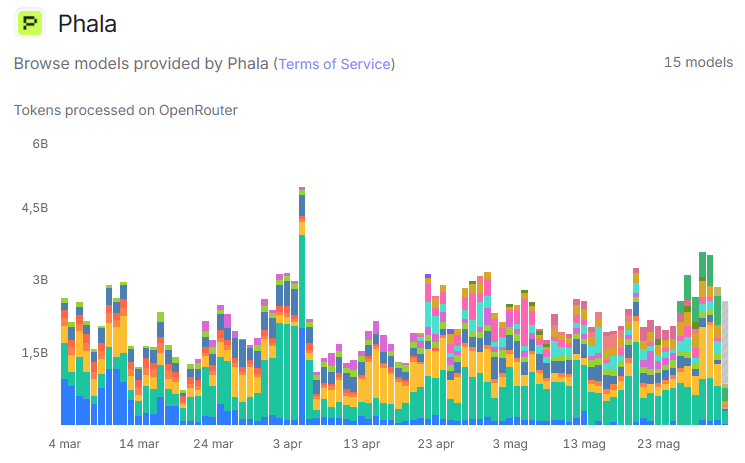
@PhalaNetwork, as one of the platform's historic providers with now approximately 2.5 billion tokens stably managed every day, had long recognized this. 👏
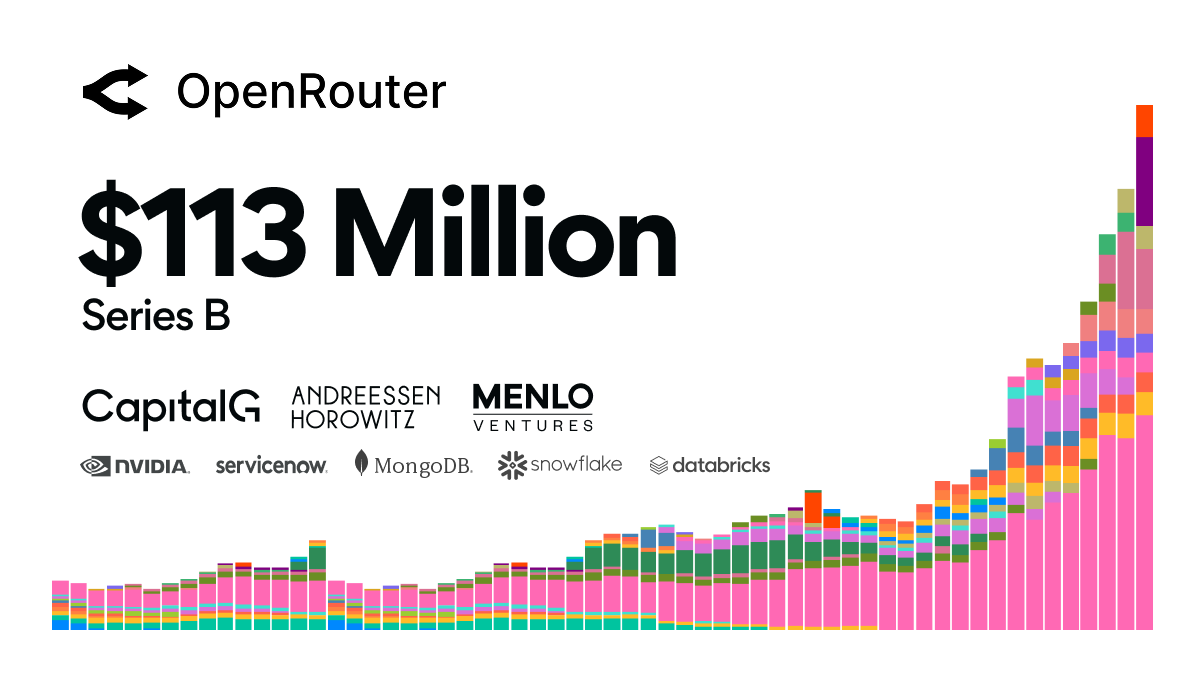
Today we’re announcing our $113M Series B led by @CapitalGVC.
Over the last 6 months, weekly volume on OpenRouter grew from 5T to 25T tokens as AI rapidly shifts from experimentation into production.
We’re excited for what comes next.
AutoGPT kicked off the autonomous-agent wave.
Now it runs on Phala Cloud with TEE-backed isolation for private AI workflows.
Deploy: https://t.co/Zq1QlfQVxM
While Google uses TEE in a centralized manner to protect Android data aggregation, @PhalaNetwork offers the same confidential computing tech in a decentralized and verifiable form, allowing anyone to build private analytics or AI systems without having to trust any single entity.
By tracking Stripe API keys, this chart indicates a steady growth in users paying to use @openclawdiai. The numbers are still relatively low, but it's an interesting trend to follow. 👀
Clawdi is an AI product developed by Phala Network!
Polkadot OpenGov is voting on a major change to the network’s staking architecture.
Referendum 1890 proposes that validators on Polkadot are required to lock a minimum of 10,000 DOT of their own funds as self-stake.
This reform is a mandatory prerequisite for the next major staking upgrade:
• Nominators becoming unslashable
• Fast unbonding (~24-48h instead of ~28 days)
The logic is simple:
Validators absorb the slashing risk directly through significant self-bond exposure.
Nominators can continue earning staking rewards without exposing their principal to slashing.
If enacted, Polkadot staking would remove its two largest barriers to participation:
Lower risk. Faster exits.
Ready or not, here they come.
Quantum computers may still feel like science fiction to some. For blockchain security, they are not.
The real question is no longer whether quantum computers arrive tomorrow or in ten years. It is whether networks are ready when they do.
This changes how we think about trust in AI and cloud infrastructure.
Instead of saying “trust the cloud provider”, Phala provides publicly verifiable evidence for all TEE apps. 👇
JAM Implementer Teams - the automated fuzzer to test JAM implementations is now accessible here: https://t.co/FtwdMKPzsc
Please note that you will need to register and be approved, and need ~ 0.5 DOT to use it. Also please note that this is only for JAM implementer teams.
If all is successful, you can attest on-chain and then set up an interview with the Polkadot Technical Fellowship.
See the "Let's JAM" channel on Matrix ( #jam:https://t.co/5wtOqhdkd9 ) for more details.
AI agents are getting smarter, but their memory still feels fragile.
Switch framework. New device. Fresh environment. Suddenly you’re rebuilding context, reconnecting tools, re-adding secrets.
Meet @openclawdiai: persistent memory for agents that actually travels with you.
Meet @bgmshana from Phala Cloud.
In a recent featured talk part of a series on Confidential Computing, he breaks down how we can build a "Privacy-First" future for AI using Trusted Execution Environments (TEEs). 🛡️🤖
Here are the key takeaways from his session. 🧵👇
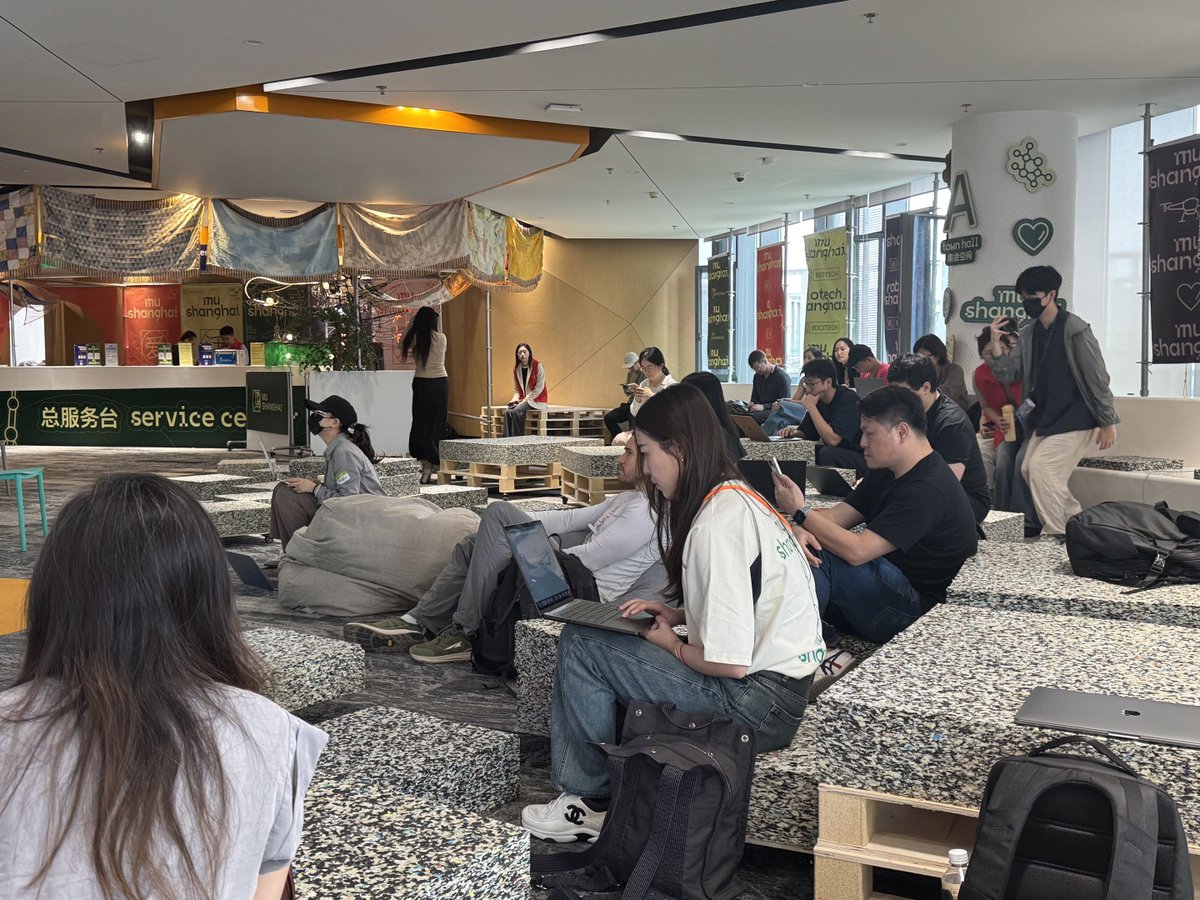
We were at muShanghai’s AI Security Day today!
Phala's Head of Research Dr. Shelven Zhou @zhou49 delivered a workshop on Phala as well as @openclawdi, the ultimate AI environment powering OpenClaw and Hermes agents!
Big thanks to everyone who joined the session. 🫡
It will be interesting to see how Anthropic handles the amount of sensitive data that will be processed by Claude’s new tool for lawyers.
If only there were a confidential cloud with remote attestation to ensure that the data provided by lawyers couldn’t be accessed by anyone.