one major lesson i've learned from the past year of @jokerace_io is that even among cryptonative audiences, financial incentives are *way* less powerful than reputational incentives (status) and social incentives (the chance to make friends)
and this makes perfect sense because financial incentives just give you money. but reputational incentives give you status *and* money longterm.
let me give some examples, in order from worst to best:
1) the winner of a meme contest earns $5000. this sounds good in theory: you can earn thousands of dollars for a minute of work! but in practice, you're probably going to do a bunch of unpaid labor to make memes for a company. the incentives aren't as great as they seem.
2) the winner of an art contest earns $5000. this is much, much better, for a simple reason: this is for artists who have *already made their artwork*, so there's nothing to be lost besides the submission fee and time it takes to submit.
3) the winner of an art contest earns 1st place from a jury of top artists and collectors. on the surface, we've replaced money with status and visibility, which is far more important for artists. but when you remember that that status converts to higher prices, they arguably can make way more from this contest than just $5000. status wins.
4) a jury of top artists and collectors will pick 10 top artists who will showcase their work on a livestream for audiences to vote on their favorites. now we have two contests, one offering status from experts, and one offering visibility from the masses. the reputational incentives are strong for the artists, but let's note something else: there's *social* incentives for the audience to form communities around favorite artists to vote them up. and all of this is onchain to build a dashboard of top artists that can earn opportunities, higher prices, airdrops, etc.
5) a jury of top artists and collectors will pick 10 top artists who will showcase their work on a livestream for audiences to vote on their favorites—and every vote that an artist receives will count as a point. now we're cooking. everyone wins by participating by getting attestations and *there is no way to lose*.
there are really three points to be made here.
first, reward people for work they're already doing or would have done anyway (as part of a class). when we permissionlessly reward people for original work, we create a dystopia of either rewarding people for meaningless actions or leaving most to lose.
second, use reputational systems like points so that everyone is always earning status from local communities. number of votes is not the only important factor here—the communities that voted for you matters much more, longterm, so that you can find values-aligned communities. all of this is valuable data to find your people.
third, social capital can often convert to financial capital, but financial capital can almost never convert to social capital. you can't buy your way to being cool. but if you're cool, you can leverage that in a ton of ways for job opportunities, sales, partnerships, airdrops, etc, because everyone will want to work with you.
the biggest mistake our space made was thinking that financial incentives would trump social incentives when the opposite continues to be true.
keep an eye out for a thread covering the best optimism mission final submissions next week :)
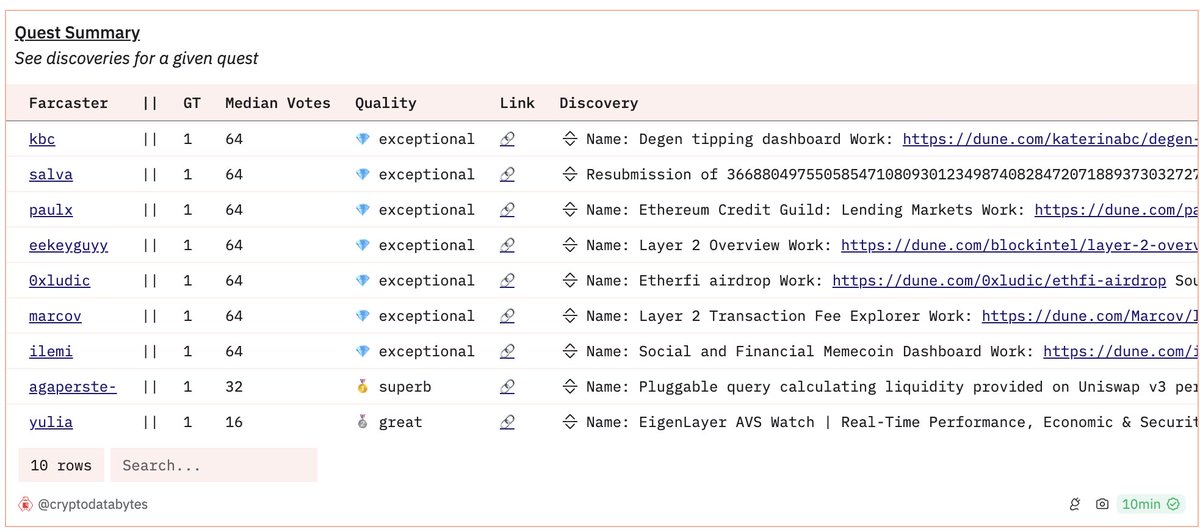
as always, anyone can join this group of 250+ data explorers. Check out the blog post on why an onchain community matters and what quests are available!
https://t.co/MO7q07vu9A
bytexplorers weekly highlights!
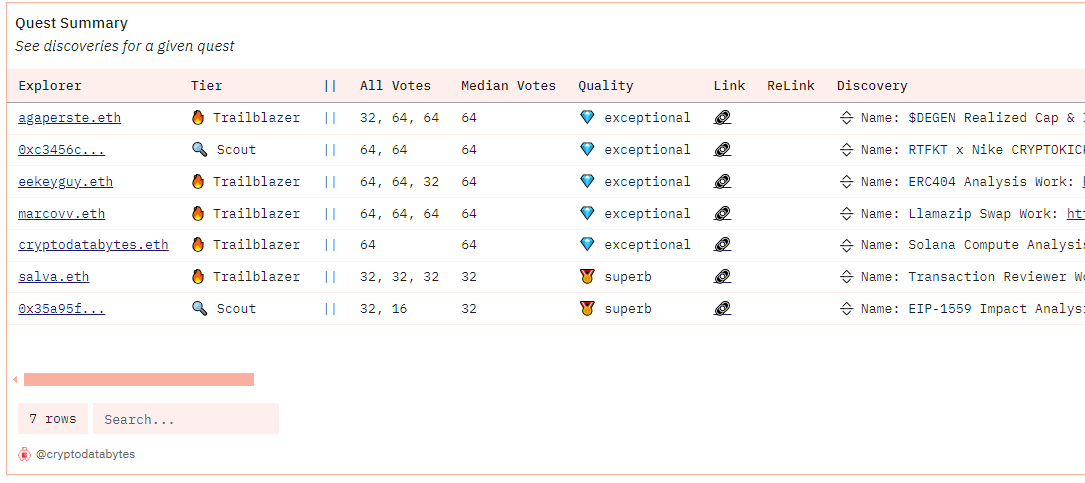
We got 3 promotions to trailblazer and 2 to scout, and we also wrapped up the 6 week optimism mission.
let's go over some great discoveries from the last few weeks
The @Optimism numbaNERDs mission is still ongoing, this program lasts three more weeks, anyone can join in anytime!
Learn more here:
https://t.co/cWpBCtTRht
The Bytexplorers are partnering with Optimism NumbaNERDs on our first research mission.
This will be a six week initiative where anyone can compete in tackling a list of questions (with rewards of course)!
bytexplorer weekly highlights 🔍
we're officially 3 months old, and nearing 250 explorers!
Congrats to our newest trailblazer, @YuliaWasThere 🔥
Let's look at some of the incredible research from last week...
@Postman_DAC@sudoswap@marcov_91 It will just be the 100 tokens until they sell out. I will increase the supply when I feel the community is ready for it.
bytexplorer weekly highlights!
we launched our sudoswap pool for bytelight, reached 200 explorers!
Congrats to @marcov_91 for reaching trailblazer tier :)
let's dive into some of the best weekly submissions:
The first checkpoint (small/easy questions) of the
@Optimism numbaNERDs mission is due this week.
This program lasts six weeks, anyone can join in anytime!
Learn more here: https://t.co/cWpBCtTRht
The Bytexplorers are partnering with Optimism NumbaNERDs on our first research mission.
This will be a six week initiative where anyone can compete in tackling a list of questions (with rewards of course)!
🔍 Realized cap, born from Bitcoin's UTXO chains, intrigued me. A question about @degentokenbase on Warpcast led me into a rabbithole.
Emerging from the rabbithole 🐇,here's a dash on: 1/ $DEGEN's realized cap 2/ Calculating it for ERC20 tokens using virtual UTXO
https://t.co/2hEBiVHXgz
@andrewhong5297 built a Solana compute dashboard so you can see minute by minute stats on transactions, fees, programs, blocks, and more.
https://t.co/K1oYz1NUIj
Solana's block saturation is largely influenced by market volatility due to continuous transaction execution. A full block has a capacity of 48M compute units.
Consequences of large price movements:
- arbitrage opportunities ↑
- spam ↑
- P(transaction inclusion) ↓