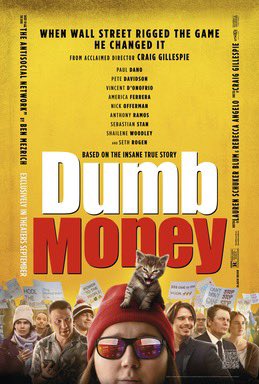
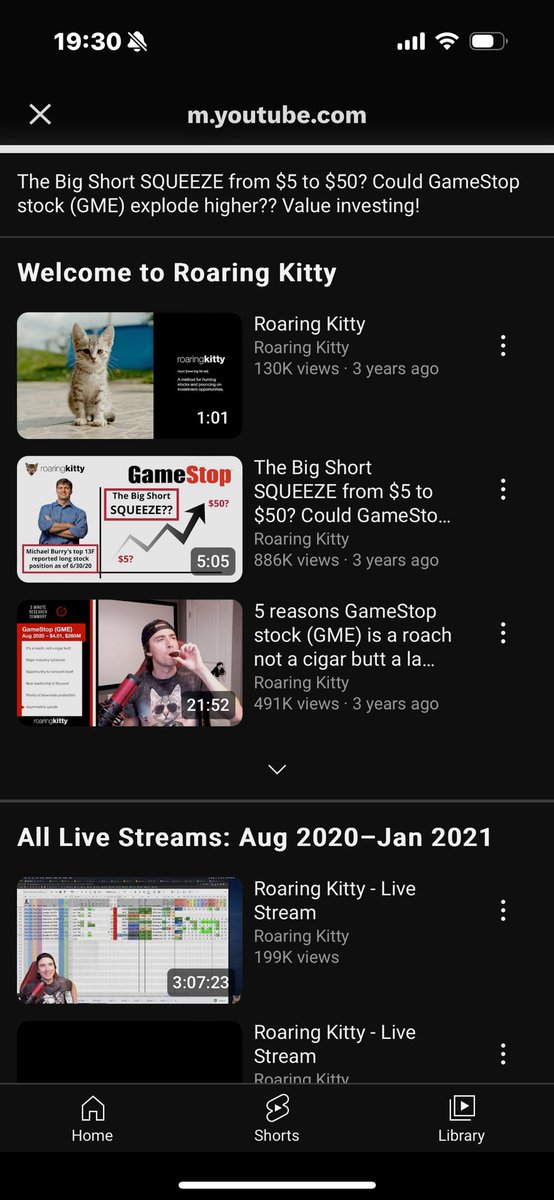
I watched a movie this weekend on @Netflix called DUMB MONEY
The movie was based on a true life story of a youtube stock trader who made some serious cash on $GME @GameStop stock token in 2021
By believing in $GME and betting against stock market Wall Street,he was able to turn he’s life savings of $52k into $35 million and making the short sellers lose over $6 billion in total during the $GME crazy bull spike.
Now normally I’m not the type to come online and talk about a movie I’ve watched but here’s the crazy part.
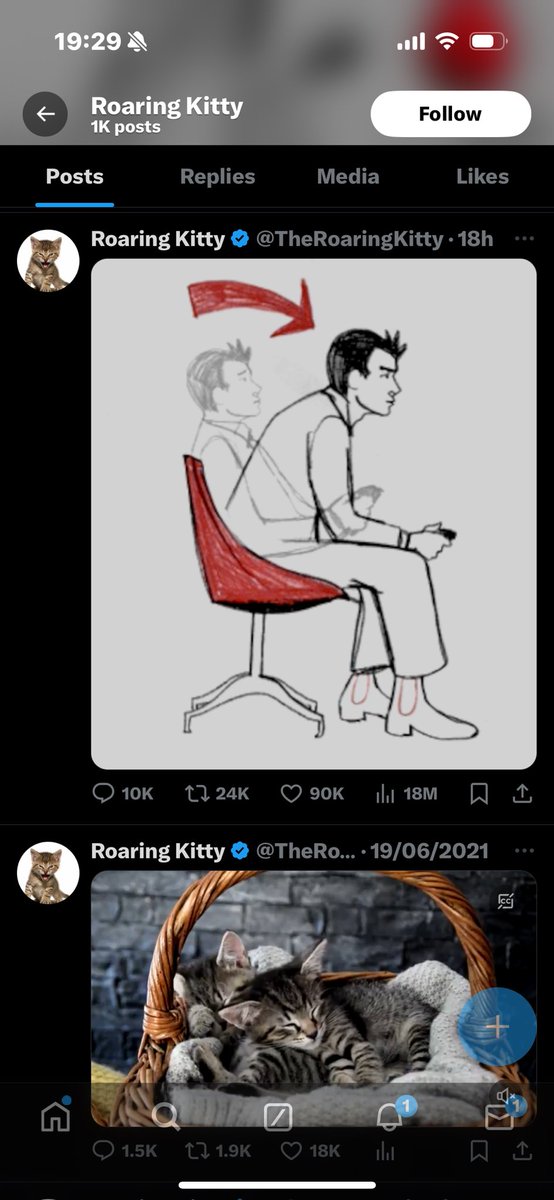
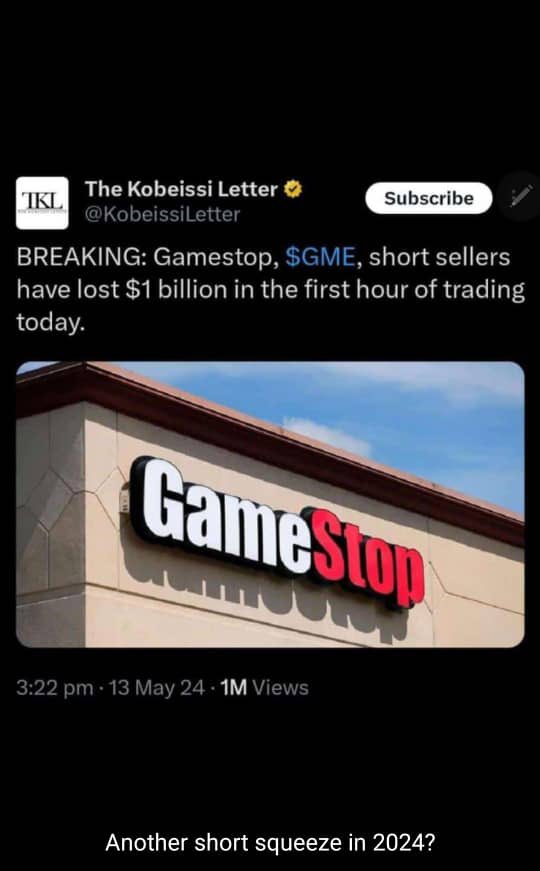
This particular guy went off the radar after the whole $GME saga in 2021,he’s last post was 2021 and now he’s back with a meme tweet on he’s twitter page merely 18hrs ago, $GME short sellers have lost over $1 billion in the first hours of trading today.
I couldn’t believe my eyes,a guy by the name @TheRoaringKitty did the impossible in 2021 against all odds and won. And just 3 years later with one tweet he’s back to making the rich lose.
It’s not just DUMB MONEY if you ask me,it’s DUMB INFLUENCE.
WOW,just wow!!!
The most expensive mistake in crypto is misclassifying the asset.
Bitcoin was sold as an inflation hedge. In 2022, inflation hit about 9% and Bitcoin fell roughly 65%. It behaved like a risk asset.
Ask three questions before allocating:
1. What role is this asset playing: growth, hedge, or settlement??
2. Can we hold through a 50% drawdown without forced selling??
3. Does the use case (payments, access to hard currency) hold up on its own evidence??
I'm still pro-crypto. I just want it judged on its record, not its marketing.
DeFi is evolving. But what comes after betting and prediction markets? 👀
A few years ago, DeFi was mainly about token swaps, yield farming and staking.
Then came memecoins, perpetual trading and the explosive rise of prediction markets like @Polymarket.
Today, people aren't just trading crypto prices. They're trading expectations about real-world events.
And the numbers are interesting. 👇
📊 Prediction markets: $102.4B in contracts traded over 30 days, with approximately $25.7B actually paid for those contracts.
💰 Stablecoins: $302.34B in market capitalization.
🏦 DeFi: $88.49B in total value locked.
🌍 Real-world assets: Approximately $34.61B represented onchain, with around $4.12B actively used in DeFi.
Data snapshots: October 17–18, 2026. Prediction-market figures include centralized venues.
But here's what makes this evolution interesting.
Prediction markets are showing how financial innovation can expand beyond trading crypto tokens.
Meanwhile, stablecoins, lending protocols and tokenized assets are creating opportunities for something even more practical.
I see four areas shaping DeFi's next phase:
🔹 Stablecoin payments: Moving money across borders more efficiently.
🔹 Onchain lending: Expanding access to borrowing and liquidity.
🔹 Real-world asset tokenization: Bringing traditional financial products onto blockchain infrastructure.
🔹 Consumer-friendly financial apps: Making DeFi accessible to people who don't understand wallets, gas fees or smart contracts.
And this is where the real transformation could happen.
Imagine using a financial app to receive payments, borrow money or access investments without even knowing it's powered by DeFi.
That's the kind of adoption worth watching.
Of course, security, regulation and liquidity remain serious challenges.
But the bigger picture is becoming clearer.
The first wave of DeFi was about making finance decentralized.
The next wave could be about making decentralized finance genuinely useful.
Prediction markets aren't the end of DeFi's evolution. They're one part of a much bigger financial transformation.
So, what do you think comes next?
Will stablecoins, tokenized assets or onchain lending lead DeFi's next growth phase?
Or is there another sector we're overlooking?
📊 Sources: DefiLlama and DeFi Rate.
#DeFi #Web3 #Blockchain #PredictionMarkets #Stablecoins #RWA #CryptoResearch #OnchainFinance #Ethereum #FutureOfFinance
@promaxpluto@axisrobotics Keeping the failures instead of only the clean demos is how the model actually improves. Highlight reels don’t train anything.
@BryanQuartz Live product with a public explorer since July changes the conversation. Seeing captures and USDC settlements on-chain is better than future promises.
@L0cCapital Clear separation between Trade, Earn, Build, and Qualify makes the paper-trading path easier to understand. Rules matter more than free demos.
@rudolphhh2000@Americanfort_io Embedding privacy features as an SDK into wallets people already use is smarter than asking everyone to switch to a new app.
@Harin2103@2FactorFinance Kelly-optimized leverage that adjusts to the asset’s volatility instead of fixed multiples is the right idea. Sudden vol spikes will be the real test.
@Vanquan_titans@zerufinance Separating wealth from consistency and protocol diversity makes wallet reputation actually useful instead of just ranking the biggest balances.