The American Reserve Modernization Act (ARMA) would authorize the U.S. Treasury to acquire up to 200,000 bitcoin per year for five years, targeting a reserve of 1 million BTC.
The bill was introduced Wednesday by Rep. Nick Begich with 16 original cosponsors. It is a rebranding and expansion of the original BITCOIN Act co-introduced last year by Begich and Senator Cynthia Lummis. It would codify Trump's March 2025 executive order establishing a Strategic Bitcoin Reserve into permanent law that cannot be reversed by a future president.
The bill classifies bitcoin as a "Tier 1" strategic reserve asset, putting it on the same legal footing as gold. A separate digital asset stockpile would hold other federally owned crypto.
All acquisitions must be budget-neutral. The funding mechanism is revaluing Federal Reserve gold certificates from their current statutory price of $42.22 per ounce, set in 1973, to current market prices. That gap generates hundreds of billions in accounting gains without new taxpayer debt.
The bill also ends the practice of auctioning off seized bitcoin. All future seizures would be transferred directly to the Strategic Reserve instead of being liquidated by the U.S. Marshals Service. Existing government holdings would be consolidated into a single audited ledger.
Bitcoin in the reserve would be held for a minimum of 20 years. The bill establishes federal custody standards including geographic distribution of private keys across air-gapped facilities, multi-signature governance requiring authorization from the Treasury, the Fed, and an independent third agency, and investment in "quantum-resistant cryptographic upgrades."
Rep. Pat Harrigan, one of the cosponsors, said "The United States government already holds billions in seized bitcoin with no coherent strategy for managing it, and that needs to change."
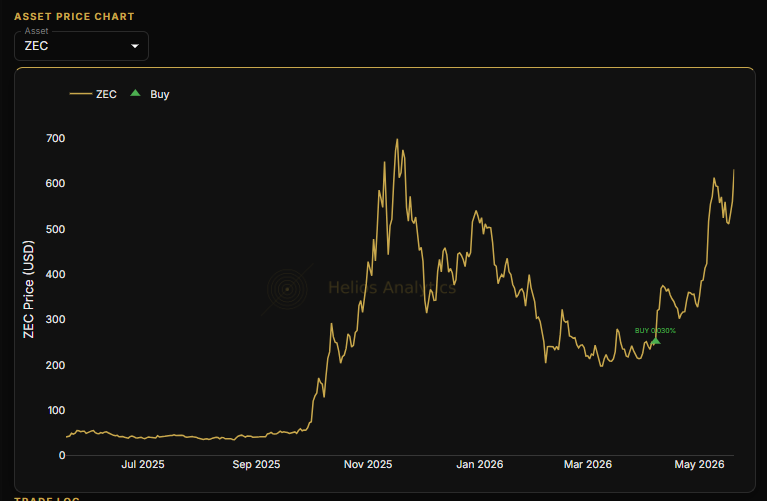
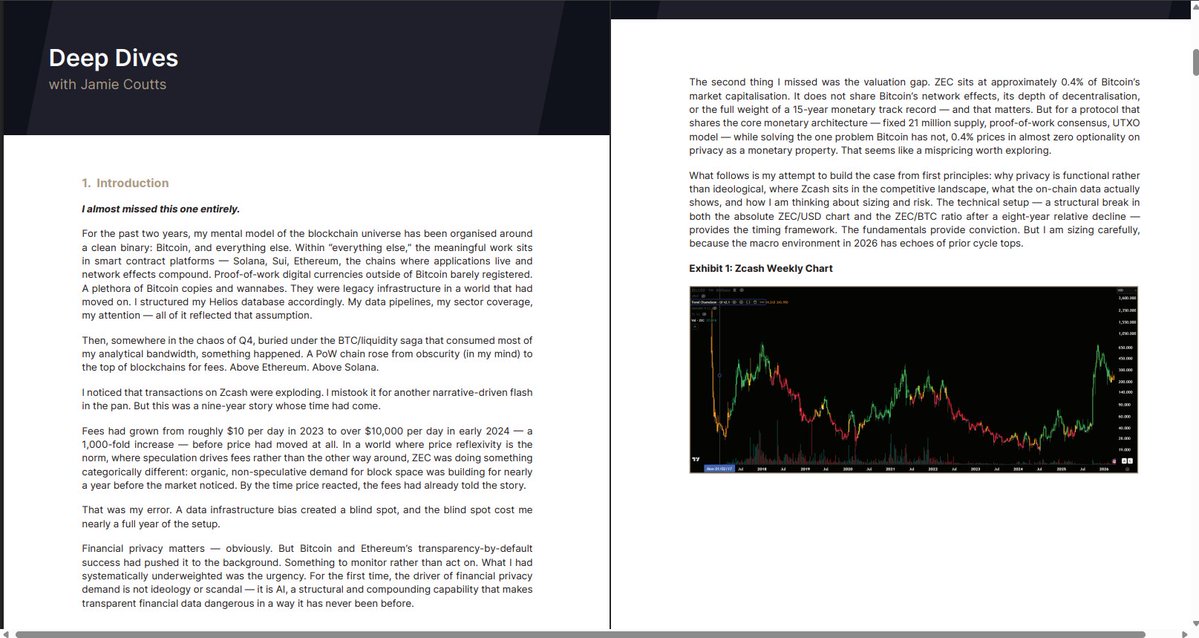
5 weeks ago I published a zcash:native deep dive for @RealVision Pro. Several things had impressed me at the time. Most still aren't being talked about. 🧵
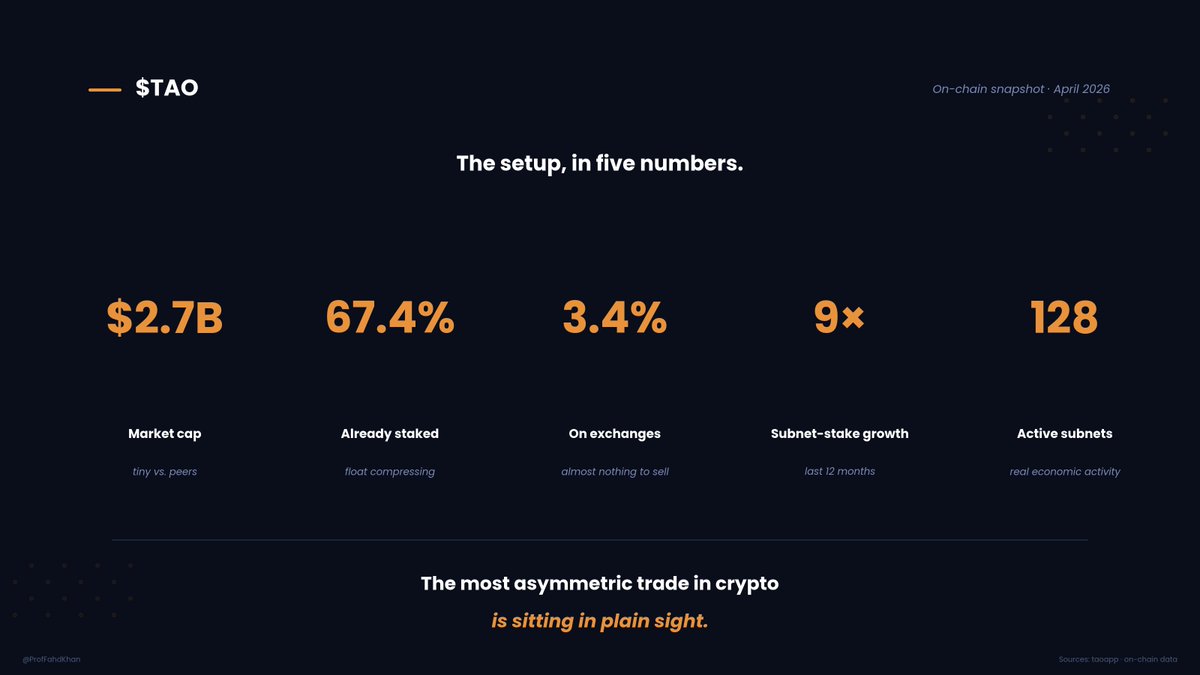
The most asymmetric trade in #Crypto is sitting in plain sight at a $2.7 billion MC.
Being an academic, I have spent time thinking abt the mathematical case for $TAO, reviewing frameworks & recent reports.
$1 TRILLION #Bittensor Market Cap by Sept 2034 (~370x).
Here’s how: 🧵
$300 BILLION IBM ANNOUNCES LIVE ON BLOOMBERG IT WILL LAUNCH A #BITCOIN AND CRYPTO WALLET FOR INSTITUTIONS
IT WORKS WITH 97 OF THE TOP 100 BANKS
BTC IS GOING MAINSTREAM 🚀
BREAKING: $11 TRILLION CHARLES SCHWAB JUST TOLD 40 MILLION INVESTORS IT'S TIME TO START ADDING #BITCOIN TO PORTFOLIOS
THEY ARE RECOMMENDING UP TO 7% ALLOCATIONS
THE 60/40 PORTFOLIO IS OFFICIALLY OVER 🔥
“TAO changed my life as a builder.”
@sebyrubino on why BitTensor is gives builders an unfair advantage.
Instead of begging for hiring, compute, and distribution, you plug into a network where incentives recruit the people, and people compete to give you the cheapest compute.
JUST IN: $10 TRILLION MORGAN STANLEY JUST REVEALED ONLY 1 IN 5 CLIENTS HOLD #BITCOIN
16,000 ADVISORS ARE NOW SELLING BTC ETFS
$MSBT HIT $100 MILLION IN WEEK ONE
THIS IS JUST THE BEGINNING 🚀
WOAH @Jason discussing @ridges_ai and Bittensor on @theallinpod 👀
there's clear opportunity post-templar to be the king subnet on $tao.
chat, i need your help... is @ridges_ai the next $100M subnet runner and taking the subnet crown?
Congress has spent the better part of half a decade trying to pass a framework to onshore the future of finance.
It is time for @BankingGOP to hold a markup and send the CLARITY Act to President Trump’s desk.
Senate time is precious, and now is the time to act.
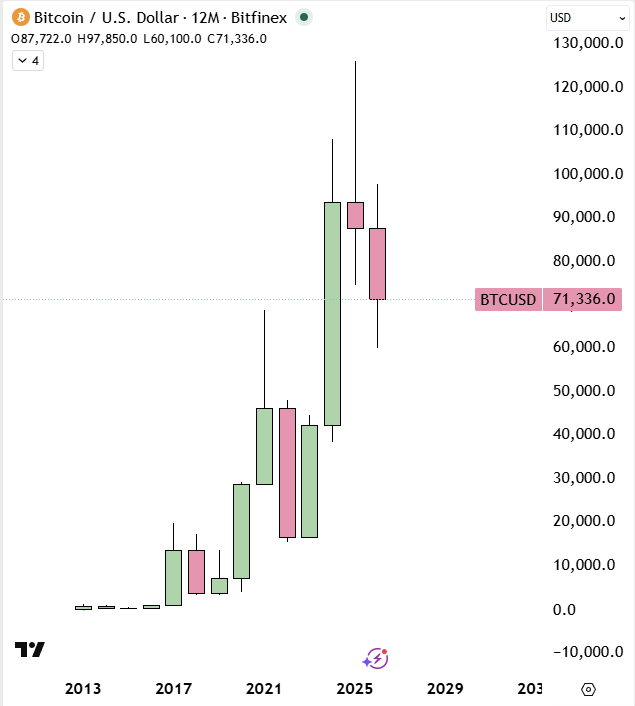
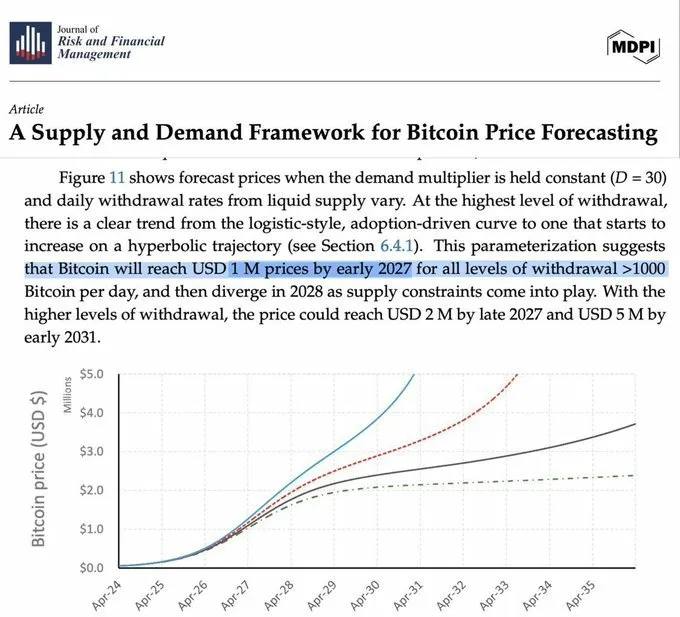
"Bitcoin could reach $1 million by 2027 and $5 million by 2031."
According to a peer-reviewed pricing model published in the Journal of Risk and Financial Management.
The man who bought Bitcoin at $11 is running the EXACT same playbook right now on a coin most people are sleeping on
This isn't speculation. He's already filing the paperwork for $TAO.
Watch the video for the full @bittensor breakdown👇
Advancing confidential computing for a more secure AI future.
Together with @manifoldlabs, we’re exploring how Intel TDX and Intel Trust Authority help enable confidential workloads across decentralized infrastructure, including @TargonCompute's Targon Cloud platform—protecting data at rest, in transit, and in use.
We needed to run trusted workloads on untrusted host machines.
So over a year ago, we started building the Targon Virtual Machine to enable Confidential TEEs in production.
Today we're sharing our white paper written alongside @intel: Decentralized Compute on Untrusted Hardware Using Intel® TDX and Encrypted CVMs