🔹RAX Finance · Weekly Update #01🔹
Locked in. Building.
A quieter week on the timeline, a busy one behind the scenes.
Starting today, we’re sharing a Weekly Update every Friday.
Stay tuned 🟢
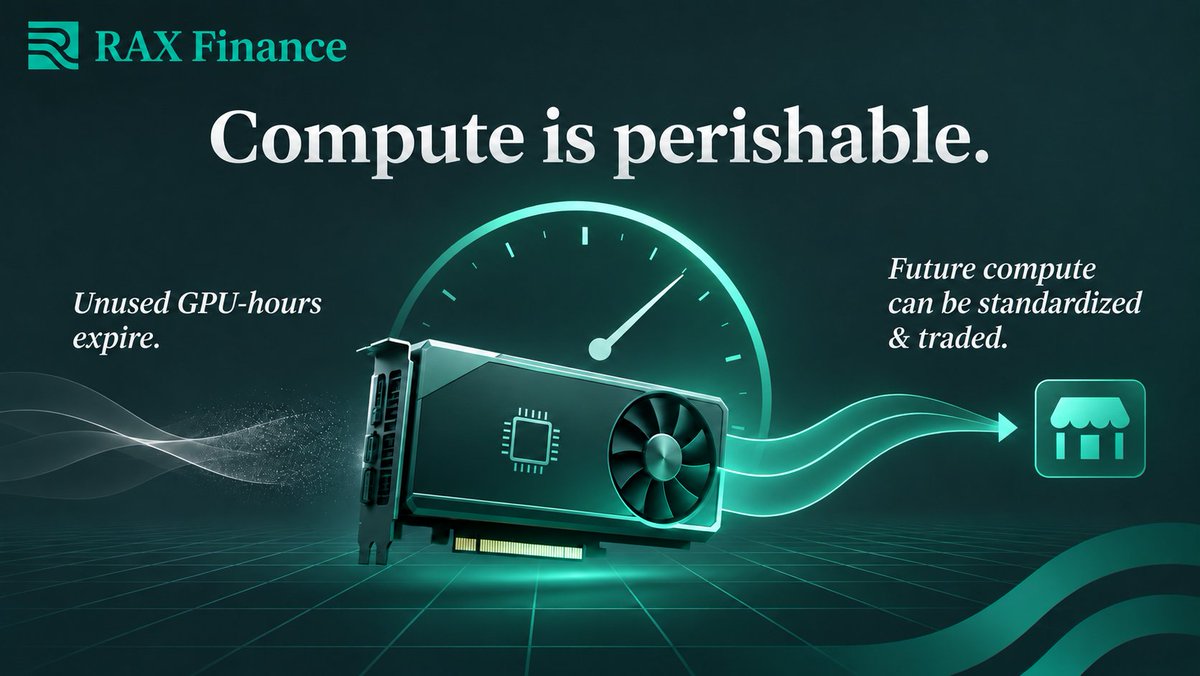
Compute has an expiration problem
An unused GPU-hour can't be stored for tomorrow.
Once that hour passes, the capacity is gone
But access to compute can be standardized, priced,
and traded before it's consumed.
That's what we're building at RAX Finance
Making compute fungible and tradable.
🚀 RAX Ambassador Round 2 is OPEN!
🎯 10 slots available
📅 Apply within 5 days
♾️ Ongoing program (3-strike inactivity rule)
Weekly Missions
→ Content Creation: +10–30 pts
→ Community Support: +5 pts
→ Up to 35 pts/week
🎁 Weekly Unboxing Opportunity rewards for ambassadors.
Your points contribute to your reward weight.
Who we’re looking for:
✓ Consistent contributors
✓ Community-minded participants
✓ Long-term thinkers
Not just here for a one-off post — we value people who show up and grow with us.
📝 Apply now:
https://t.co/iN4GT1ZHSP
Be the Architect. Own the Engine.
A GPU doesn't generate revenue just because it's
powerful
It generates revenue when someone needs its
compute.
That distinction matters a lot more than people think.
643 AI data center campuses. Across 55 countries.
That's the infrastructure footprint captured in one
recent industry census.
And every new location brings its own energy costs,
capacity constraints, and compute economics.
AI may be global, but the cost of powering it isn't
universal.
You can buy a barrel of oil without knowing which well
it came from.
But renting GPU compute still means choosing a
provider, region, hardware configuration, and contract.
That's the difference between buying a commodity
and negotiating a service.
AI compute is ready for a better market structure.
And that's exactly what RAX Finance is building.
https://t.co/zw0PzLxvBJ
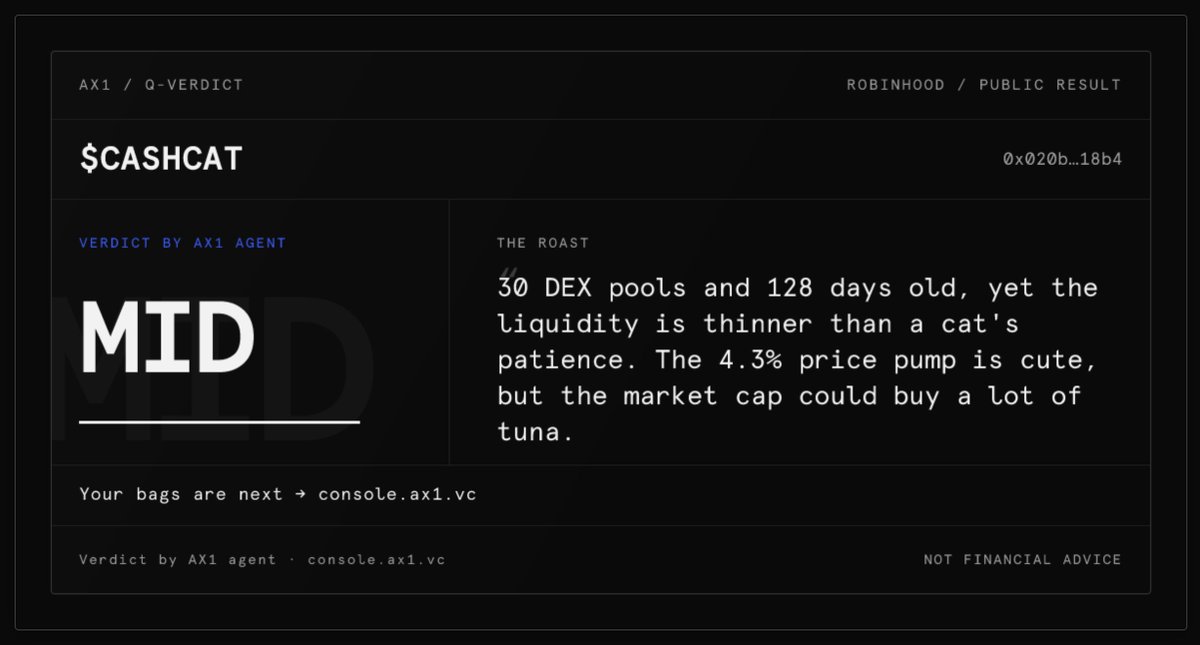
AI agents are roasting your bags for tokenized SpaceX stock.
640K+ roasts so far. Get yours free: https://t.co/fqkGp2WIs2
$10K+ weekly pool from Monday: top 50 get the stock, $640 for #1, qualified agents below split the rest.
Repost + your verdict card below: 10 free roasts.
Discover Bountura — a platform that brings new opportunities to explore and participate in the growing digital ecosystem. If you're interested in discovering new projects and opportunities, Bountura is worth checking out.
Explore more: https://t.co/VdkjsqSKle
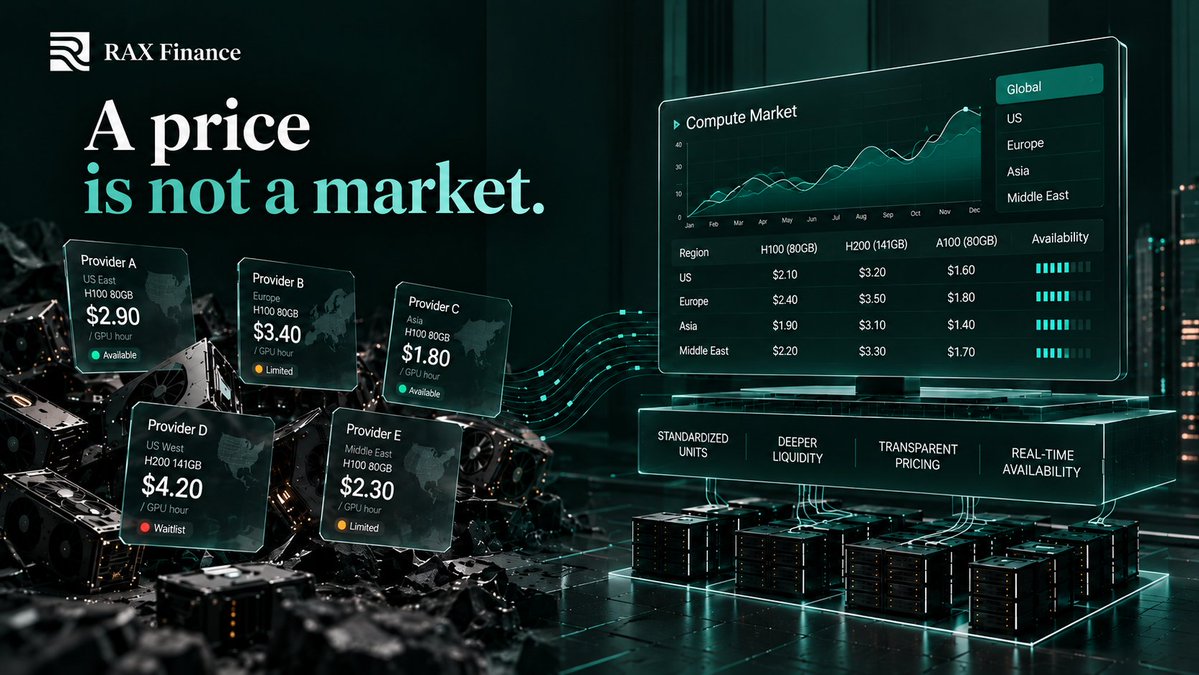
There's a difference between having a price and having a market.
GPU providers already publish prices. But those quotes vary by region, hardware, contract length, and availability.
A functioning commodity market needs something more: standardized units, reliable delivery, and prices participants can actually trade against.
That's where compute markets get interesting.
What is an hour of AI compute actually worth?
Not all compute is priced the same.
The value of AI compute changes based on:
• GPU model
• Location
• Availability
• Demand
As AI infrastructure scales, transparent price discovery becomes essential.
That’s the market infrastructure RAX is building.
Hot take time:
AI compute should be priced like:
A) Oil — global commodity, single benchmark (WTI/Brent model)
B) Electricity — regional grid, locational pricing (LMP model)
Reply with A or B + your reasoning.
We're clearly Team B (hence building regional indices), but curious what you think.
Especially want to hear from folks who disagree 👀
Friday check-in 👋
What’s caught your attention in AI compute this week?
A new GPU, a data centre trend, or the future of ComputeFi?
We’re curious what the Rax community is following. Drop your thoughts below 👀
Compute is being planned on a multi-year horizon.
Chipmakers are already securing EUV tools for 2029 and 2030.
ASML says customers are asking for more machines every day, even as 2027–2028 capacity expands.
The industry is locking in the manufacturing base for the next wave of AI capacity years in advance.
Via @wallstengine
📊 Open question for the compute market:
By the end of 2027, what % of APAC third-party GPU capacity will be traded on secondary markets rather than remain locked in long-term contracts?
We’re talking about neoclouds and independent operators, excluding hyperscaler self-use. Secondary trading includes unused or residual contracted capacity changing hands.
Our working hypothesis: 15–25%.
Why?
• Multi-year take-or-pay contracts still dominate, with limited early-exit options.
• Secondary trading is emerging, but liquidity, standardisation, and counterparty trust are still developing.
• As market infrastructure matures, more unused capacity could find a second buyer.
What’s your prediction, and why? 👀
Let’s revisit this in 12 months and see who got closest.
Scenario:
You sign a 12-month GPU contract for $2.5/hr.
3 months in:
• Your project pivots and needs a different region
• Your original contract still has 9 months left
• You're locked in, paying $216K for ~13 GPUs you can't use
What would you want?
A) Transfer the contract to someone else
B) Redeem it for other compute (different region/model)
C) Eat the cost — that's business
D) Something else? Tell us below.
💬 Reply with your choice + RAX Finance Waitlist address.
🎁 We’ll reward great answers with 5 Unboxing Opportunities!
🔗 https://t.co/blgzDVUsow
Why regional compute pricing matters: the financing gap no one is talking about
AI infrastructure spend is exploding — but ownership structures differ sharply by region, and that gap is showing up in financing costs.