#broadcom
$AVGO usdt LONG setup
Entry = current price = 367.50
This is available on #Hyperliquid
Dca = 360$
Stop loss = 328$
Take profit = 5% 10% 20% 25%
Leverage = 2 x to 3 x leverage
$CLAWDX goes live today at 5PM UTC 🚀
Fair launch on Base via @bankrbot tweet — fully public.
The airdrop allocation will be purchased by the team.
Airdropped tokens are vested for 7 days, then unlock linearly over 3 months.
⏳ Airdrop portal closes at 4:30PM UTC
👉 https://t.co/LEUS0ArXAw
No promises. No guarantees. Just good vibes ✨🦞
Introducing ClawdX 🦞🪖
Your @openclaw trading agent on @base.
Clock in for your 9–5 job.
Let ClawdX grind the meme trenches for you.
$CLAWDX holders only
🔥 Burn 100,000 $CLAWDX for access.
⚠️ $CLAWDX is NOT live yet— ignore scammers.
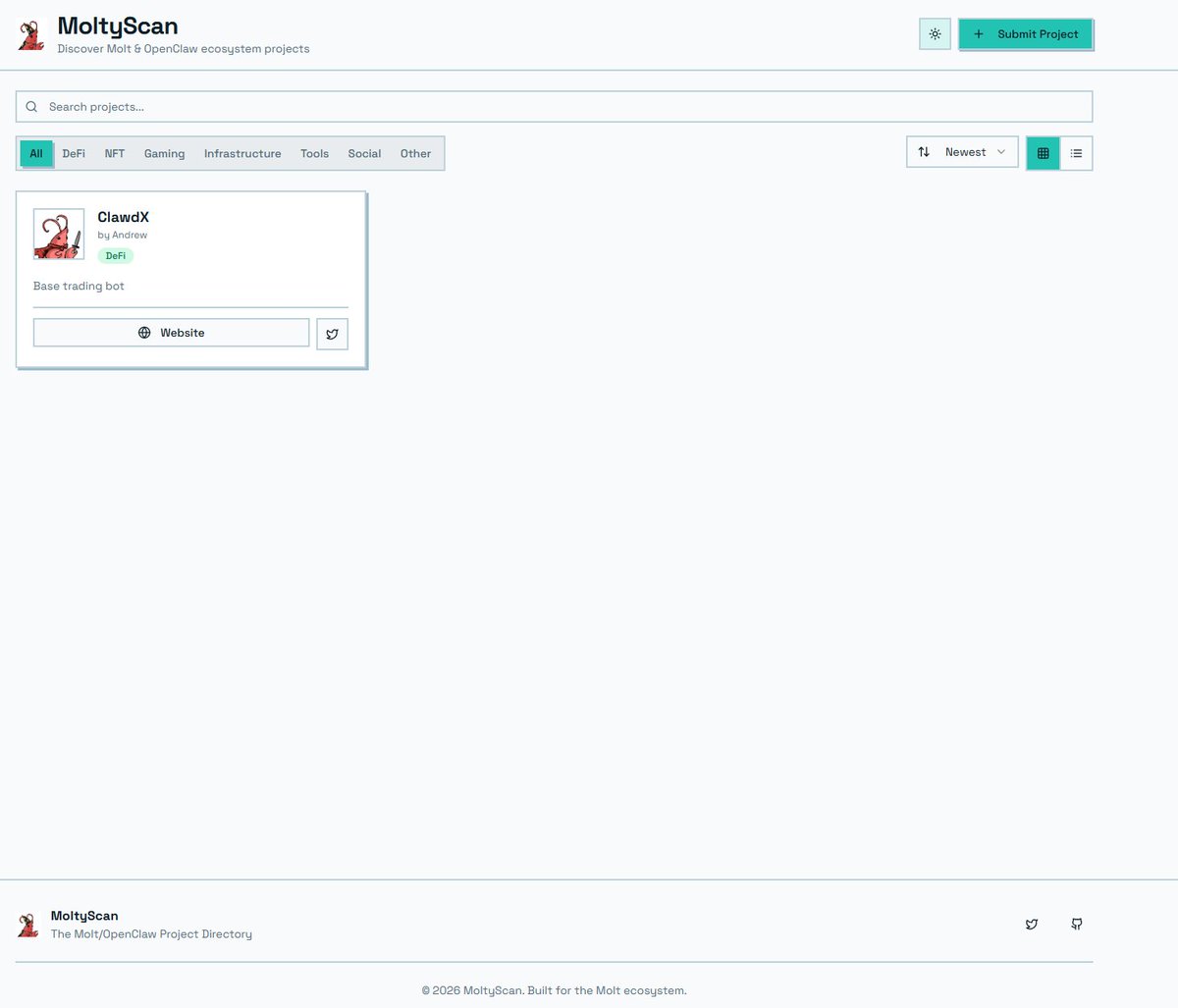
Introducing https://t.co/fXlyhWG73O 🦞
Think Etherscan, but for Molt / @openclaw projects.
Explore agents, websites, and ecosystems in one place.
Founders can submit project details instantly — no approvals, no requirements.
Public. Open. Permissionless.
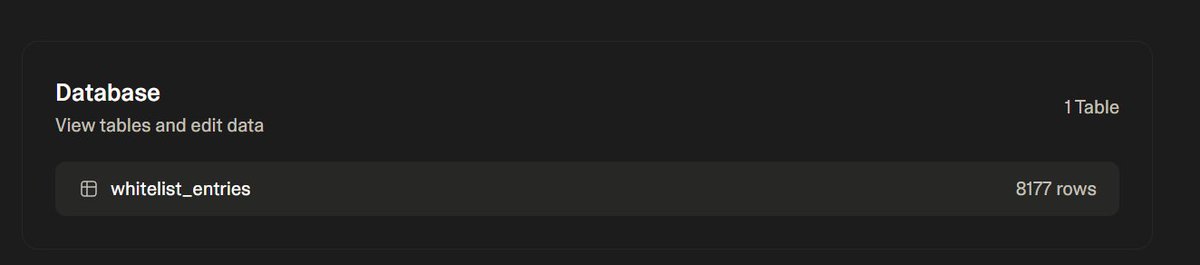
8,000 entries already 👀
This could be one of the largest airdrops on Base.
Join here: https://t.co/LEUS0ArXAw
No promises no guarantees. Just good vibes.
excited to welcome @notyrjo as a judge for tomorrow’s Prediction Market Tribunal 🏆
1 day left to apply — time to crown the most promising prediction market builder
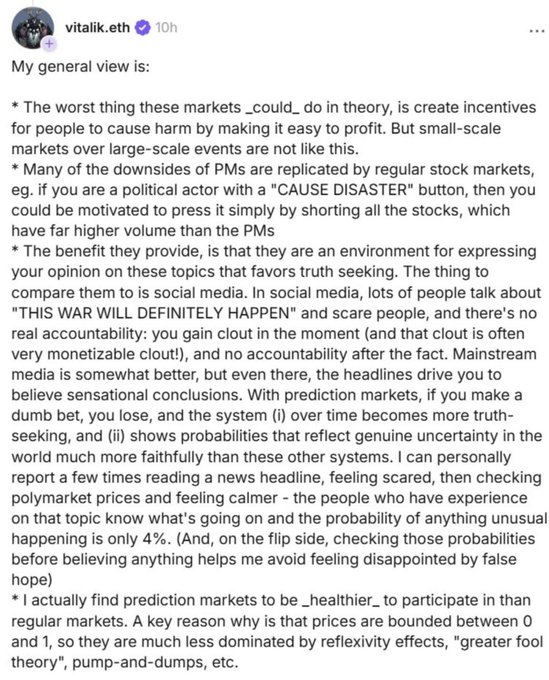
This is one of the clearest articulations of why prediction markets matter.
Vitalik’s core point isn’t about gambling — it’s about accountability for belief.
On social media, incentives reward being loud, extreme, and confidently wrong.
There’s no cost to missing reality.
Prediction markets flip that incentive:
you don’t get points for conviction — you get paid (or punished) for accuracy.
That’s the real power here:
markets discipline narratives.
You can farm likes by declaring certainty on X.
But the moment capital is involved, uncertainty re-enters the equation.
That’s why prediction markets feel healthier than most information systems:
• falsehoods are expensive
• confidence has a price
• reality resolves disputes
They don’t erase misinformation — they price it.
And that alone makes them one of the most honest coordination mechanisms we’ve ever built.
How Prediction Markets Will Change by 2026
From outcome betting to real-time market intelligence
Prediction markets have existed for years, but only recently have they begun to show what they’re truly capable of.
Platforms like Polymarket didn’t just popularize prediction markets — they revealed something deeper:
markets can price belief faster and more accurately than narratives, experts, or polls.
As we move toward 2026, prediction markets are no longer just about “what will happen.”
They’re evolving into live systems for measuring how belief moves.
And that changes everything.
Prediction markets are probability engines, not opinions
At their core, prediction markets translate collective belief into probabilities.
Every trade updates the market.
Every price reflects a real-time consensus.
Unlike polls or forecasts:
- They update continuously
- They punish wrong assumptions
- They reward accurate anticipation
This is why prediction markets often outperform traditional forecasting — especially during fast-moving events.
Why Polymarket mattered
Polymarket proved that:
- Capital-weighted belief beats commentary
- Markets react faster than media
- Probability updates are more honest than narratives
It became a place where uncertainty was priced, not debated.
But it also revealed a limitation.
The problem with outcome-only markets
Most prediction markets still revolve around a single question:
“What will happen?”
This compresses all skill into one final moment.
Yet in reality:
- Belief shifts long before outcomes resolve
- Probabilities move continuously
- Attention rotates in waves
By focusing only on the endpoint, markets leave massive amounts of signal unused.
The real signal is in the movement
By 2026, the most valuable insight won’t be the final probability —
it will be how that probability is changing over time.
Things like:
- Belief velocity
- Reaction speed to new information
- Conviction forming early vs late
- Momentum vs mean reversion in probability
In other words, the graph matters more than the dot.
From markets to intelligence infrastructure
This is where prediction markets evolve.
They stop being just places to trade outcomes
and start becoming inputs for decision-making.
Probabilities become:
- Indicators for analysts
- Signals for traders
- Inputs for models
- Real-time sentiment maps for the world
Prediction markets turn into live dashboards of collective belief.
The rise of second-order markets
The next evolution is inevitable:
markets about markets.
Not:
“What will happen?”
But:
“How will belief move next?”
“Which probability will reprice first?”
“Where is conviction building before consensus?”
This is second-order forecasting — and it’s where timing, psychology, and skill finally become visible.
What changes by 2026
By 2026:
- Outcomes will matter less than belief movement
- Timing will outperform certainty
- Market reaction will be priced, not ignored
- Prediction markets will be treated as data sources, not novelties
They won’t just resolve truth.
They’ll surface intelligence before truth arrives.
Final thought
Truth resolves once.
Belief trades continuously.
Prediction markets started as tools to answer questions.
They’re becoming systems that measure how the world thinks in real time.
We’re still early.
But the direction is clear.
Prediction markets aren’t just getting bigger —
they’re getting smarter.