Byron Scott settles the Magic Johnson vs. Larry Bird debate: “He was the best player in the 80s… by far”
Byron Scott believes championship rings are the ultimate measure of success.
When talking about the most iconic eras in NBA history, many old-school fans would probably point straight to the 1980s.
For the first time, two young superstars arrived and became the faces of two of the league’s most iconic franchises. Larry Bird and Magic Johnson did more than dominate games for the Boston Celtics and Los Angeles Lakers. Their contrasting styles, personalities and rivalry made fans want to emulate them and tune in whenever they went up against one another.
It also came at a crucial time for the league. The NBA was dealing with serious issues surrounding drug abuse and its overall image, but Bird and Magic helped shift much of the public conversation back toward basketball.
While it still seems impossible for most old-school fans to pick one, if Byron Scott is to be believed, Magic undoubtedly had the upper hand over Bird in “owning” that particular decade.
Speaking on his “Fastbreak Podcast,” Scott claimed that Magic’s higher title count would bother Bird so much that the Celtics legend would unhesitatingly replace his MVP awards with championship rings.
“I’ll tell you why: Magic Johnson has five chips in the ‘80s. Larry Bird had three. So, right there, I guarantee if you go to Larry Legend… He won three MVPs and he got three championships. I guarantee you if you said, ‘Larry, if you could trade those MVPs in for championships, would you do it?’ (Yes). In a heartbeat.”
Continue reading on Basketball Network 👇https://t.co/l3e10FySD6
25 FIs signed in 30 days. 60+ execs at Stablecon. 🚀
Loved joining @GoogleCloud at #GoogleCloudNext to talk AI & Substrate. After building agentic AI with @WorldBank, we’re bringing elite fintech tools to FIs of all sizes.
Huge thanks to Google for the partnership!
🎩🔮 More FIs → more Substrate deployments → more agents → more agent actions → more proofs/transactions → more protocol revenue → more $BSL utility/demand → stronger network economics.
Just connecting some dots… 👀
🎩 🔮 There's some static in the air... something's trying to come through.
Institution.
Integration.
Deployment.
Then attention.
Then liquidity.
November. 🔒
1/7 🧵
Connecting the dots on $BSL, @BANKSOCIALio & agentic finance. 🎩🔮
@PresidentHODL recently placed $BSL alongside $BTC, $XRP, $HBAR, $SOL, $DAG & $LINK when discussing the digital-asset commodity layer.
That shows conviction. So where could $BSL fit?
@PresidentHODL recently placed $BSL alongside $BTC, $XRP, $HBAR $SOL, $DAG and $LINK when discussing the emerging digital-asset commodity layer.
Coming from the CEO of @BANKSOCIALio, that shows serious conviction in where he believes $BSL belongs long term.
It got me thinking about the architecture BankSocial is assembling—and where BSL could ultimately fit.
Look at the pieces:
Substrate → AI orchestration
CLPR → cross-ledger interoperability and proofs
Hedera → consensus and verifiable records
Stablecoins/tokenized deposits → movement of value
Secura/DeRec → decentralized security and recovery
These technologies don't need to compete with one another. They perform different jobs within a larger financial stack.
So here's the question I've been thinking about:
Could $BSL eventually become a key economic coordination and security layer within this architecture?
Not the economic layer. Not a replacement for $HBAR. Not a replacement for stablecoins or CLPR.
A key layer.
Imagine the future BankSocial is preparing for: thousands—and eventually perhaps millions—of institutional AI agents interacting with financial systems.
Those agents could move value, manage liquidity, interact across ledgers, execute institutional workflows and make increasingly autonomous decisions.
That creates a new problem:
Cryptography can prove what happened. But what provides economic accountability around the infrastructure responsible for those actions?
One possible model is $BSL bonding/staking.
Infrastructure participants could bond BSL to participate in certain trusted BankSocial network functions.
More financial institutions
→ more Substrate deployments
→ more AI agents
→ more economically significant actions
→ more proofs and transactions
→ greater infrastructure/security requirements
→ potentially more $BSL bonded or utilized.
Now add protocol economics.
Financial institutions wouldn't necessarily need to buy or even understand BSL. They could simply pay @BANKSOCIALio predictable fees in USD, rUSD or other regulated forms of value.
Behind the scenes, network activity could potentially feed an economic loop:
FI usage → protocol revenue → network security/incentives → BSL buying, staking or bonding → infrastructure participants → stronger network. ♻️
That's where this gets particularly interesting to me.
BSL wouldn't derive utility merely because people are told to hold it.
Its utility could potentially grow because the network itself is growing.
More FIs create more activity. More activity creates more demand for infrastructure. More infrastructure requires more economic participation/security. Participants are rewarded for providing something useful. That attracts additional capital and infrastructure.
And the flywheel turns again.
More FIs → more agents → more actions → more proofs → more protocol activity → potentially more $BSL utility → stronger network economics → more participation → more FIs. ♻️
This also makes @PresidentHODL's decision to place $BSL in the conversation alongside some of crypto's largest infrastructure assets more interesting to me.
Maybe BSL isn't supposed to do everything.
Maybe it only needs to do one important thing extremely well: provide economic coordination, participation and/or security within the financial network BankSocial is building.
If that's ultimately where the architecture goes, BSL's importance wouldn't be measured simply by today's trading volume or market cap.
It would increasingly be measured by how much real economic activity depends on the network functions BSL supports.
To be clear: BankSocial and John Wingate have not announced this bonding/security architecture. This is my thesis about one way the technologies and economic incentives could logically converge.
I'm connecting dots, not claiming answers.
But the more pieces @BANKSOCIALio puts on the board, the more interesting the picture becomes. 👀🎩🔮
#BSL #BankSocial #Hedera #CLPR #AGI
I
👀 This is where @BANKSOCIALio gets interesting.
Remint already orchestrates FedNow alongside RTP, SWIFT, SEPA, PIX, SPEI, stablecoins & other rails-and BankSocial has already completed a live FedNow payment for a U.S. credit union.
If the Fed's proposed cross-border framework moves forward, infrastructure that can orchestrate the domestic FedNow leg with international rails, FX & programmable settlement could become increasingly valuable.
@PresidentHODL has been building in the right neighborhood. 🎩🔮
#BankSocial #BSL #FedNow #Payments #Fintech
If people are telling you that you shouldn’t be in digital assets and you shouldn’t own the commodity layer ($BTC, $XRP, $BSL, $HBAR, $SOL, $DAG, $LINK, etc.) it’s either because they don’t know what they are talking about or they want a lower entry.
As for me and mine - #WeHODL
Check out our CEO getting interviewed by @GoogleCloud. Financial systems are evolving fast. At BankSocial, we’re driving "Cooperative Capitalism" & democratizing finance globally with @Google Cloud. 🚀
#Fintech#GoogleCloud#Web3
There are two types of financial technology: Things customers brag about. Things customers never notice because they simply work. We like both.
#BSL#BankSocial#NotYourAverageFinance
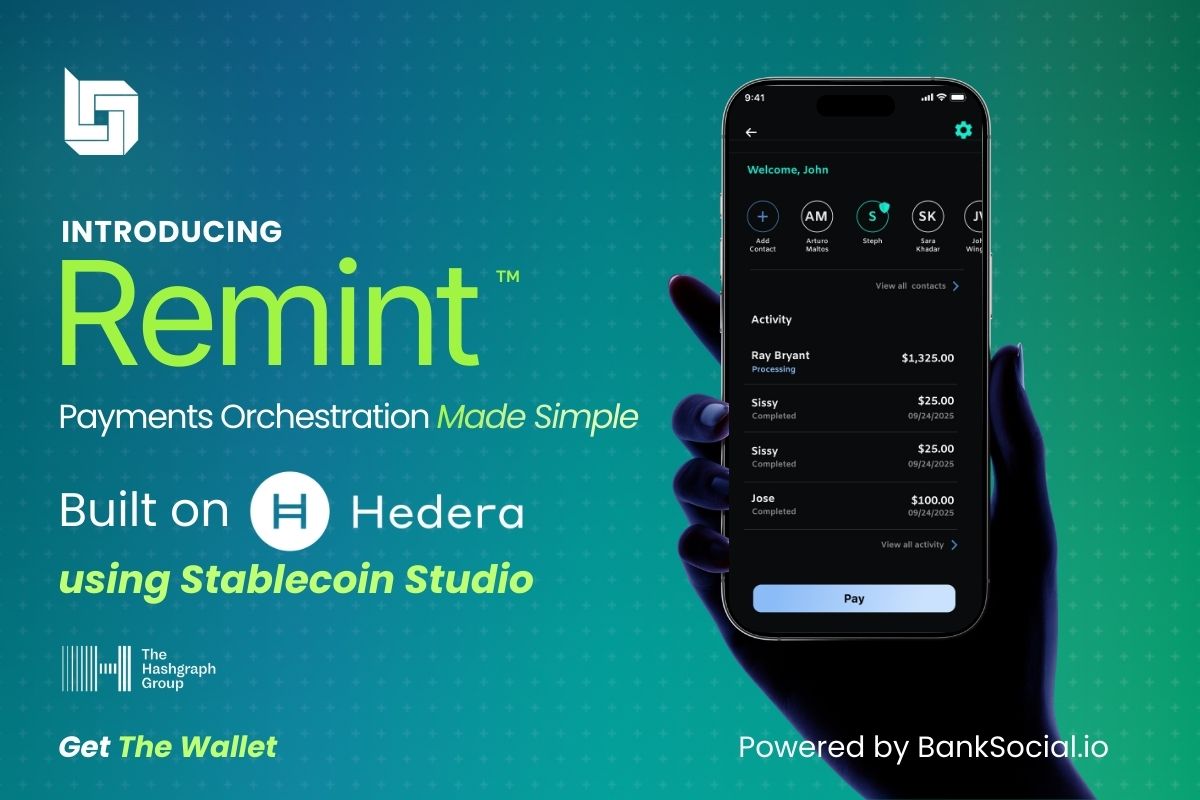
Introducing Remint™ by #BankSocial 🚀
A payments orchestration layer for real-time, cross-border, and AI-native payments.
Built on @hedera using #Stablecoin Studio, supporting $rUSD alongside traditional rails, all in one unified platform.
🤝 @hashgraphgroup
🌐 $BSL | $HBAR | $XRP | $BTC | $DAG | $ADA | $ALGO | $SOL | $LINK | $rUSD
First we brought on the Amazing Anindya Roy.
Then we landed the Joyful and Judicious Jack Antonini.
Incredibly we managed to land the Mangnificent Mance Harmon.
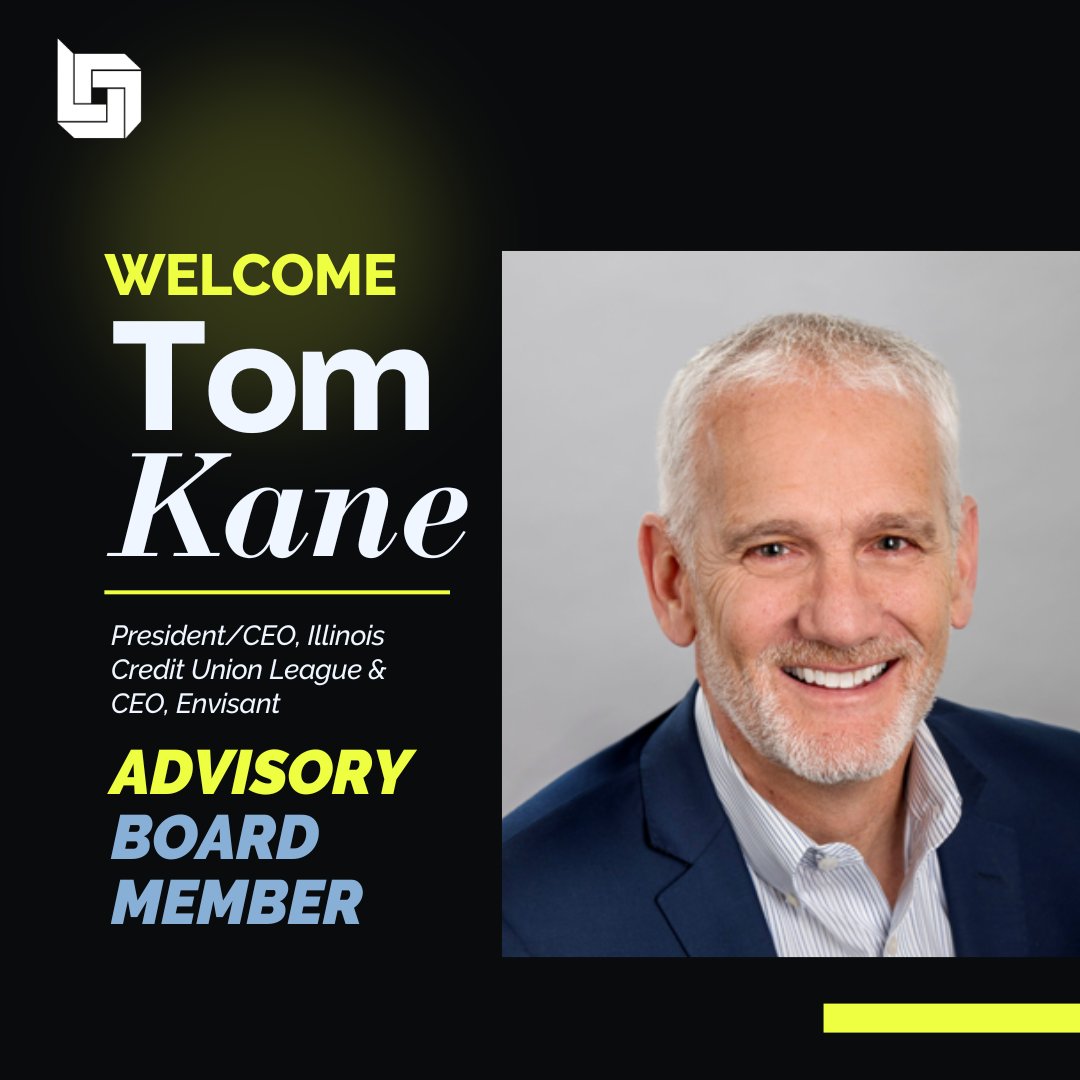
Now we announce the Terrific Tom Kane, the most recent addition to our board.
#Grateful#FutureOfFinance#BankSocial