...Instead, BTCN extend's its minting rights to multiple trusted custodians, smart contracts, and/or bridging protocols.
This empowers hodlers & protects their choice of how to store their native BTC as we create the go-to app ecosystem to unlock the value your BTC represents.
Exciting news! Dyson Finance shifts gears: from Pioneer Version to Full Version deployed on @0xPolygonDeFi!🟣🚀
Full Version means brand new features to make the MOST out of the DEX. Thread 🧵
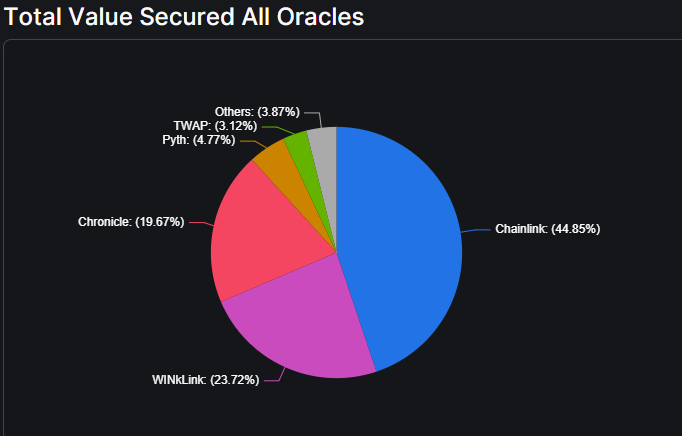
@gyan_eth@ChainLinkGod@PythNetwork@jumptrading let he who is without sin cast the first stone !!! other big guns project welcomes new projects with open arms, LINK wants a monopoly in the oracle market guess @PythNetwork is doing something right. It's good to see
Let’s talk about the aggregator of everything
@UniDexFinance is the leading perpetual and spot aggregator within the EVM world
Learn how #Pyth data empowers UniDex newly-launched Indices and its UI:
ℹ️ About Unidex
UniDex is a meta-aggregator for both swap and perps, allowing users to place trades at the best rate and deepest liquidity no matter the market
Launched just over a year ago, UniDex has achieved incredible milestones:
📈 $1.2B+ in trading volume
🥇 $1.5M in trading fees
🫂 ~10k distinct users
As of today, UniDex is available on eight different blockchains:
@zksync ∎
@optimismFND 🔴
@FantomFDN 👻
@BNBCHAIN 🟡
@MetisDAO 🌿
@bobanetwork 🧋
@BuildOnBase 🛡️
@avax 🔺
UniDex provides three distinct advantages over other individual platforms offering perpetuals in DeFi:
1️⃣ Trades are executed against the best rate against multiple leverage protocols
2️⃣ Any trading pair is supportable on the platform
3️⃣ All assets trade against a single pool which brings deeper liquidity
🔮 Unidex is now #PoweredByPyth
From today, UniDex traders can take positions on the 1st of their kind crypto indices — baskets comprised of your favorite tokens
Through indices, users can easily gain exposure to specific DeFi segments like L2s, Perp Protocol or even non-EVM chains
For instance, the non-EVM index is comprised of $BTC $SOL $APT $ADA $SUI $DOT $HBAR $NEAR $ATOM $ALGO
Additionally, UniDex is leveraging the Pyth Price Feeds within their UI through @tradingview — the leading charting services in the world
The Pyth Network is excited to release its OKB/USD price feed 🔮
$OKB is the native token of the leading crypto exchange @okx
The Pyth OKB/USD price feed is now available on 35 blockchains
#Bitcoin prices fluctuated wildly on Monday as rumors of a Bitcoin ETF approval circulated, were confirmed on Twitter, and then were falsified over the course of an hour.
Pyth handled this crash as designed and highlighted the precise scenarios where confidence intervals are crucial.
Here’s how it worked:
In the plot below, you can see the #Pyth aggregate plotted along with its confidence interval shown shaded in purple, between 13:00 and 14:00 GMT on October 16.
During the peak of the spike, when Bitcoin hovered around 30k on most exchanges, Pyth confidence intervals widened to express uncertainty.
But this is just scratching the surface. Let’s dig deeper.
The plot below shows the aggregate price along with the confidence interval, alongside the minimum and maximum of the active publishers’ prices, and the 25th and 75th percentile of the active publishers’ prices.
As you can see, the 25th and 75th percentile intervals are relatively close, indicating that most publishers tracked the price spike on major centralized exchanges. There were some outliers (high and low), and the Pyth aggregation algorithm effectively filtered these out.
But it gets even more interesting.
The plot below shows the standard deviation amongst active publishers, the interquartile range of the publishers (the difference between the 75th and 25th percentile), and the width of the aggregate confidence interval.
The Pyth aggregation algorithm’s exclusion of outliers is easy to see in this plot: the standard deviation of the publishers is much larger than the interquartile range due to the few outliers.
Rather than peg itself to the range of the outliers, the Pyth confidence interval tracks the interquartile range very accurately.
Let’s take a look at one slot in particular at 13:32:44 GMT that day.
The aggregate price here was $29,545.15. The minimum publisher published a price of $27,938.90 and was the only publisher to publish a price below $29,300. The maximum publisher had a price of $29,596.09. The aggregate confidence interval width was $38.69, taking into account the fact that 26 active publishers were in a relatively tight $300 range and only one publisher was outside of that range.
Zooming into the main period of the spike, 13:30-13:40 GMT, we see visually that the confidence intervals expanded amidst the greater volatility and uncertainty.
Indeed, during that 10-minute stretch, the average aggregate confidence interval width was over $40, or approximately 0.1%.
Over the remainder of that hour, the average aggregate confidence interval width was about $17, or approximately 0.05%.
In fact, over the ~2 minutes where BTC ticked above $29,500, the aggregate confidence interval was on average around $80, or approximately 0.2%.
As reports came out that the rumors of an ETF approval were false, the BTC price on many centralized exchanges quickly dropped down to pre-news levels of around $28,000.
Pyth publishers reflected that price drop in real-time, and the aggregate dropped rapidly. As prices on these venues converged back to around $28,000, publishers’ quotes similarly converged, and the aggregate confidence accordingly decreased.
Of course, pre-news confidence (around $10, or approximately 0.03%) was lower than post-spike confidence (around $18, or approximately 0.06%).
There was greater uncertainty in the price of BTC due to lingering uncertainty around the news and its retraction, which was reflected in both higher price volatility post-spike and greater spread of publisher quotes.
As time went on and uncertainty decreased, so too did the aggregate confidence interval.
All this shows that Pyth confidence intervals performed as designed and were robust in the face of market uncertainty.