AI Agents Need Proof, Not Just Trust! 🤖🔐
AI agents are becoming more powerful every day. They can analyze information, make decisions, interact with applications, and complete tasks automatically.
But there is one important question we should not ignore:
How can we trust what an AI agent claims if we cannot verify what it actually did?
This is where @primus_labs brings an interesting perspective to the future of AI and Web3.
Instead of depending only on promises or trusting an AI system blindly, we need a way to verify its actions through cryptographic proof.
🔍 Why Do AI Agents Need Verification?
1. Actions Need Evidence
An AI agent might say it completed a task, but a statement alone is not enough. We need reliable evidence that the action actually happened.
2. Trust Through Cryptographic Proof
Cryptographic verification can help confirm that information or actions meet specific requirements without relying entirely on someone’s word.
3. Protect Sensitive Information
Verification should not mean exposing everything. Privacy-focused technologies such as zkTLS and zkFHE can help prove specific information while protecting sensitive data.
4. More Transparency
When AI actions can be verified, users and applications have a stronger foundation for understanding what happened and making informed decisions.
5. Safer AI Automation
As AI agents handle more complex tasks, verifiable execution becomes increasingly important for building confidence in automated systems.
🧡 Where Does Primus Labs Fit In?
Primus Labs is exploring how cryptographic technologies can make data and computation more verifiable.
Its approach includes interesting technologies:
zkTLS: Helps prove information from online interactions without revealing sensitive underlying data.
zkFHE: Enables computation on encrypted data while keeping the original information private.
zkVM: Provides an environment for generating and verifying computational execution proofs.
Together, these technologies represent an important direction for applications that need both privacy and verification.
My Take 💡
AI agents should not get unlimited trust just because they sound intelligent or complete tasks quickly.
We need systems where actions can be checked, information can be verified, and privacy remains protected.
That’s why I find the work around Primus Labs interesting.
The future is not just about smarter AI. It’s about verifiable AI.
Don’t just trust. Verify. 🧡
#PrimusLabs #AI #zkTLS #zkFHE #Web3
@primus_labs
Your Online Activity Has Value. Your Private Data Should Stay Private! 🔐
One thing I find interesting about @earnOS_io is how it explores a better way to verify online activities without asking users to expose all their personal information.
Think about your everyday online activities. You shop, listen to music, use different platforms, discover brands, and complete digital tasks.
But how can a platform confirm that you actually completed an activity without accessing all your private data?
This is where zkTLS becomes important.
🔍 What Is zkTLS?
zkTLS combines ideas from Transport Layer Security (TLS) and zero-knowledge cryptography to help prove information from online interactions without revealing the underlying sensitive data.
In simple words, it helps prove that something happened without exposing everything behind it.
Why Does zkTLS Matter?
1. Verify Without Revealing Everything
You can prove that a particular online activity happened without sharing your complete account details or personal information.
2. Better Data Privacy
Your personal information should not become the price you pay for participating in digital platforms. Privacy-focused verification helps reduce unnecessary data exposure.
3. Trust Through Proof
Instead of simply asking users to make claims, platforms can use cryptographic proofs to verify specific information.
4. More Useful Digital Rewards
This technology creates interesting possibilities for reward platforms like EarnOS, where users complete brand missions and verify eligible activities.
🫶 How Does This Connect With EarnOS?
EarnOS is building around a simple idea:
Engage → Verify → Earn
Users discover brand missions, complete activities, and receive rewards for eligible actions.
The interesting part is that verification and privacy can work together. Users should be able to demonstrate their participation without unnecessarily exposing their personal information.
My Take
The future of the internet should not force people to choose between earning rewards and protecting their privacy.
Your activity can be useful, your actions can be verified, and your personal information deserves protection.
That’s why zkTLS is such an interesting part of the privacy conversation around EarnOS.
Prove your activity. Protect your data. Get rewarded. 🫶
#EarnOS #zkTLS #Privacy #Web3
@earnos_io
Recognition That Keeps a Community Moving Forward!
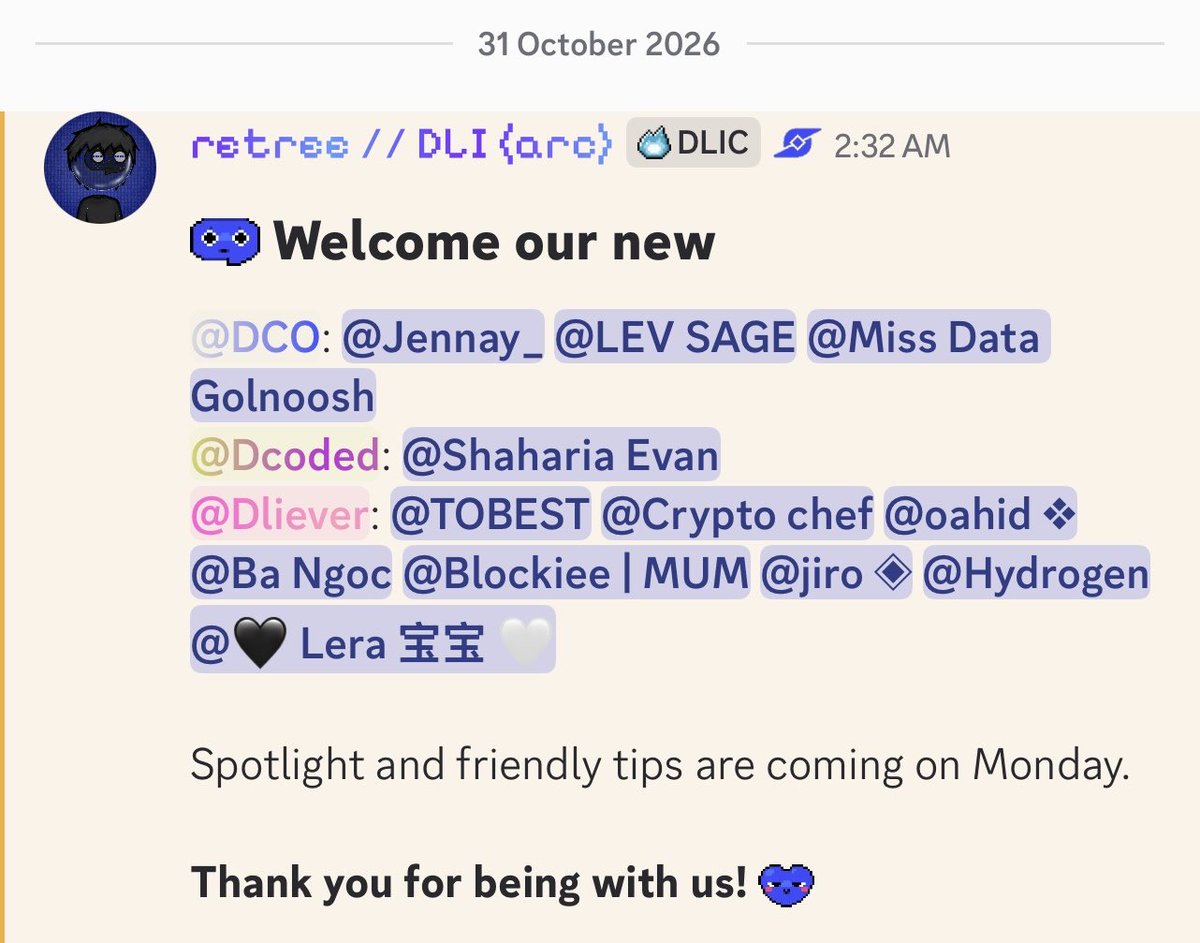
Congratulations to everyone who received a new role in @DlicomApp! 💙
A special congratulations to @amircry94432508 on receiving the DCO role. Well deserved, and wishing you continued success on your journey with Dlicom.
Congratulations as well to everyone who received the Dcoded and Dliever roles. Every contribution, helpful interaction, and effort to support the community adds value to the bigger picture.
What makes Dlicom interesting is its vision of bringing AI and Web3 closer together through a more accessible digital experience.
➝ Building useful AI-powered experiences
➝ Making Web3 easier for more people to explore
➝ Encouraging community participation and knowledge sharing
➝ Growing an ecosystem where product development and community efforts go hand in hand
Roles are a nice form of recognition, but the real value comes from continuing to learn, contribute, and help the ecosystem move forward.
Congratulations once again to @amircry94432508 and everyone recognized today.
Keep building, keep contributing, and keep moving forward with Dlicom! 💙
@DlicomApp@dlicom_IN@retreeq_@cooldudeabhii@gautamxbt
🎃 Don’t Let Your SOL Stay Idle This Halloween! 👻
One thing many SOL holders overlook is that keeping SOL in a wallet or on an exchange doesn’t always mean they’re making the most of their assets.
Your SOL can do more than just sit there.
This is where @Tramplin_io makes staking interesting.
Through Tramplin, you can stake your SOL with a validator and help support the Solana network while earning staking rewards.
🟣 Why put your SOL to work?
• Support Solana: Staking helps strengthen the network by contributing to its security and decentralization.
• Earn Rewards: Instead of leaving your SOL completely idle, staking gives you an opportunity to earn rewards.
• No Long Lockup: Tramplin allows you to unstake whenever you want, so your SOL isn’t stuck for a fixed period.
• Extra Reward Opportunities: Tramplin also offers Epoch Draws, giving stakers a chance to receive additional SOL rewards.
The interesting part is that you don’t need to change your daily routine or actively trade to participate. You can simply stake your SOL and let it contribute to the network.
This Halloween, don’t let your SOL disappear like a ghost. 👻
Give your SOL a purpose. Put it to work with Tramplin! 🟣
🔗 https://t.co/cDkuDMoUe8
@Tramplin_io@djony_sd
🔶 Prove Your Data Without Revealing Your Secrets – The Future of Digital Privacy!
We live in a digital world where data plays an important role in almost everything we do. From using online platforms to accessing financial services, sharing information has become part of our everyday lives.
But there is one important problem: Do we really need to reveal all our personal information just to prove something is true?
I believe the answer should be no.
This is where @primus_labs brings an interesting approach to data privacy and verification.
Let’s understand why this matters. 👇
🔶 1. Verification Without Full Disclosure
Imagine you want to prove that you meet a certain requirement without sharing your complete personal details.
Normally, you might need to provide an entire document or expose information that has nothing to do with the verification.
With privacy-preserving cryptographic proofs, it becomes possible to demonstrate that something is valid without revealing the underlying sensitive information.
🔶 2. Your Data Should Stay Private
Personal information such as financial records, account details, identity information, and online activity should not be exposed unnecessarily.
Privacy-focused technologies help reduce the amount of sensitive information that needs to be shared.
The goal is simple: give applications the proof they need without giving away everything about yourself.
🔶 3. Trust Through Cryptographic Proofs
Trust should not depend only on someone saying that their information is correct.
Cryptographic verification provides a way to check whether a claim meets specific requirements.
Instead of blindly trusting the information, applications can verify its authenticity through mathematical proofs.
🔶 4. Privacy and Transparency Can Work Together
Many people think privacy means hiding everything, while transparency means showing everything.
But these two ideas do not have to conflict.
We can verify important information while keeping private details protected. This creates opportunities for safer digital experiences without unnecessary data exposure.
🔶 5. Why This Matters for Web3
As Web3 continues to grow, applications will need better ways to handle user information.
Privacy-preserving verification can be useful in areas like:
• Digital identity and credentials
• Financial information and transactions
• On-chain and off-chain data verification
• AI systems that need trustworthy information
• Applications requiring proof without exposing sensitive records
My Take 💡
The future of the internet should not force people to choose between privacy and trust.
We should be able to prove what is necessary without revealing what should remain personal.
That’s why the work around cryptographic verification, zkTLS, and privacy-focused technologies at @primus_labs worth following.
The real innovation is not just making data accessible. It’s making data verifiable while respecting the privacy of the people behind it.
Verify, Don’t Reveal. 🔶
#PrimusLabs #Web3 #Privacy #ZeroKnowledge #zkTLS
@primus_labs
Your Everyday Interests Can Turn Into Real Rewards! 🫶
One thing I find interesting about @earnOS is that earning rewards doesn’t always have to mean doing something completely different from your daily routine.
Think about the things you already enjoy. Maybe you like shopping, listening to music, staying active, discovering new brands, or trying new products.
What if some of these everyday activities could also give you an opportunity to earn rewards?
That’s the idea behind ero.
Instead of limiting users to one type of activity, ero offers different missions connected to brands, products, and everyday interests. Users can explore available missions, choose the ones that match their interests, complete the required tasks, and earn rewards.
How does it work?
🌸 Discover Missions: Explore different opportunities from familiar brands and discover new ones.
🌸 Choose What You Like: Not every mission needs to be for everyone. You can focus on activities that match your interests.
🌸 Complete the Tasks: Follow the mission requirements and complete the requested actions.
🌸 Earn Rewards: Get rewarded for completing eligible missions.
What makes this approach interesting is the connection between brands and real people. Brands get an opportunity to reach people who are genuinely interested in what they offer, while users get something valuable in return for their participation.
I also like the idea that everyone can have a different experience. Your interests, choices, and favorite brands don’t have to look like someone else’s.
My Take:
The best reward experience is one that fits naturally into people’s lives.
We already spend time discovering products, exploring brands, and engaging with things we enjoy. ero is bringing a new perspective to those everyday connections by turning selected activities into rewarding opportunities.
You don’t need to change who you are. Just discover missions that match your interests.
Be yourself. Explore missions. Complete tasks. Earn rewards.
#ero #EarnOS #Web3 #Rewards
@earnos_io
Making Complex Workflows Easier to Maintain!
One challenge in blockchain development is not just getting an application running. It's keeping the entire system manageable as new requirements emerge.
A workflow that starts with a few operations can eventually involve multiple programs, execution environments, external data, and onchain interactions.
When everything is tightly connected, even a small update can create complications across the system.
This is where infrastructure design matters.
@fermah_xyz is exploring composable execution through Kernel, giving developers a way to organize and coordinate multi-step operations.
◆ A More Flexible Architecture
• Individual actions can have clearly defined responsibilities.
• Execution components can evolve independently.
• Outputs from one operation can support subsequent steps.
• Complex workflows can be assembled from reusable building blocks.
This approach encourages developers to think beyond individual transactions and focus on the complete lifecycle of an application.
The benefit is not just flexibility during development. A well-structured execution system can also make future upgrades and integrations easier to manage.
As blockchain applications mature, maintainability will become just as important as performance.
Building something that works is one achievement. Building infrastructure that can keep evolving without becoming difficult to manage is another.
@fermah_xyz@7wealthh
Exploring mump2p Through Real Validator Data!
Blockchain performance is not determined by consensus and execution alone. The way data travels between nodes also plays an important role in keeping a network efficient and reliable.
@get_optimum has published its first individual operator case study in collaboration with @BlockdaemonHQ, examining the effects of mump2p across 2,185 Ethereum mainnet validators.
This study takes the discussion beyond technical concepts and focuses on how networking technology performs in a real validator environment.
◆ Why Validator Networking Matters
Ethereum validators continuously exchange information to stay connected with the network and participate in consensus.
When data propagation is inefficient, delays and unnecessary network communication can create additional challenges for operators.
Improving how information moves between nodes can help make this process more efficient.
◆ What Makes This Study Important?
→ It examines a real deployment involving 2,185 Ethereum mainnet validators.
→ It brings an individual operator perspective through Blockdaemon.
→ It explores the effects of mump2p within an actual Ethereum environment.
→ It adds practical insights to the discussion around more efficient blockchain networking.
◆ Moving Beyond Theory
Every operator environment comes with different network conditions and performance requirements. Real-world evaluations help us understand how infrastructure improvements behave outside controlled testing environments.
This collaboration provides another opportunity to examine how mump2p can contribute to Ethereum validator operations.
For me, the most interesting part is the scale of this evaluation. Looking at thousands of validators gives the community a more practical perspective on the role of networking improvements.
Better data movement is an important part of building efficient blockchain infrastructure.
And studies like this help turn technical innovation into measurable real-world insights.
@get_optimum@discordflash@TheBl0ckBoy
Exploring New Possibilities in Physical AI!
Happy to share that I've received the Exploratory role in the @PrismaXAi community!
Thank you to the @MaxC16134 PrismaX team for the recognition and for creating an environment where community members can learn, explore and contribute.
What makes PrismaX interesting is its focus on Physical AI, bringing AI and robotics closer together to help machines understand and interact with the real world.
→ Advancing robot learning through high-quality data
→ Connecting AI models with real-world environments
→ Exploring teleoperation and human demonstrations
→ Working toward more capable and reliable robotic systems
Physical AI has the potential to change how robots learn, adapt, and perform tasks beyond controlled environments. Better data and real-world experience will play an important role in that progress.
I'm looking forward to learning more, staying active in the community, and following PrismaX as this technology continues to evolve.
Thanks again to the team for the recognition. More to explore and learn ahead!
@PrismaXai@MaxC16134@vivianrobotics
➡️ 𝙋𝙧𝙞𝙨𝙢𝙖𝙓 𝙊𝙛𝙛𝙞𝙘𝙞𝙖𝙡 𝙡𝙞𝙣𝙠𝙨 ⬇️
𝐖𝐞𝐛𝐬𝐢𝐭𝐞: https://t.co/bA2mnZ1Ke0
𝐑𝐨𝐛𝐨𝐭 𝐂𝐨𝐧𝐭𝐫𝐨𝐥 𝐂𝐞𝐧𝐭𝐞𝐫: https://t.co/lvqYY1b51w
𝐃𝐢𝐬𝐜𝐨𝐫𝐝: https://t.co/lGRZTdCqra
𝐖𝐡𝐢𝐭𝐞𝐩𝐚𝐩𝐞𝐫: https://t.co/0VfQXUxb9O
🟣 Staking SOL Is More Than Just Earning Rewards – It’s About Being Part of the Network!
One of the interesting things about Solana is that holding SOL doesn’t mean you have to leave it sitting in your wallet without purpose.
Staking gives your SOL an active role in supporting the network while giving you an opportunity to earn staking rewards.
This is where @Tramplin makes the experience even more interesting. 💜
Let’s understand how it works.
🌸 1. Put Your SOL to Work
When you stake SOL, you delegate it to a validator that helps secure the Solana network. Your SOL continues to belong to you, while your stake contributes to network security and decentralization.
🌸 2. Simple Entry, No Complicated Process
Tramplin allows users to participate with just 1+ SOL. You don’t need a huge balance to become part of its staking community.
🌸 3. Staking Meets Community Rewards
What makes Tramplin interesting is its Epoch Draw reward system. Alongside regular staking, eligible stakers get an opportunity to receive additional SOL rewards through these draws.
And the latest example says it all!
Epoch Draw #1071 is complete, with 7 stakers sharing approximately $58 worth of SOL.
🌸 4. Rewards Without Manual Claims
Another useful part is the reward distribution. Winners receive their SOL directly in their wallets, so there is no need to go through an extra claiming process.
Less hassle, more convenience.
🌸 5. Your Stake Can Keep Participating
The idea is simple: stake 1+ SOL, support the Solana ecosystem, and become eligible for future reward opportunities.
Of course, rewards are not guaranteed every epoch, but every draw brings another opportunity for participating stakers.
🌸 My Take:
I like the idea behind Tramplin because it combines two useful things: helping secure the Solana network and creating additional reward opportunities for its community.
Staking should not feel complicated. A good experience should be simple to understand, easy to participate in, and transparent about how rewards work.
That’s the kind of approach that makes staking more interesting for everyday SOL holders.
🟣 Stake smart. Support Solana. Stay part of the community.
🔗 https://t.co/cDkuDMoUe8
#Tramplin #Solana #SOL #Staking #Web3
@Tramplin_io@djony_sd
@earnos_io The best part about ero is that you don't have to change your lifestyle to earn rewards. Your everyday interests can become new opportunities. That's a smarter way to connect with brands! 🫶
Privacy Is Not a Feature, It's the Foundation!
The internet has made information easier to access than ever before. But as digital applications become more powerful, one important question remains:
Can we use data without exposing everything behind it?
This is where @primus_labs brings an interesting perspective to Web3.
Instead of treating privacy and verification as competing goals, Primus explores cryptographic technologies that can help make both possible.
→ Verify Without Blind Trust
With zkTLS, applications can verify information obtained from websites without requiring those websites to change how they operate.
→ Protect What Matters
Privacy-preserving techniques can help users prove specific facts without unnecessarily revealing sensitive personal information.
→ Compute With Confidentiality
Technologies such as Fully Homomorphic Encryption (FHE) explore how computations can be performed on encrypted data without decrypting it first.
→ Connect Web Data With Web3
Verified off-chain information can open new possibilities for decentralized applications that need reliable data from beyond the blockchain.
→ Build a More Trustworthy Digital World
When information can be verified through cryptographic proofs, applications have new ways to establish trust without relying entirely on assumptions.
The bigger vision is not simply about collecting more data.
It's about making information useful, verifiable, and privacy-aware at the same time.
Because the future of Web3 should not force users to choose between proving something is true and keeping their private information protected.
Verify what matters. Protect what stays private.
@primus_labs
AI Should Adapt to People, Not the Other Way Around
One problem with many digital products is that every user is expected to follow the same experience.
But people have different goals, habits, and ways of interacting with technology.
This is where AI can make a meaningful difference, and it's an interesting area to explore in the context of @DlicomApp.
➝ Experiences that feel more personal
AI can help make digital interactions more relevant by adapting to individual needs instead of delivering the same experience to everyone.
➝ Less friction, more usefulness
The best technology doesn't make people work harder to understand it. It helps simplify tasks and makes useful features easier to access.
➝ Smarter interactions over time
As AI becomes more integrated into applications, the opportunity is to create experiences that feel more intuitive, responsive, and practical.
The real value of AI isn't simply adding another intelligent feature to an app. It's making the entire experience more useful for the person using it.
I believe the next generation of digital products will stand out not just because of what their technology can do, but because of how naturally people can use it.
That's the kind of progress worth watching in the evolving Web3 and AI space.
@DlicomApp@dlicom_IN@retreeq_@cooldudeabhii@gautamxbt
The Internet Needs Better Ways to Reward Attention!
Every day, people spend hours exploring websites, discovering products, watching content, and interacting with brands.
That attention has real value, yet the people behind it don't always receive a meaningful share of what they help create.
This is an interesting problem to think about when looking at @earnos_io.
What if everyday digital activity could become an opportunity rather than just another source of value for platforms and advertisers?
→ Users could discover new brand experiences.
→ Brands could connect with people who choose to engage.
→ Digital participation could create value beyond simple clicks.
→ Clear reward structures could make the exchange easier to understand.
→ People could have more reasons to engage on their own terms.
The important part isn't rewarding every single action without context. It's creating a better connection between genuine participation and the value that participation generates.
For me, this is one of the more interesting ideas behind the evolving digital economy.
The internet has already become a major part of how people spend their time.
The next question is whether that time can create more value for the people who contribute to it.
That's a direction worth watching as EarnOS develops.
@earnos_io
🟣 Epoch Draw #1069: 7 Stakers Shared ~$57 in SOL Rewards!
Another epoch, another reward update from Tramplin. 💜
Epoch Draw #1069 is complete, and this time, 7 stakers shared approximately $57 worth of SOL. The best part? Their rewards went straight to their wallets, without needing to claim them manually.
But there is something more interesting to understand about this system. 👇
🔹 What makes Tramplin different?
Normally, when you stake SOL, your rewards depend on how much SOL you stake. The more you stake, the more rewards you generally earn. For smaller holders, the returns can sometimes feel slow.
Tramplin brings a different approach to Solana staking. Instead of simply distributing rewards according to the amount each person stakes, it pools staking rewards and redistributes them through reward draws.
🔹 How does the Epoch Draw work?
Every Solana epoch, Tramplin selects 7 winners for the Epoch Draw. Your staked SOL and effective stake help determine your weight in the reward selection process.
This means you don’t necessarily need a huge wallet to have a chance at receiving a meaningful reward. Consistency also matters because points and multipliers can increase your effective stake over time.
🔹 What about the rewards?
In Epoch Draw #1069, seven participants shared around $57 in SOL. It’s a simple example of how staking rewards can be distributed among selected participants rather than being limited to a small, proportional payout for each wallet.
And when you win, the reward goes directly to your wallet, so there is no manual claim required for the draw reward.
🔹 How can you participate?
You can start with 1 SOL or more and become eligible for Tramplin’s reward system. The idea is to make staking more engaging and give participants an opportunity to receive rewards while supporting the Solana network.
Of course, rewards are not guaranteed in every draw, and SOL’s market price can change. It’s always important to understand how staking works before getting started.
For me, the interesting part of Tramplin is how it brings a different reward experience to native Solana staking.
Seven stakers, one epoch, and approximately $57 in shared rewards. 🟣
Will the next draw have your wallet among the winners?
🔗 Learn more: https://t.co/geitc0eY2x
#Tramplin #Solana #Staking #Crypto
@Tramplin_io@djony_sd
Expanding the Boundaries of Prediction Markets!
Imagine a prediction market built around a blockchain event that lasts just a few seconds.
By the time a traditional resolution window closes, the opportunity may already be gone. The event happened, the state changed, and the market is still waiting for its outcome to be finalized.
That gap limits what prediction markets can actually cover.
@fermah_xyz is exploring a different approach by treating resolution as part of execution, allowing an event's outcome and the resulting settlement to fit into the same workflow.
Think about the possibilities:
• Markets responding to specific protocol state transitions.
• Short-lived onchain events becoming potential market outcomes.
• Settlement workflows designed around the speed of the underlying event.
This could change how developers approach market creation. Instead of starting with events that are easy to resolve slowly, they can explore opportunities where timing is central to the market itself.
Of course, faster execution still needs reliable outcome verification. Speed only matters when the result can be trusted.
The bigger opportunity is expanding the range of events that prediction markets can support.
When resolution can keep pace with onchain activity, markets no longer have to be designed only around events that unfold over long periods.
@fermah_xyz@7wealthh
Robotics Progress Starts With the Right Data!
Building capable robots takes more than advanced models. It requires high-quality data that reflects the tasks robots must perform in real environments.
At CoRL 2026, @PrismaXAi will be in Austin from November 9–12 at Booth #1100.
The focus is on making robot training more practical through:
→ Task-Specific Data
Collection designed around the task, environment, and robot embodiment rather than a one-size-fits-all dataset.
→ Real-World Teleoperation
Data covering complex interactions, bimanual coordination, dexterous movements, and long-horizon tasks.
→ Human Demonstrations
Egocentric recordings that help robotics models learn from how people perform hands-on work.
→ Quality Before Delivery
Each episode is evaluated against defined standards so training data captures useful skills, not just attempted actions.
As robotics models continue to evolve, the connection between training data and real-world tasks becomes increasingly important.
Working on VLAs, world models, or robotics foundation models? CoRL 2026 is a chance to explore what better data can make possible.
📍 Austin, Texas
📅 November 9–12
Booth #1100
@corl_conf #CoRL2026
@PrismaXai@vivianrobotics@MaxC16134
Another Step Forward for the Community ✨
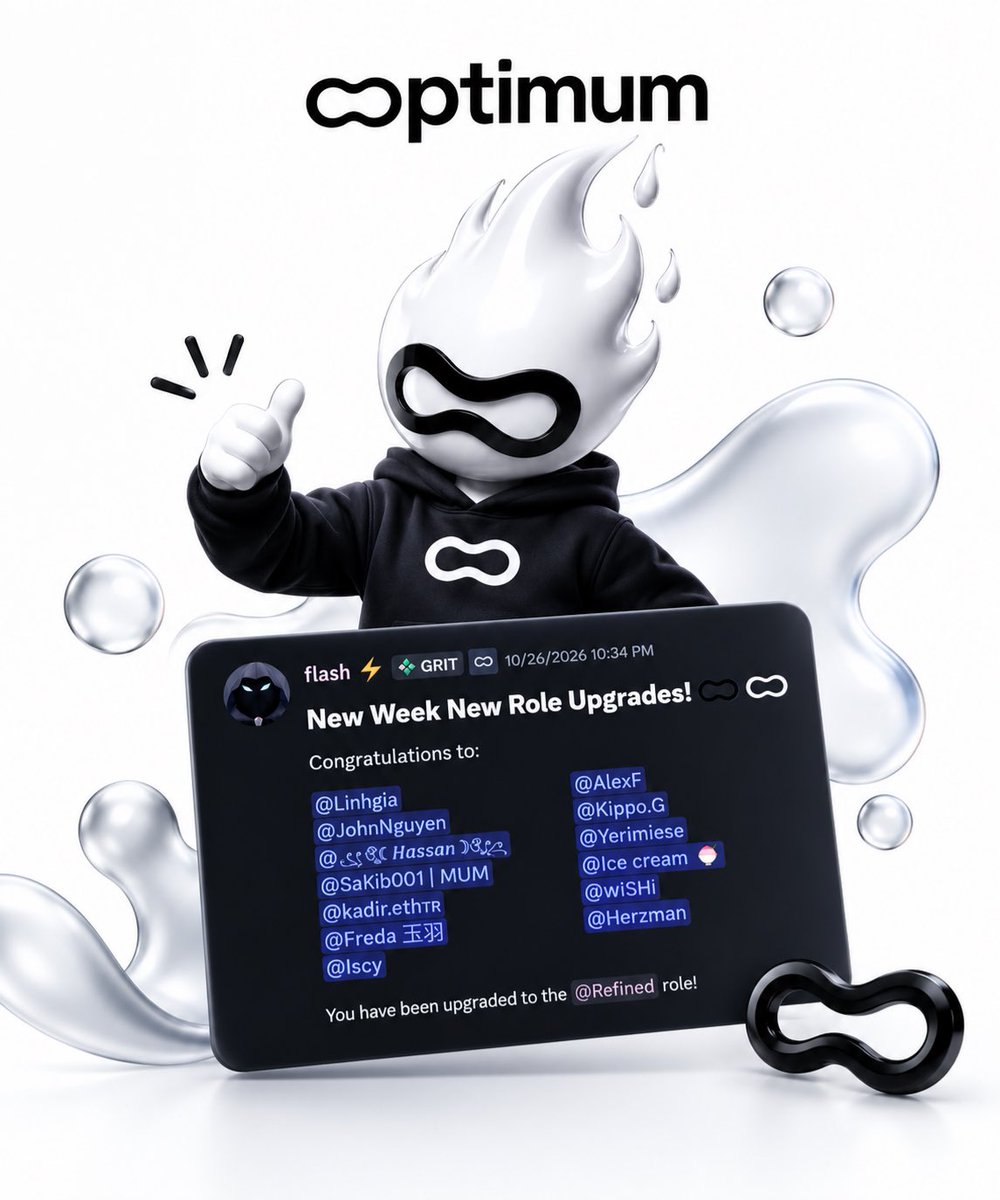
Congratulations to everyone who earned the Refined role!
Community growth comes from showing up consistently, sharing ideas, helping others, and staying involved. Recognition like this makes those efforts feel meaningful.
With @get_optimum working on better blockchain data delivery through technologies like RLNC and mump2p, the community has plenty of interesting developments to follow.
➜ Keep learning and contributing.
➜ Stay active and support others.
➜ Keep exploring what Optimum is building.
Every step counts when you're part of a community that continues to grow. More progress, more opportunities, and more achievements ahead!
Keep building and moving forward. 🚀
@get_optimum
@cryptooflashh
@TheBl0ckBoy