“How do we stop entropy?”
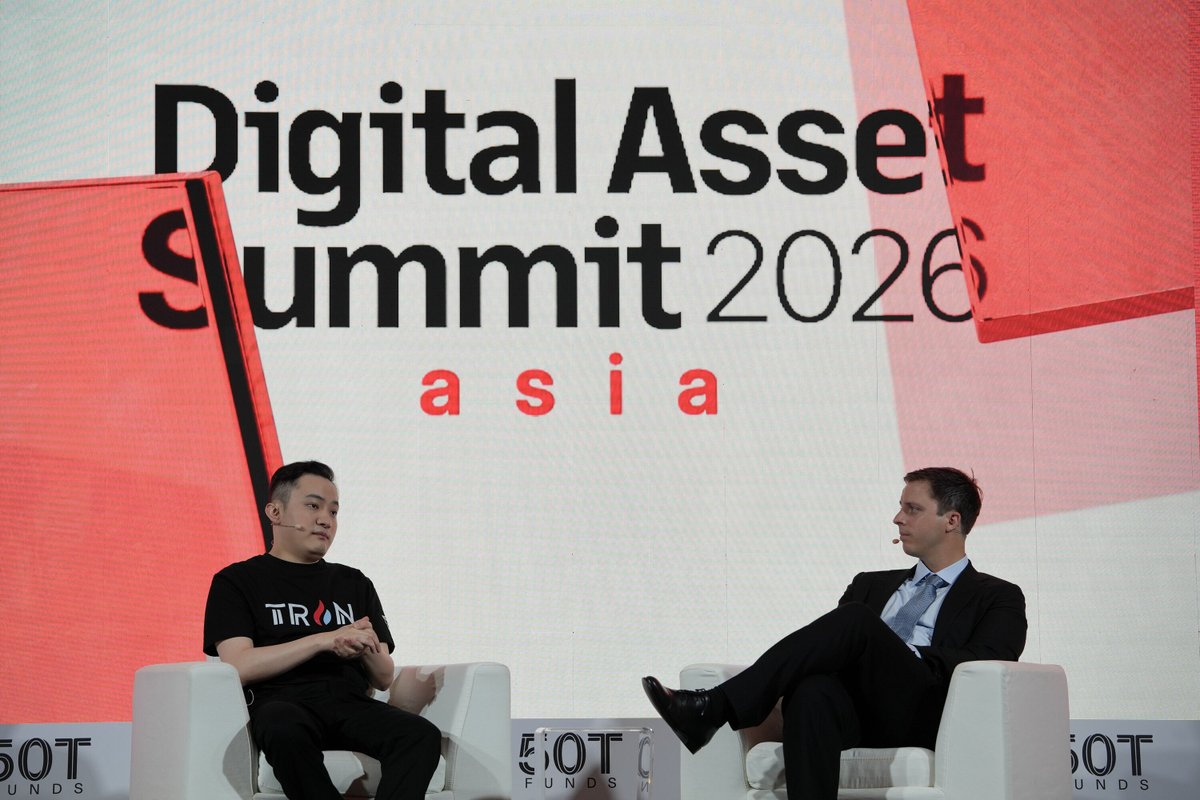
Yesterday, during the opening ceremony of the 2025/2026 academic year of the University of Genoa, @paoloardoino, CEO of @tether, delivered his Lectio Magistralis (Master’s Degree Lecture) before the academic community of #UniGe and the rectors of other Italian universities. He offered a clear and concrete reflection on how innovation can redefine access to economic services on a global scale.
The heart of the event entitled “The Quest for a #Stable Society” is the “Tether’s #Manifesto”: the stability of society arises from fair and technologically advanced access to financial services, supported by decentralized models and peer-to-peer dynamics.
1. #Stability derives from equipotent access to #technology and #finance.
2. #Decentralization of technology and finance makes society resilient to failure and abuse.
3. Technology and finance are a reflection of society: #peertopeer.
Ardoino then explains the birth and growth of #tether. A #stablecoin born to solve a real problem in emerging markets: the extreme devaluation of local currencies (as in Argentina, Turkey, Nigeria, Venezuela and Egypt) that destroys families’ savings.
#USDT During the 2020 pandemic, it became a vital protection tool in emerging countries, going from 2 to over 184 billion dollars in circulation, establishing itself as the most widely used digital dollar in the world.
In the second part, Paolo Ardoino analyzes the social impact of #tether, defining it as the most important case of #financial inclusion in history.
With over 560 million users, USDT allows #remittances at zero cost for those who work far from their home country, eliminating bank fees that reach up to 26%.
Tether’s vision, however, extends beyond finance through three #opensource technological pillars (technology he strongly believes in) and based on #decentralization:
@Holepunch_to: a peer-to-peer communication system to guarantee freedom of information without intermediaries.
@qvac : artificial intelligence models that run directly on smartphones, bringing education even where connectivity is poor.
#Decentralized #Energy Grid in #Africa: a project aiming to bring energy to 30 million homes by 2032 through a network of 100,000 solar kiosks and rechargeable batteries, also creating thousands of local jobs.
Tether is not just a company. It is the stable company.
@Cointelegraph AI onchain isn’t a 5-year theory anymore. Google’s AP2 supports agent crypto payments, x402 crossed 100M tx on Base, and stablecoins moved $10.2T adjusted in 12 months. As agents start acting, not just answering, blockchains look like their native financial rails
@WatcherGuru The bigger story isn’t just 9M customers getting crypto access. It’s crypto entering everyday banking rails. USDT may be the most interesting asset: direct dollar-linked exposure from a rand account, inside the bank app. Bitcoin gets the headline. ZAR → USDT is what I’d watch.
@BitcoinArchive https://t.co/P5gkGchSFs had been largely on hold since June, and the refusal came more than 15 months after the application. The way back is telling: one licensed German partner for trading, another for custody. Under MiCA, the licence is now part of the plumbing
@BitcoinArchive Behind the headline is a ring-fenced model: coins bought through FNB can't leave for an outside wallet. Clients get exposure inside the bank, not keys of their own. USDT is on the list too, so savers in rand can reach dollars from a banking app. That flow is the one I'd watch
@KobeissiLetter Gulf crude flows point the same way. Per Kpler, exports topped pre-war levels on 14 days in September. The constraint has moved downstream: with barrels available but refining capacity short, the squeeze lands on gasoline and diesel margins. Hormuz still carries a risk premium.
@Cointelegraph Being in profit cuts both ways. Holders who never went under water have no reason to capitulate, but every leg higher gives them one to sell. Per CryptoQuant, through September the market absorbed fewer coins than became available. A demand problem, not a conviction one.
Oil surges 35% in a year, energy stocks are having a field day, while ordinary families get squeezed at the pump and at the checkout line because three critical shipping routes — Hormuz, the Red Sea, the Caspian — are all under strain simultaneously. It’s the same pattern every single time: geopolitical events dictate prices, and everyday consumers end up carrying the burden
Crude jumps 35% in a year, energy stocks celebrate, and meanwhile families are cutting back on gas and groceries because three shipping corridors — Hormuz, the Red Sea, the Caspian — are all breaking down at once. Same story every time: geopolitics sets the prices, consumers absorb the hit. Same people always foot the bill
The most significant data point isn’t the raw reactor count, it’s the speed: China builds in an average of 2.8 years what takes the rest of the world 5.8 years — with some projects, like India’s, taking up to 22 years. The secret is standardization: the Hualong One design gets replicated at industrial scale instead of being re-engineered project by project, backed by a uniform project management system that drastically cuts licensing and engineering bottlenecks.
The result: half of the nuclear capacity under construction globally today is Chinese, and Beijing is targeting 100 GW installed by 2030 — overtaking France as the world’s second-largest nuclear fleet, with some analysts seeing it surpass the US as the top producer by the end of the decade.
Meanwhile, the US doesn’t have a single large commercial reactor under construction, and the last two completed took about 15 years each. This isn’t a matter of political will on nuclear anymore, it’s a structural industrial advantage that keeps widening every year.