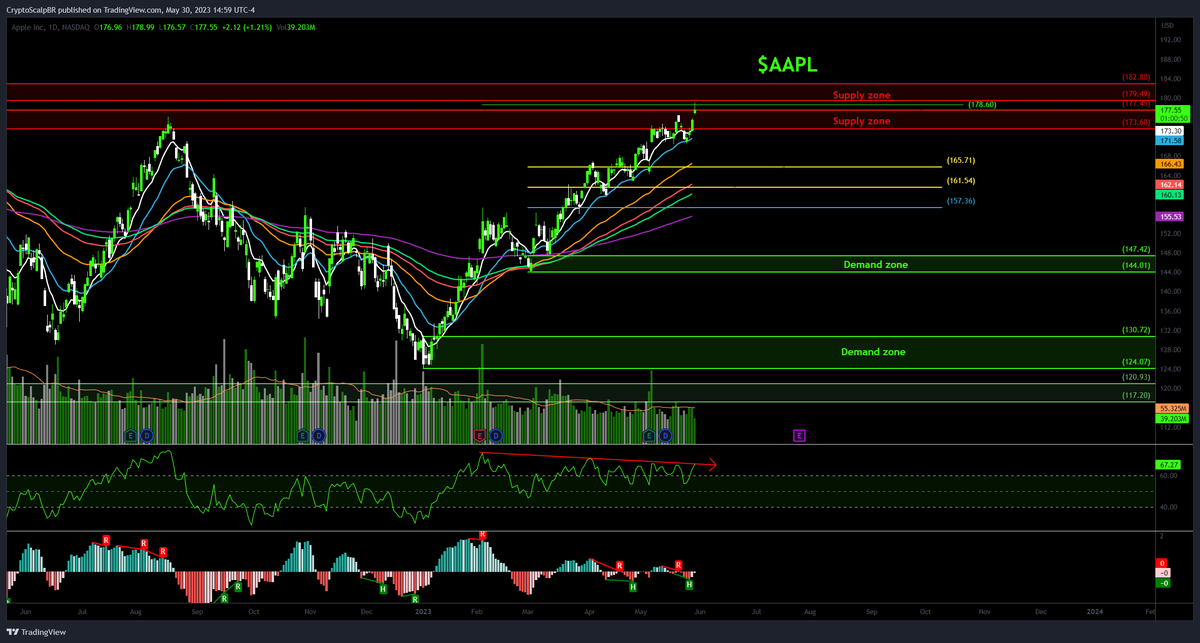
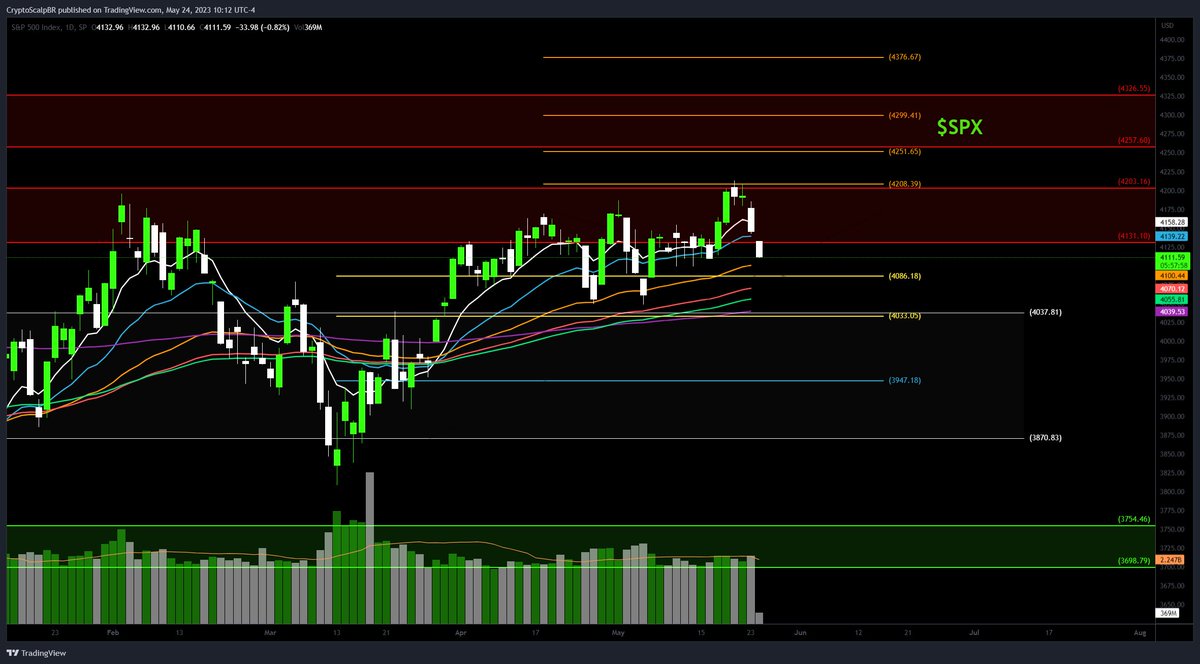
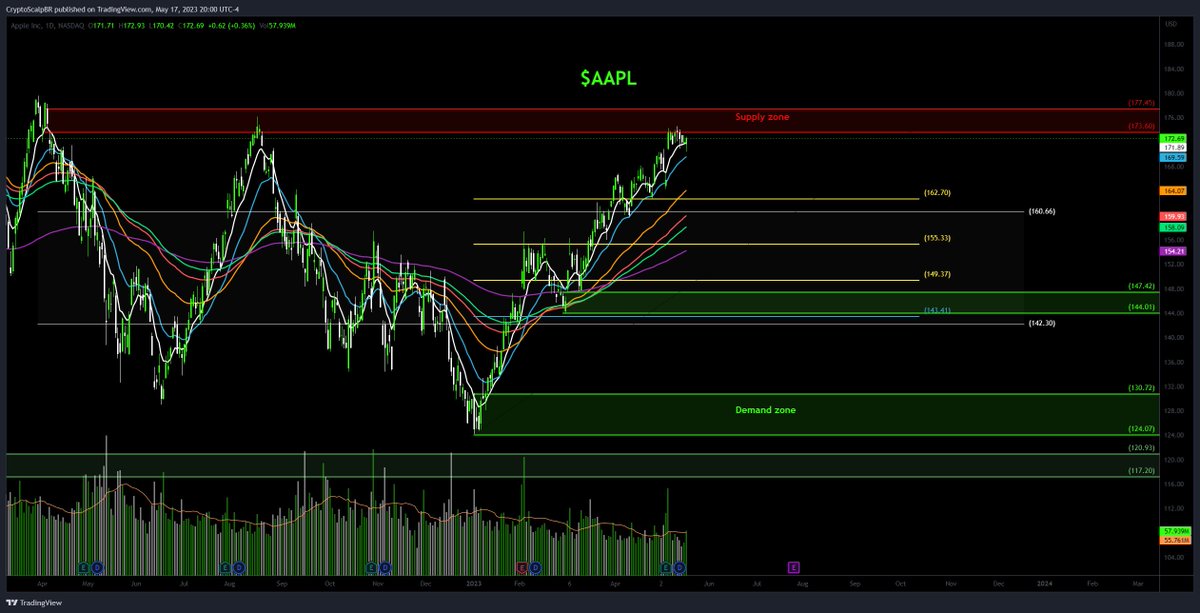
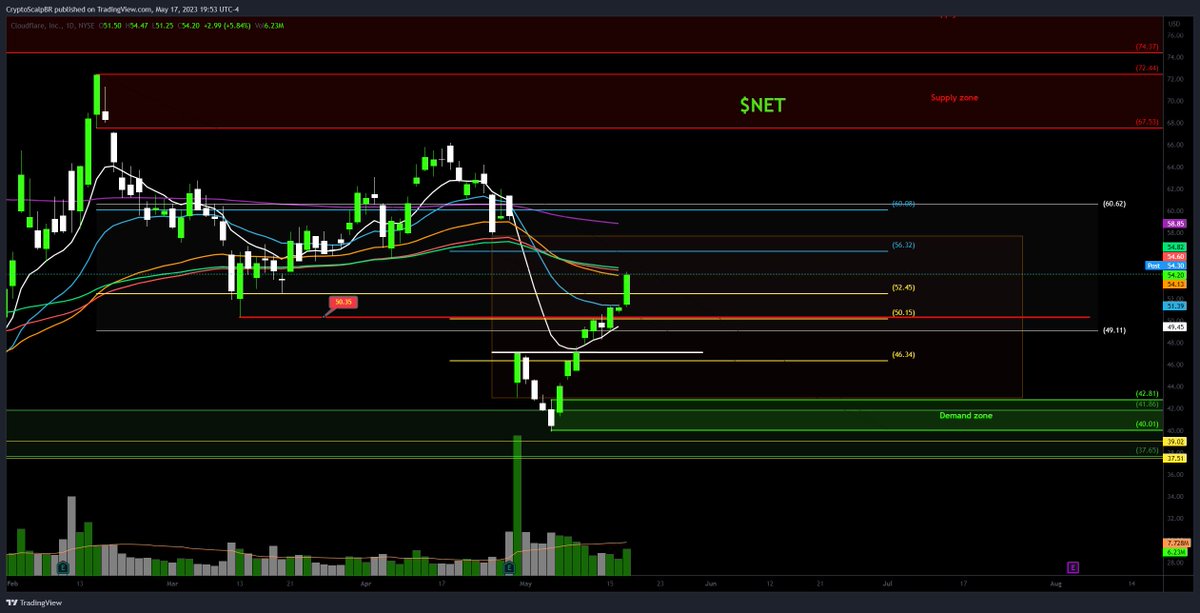
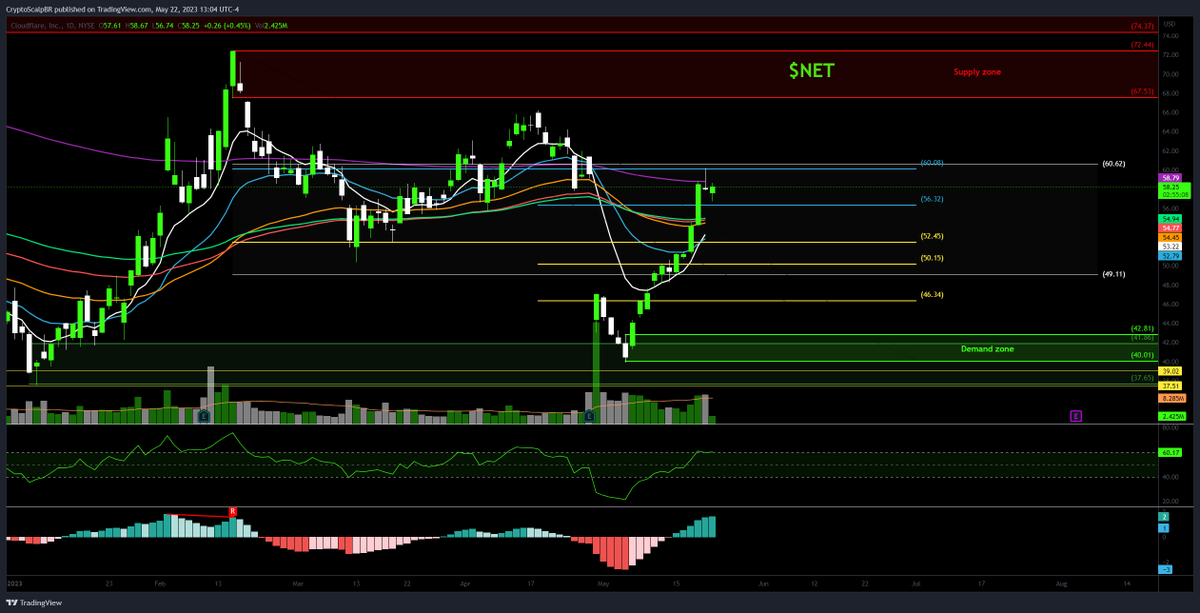
Exponential or Simple moving averages?
The choice between exponential moving averages (EMA) and simple moving averages (SMA) depends on your specific trading or analysis objectives and the characteristics of the data you are working with. Here are some considerations for each:
Simple Moving Averages (SMA):
Smoothness: SMAs provide a smoother representation of the trend compared to raw price data, making it easier to identify the overall direction.
Ease of Use: They are straightforward to calculate and interpret, making them suitable for those new to technical analysis.
Equal Weighting: Each data point in the period contributes equally to the average, which can be an advantage or a limitation depending on the context.
Exponential Moving Averages (EMA):
Recent Data Emphasis: EMAs give more weight to recent data points, making them more responsive to recent price changes. This can be advantageous in fast-moving markets.
Faster Signals: EMAs react more quickly to price changes, so they may generate signals (such as crossovers) sooner than SMAs.
Trend Identification: EMAs are particularly useful for identifying trends early on and adapting to changing market conditions.
Choosing Between SMA and EMA:
Trend Analysis: If you are primarily interested in identifying the overall trend and are less concerned with rapid changes, SMA might be suitable.
Responsive Signals: If you want your moving average to react quickly to price changes and provide signals promptly, EMA could be more appropriate.
Combination: Some traders use a combination of both SMAs and EMAs. For example, they might look for crossovers between a short-term EMA and a longer-term SMA to generate trading signals.
Ultimately, the choice between SMA and EMA is subjective and may depend on your trading strategy, risk tolerance, and preferences. It can also be helpful to experiment with both types and observe how they perform in different market conditions. Additionally, consider other technical indicators and analysis tools to complement your moving average strategy.
#StockMarket #Trading #Investing #Stocks #DayTrading #SwingTrading #TechnicalAnalysis #FinancialMarkets #OptionsTrading #StockPicks #TradingTips #StockMarketNews #MarketAnalysis #InvestmentStrategy #TradingCommunity
Marketing your company is a crucial step to attracting clients and building a reputable brand. Here are some strategies and steps to market your investment company effectively:
Define Your Brand and Unique Selling Proposition (USP):
Determine what sets your company apart from the competition. Identify your strengths, values, and the unique benefits you offer to clients.
Website and Online Presence:
Create a professional website that reflects your brand and services. Make sure it is user-friendly, mobile-responsive, and optimized for search engines (SEO).
Content Marketing:
Develop high-quality content that demonstrates your expertise. This includes blog posts, articles, videos, webinars, and whitepapers related to investment topics and market insights.
Social Media Presence:
Establish and maintain a strong presence on social media platforms like LinkedIn, Twitter, and others to share your content, engage with your audience, and showcase your industry knowledge.
Email Marketing:
Build and maintain an email list to keep clients and potential clients informed about your services, market updates, and company news.
Networking:
Attend industry events, join investment associations, and network with potential clients and partners to build relationships and expand your reach.
Client Testimonials and Case Studies:
Showcase the success stories of your clients through testimonials and case studies. Social proof can be a powerful marketing tool.
Online Advertising:
Consider pay-per-click (PPC) advertising on platforms like Google Ads and social media to reach a broader audience. Utilize precise targeting options to connect with potential clients.
Public Relations:
Build relationships with financial journalists and bloggers to get your company featured in news articles, blogs, and industry publications.
Educational Webinars and Seminars:
Host webinars or seminars to provide in-depth information on investment topics and allow potential clients to interact with your team.
Compliance and Regulation:
Ensure that all your marketing materials and practices comply with relevant financial regulations and industry standards.
Analytics and Measurement:
Use analytics tools to measure the performance of your marketing campaigns. Adjust your strategies based on the data to optimize results.
Referral Programs:
Encourage satisfied clients to refer others to your investment services. Consider offering incentives or rewards for successful referrals.
Continuous Learning:
Stay updated with the latest developments and continuously refine your marketing strategies.
Legal and Compliance Considerations:
Make sure your marketing materials adhere to all legal and regulatory requirements in the industry.
Remember that building a strong and reputable brand takes time and consistent effort. The success of your marketing efforts will depend on understanding your target audience, adapting to market conditions, and delivering excellent service to your clients.
#StockMarket #Trading #Investing #Stocks #DayTrading #SwingTrading #TechnicalAnalysis #FinancialMarkets #OptionsTrading #StockPicks #TradingTips #StockMarketNews #MarketAnalysis #InvestmentStrategy #TradingCommunity
Beta is an important measure in the financial market that quantifies the sensitivity of an asset to movements in a reference index, typically the overall market. It describes how the price of an asset tends to move in relation to fluctuations in this reference index. Beta is a fundamental tool for investors to assess the risk and return potential of an asset compared to the market, and it is also widely used in portfolio management. Here are the details about beta in the financial market:
Calculation of Beta: Beta is calculated using a regression analysis, which compares the historical returns of a specific asset with the historical returns of the reference index. The result is a number that represents the sensitivity of that asset to changes in the reference index.
Interpretation of Beta: A beta equal to 1 indicates that the asset is as volatile as the market. This means that, on average, the asset moves in the same direction and to the same extent as the market.
A beta less than 1 indicates that the asset is less volatile than the market. It tends to have smaller movements in relation to changes in the reference index.
A beta greater than 1 indicates that the asset is more volatile than the market. It tends to have larger movements in relation to changes in the reference index.
Importance of Beta: Beta is a critical measure for risk and portfolio management because it helps investors understand how an asset behaves in relation to the market.
Investors use beta to assess the systematic or non-diversifiable risk of an asset. Systematic risk is related to market volatility and cannot be eliminated through diversification.
Beta is used to make decisions about asset allocation in a portfolio. A well-balanced portfolio may include assets with different betas to control overall risk.
Limitations of Beta: Beta is a retrospective measure based on past price history. Therefore, it does not consider unpredictable events that can affect markets.
It does not take into account specific factors of the company or asset, such as management quality, financial situation, or market competitiveness.
Beta can be influenced by changes in the business cycle or unique events that have affected the asset in the past.
Examples of Beta Use: Investors looking to reduce risk in their portfolios may choose to invest in assets with lower betas.
Investors seeking potentially higher returns may look for assets with higher betas, assuming they are willing to accept higher risk.
Companies issuing stocks can use the beta of their shares as a risk metric for potential investors.
In summary, beta is an essential measure in the financial market that helps quantify the relationship between an asset and the market. It is a valuable tool for risk and portfolio management but should be used in conjunction with other analyses and considerations to make informed investment decisions.
#StockMarket #Trading #Investing #Stocks #DayTrading #SwingTrading #TechnicalAnalysis #FinancialMarkets #OptionsTrading #StockPicks #TradingTips #StockMarketNews #MarketAnalysis #InvestmentStrategy #TradingCommunity
🧠💹 Mastering Stock Market Psychology for Successful Investing 💹🧠
📈 Stay Calm, Stay Smart: Emotions can drive impulsive decisions. Train your mind to stay rational during market swings to make well-thought-out choices. #EmotionalIntelligence#SmartInvesting
💭 Think Long-Term: Focus on the bigger picture and avoid getting caught up in short-term fluctuations. Patience and a long-term perspective lead to better outcomes. #LongTermInvesting #PatiencePaysOff
🚫 Avoid Herd Mentality: Don't blindly follow the crowd. Conduct your research and analysis to form independent judgments. #BeContrarian #ThinkDifferent
📚 Learn from Mistakes: Investing is a learning journey. Embrace your failures, learn from them, and use those lessons to refine your investment approach. #FailForward #GrowAndLearn
🛑 Don't Panic Sell: Fear can trigger panic selling, leading to potential losses. Stick to your investment plan and avoid hasty decisions during market downturns. #StayCalm #StayInvested
💼 Know Your Risk Tolerance: Understand your risk appetite and invest accordingly. Don't overcommit to risky assets if it doesn't align with your comfort level. #RiskManagement #KnowYourself
💪 Develop Resilience: Markets can be unpredictable. Cultivate resilience to stay committed to your strategy, even in challenging times. #StayStrong #ResilientInvestor
🧐 Be Realistic: Avoid irrational exuberance and be realistic about your expectations. Consistent growth often outperforms speculative gains. #RealisticGoals #SmartExpectations
🙏 Control What You Can: Accept that you can't control the market, but you can control your reactions. Focus on managing your emotions and actions. #ControlTheControllables
Remember, successful investing requires a strong mindset. Develop discipline, self-awareness, and a rational approach to navigate the stock market effectively. 🚀💼 #InvestingPsychology #MindOverMarket
#StockMarket #Trading #Investing #Stocks #DayTrading #SwingTrading #TechnicalAnalysis #FinancialMarkets #OptionsTrading #StockPicks #TradingTips #StockMarketNews #MarketAnalysis #InvestmentStrategy #TradingCommunity
"What you are experiencing as a trader is not a coincidence. It is part of Smart Money’s Business Plan. You are trading against them, and they are not in the business of losing money."
(Andrew Jevon)
#tradingstrategies#investing#tradingtips#stocks#StockMarket #OptionsTrading #stockanalysis #BolsadeValores #MercadoFinanceiro #priceaction #AnáliseTécnica #Ações #stocktrading #daytrading #stockcharts #marketanalysis #technicalanalysis