The first blockchain-friendly personal agent OS is here, and only 2 days left til our TGE at Base!
Since sharing the post the other day for the airdrop to leave no one behind, many people submitted their 0x addresses.
However, many Sybils came, so we decided to extend the prechecker for 24 hours.
Make sure to fill this out for eligibility:
https://t.co/A6gN5Rt2Pn
(everyone should)
1. We are doing this to filter out as many bots and to share the drop with more real accounts instead.
2. We also asked for the Telegram username (optional). If you join our community, add your username too for extra drops.
3. Those who filled the previous prechecker already will get some extra bonus from filling this and adding their telegrams. (Old entries will be kept, including idearalph posts). Also, slightly higher bonuses will be given for being early.
4. You can still drop wallets underneath this post too btw and then submit those to prechecker, if you've never submitted them before.
P.S. We're gonna be giving more multipliers again in these 24 hours for those who QRT this post, and let people know about the final opportunity to enter the drop. With a multiplier of up to 100X, depending on your reach.
Spark, as a personal self-improving agent, is now ready to use. You can get it from our bio.
It's open source.
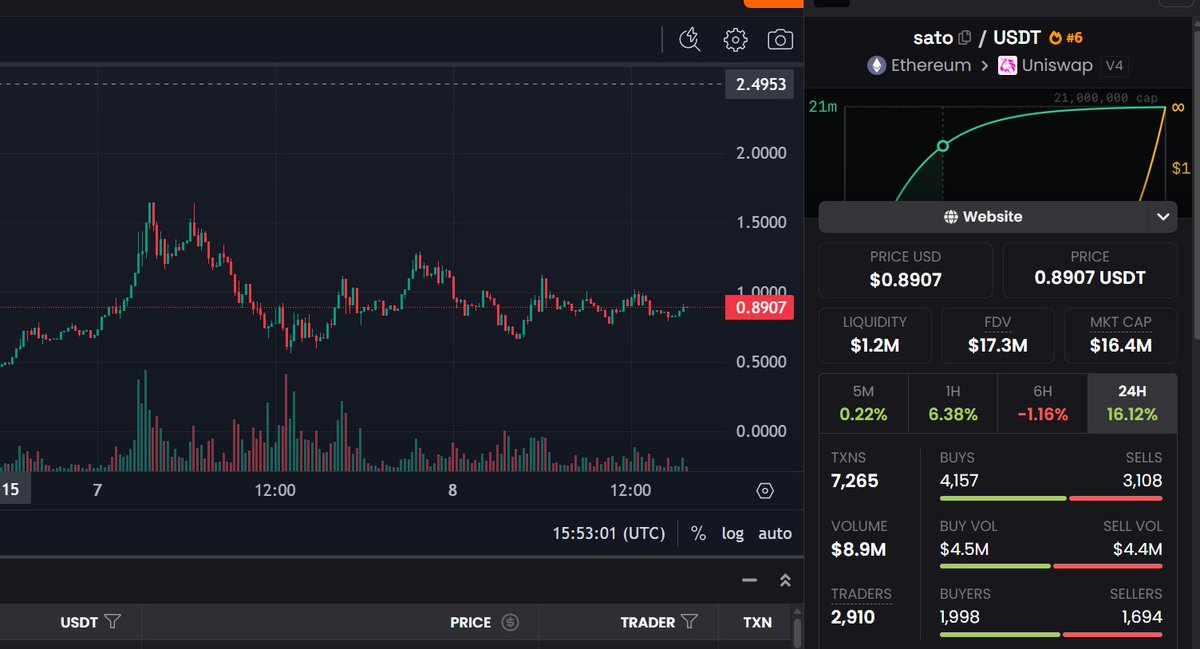
$SATO vs $DATO ( MAX ENGAGE SO EVERYONE SEES THIS )
I built $dato to solve the core flaws in the original $sato model.
Instead of minting and burning directly against circulating supply, users mint $dato from trading fee revenue.
Every trade generates 4% fees in $SOL and $DATO.
Those fees flow directly into the hook pool.
Users then mint $dato from the hook pool according to the bonding curve, while the accumulated $SOL becomes the reserve backing.
This creates a much more stable system because reserves come from real trading activity rather than pure speculative inflows.
According to AI security research, the original $sato design is vulnerable to 3 major issues:
1 Bank run risk ( reserves running low )
2 MEV bot exploitation ( ETH stuff )
3 No external price balancing ( isolated synthetic pricing)
$dato introduces a revenue-backed reserve model designed to reduce those weaknesses significantly.
$SATO vs $DATO ( MAX ENGAGE SO EVERYONE SEES THIS )
I built $dato to solve the core flaws in the original $sato model.
Instead of minting and burning directly against circulating supply, users mint $dato from trading fee revenue.
Every trade generates 4% fees in $SOL and $DATO.
Those fees flow directly into the hook pool.
Users then mint $dato from the hook pool according to the bonding curve, while the accumulated $SOL becomes the reserve backing.
This creates a much more stable system because reserves come from real trading activity rather than pure speculative inflows.
According to AI security research, the original $sato design is vulnerable to 3 major issues:
1 Bank run risk ( reserves running low )
2 MEV bot exploitation ( ETH stuff )
3 No external price balancing ( isolated synthetic pricing)
$dato introduces a revenue-backed reserve model designed to reduce those weaknesses significantly.