In 1986 a guy got kicked out of every casino in Vegas for counting cards. So he flew to Hong Kong with $180,000 and started betting on horses instead. He walked away with almost $900 million.
It's Bill Benter. He figured horse racing was just another counting problem. Same math, more moving parts.
He and a partner showed up with $180k and a computer. Benter spent years teaching that computer to guess one thing, the real chance each horse had to win. If his number was better than the odds the bookies gave, he bet. If not, he skipped it.
That's the whole trick. Expected value.
EV = p · b − (1 − p)
Only bet when your win chance p, at odds b, is worth more than your chance of losing.
This recording was never meant to be some hidden gem. Nobody expected Professor Tsitsiklis to hand the whole foundation away in 45 minutes, but that's exactly what happens on the board. Students in that room pay over $80,000 a year to sit through it. It's free right here. It's free right here.
Every quant, every professional bettor, every hedge fund analyst started with this exact hour. Benter just watched it and actually did the homework.
Almost nobody knows this lecture even exists. Watch it before it gets taken down.
The answer is in this video.
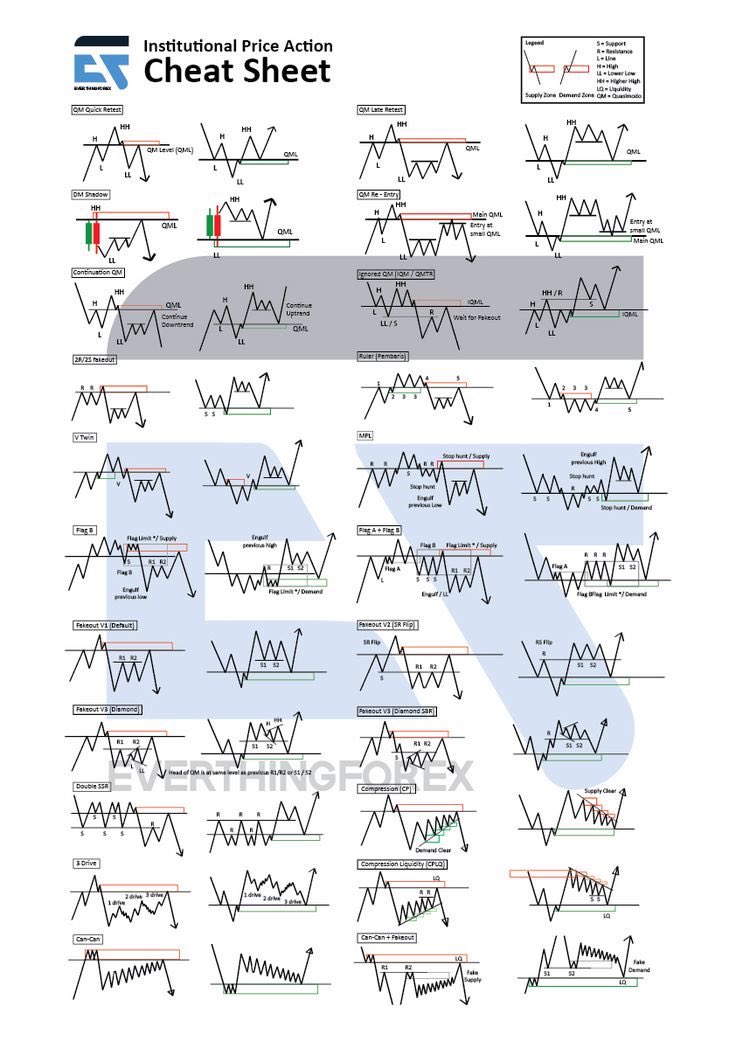
Institutional Price Action Cheat Sheet 2025
1. Market Structure
HH (Higher High) → Bullish continuation
HL (Higher Low) → Confirmation of strength
LH (Lower High) → Bearish continuation
LL (Lower Low) → Confirmation of weakness
2. Liquidity Zones
Equal highs/lows = liquidity pools
Stop hunts happen before real moves
Institutional orders hide below/above obvious levels
3. Order Blocks
Bullish OB → Last down candle before an impulsive move up
Bearish OB → Last up candle before an impulsive move down
Retest of OB = high-probability entry
4. Fair Value Gaps (FVG)
Imbalance between buyers & sellers
Price gravitates to fill gaps before continuation
5. Institutional Entries
Break of structure (BOS) + Retest = safest entry
Entry near liquidity sweep = sniper trades
Confluence of OB + FVG + BOS = institutional precision
6. Risk Management (The Real Edge)
1–2% per trade, never more
Stop hunts are normal → place stops smartly
Patience > entries — institutions wait, so should you
Golden Rule 2025:
Retail chases moves. Institutions create moves. Trade with the creator, not the chaser.
A MILLION WATCH STORY EVERY TRADER NEEDS TO HEAR:
When William J. O’Neil asked Jack Dreyfus about his strategy of cutting losses at 10%, the answer revealed a powerful lesson about protecting capital and staying in the game.
A simple rule can separate legendary traders from everyone else.
Market Wizard Linda Reschke's 12 Technical Trading Rules:
1. Buy the first pullback after a new high. Sell the first rally after a new low.
2. Afternoon strength or weakness should have follow through the next day.
3. The best trading reversals occur in the morning, not the afternoon.
4. The larger the market gaps, the greater the odds of continuation and a trend.
5. The way the market trades around the previous day’s high or low is a good indicator of the market’s technical strength or weakness.
6. The previous day’s high and low are two very important “pivot” points, for this was the definitive point where buyers or sellers came in the day before. Look for the market to either test and reverse off these points, or push through and show signs of continuation.
7. The last hour often tells the truth about how strong a trend truly is. “Smart” money shows their hand in the last hour, continuing to mark positions in their favor. As long as a market is having consecutive strong closes, look for up-trend to continue. The up trend is most likely to end when there is a morning rally first, followed by a weak close.
8. High volume on the close implies continuity the next morning in the direction of the last half-hour. In a strongly trending market, look for resumption of the trend in the last hour.
9. The first hour’s range establishes the framework for the rest of the trading day.
10. A greater percentage of the day’s range occurs in the first hour then was the case in the past, and thus it has become increasingly important to trade aggressively if there are early signs of a strong trend for the day.
11. There are four basic principles of price behavior which have held up over time. Confidence that a type of price action is a true principle is what allows a trader to develop a systematic approach.
The following four principles can be modeled and quantified and hold true for all time frames, all markets. The majority of patterns or systems that have a demonstrable edge are based on one of these four enduring principles of price behavior.
Charles Dow was one of the first to touch on them in his writings. Principle One:
A Trend Has a Higher Probability of Continuation than Reversal Principle Two:
Momentum Precedes Price Principle Three:
Trends End in a Climax Principle Four:
The Market Alternates between Range Expansion and Range Contraction!
12. In the world of money, which is a world shaped by human behavior, nobody has the foggiest notion of what will happen in the future. Mark that word –
Nobody! Thus the successful trader does not base moves on what supposedly will happen but reacts instead to what does happen.
I’m starting a new trading challenge in 48 hours.
$1,000 → $1,000,000
Every trade will be posted before and after
This is going to be the last small trading challenge account I think I will ever do
If you miss this, you may never get an opportunity like this again
First Livestream: Monday 3rd of August
Comment “1M” and I will DM you the link
In 2013 a Wall Street risk boss walked up to an MIT chalkboard and gave away the exact math desks charge $400,000 a year to run.
MIT filmed it. it has been free for 13 years. 7.9 million people pressed play and almost none of them changed a thing.
his point: the Wall Street edge was never a secret. it is a first lecture. options, risk, how a payout is actually built.
every prediction-market trader hunting an edge in 2026 is chasing what Jake Xia put on a board in hour one of a free class.
he ran risk for a living, not a channel. the video outdrew most blockbusters and still moved almost no one, because watching is not doing.
skip to where he prices risk. he takes the thing quant threads sell for $500 and builds it from zero, slow enough for a beginner to follow.
no paywall. no NDA. one board and a marker.
a quant I know sends this link to every junior who whines the math is too hard.
you are 13 years late. it is still free.
Five Fundamental Truths:
1. Anything can happen.
2. You don’t need to know what is going to happen next in order to make money.
3. There is a random distribution between wins and losses for any given set of variables that define an edge.
4. An edge is nothing more than an indication of a higher probability of one thing happening over another.
5. Every moment in the market is unique.
Mark Douglas
The popular quote "Don't speak negatively about yourself, even as a joke. Your body doesn't know the difference. Words are energy and they cast spells, that's why it's called spelling" Bruce Lee :