One thing I’ve learned from following the Kairos project is that real growth in Web3 takes patience.
Not every important project moves with constant hype.
Some focus more on building infrastructure, partnerships, and long-term sustainability.
That approach deserves attention.
A thread 🧵
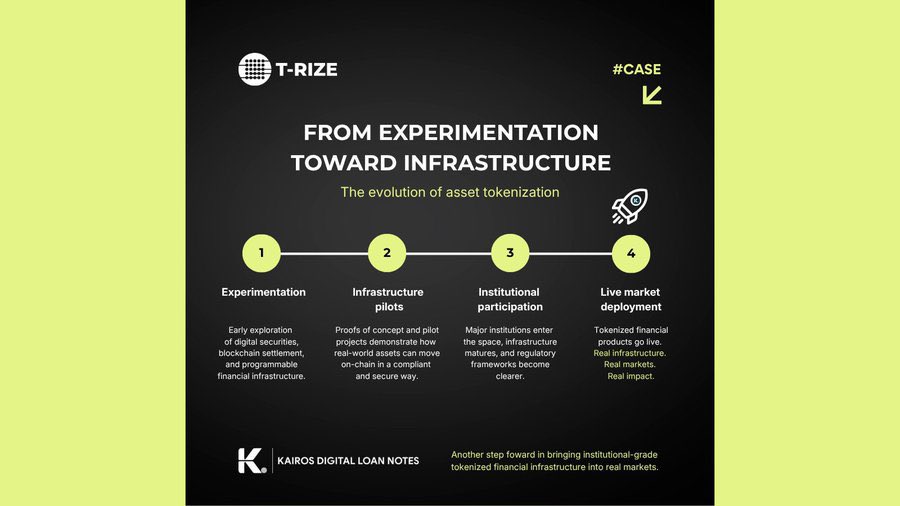
#RWA | @trize_io
Join @x10xalex tomorrow at 1 PM UTC for an AMA on the latest $RLS tokenomics update.
As the core developer of Rayls, @parfin_io has committed to keeping approximately 11% of the total $RLS supply locked for an additional year.
Drop your questions below; we'll cover them live.
Most hiring decisions come down to gut feel disguised as logic.
You read the resume, You like the vibe. You think "this person gets it." Then three months in, you realize they excel at the wrong things.
─────➤
The real problem: you never compared what you actually need right now versus what you're betting on for later.
One candidate shows deep expertise and ships fast. They solve immediate problems. But they work best in stable systems where the playbook is clear.
Another candidate is adaptable, communicates well, learns quickly. They'll grow with your company. But they might be slower out of the gate, and you don't have time for slow.
Most teams pick one profile and hope it works. They don't pressure-test the tradeoff before committing.
That's where comparing priorities gets useful.
─────➤
Ask the same hiring question through different lenses. What does a "we need results now" filter see? What about "we need someone who grows with us"? Where do those views align? Where do they completely disagree?
The disagreement is the useful part. It's the tension between what you need immediately and what you're building for. Once you see it clearly, the decision gets easier. Not because you know which candidate is objectively better, but because you know which tradeoff you're willing to make.
─────➤
One AI answer gives you confidence in one direction. Multiple perspectives expose what you might be sacrificing to get there.
That's why comparing matters before you hire.
👉 Try it here: https://t.co/N9JgGV7Nyj
Most managers trust the first answer they get about a problem employee.
Performance metrics look good. Maybe it's a communication issue. Coaching should fix it.
But that's one lens.
@agnt_hub
─────➤
Another model might see the same person differently. Team morale is dropping. People are leaving. The culture cost of keeping them is already higher than the severance. Trust, once broken, doesn't come back from a workshop.
Which answer is right?
Both are. And neither is complete.
─────➤
This is the kind of decision where relying on one AI answer can cost thousands. Not because AI is useless. Because one perspective can't see what's happening on the other side of the organization.
One model focuses on individual results. Another weighs the team dynamics. A third looks at financial impact. A fourth considers how this decision affects retention and culture.
When they disagree, the disagreement tells you what to inspect before you decide.
Maybe the coaching path is right. Maybe it's time to move on. But the decision should come after you've seen the tension between those views, not before.
─────➤
That's where Truth helps. Ask once. See what multiple models would actually argue about this specific person. Watch where they agree on the core issue. See where they split on what matters most.
The answer that survives the debate is the one worth acting on.
👉 Start your first decision here: https://t.co/N9JgGV7Nyj
#AI | @agnt_hub
@Da7_Tech Switching makes sense when one model stops delivering. Before you settle on a replacement, comparing a few at once saves the trial-and-error.
https://t.co/B3xHXFalC2
#AI | @agnt_hub
Most managers trust the first answer they get about a problem employee.
Performance metrics look good. Maybe it's a communication issue. Coaching should fix it.
But that's one lens.
@agnt_hub
─────➤
Another model might see the same person differently. Team morale is dropping. People are leaving. The culture cost of keeping them is already higher than the severance. Trust, once broken, doesn't come back from a workshop.
Which answer is right?
Both are. And neither is complete.
─────➤
This is the kind of decision where relying on one AI answer can cost thousands. Not because AI is useless. Because one perspective can't see what's happening on the other side of the organization.
One model focuses on individual results. Another weighs the team dynamics. A third looks at financial impact. A fourth considers how this decision affects retention and culture.
When they disagree, the disagreement tells you what to inspect before you decide.
Maybe the coaching path is right. Maybe it's time to move on. But the decision should come after you've seen the tension between those views, not before.
─────➤
That's where Truth helps. Ask once. See what multiple models would actually argue about this specific person. Watch where they agree on the core issue. See where they split on what matters most.
The answer that survives the debate is the one worth acting on.
👉 Start your first decision here: https://t.co/N9JgGV7Nyj
#AI | @agnt_hub
@sbilstein The "deep research" branding oversold confidence and undersold the actual problem: one model's research pass hides what a different model would challenge.
Comparing outputs is where the useful part starts. https://t.co/B3xHXFalC2
Most hiring decisions come down to gut feel disguised as logic.
You read the resume, You like the vibe. You think "this person gets it." Then three months in, you realize they excel at the wrong things.
─────➤
The real problem: you never compared what you actually need right now versus what you're betting on for later.
One candidate shows deep expertise and ships fast. They solve immediate problems. But they work best in stable systems where the playbook is clear.
Another candidate is adaptable, communicates well, learns quickly. They'll grow with your company. But they might be slower out of the gate, and you don't have time for slow.
Most teams pick one profile and hope it works. They don't pressure-test the tradeoff before committing.
That's where comparing priorities gets useful.
─────➤
Ask the same hiring question through different lenses. What does a "we need results now" filter see? What about "we need someone who grows with us"? Where do those views align? Where do they completely disagree?
The disagreement is the useful part. It's the tension between what you need immediately and what you're building for. Once you see it clearly, the decision gets easier. Not because you know which candidate is objectively better, but because you know which tradeoff you're willing to make.
─────➤
One AI answer gives you confidence in one direction. Multiple perspectives expose what you might be sacrificing to get there.
That's why comparing matters before you hire.
👉 Try it here: https://t.co/N9JgGV7Nyj
@kapilansh_twt The honest answer: depends on the question. Each model has different blind spots, so checking one is often not enough. Compare them all at once in Truth: https://t.co/B3xHXFalC2
July was just the beginning.
> 600+ applications
> 18000+ points awarded
> 56 countries represented
The leaderboard has been reset, and The Rail is open for a new intake.
Apply below if you want to contribute and grow with the Rayls ecosystem while earning rewards 👇
@ChrisBarrett Proof of insurance onchain is a big deal for institutional RWA adoption.
@trize_io is showing how Canton + Chainlink can bring more transparency and verifiability to private credit.
T-RIZE + Chainlink is a strong step toward making tokenized private credit more transparent and verifiable.
Bringing proof of insurance onchain adds another layer of trust around real-world assets on Canton Network.
This is what institutional-grade RWA infrastructure should look like.
@trize_io | @CantonNetwork
“T-RIZE has started using Chainlink to verify insurance coverage for its tokenized private credit product built on Canton Network. Chainlink is providing "proof of insurance," an onchain record of an asset’s insurance, which can be independently verified by a third party.”
Infrastructure first. That’s what makes on-chain markets actually viable for serious capital.
Edel and Hecto are tackling different sides of the market, but the shared vision is what stands out.
Proud to see such strong projects building in the same ecosystem as @trize_io on @CantonNetwork.
The Canton ecosystem keeps getting more impressive.
#Tokenization
The next phase of blockchain adoption may be less about asking:
“What can we speculate on?”
and more about asking:
“What real financial activity can move onchain?”
Canton Network is building the rails for institutional blockchain activity.
@trize_io is helping bring real-world financial opportunities to those rails.
That is why T-RIZE is an important player in the Canton ecosystem.
The next major wave of blockchain adoption may not come from putting more speculative assets on-chain.
It may come from moving real financial activity onchain.
That is the opportunity at the intersection of @CantonNetwork and @trize_io
But to understand why T-RIZE matters, we first need to understand what Canton is building.
A thread 🧵
This is why the Canton × T-RIZE relationship is worth watching.
Canton is focused on building infrastructure for institutional finance.
T-RIZE is focused on real-world assets and structured financial opportunities.
Together, they represent a model where blockchain infrastructure and financial products develop together.