Someone’s everyday walk.
A moment I’ll keep coming back to.
Long after the trip ends,
it’s ordinary streets like this that stay with me. 🇯🇵
#JapanTravel#StreetPhotography
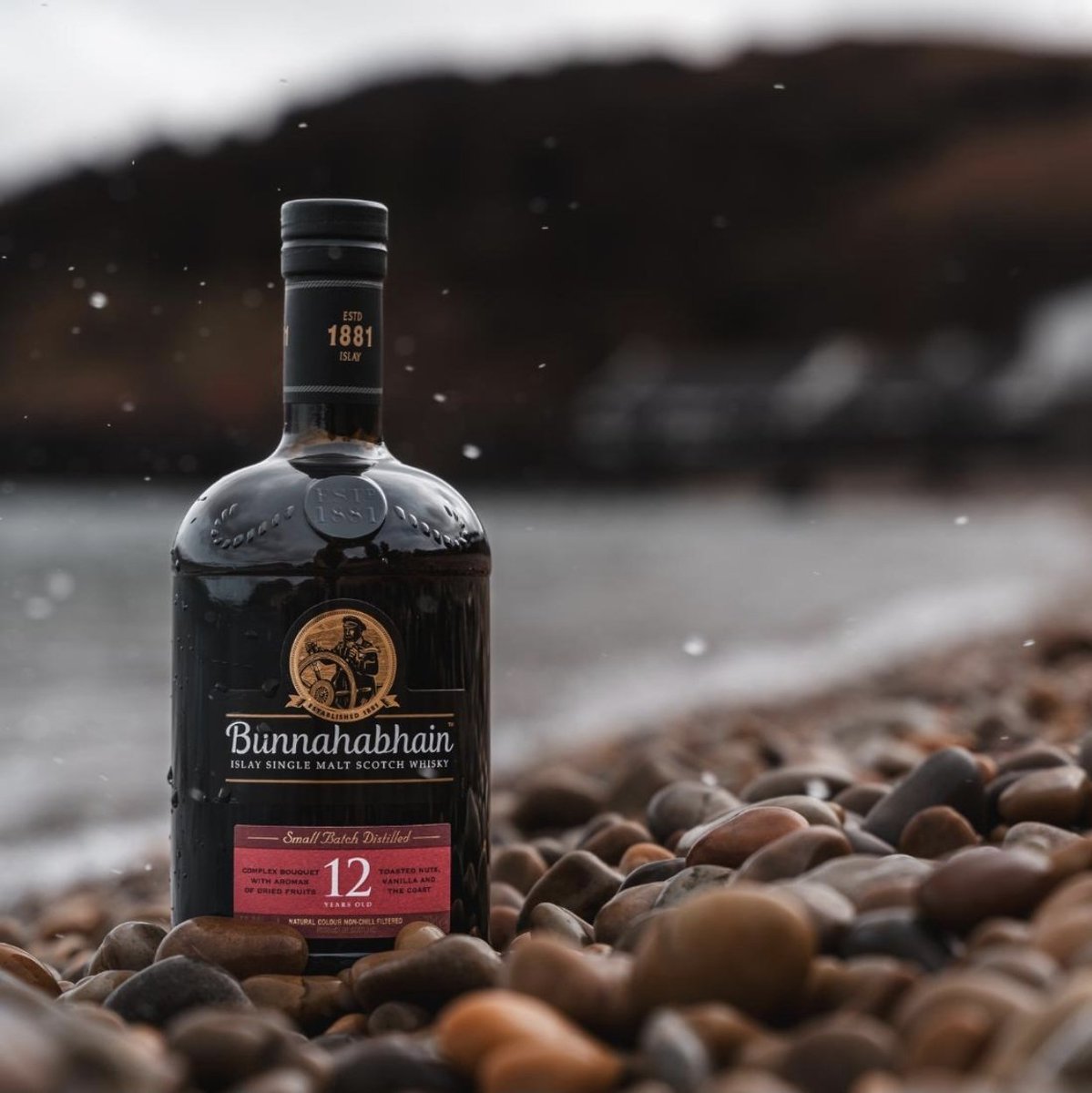
Does every Islay whisky have to be smoky?
Bunnahabhain 12 challenges that assumption.
Unpeated | 46.3% ABV
Bourbon + sherry casks; non-chill filtered.
Nose: fruit, florals, dried fruit
Palate: nuts, vanilla, caramel
Finish: long, with sea salt
Peat or no peat?
#Islay#Whisky
@Bitreumalt Exactly. Preferred equity isn't technically a loan, but that 15% dividend is still a serious cost. The real question is whether shareholders actually benefit over time.
Goldman Sachs expects the Fed to hold rates in October, then hike again in December.
For Bitcoin, the October hold isn't the real story. It's already widely expected.
What matters is whether the Fed keeps the door open to further tightening.
I'll be watching the 2-year Treasury yield, DXY and spot BTC ETF flows after the decision.
A rate hold isn't necessarily a dovish signal.
#Bitcoin #BTC #FOMC
@DDogeback Brazil looks promising. Now I want to see real transaction volume and institutions actually using it, not just more partnership announcements.
What happens when banks, securities firms, and traditional financial assets move into DeFi?
One project worth watching is Rayls ($RLS).
The biggest barriers to institutional blockchain adoption aren't just speed or scalability.
They're privacy, regulatory compliance, asset control, and access to liquidity.
Rayls aims to address these challenges through three key components:
① Sovereign: Protecting institutional assets and sensitive transaction data.
② Private Network: Enabling asset transfers and settlement between financial institutions.
③ Public Chain: Connecting traditional finance with public blockchain networks and DeFi liquidity.
What's particularly interesting is that Rayls already has real-world institutional use cases.
Brazil's Núclea has used Rayls for receivables tokenization, while financial group XP has launched USDXP, a dollar-pegged digital asset built on Rayls infrastructure.
However, institutional adoption doesn't automatically translate into higher $RLS token prices.
The real questions are:
• How much institutional capital will actually move on-chain?
• Will transaction volumes and network fees grow?
• Can the RLS token-burning mechanism create measurable value?
The future of RWA isn't simply about tokenizing assets.
It's about making those assets transferable, tradable, and liquid.
If Rayls can successfully bridge regulated financial institutions with decentralized liquidity, it could become an important part of the evolving financial infrastructure.
I'll be watching how real-world adoption translates into actual network activity.
#Rayls #RLS #RWA #DeFi #TradFi
Ardbeg Uigeadail is worth reading as a cask composition.
The official page lists bourbon and Oloroso sherry casks, 54.2% ABV and no chill filtration. It describes a vatting of different styles of Ardbeg.
That wording matters: combining cask-matured whiskies and moving one whisky into a finishing cask are different production choices.
For this bottle, “how the casks are combined” is a better starting question than “how long was the finish?”
#Whisky #Ardbeg
A little taste of the ocean today.
Shirasu rice bowl and a beautiful platter of fresh sashimi.
One of the best parts of Japan is definitely the seafood.
Which would you try first?
#JapanFood#JapaneseCuisine#Seafood
@DDogeback Same here. The first move after the Fed could be misleading. I want to see where the 2-year yield settles once the initial volatility fades.
The Treasury rally gave a little back on Friday.
U.S. yields rose 4 basis points on Oct 23:
2-year: 4.65% → 4.69%
10-year: 4.96% → 5.00%
Both remained below Oct 21 levels. That looks like a partial reversal, not a full return to the previous rates backdrop.
For BTC, the next test is whether yields hold below those earlier levels after the Fed decision. One strong bond session is a starting point, not a trend.
#Bitcoin #Macro
10,000 Bitcoin simulations. $1M by 2033.
But here's the part that caught my attention.
Willy Woo's median path includes a 43% drawdown between the projected 2028 peak and 2030.
A $1M target sounds exciting. Surviving the journey is another story.
And remember, it's a simulation, not a prediction.
#Bitcoin #BTC
A reserve ratio is only as useful as the scope behind it.
The PCAOB’s investor advocate warns that proof-of-reserves reports are not audits and may leave liabilities or borrowed assets unaddressed.
Three checks matter:
• Which assets and obligations were covered?
• Could the reserves be borrowed or restricted?
• When was the snapshot taken?
A wallet balance is evidence. The report’s scope tells you what that evidence can support.
#Crypto #ProofOfReserves
Bitcoin ETF inflows may be turning positive again.
SoSoValue reportedly recorded $110.34M in net inflows on Oct 26, led by BlackRock's IBIT.
Encouraging, but one green day doesn't erase two days of heavy outflows.
I'll be watching whether inflows continue and broaden beyond IBIT, especially after the Fed decision.
#Bitcoin #BTC #ETF
@GetTheDailyDirt A four-year-old getting hurt just riding the school bus… that's awful. Glad he's in stable condition. Hope the little guy recovers quickly.
@DDogeback What frustrates me most is the silence. If holders aren't supposed to share in the revenue, fine. But then tell us how NAVX is actually meant to benefit.
NAVI Protocol: Where Is the Accountability to NAVX Holders?
I have a serious question for the NAVI team.
Who is this project's growth actually benefiting?
NAVI is not a protocol without a working product or revenue.
According to DeFiLlama, the protocol generated approximately $300,000 in revenue over a recent 30-day period, yet reported token holder revenue was $0.
NAVI's documentation describes revenue-sharing mechanisms through dLP.
So where are the actual numbers? How much value has been distributed, and how does any of this translate into sustainable value for NAVX holders?
But the bigger issue is trust.
On October 16, NAVX was designated as an investment caution asset by Coinone due to insufficient market capitalization or trading activity under the exchange's criteria.
At a time like this, holders don't need another flashy roadmap, partnership announcement, or marketing campaign.
They need answers. They need transparency. They need accountability.
Here are four questions the NAVI team should address publicly:
1. Where exactly is the protocol's revenue going?
2. What measurable value is NAVX actually capturing?
3. What concrete actions are being taken to address exchange warnings and improve liquidity?
4. Why is it so difficult for holders to get clear answers about issues that directly affect their investments?
Nobody is asking the team to guarantee token prices.
Nobody expects the market to move in a straight line.
But investors who supported this project deserve honest communication, transparent reporting, and meaningful action.
You cannot keep promoting ecosystem growth while leaving the people who believed in your token wondering whether they matter at all.
Technology alone doesn't build a successful ecosystem.
Trust does.
And trust is not something a team can demand. It has to be earned through consistent actions and accountability.
NAVX holders are not just numbers on a dashboard.
They are real people who invested real money because they believed in the project's vision.
Their concerns deserve more than silence.
NAVI's leadership needs to understand something:
A growing protocol does not automatically mean a successful token. And a successful protocol means very little to its investors if the team cannot explain how that success benefits them.
It's time for the NAVI team to stop relying on promises and start providing measurable results.
We don't need another announcement telling us how promising the future is.
We need evidence of what is being done today.
Silence will not restore trust. Accountability might.
$NAVX #NAVIProtocol #SUI #DeFi