The shelf is physical. The conversation continues.
A shopper can discover a product in one place, buy it in another and describe the experience later.
Shping connects those product-level moments. Web3 Retail has to work with the way shopping already happens.
#SHPING #Web3Retail
Drain $rvn from any central exchanges and reclaim the right of holders.
Delisting from central exchanges should lead to keep ravencoins in private wallet, not again to any central exchanges.
Otherwise, @ravencoin would not get any potential toward growth.
Wildcard of the day: $RVN
Ravencoin is mined on GPUs with KawPow, one-minute blocks, 1,250 $RVN a block.
A 50 MH/s card grosses about $0.16 a day. At 10-cent power it loses money.
Start with any GPU and a pool. Mine it to hold it, not to pay the bill.
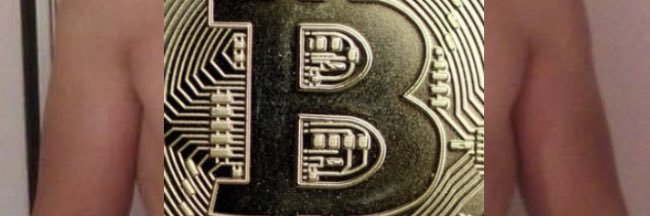
$BTC was developed as the core digital asset that manifest a store of value in the time of inflation. It can tokenize cash. It's proven.
$RVN was specifically developed for the digital asset issuance and transfer based on the store of value like BTC. It can tokenize all assets.
Keep the product at the centre.
Official information, purchase context and buyer experience describe different sides of the same item.
Shping connects them at product level. A shared reference makes the conversation more useful for the next person with a question.
$SHPING #Web3Retail
The Zilliqa Layer 2 will run in a country that has had a law for tokens since 2020.
Liechtenstein’s Blockchain Act gives tokens, and the services around them, a clear legal basis. As a member of the European Economic Area, Liechtenstein also connects to the EU market.
LTIN (@ltin_li) will operate the network. It’s majority-owned by state-owned Telecom Liechtenstein, runs on 100% renewable energy and keeps its data in Europe.
Institutions will know which law applies and who runs the network. 🖤
A first purchase opens a second question.
What would give someone a reason to choose the product again?
Purchase patterns show what happens next; shopper feedback can help explore the experience behind it. Shping connects those perspectives without pretending that a repeat purchase explains its own cause.
#SHPING #Web3Retail
Every trade in our permissioned markets will trace back to a company that answers for it. Here’s how it will work on the Zilliqa Layer 2:
1. A company gets a vLEI through LTIN (@ltin_li). The vLEI proves who may act for the company, a person or an AI agent, and within which limits.
2. That vLEI whitelists the company’s wallet for the market.
3. LTIN, majority-owned by state-owned Telecom Liechtenstein, runs the sequencer that orders and batches the transactions.
4. Each batch settles on Ethereum.
Holding ZIL needs no KYC, and you can always move your ZIL token freely.