Shame on you, @chainalysis.
Running a Tornado Cash relayer, earning fees from it, then helping prosecute its developer is a level of hypocrisy that deserves public scrutiny.
One thing before I start: everything in this post is public information from my own docket. None of it is new, and I'm not revealing anything you can't already find in the court filings yourself.
The retrial just got pushed to April 26, 2027. The order came down today (Dkt. 300). My acquittal motion is still sitting there, undecided. I honestly don't know when this ends.
Prosecutors are supposed to protect American interests and go after people who broke the law. A jury deadlocked on the two most serious counts against me. And still SDNY won't stop, because this case was never just about me. It's about setting an example.
Don't take my word for it. Tara La Morte, the chief of SDNY's Illicit Finance and Money Laundering Unit, said it herself at a New York City Bar Association event (Law360, Feb. 23, 2024; filed on my docket as Doc. 25-2):
"We want the industry to take notice."
"What we're trying to do is sort of bring the industry into compliance, and I think Tornado Cash is an example of that."
An example. Out of a developer who wrote code.
At that same event, her deputy praised the government's blockchain-tracing partner, Chainalysis.
Here is what they didn't tell the audience. All of it is from the public docket in my case.
According to the trial transcripts, Chainalysis was running its OWN Tornado Cash relayer, and earning fees on the transactions flowing through it.
- Chainalysis's own lawyers admitted to "a relayer node that Chainalysis operated"; my subpoena sought documents on Tornado Cash relayer(s) "used from March to August 2022." (Dkt. 211)
- In open court, the prosecutor said it plainly: "I think the parties agree as to that part of the testimony, that the Chainalysis relayer earned fees." Same hearing: "there's zero evidence that the defendant was in any way aware that Chainalysis was running a relayer." (Dkt. 259, July 25, 2025)
So the company that helped trace my "criminal" transactions was itself profiting from Tornado Cash transactions, while I was prosecuted over software I helped create.
And when my lawyers subpoenaed them to testify?
- Chainalysis moved to quash. (Dkt. 211)
- The government backed them: "Your Honor, we agree with the position outlined in the motion." (Dkt. 255)
- The night before, prosecutors called Chainalysis's counsel. The judge asked point-blank: "Did you let them know that they were potentially subject to investigation or prosecution?" The answer: "We have discussed at a high level some of the issues surrounding the relayer with Chainalysis." (Dkt. 259)
- The Chainalysis witness took the Fifth. My lawyers learned about that call only afterward, from Chainalysis's own lawyer. (Dkt. 263)
The jury never heard any of it.
This spring, at the Bitcoin 2026 conference in Las Vegas, something happened that I still can't quite believe. The Acting Attorney General, Todd Blanche, and the FBI Director, Kash Patel, sat on a panel called "Code is Free Speech."
Think about that. The two top law enforcement officials in the country. Blanche told thousands of developers: if you're a coder and you're not the one committing the crime, "you are not going to be investigated and not going to be charged." He said the last administration's crypto cases were "outrageous attacks on the industry." Patel praised "the Chainalysises of the world" as FBI partners.
And when the moderator pointed at the elephant in the room, my case, Tornado Cash, Roman Storm, the Acting Attorney General called it a "lingering case" they are "continuing to deal with."
So here is my hypothetical question. If code is free speech, why am I still being prosecuted for writing it? And if the Chainalysises of the world are the partners, the same Chainalysis that ran its own Tornado Cash relayer and earned fees from Tornado Cash users, while I never did, why is it off the hook?
They made an example out of a developer for writing code. Their own vendor ran the same infrastructure, pocketed the fees, and got a phone call instead of a prosecution.
Sources 👇👇👇
One thing before I start: everything in this post is public information from my own docket. None of it is new, and I'm not revealing anything you can't already find in the court filings yourself.
The retrial just got pushed to April 26, 2027. The order came down today (Dkt. 300). My acquittal motion is still sitting there, undecided. I honestly don't know when this ends.
Prosecutors are supposed to protect American interests and go after people who broke the law. A jury deadlocked on the two most serious counts against me. And still SDNY won't stop, because this case was never just about me. It's about setting an example.
Don't take my word for it. Tara La Morte, the chief of SDNY's Illicit Finance and Money Laundering Unit, said it herself at a New York City Bar Association event (Law360, Feb. 23, 2024; filed on my docket as Doc. 25-2):
"We want the industry to take notice."
"What we're trying to do is sort of bring the industry into compliance, and I think Tornado Cash is an example of that."
An example. Out of a developer who wrote code.
At that same event, her deputy praised the government's blockchain-tracing partner, Chainalysis.
Here is what they didn't tell the audience. All of it is from the public docket in my case.
According to the trial transcripts, Chainalysis was running its OWN Tornado Cash relayer, and earning fees on the transactions flowing through it.
- Chainalysis's own lawyers admitted to "a relayer node that Chainalysis operated"; my subpoena sought documents on Tornado Cash relayer(s) "used from March to August 2022." (Dkt. 211)
- In open court, the prosecutor said it plainly: "I think the parties agree as to that part of the testimony, that the Chainalysis relayer earned fees." Same hearing: "there's zero evidence that the defendant was in any way aware that Chainalysis was running a relayer." (Dkt. 259, July 25, 2025)
So the company that helped trace my "criminal" transactions was itself profiting from Tornado Cash transactions, while I was prosecuted over software I helped create.
And when my lawyers subpoenaed them to testify?
- Chainalysis moved to quash. (Dkt. 211)
- The government backed them: "Your Honor, we agree with the position outlined in the motion." (Dkt. 255)
- The night before, prosecutors called Chainalysis's counsel. The judge asked point-blank: "Did you let them know that they were potentially subject to investigation or prosecution?" The answer: "We have discussed at a high level some of the issues surrounding the relayer with Chainalysis." (Dkt. 259)
- The Chainalysis witness took the Fifth. My lawyers learned about that call only afterward, from Chainalysis's own lawyer. (Dkt. 263)
The jury never heard any of it.
This spring, at the Bitcoin 2026 conference in Las Vegas, something happened that I still can't quite believe. The Acting Attorney General, Todd Blanche, and the FBI Director, Kash Patel, sat on a panel called "Code is Free Speech."
Think about that. The two top law enforcement officials in the country. Blanche told thousands of developers: if you're a coder and you're not the one committing the crime, "you are not going to be investigated and not going to be charged." He said the last administration's crypto cases were "outrageous attacks on the industry." Patel praised "the Chainalysises of the world" as FBI partners.
And when the moderator pointed at the elephant in the room, my case, Tornado Cash, Roman Storm, the Acting Attorney General called it a "lingering case" they are "continuing to deal with."
So here is my hypothetical question. If code is free speech, why am I still being prosecuted for writing it? And if the Chainalysises of the world are the partners, the same Chainalysis that ran its own Tornado Cash relayer and earned fees from Tornado Cash users, while I never did, why is it off the hook?
They made an example out of a developer for writing code. Their own vendor ran the same infrastructure, pocketed the fees, and got a phone call instead of a prosecution.
Sources 👇👇👇
"Ethereum must provide privacy unconditionally, without forcing users to prove their innocence."
Seeing @pcaversaccio join the Ethereum Foundation Board gives me hope that privacy will finally become a first-class priority for Ethereum.
If Ethereum embraces this vision, it will be unstoppable.
https://t.co/qXUNuXmpIv
1/ Privacy is often thought of as politically risky. In this guest thread by @valkenburgh, Executive Director of @coincenter, he makes the case, in his own words, that the reality is the opposite:
Privacy is essential to Ethereum’s promise of financial freedom and neutrality.
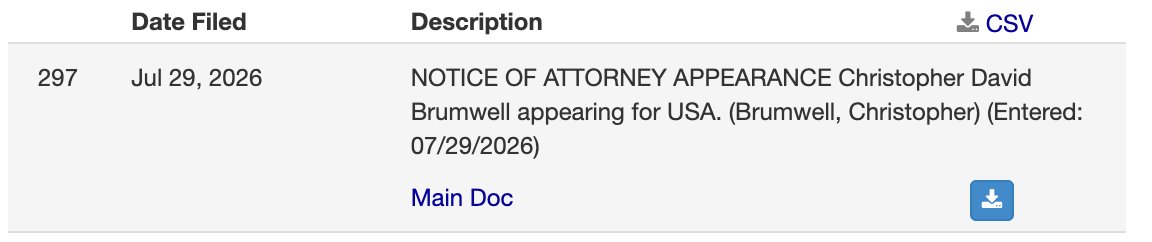
The U.S. Attorney’s Office for SDNY is committing even more resources to my case.
Another prosecutor has just entered an appearance - all to prosecute an open-source developer.
https://t.co/oEv7CpLeNn
there's more technical details i wanna tell you abt. but most importantly:
i present this to you all (at no small personal risk tbh)
bc I believe that we as an ethereum community can make the "privacy transition" but the only way to do it in earnest, is to start
so lets start
Ethereum already has a protocol that passed the ultimate walk-away test: Tornado Cash. It survived abandonment, hostile governance conditions, and even OFAC sanctions—the harshest stress test imaginable. The protocol is still alive and working
this industry has spent more than a decade lying to itself about building the future while shipping systems that can't survive the people who built them. if your application fails the walk away test, you've fucking failed. period. i don't fucking care how many users, investors, or billions it has. sooner or later every company disappears, every foundation dissolves, and every multisig stops signing. the only things worth building are the ones that keep working after everyone walks away. build something that no longer needs you.
Tornado Cash TVL is up 6% in seven days.
That’s what real product-market fit looks like: when a protocol solves a fundamental need, users keep coming even without an active team maintaining or promoting it.
This is what a true Ethereum public good looks like.
#TornadoCash #Ethereum #Privacy #PublicGoods #DeFi #ProductMarketFit
Honestly, the best outcome would be for the Ethereum Foundation to treat Tornado Cash as critical Ethereum public infrastructure, acquire enough voting power to protect it, and support a trusted UI.
Would you support the EF taking on that role?
extremely important!
Let’s harden Tornado Cash even further. Pure immutable onchain infrastructure *mwah*
And then let’s use Tornado. A lot. Bc it’s truly CROPS.
As a TORN holder, I think this is an extreme overreaction.
Active holders are already reviewing proposals and voting malicious ones down. Governance needs stronger safeguards, not permanent destruction.
The community has kept Tornado Cash and its UI alive after the founders left. TORN holders have the strongest incentive to maintain a safe interface because their interests are directly tied to the protocol. Any unrelated third-party frontend should be treated as untrusted by default.
The current governance system is far from perfect, but it remains the best coordination mechanism available today. Killing it without a concrete replacement for maintaining the UI, updating the IPFS hash, authenticating releases, and handling emergencies is irresponsible.
Unless the Ethereum Foundation formally recognizes Tornado Cash as public infrastructure and trusted EF contributors maintain the UI, these problems must be solved before governance is permanently disabled.
@tornadostoshi we need another way to maintain this - i don't have a concrete plan, but if another malicious proposal passes the IPFS will also become malicious, so it's better to completely find new ways
Almost a year later and DOJ is pushing for a retrial. Sit with what that means: they’d rather set a precedent that criminalizes writing code than admit the case doesn’t hold. Every developer in this country inherits the risk - for decades - unless this is dismissed.
FreeRomanStorm and support the battle.
Tornado Cash: No founder maintenance, but strong ongoing demand. A real Ethereum public good in action.
ENS drama tests if it can qualify too. Hope ENS passes like Tornado Cash — real value, not facade.
#TornadoCash#ENS#PublicGoods#Ethereum
Crypto is a big deal, Mr. President — and the country that wins it is the one where developers can build without fearing prosecution for what third parties do with their code.
Right now that's not America. US v. Storm — a Biden-era case still being pursued today — is Exhibit A. Please take a look
https://t.co/cMZ4VVYyTK
Roman's warning is incredibly valuable. SDNY is not just going after a privacy protocol they are putting the first crack in the dam. The breadth of their legal theories would ultimately allow them to target anyone building freedom tech: from a Bitcoin core dev, to a decentralized AI startup, to basic open source library maintainers.
Either we stand together and fight here or the next 20 years are a war that's harder and harder to win, that bends toward corporate and government consolidation of open technologies to the detriment of freedom, autonomy, and diversity.
ENS DAO positions itself as Ethereum public goods infrastructure.
Recent drama suggests otherwise.
Real public goods are scarce — Tornado Cash is one of the few that truly belongs in that category.
#Ethereum#PublicGoods#TornadoCash#Privacy#OpenSource
🌪️⚖️🛡️ ——————————————— 🛡️⚖️🌪️
🙏 I'm Roman Storm. To @ethereum, and to everyone who has stood with me through this - thank you. Truly.
When you're a developer facing decades in prison for writing open-source code, the nights get very long. And then this community shows up. Again and again. And I remember I'm not alone. That's everything. 💚
Let me be clear about what this case actually is. I didn't rob anyone. I didn't steal, didn't touch a single user's funds, never took custody of a single coin. I wrote software. Privacy software - the kind of thing that, in any sane world, belongs on a résumé. Not in an indictment. 🧑💻
So I want to tell you why, even now, I have every reason to keep fighting. Because this isn't blind hope. The courts have already started to speak - and what they said has a name. Van Loon. 📜
In November 2024, a federal appeals court - the Fifth Circuit - looked at what the government did to Tornado Cash and said it plainly: government broke the law. OFAC overstepped its authority when it sanctioned the protocol. Those immutable smart contracts aren't "property" that belongs to anyone. ⚖️
Sit with the court's own words, because they're extraordinary. The judges described Tornado Cash's contracts as "unownable, uncontrollable, and unchangeable — even by [their] creators." 🤯
Uncontrollable. Even by their creators. A federal court, after studying the actual technology, found that I literally cannot control the code I helped write. It runs on its own. It always will. No one can stop it - not me, not OFAC, not anyone. That's not a loophole. That's just how it works.
And the government's own position has since crumbled. After Van Loon, OFAC removed Tornado Cash from the sanctions list entirely in March 2025. The protocol they once branded a national-security threat - delisted, out in the open. ❌
And yet they're still prosecuting me. So look closely at what they're actually holding against me - because the harder you look, the thinner it gets. 🔍
My team integrated Chainalysis's official OFAC sanctions screening directly into the Tornado Cash interface - a real-time compliance measure to block sanctioned addresses. The government's response to that? They called it "window dressing." Compliance, dismissed as decoration. 🙃
Then there are my own words, from my own chats, reacting to hackers getting traced: "I'm glad those fuckers are detected." That's the person they're branding a criminal conspirator. The story and the evidence don't match - because the story isn't true. 💔
And once you start looking, the pattern is everywhere. A court says the protocol is uncontrollable even by its creator - yet they want to jail me for "controlling" it. That's the kind of case this is. It gets worse. ⬇️
The indictment's most-quoted line - a dramatic "how do you go about laundering $600 million?" - was pitched as a co-founder's words. It wasn't. It was written by a CoinDesk reporter asking the team how mixers work. A forwarded message got mislabeled in the data extraction. A journalist's question became Exhibit A. 📰
Then the most damning of all: on the very day I was indicted, FinCEN officials privately told these SDNY prosecutors that non-custodial tools like this are NOT money services businesses. The prosecutors walked into court and argued the opposite. My defense didn't learn about it for ~21 months. ⚖️
Even the DOJ doesn't seem to believe its own theory. Weeks before insisting I'm guilty, the same DOJ told the Supreme Court - in its amicus brief in Cox Communications v. Sony Music — that "knowledge that a buyer plans to misuse a product with substantial legitimate uses, without more, does not support an inference of culpable intent." The exact opposite of what they argue against me. Same DOJ. Weeks apart. 🔁
https://t.co/cRoJAQZwB8
So step back. If you only hear "crypto mixer," you might assume the worst. But this is not a shadowy contraption. It's mainstream, studied, respected technology. 🎓
Stanford teaches Tornado Cash — not as a cautionary tale, but as the textbook example of how cryptographic privacy works. It's a final-exam question in CS251, Dan Boneh's renowned cryptography course. 📚
https://t.co/2A77txqf4g
https://t.co/65jdsOEtuw
And Stanford's own exam notes something the prosecutors won't: Tornado Cash ships a built-in compliance tool, letting a user voluntarily prove which deposit was theirs to satisfy an exchange like Coinbase. Privacy and compliance, designed to coexist. 🔎
This isn't fringe, either. The Federal Reserve Bank of St. Louis published a primer on Tornado Cash for economists and policymakers - treating it as legitimate financial-privacy infrastructure, and describing that very same compliance tool. 🏦
https://t.co/d6orD3ydQT
ers
So add it all up. Technology taught at Stanford. Analyzed by the Federal Reserve. Vindicated in a federal court of appeals. Built with real-time sanctions screening the government waved off as "window dressing." And the developer who helped build it - me, is facing prison. Tell me that sits right. 😞
This is why it reaches so far beyond me. If publishing neutral, open code makes you a criminal for whatever a stranger later does with it, every developer here is exposed. Every wallet team. Every protocol. Everyone who's ever pushed to a public repo. 🧨
Privacy is not a crime. Open source is not a conspiracy. Writing software is not the same as committing the acts of those who misuse it. The easiest principles in the world to defend - which is exactly why we can't afford to lose them here. 🛡️
Van Loon is the law catching up to the truth. Now I deserve the same justice the protocol already received. We're close. The arguments are strong. And with you behind me, we can finish this. 💪
So please — follow my co-founder in this fight @alex_pertsev, and share our stories. And if you're able, support my legal defense at 👉 https://t.co/lx9E4ILDrn 💚 Every voice, every dollar, every repost tells a court — and tells me — that I don't stand alone.
I'm Roman Storm. We started this together. Let's end it together. 🌪️
🌪️⚖️🛡️ ——————————————— 🛡️⚖️🌪️













![rstormsf's tweet photo. 🌪️⚖️🛡️ ——————————————— 🛡️⚖️🌪️
🙏 I'm Roman Storm. To @ethereum, and to everyone who has stood with me through this - thank you. Truly.
When you're a developer facing decades in prison for writing open-source code, the nights get very long. And then this community shows up. Again and again. And I remember I'm not alone. That's everything. 💚
Let me be clear about what this case actually is. I didn't rob anyone. I didn't steal, didn't touch a single user's funds, never took custody of a single coin. I wrote software. Privacy software - the kind of thing that, in any sane world, belongs on a résumé. Not in an indictment. 🧑💻
So I want to tell you why, even now, I have every reason to keep fighting. Because this isn't blind hope. The courts have already started to speak - and what they said has a name. Van Loon. 📜
In November 2024, a federal appeals court - the Fifth Circuit - looked at what the government did to Tornado Cash and said it plainly: government broke the law. OFAC overstepped its authority when it sanctioned the protocol. Those immutable smart contracts aren't "property" that belongs to anyone. ⚖️
Sit with the court's own words, because they're extraordinary. The judges described Tornado Cash's contracts as "unownable, uncontrollable, and unchangeable — even by [their] creators." 🤯
Uncontrollable. Even by their creators. A federal court, after studying the actual technology, found that I literally cannot control the code I helped write. It runs on its own. It always will. No one can stop it - not me, not OFAC, not anyone. That's not a loophole. That's just how it works.
And the government's own position has since crumbled. After Van Loon, OFAC removed Tornado Cash from the sanctions list entirely in March 2025. The protocol they once branded a national-security threat - delisted, out in the open. ❌
And yet they're still prosecuting me. So look closely at what they're actually holding against me - because the harder you look, the thinner it gets. 🔍
My team integrated Chainalysis's official OFAC sanctions screening directly into the Tornado Cash interface - a real-time compliance measure to block sanctioned addresses. The government's response to that? They called it "window dressing." Compliance, dismissed as decoration. 🙃
Then there are my own words, from my own chats, reacting to hackers getting traced: "I'm glad those fuckers are detected." That's the person they're branding a criminal conspirator. The story and the evidence don't match - because the story isn't true. 💔
And once you start looking, the pattern is everywhere. A court says the protocol is uncontrollable even by its creator - yet they want to jail me for "controlling" it. That's the kind of case this is. It gets worse. ⬇️
The indictment's most-quoted line - a dramatic "how do you go about laundering $600 million?" - was pitched as a co-founder's words. It wasn't. It was written by a CoinDesk reporter asking the team how mixers work. A forwarded message got mislabeled in the data extraction. A journalist's question became Exhibit A. 📰
Then the most damning of all: on the very day I was indicted, FinCEN officials privately told these SDNY prosecutors that non-custodial tools like this are NOT money services businesses. The prosecutors walked into court and argued the opposite. My defense didn't learn about it for ~21 months. ⚖️
Even the DOJ doesn't seem to believe its own theory. Weeks before insisting I'm guilty, the same DOJ told the Supreme Court - in its amicus brief in Cox Communications v. Sony Music — that "knowledge that a buyer plans to misuse a product with substantial legitimate uses, without more, does not support an inference of culpable intent." The exact opposite of what they argue against me. Same DOJ. Weeks apart. 🔁
https://t.co/cRoJAQZwB8
So step back. If you only hear "crypto mixer," you might assume the worst. But this is not a shadowy contraption. It's mainstream, studied, respected technology. 🎓
Stanford teaches Tornado Cash — not as a cautionary tale, but as the textbook example of how cryptographic privacy works. It's a final-exam question in CS251, Dan Boneh's renowned cryptography course. 📚
https://t.co/2A77txqf4g
https://t.co/65jdsOEtuw
And Stanford's own exam notes something the prosecutors won't: Tornado Cash ships a built-in compliance tool, letting a user voluntarily prove which deposit was theirs to satisfy an exchange like Coinbase. Privacy and compliance, designed to coexist. 🔎
This isn't fringe, either. The Federal Reserve Bank of St. Louis published a primer on Tornado Cash for economists and policymakers - treating it as legitimate financial-privacy infrastructure, and describing that very same compliance tool. 🏦
https://t.co/d6orD3ydQT
ers
So add it all up. Technology taught at Stanford. Analyzed by the Federal Reserve. Vindicated in a federal court of appeals. Built with real-time sanctions screening the government waved off as "window dressing." And the developer who helped build it - me, is facing prison. Tell me that sits right. 😞
This is why it reaches so far beyond me. If publishing neutral, open code makes you a criminal for whatever a stranger later does with it, every developer here is exposed. Every wallet team. Every protocol. Everyone who's ever pushed to a public repo. 🧨
Privacy is not a crime. Open source is not a conspiracy. Writing software is not the same as committing the acts of those who misuse it. The easiest principles in the world to defend - which is exactly why we can't afford to lose them here. 🛡️
Van Loon is the law catching up to the truth. Now I deserve the same justice the protocol already received. We're close. The arguments are strong. And with you behind me, we can finish this. 💪
So please — follow my co-founder in this fight @alex_pertsev, and share our stories. And if you're able, support my legal defense at 👉 https://t.co/lx9E4ILDrn 💚 Every voice, every dollar, every repost tells a court — and tells me — that I don't stand alone.
I'm Roman Storm. We started this together. Let's end it together. 🌪️
🌪️⚖️🛡️ ——————————————— 🛡️⚖️🌪️](https://pbs.twimg.com/media/HLrWR6MbsAAmNsb.jpg)


