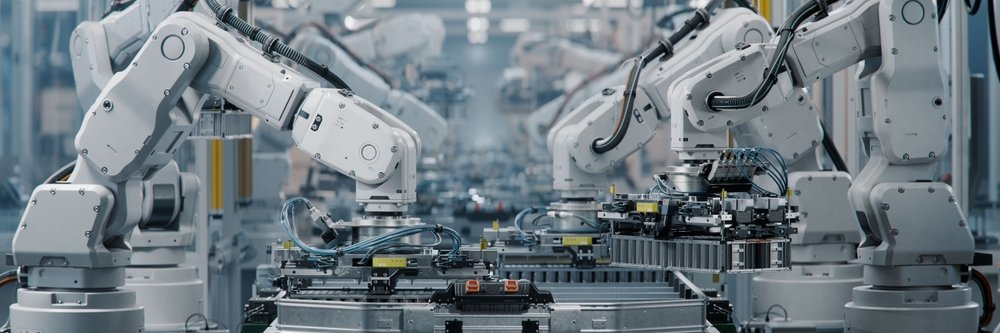
Introducing Organizely (YC F26): an AI-native ERP to help the 268,000 factories in the US lower their production costs. 🇺🇸
After running our own factory in NJ for 6 years, we're using everything we learned to build an ERP from the ground up.
More at https://t.co/5cOGxovzNg
I spent years at Meta and Walmart building software that lives on screens.
The most useful thing I've built since is a phone number.
Our factory software picks up. Supplier says a shipment slipped, it moves the dates. Someone asks if parts came in, it checks and tells them.
Nobody types anything.
If you imported anything between Feb 2025 and Feb 2026, Customs owes you the IEEPA tariffs back, with interest.
It's not automatic. Importer of record files a CAPE claim in ACE. ACH only, no checks. 60-90 days after validation.
Deadline is per entry: 180 days after liquidation, then it's gone.
The reason AI hasn't fixed manufacturing is that we keep bolting it onto ERPs from the '90s. The model is fine. The database is from the floppy disk era.
The most expensive person in a small factory spends most of the day copying numbers between screens.
Not planning. Not fixing anything. Typing.
That's the person who knows the floor best. Get them off the keyboard and let an agent do the copying.
Can we burn ERPs to the ground and start from scratch?? Seriously, why are we dropping hundreds of thousands of $$$ on something that only has a 10-25% success rate and takes 1-2+ years to onboard? That's bananas
My manufacturing company ran on paper for years. Actual paper.
We make parts for computer keyboards (@kineticlabs1), and if you wanted to know what got built last week, you went and found the notebook.
I always figured that was a small company thing. Then I read a Fast Company article this week about why AI still hasn't made it into factories, and 92% of manufacturing leaders said their systems are too old to support it. Some of these plants are running software from before the iPhone existed, with the important stuff still written in logbooks.
So the whole "AI is about to transform manufacturing" thing? Right now most factories couldn't even hand AI the data it would need to get started.
We got off paper eventually. Most of the industry hasn't.
US factory output has grown every month since January. Eight months straight, after nearly three years of mostly shrinking.
That's the good news. Here's the rest of it:
Hiring is flat. Materials cost more than they did a year ago. Most small manufacturers paid tariffs on their parts last year. And supply chains got jumpy again.
So the small shops I talk to are dealing with more orders, the same crew, and pricier inputs, all at the same time. It's hard out there!
Only 0.3% of manufacturing plants in the US have more than 1,000 employees.
Around 250,000 manufacturers have fewer than 500 people. And there are over 350,000 manufacturing businesses with no employees at all. One person, making something, often from home.
So when people picture "American manufacturing," they're picturing the 0.3%. The other 99.7% is a leather shop, a seasoning company, someone with a CNC machine in their garage.
It's not really a comeback. It's already here!
Manufacturing is coming back to America. But it'll look different than you think:
The manufacturing that happens here is small, decentralized, and specialized. For example, I recently met with small factories producing leather, steak seasoning, candle wax, all here in the States.
Same with my own company, @kineticlabs1, where we make parts for computer keyboards.
None of these look like the factory in your head. Small teams, short runs, a lot of products. Honestly it's the most excited I've been about manufacturing in a long time!
I’m appreciating Recoil more and more every day! I just wrote a component that reads an asynchronous value, and I didn’t have to worry about handling the async in any way b/c some component somewhere up the tree already handles the Suspense :)
One reason library authors should use @typescript, even if their end users don't (or at least keep .d.ts files around):
Typings = Searchable, no bullshit, probably up to date docs
Currently dealing with an ok library that isn't well documented and this is making it usable.