Two economists just published a mathematical proof that AI will destroy the economy.
Not might. Not could. Will — if nothing changes.
The paper is called "The AI Layoff Trap." Published March 2, 2026. Wharton School, University of Pennsylvania. Boston University. Peer reviewed. Mathematically modeled.
The conclusion is one sentence.
"At the limit, firms automate their way to boundless productivity and zero demand."
An economy that produces everything. And sells it to nobody.
Here is how you get there.
A company fires 500 workers and replaces them with AI. A competitor fires 700 to keep up. Another fires 1,000. Every company is behaving rationally. Every company is following the incentives correctly. And every company is building a trap for itself.
Because the workers who were fired were also customers.
When they lose their jobs faster than the economy can absorb them, they stop spending. Consumer demand falls. Companies respond by cutting costs — which means automating more workers — which means less spending — which means more falling demand — which means more automation.
The loop has no natural exit.
The researchers tested every proposed solution. Universal basic income. Capital income taxes. Worker equity participation. Upskilling programs. Corporate coordination agreements.
Every single one failed in the model.
The only intervention that worked: a Pigouvian automation tax — a per-task levy charged every time a company replaces a human with AI, forcing them to price in the demand they are destroying before they pull the trigger.
No government has implemented this. No major economy is seriously discussing it.
Meanwhile the numbers are already tracking the curve. 100,000 tech workers laid off in 2025. 92,000 more in the first months of 2026. Jack Dorsey fired half of Block's workforce and said publicly: "Within the next year, the majority of companies will reach the same conclusion."
Nobody is doing anything wrong. Companies are following their incentives perfectly. That is exactly the problem.
Rational behavior. At scale. Simultaneously. With no mechanism to stop it.
Two economists built the math. The math leads to one place.
Source: Falk & Tsoukalas · Wharton School + Boston University ·
General Valerii Zaluzhnyi, former Commander-in-Chief of the Ukrainian Armed Forces and current Ambassador to the UK:
Due to scientific and technological progress, it has become impossible, regardless of what others may claim, to carry out operational-level tasks. 1/12
Because we get asked a lot.
The Technological Republic, in brief.
1. Silicon Valley owes a moral debt to the country that made its rise possible. The engineering elite of Silicon Valley has an affirmative obligation to participate in the defense of the nation.
2. We must rebel against the tyranny of the apps. Is the iPhone our greatest creative if not crowning achievement as a civilization? The object has changed our lives, but it may also now be limiting and constraining our sense of the possible.
3. Free email is not enough. The decadence of a culture or civilization, and indeed its ruling class, will be forgiven only if that culture is capable of delivering economic growth and security for the public.
4. The limits of soft power, of soaring rhetoric alone, have been exposed. The ability of free and democratic societies to prevail requires something more than moral appeal. It requires hard power, and hard power in this century will be built on software.
5. The question is not whether A.I. weapons will be built; it is who will build them and for what purpose. Our adversaries will not pause to indulge in theatrical debates about the merits of developing technologies with critical military and national security applications. They will proceed.
6. National service should be a universal duty. We should, as a society, seriously consider moving away from an all-volunteer force and only fight the next war if everyone shares in the risk and the cost.
7. If a U.S. Marine asks for a better rifle, we should build it; and the same goes for software. We should as a country be capable of continuing a debate about the appropriateness of military action abroad while remaining unflinching in our commitment to those we have asked to step into harm’s way.
8. Public servants need not be our priests. Any business that compensated its employees in the way that the federal government compensates public servants would struggle to survive.
9. We should show far more grace towards those who have subjected themselves to public life. The eradication of any space for forgiveness—a jettisoning of any tolerance for the complexities and contradictions of the human psyche—may leave us with a cast of characters at the helm we will grow to regret.
10. The psychologization of modern politics is leading us astray. Those who look to the political arena to nourish their soul and sense of self, who rely too heavily on their internal life finding expression in people they may never meet, will be left disappointed.
11. Our society has grown too eager to hasten, and is often gleeful at, the demise of its enemies. The vanquishing of an opponent is a moment to pause, not rejoice.
12. The atomic age is ending. One age of deterrence, the atomic age, is ending, and a new era of deterrence built on A.I. is set to begin.
13. No other country in the history of the world has advanced progressive values more than this one. The United States is far from perfect. But it is easy to forget how much more opportunity exists in this country for those who are not hereditary elites than in any other nation on the planet.
14. American power has made possible an extraordinarily long peace. Too many have forgotten or perhaps take for granted that nearly a century of some version of peace has prevailed in the world without a great power military conflict. At least three generations — billions of people and their children and now grandchildren — have never known a world war.
15. The postwar neutering of Germany and Japan must be undone. The defanging of Germany was an overcorrection for which Europe is now paying a heavy price. A similar and highly theatrical commitment to Japanese pacifism will, if maintained, also threaten to shift the balance of power in Asia.
16. We should applaud those who attempt to build where the market has failed to act. The culture almost snickers at Musk’s interest in grand narrative, as if billionaires ought to simply stay in their lane of enriching themselves . . . . Any curiosity or genuine interest in the value of what he has created is essentially dismissed, or perhaps lurks from beneath a thinly veiled scorn.
17. Silicon Valley must play a role in addressing violent crime. Many politicians across the United States have essentially shrugged when it comes to violent crime, abandoning any serious efforts to address the problem or take on any risk with their constituencies or donors in coming up with solutions and experiments in what should be a desperate bid to save lives.
18. The ruthless exposure of the private lives of public figures drives far too much talent away from government service. The public arena—and the shallow and petty assaults against those who dare to do something other than enrich themselves—has become so unforgiving that the republic is left with a significant roster of ineffectual, empty vessels whose ambition one would forgive if there were any genuine belief structure lurking within.
19. The caution in public life that we unwittingly encourage is corrosive. Those who say nothing wrong often say nothing much at all.
20. The pervasive intolerance of religious belief in certain circles must be resisted. The elite’s intolerance of religious belief is perhaps one of the most telling signs that its political project constitutes a less open intellectual movement than many within it would claim.
21. Some cultures have produced vital advances; others remain dysfunctional and regressive. All cultures are now equal. Criticism and value judgments are forbidden. Yet this new dogma glosses over the fact that certain cultures and indeed subcultures . . . have produced wonders. Others have proven middling, and worse, regressive and harmful.
22. We must resist the shallow temptation of a vacant and hollow pluralism. We, in America and more broadly the West, have for the past half century resisted defining national cultures in the name of inclusivity. But inclusion into what?
Excerpts from the #1 New York Times Bestseller The Technological Republic: Hard Power, Soft Belief, and the Future of the West, by Alexander C. Karp & Nicholas W. Zamiska
https://t.co/8igjazz1On
Stubb: When Europe feels threatened by Russia, it unites.
When it feels mistreated by US tariffs, it looks elsewhere — deals with Mercosur, India, closer ties with Canada. This isn’t a rupture with America, but a new phase in the relationship.
1/
FAIT RARISSIME au Groenland 😷
Hier, un sous-marin nucléaire d'attaque 🇺🇸 a fait surface dans les eaux territoriales 🇬🇱, à 13 km de Nuuk, pour sauver un membre d'équipage.
Évacué par l'armée danoise, il est soigné à l'hôpital de Nuuk.
MAIS, l'histoire ne s'arrête pas là… 🧵⬇️
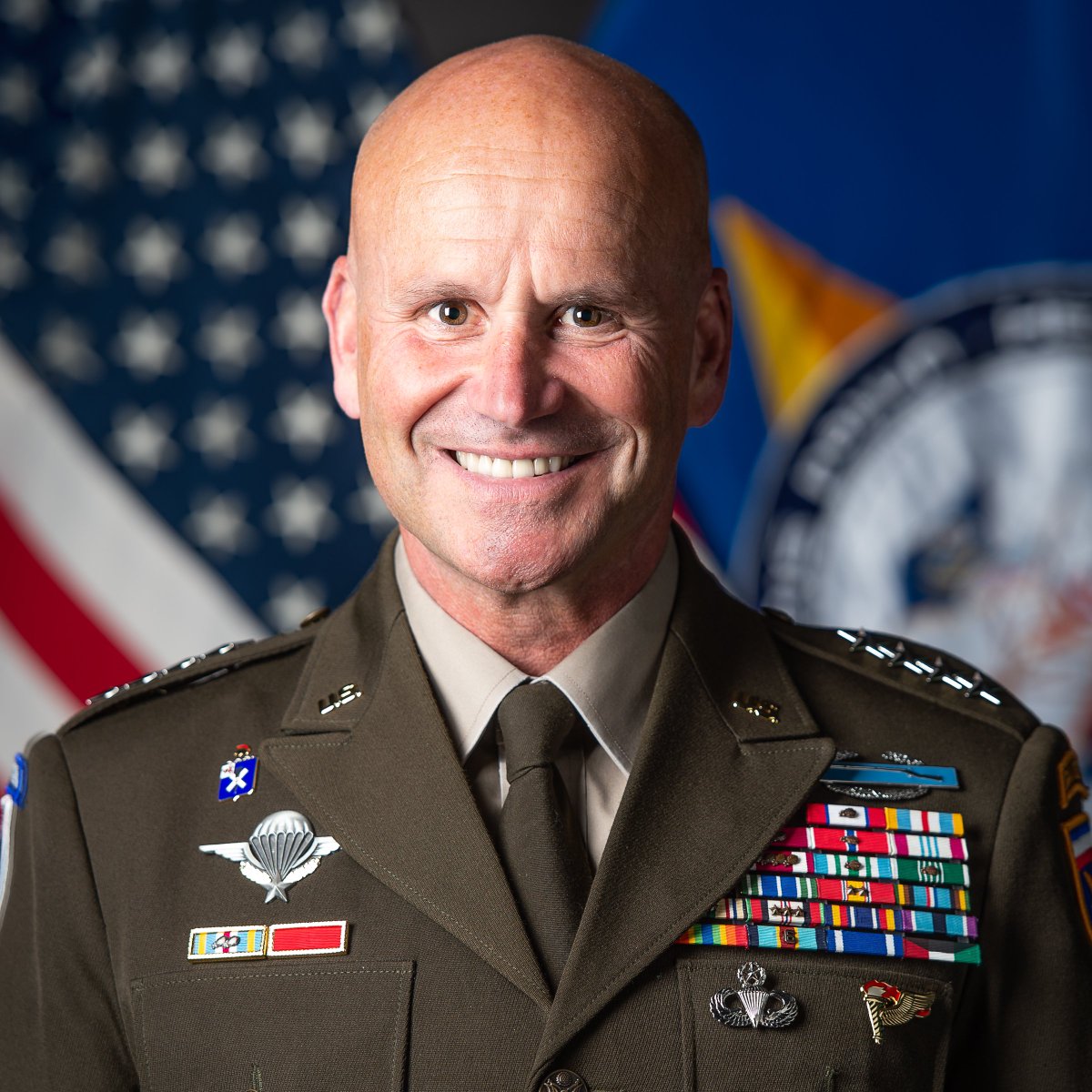
🚨NEW: Pete Hegseth tried to fire 4-Star General Chris Cavoli, the former Supreme Allied Commander in Europe, this summer after he advocated for stopping Hegseth's blockade on supplying ammunition to Ukraine.
RETWEET if you stand with General Cavoli against Hegseth!
Aftermath of Trump Strike in Jabo LG Sokoto State Nigeria. No casualty was recorded. Next time make a true precision strike direct to the heart of the terrorist if you're honest. don't bomb near civilian populated area.
So that air-strike in Nigeria done under the pretense of saving “Christians.” Well here is what their response is:
Fear and confusion in Nigerian village hit in US strike, as locals say no history of ISIS in area.
A day after part of a missile fired by the US hit their village, landing just meters from its only medical facility, the people of Jabo in northwestern Nigeria are in a state of shock and confusion.
Trump’s explanation for the bombing has left Kagara and his fellow villagers scratching their heads. Villagers say Jabo is not known for terrorist activity and that local Christians coexist peacefully with the Muslim majority.
“In Jabo, we see Christians as our brothers. We don’t have religious conflicts, so we weren’t expecting this,” he said.
The projectile had struck a field “approximately 500 meters” from a Primary Health Center in Jabo and that, while there were no casualties, the incident had “caused fear and panic within the community.”
A senior adviser at the International Crisis Group, said that while the US airstrikes might weaken some armed groups and mark a significant escalation in an offensive that Nigeria’s overstretched military has struggled with for years, “they are unlikely to halt the multi-faceted violence in different parts of the country that is driven largely by failures of governance.”
So what is Trump really doing this for? If advisors within its own country don’t agree that his strikes will help. You can’t trust him to be honest up front about anything.
#DemsUnited
Wow yes this is the way….ICE Nazis were about to kidnap some brown folk until a hero emerged and they ran away like the masked cowards that they all are
Dutch intelligence suspends sharing arrangements with the US after concluding that high level intel was routinely being shared by the White House with their friends in the Kremlin.
Dutch intelligence is smart
British army trains urban warfare as if there were no drones. All these men are dead within five minutes as soon as they meet any experienced drone operator. That is why I say: one badly equipped russian or Ukrainian drone battalion will wipe out any NATO brigade easily.
Happening now: @McFaul, a former U.S. ambassador to Russia, joins FP Live to discuss how Trump’s recent moves could impact the war in Ukraine.
Watch the live interview here: https://t.co/nFTZI96vCG