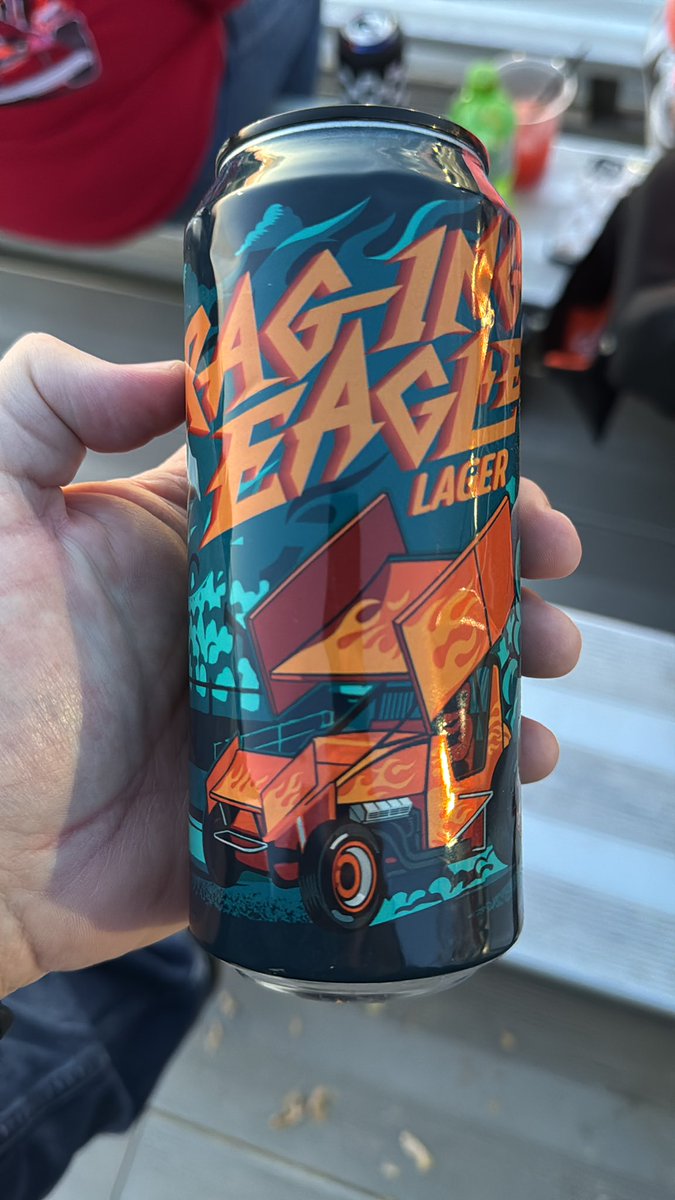
Unfortunate end to a solid night in the Kings Royal for @carson_macedo and the @AlbaughLLC 41! Ran out of fuel and got put to the tail as an open red was called. Ended up 14th @EldoraSpeedway
Unfortunate end to a solid night in the Kings Royal for @carson_macedo and the @AlbaughLLC 41! Ran out of fuel and got put to the tail as an open red was called. Ended up 14th @EldoraSpeedway
June 5, 1944. You've been awake for 40 hours.
Yesterday, the operation was called off. Eisenhower stood in a muddy airfield in England, stared at the forecast, and postponed the largest invasion in human history by 24 hours because of weather. So 156,000 men sat on ships, in ports, crammed into LSTs and Higgins boats, trying not to think about what tomorrow meant.
You're 19 years old. You're from a town so small your whole graduating class fit in one room. You've been in the Army 14 months and you've never fired a weapon at a person. None of that prepared you for tonight.
The chaplain holds a service on deck. It's dark and the ship is rocking. Half your platoon shows up. The other half write letters. The guy next to you, Kowalski from Cleveland, keeps folding and unfolding the same piece of paper. You ask if he's going to send it. He says he doesn't know who to send it to.
At 0100, the order comes down. You climb the rope net over the side of the ship in the pitch dark, down into the Higgins boat bucking in the swells below. 35 men in a steel box 36 feet long. The smell of diesel and seawater and vomit hits you before you're even seated.
The English Channel in early June is not kind.
Eight-foot swells. The bow punches up and crashes down, again and again, spraying ice-cold seawater over everyone. Within 20 minutes, the guy across from you is sick. Then the guy next to him. Then the guy next to you. Then you. There's nowhere to go. Nowhere to look. You're soaked through your wool uniform and the wind is in the low 50s and you've been awake so long the fear has almost become boring.
One sergeant keeps whispering the Hail Mary. Not loud, not for anyone, just to himself, over and over, like a machine that can't stop. A kid from Georgia named Willis is crying and doesn't seem to know it. Nobody says anything to him. Nobody has the energy.
Then the battleships open up.
USS Texas. 14-inch guns. The shockwave from a single salvo is so violent it physically moves the air in your chest. The noise is past sound. It's concussive, it's physical, it rewires something deep in your brain. The sky over Normandy turns orange. Then red. Then orange again. B-17s roll over in formations so vast they blot out the stars, 1,000 planes heading for the coastal batteries, the bunkers, the gun emplacements.
You think: nothing on that beach is still alive. Nothing could be.
You are wrong, and you don't know it yet.
What you don't know: the Air Force bombers delayed their drop by 30 seconds to avoid hitting the fleet. Thirty seconds at bombing speed puts 13,000 bombs 3 miles inland. Into French farmland. Into empty fields. Not one bomb lands on Omaha Beach. The German 352nd Infantry Division, dug into concrete bunkers along the bluffs, is untouched. Alert. Waiting.
You also don't know about the tanks.
Command planned to send 64 amphibious Sherman DD tanks ahead of the infantry to provide cover on the beach. They were supposed to float. In calm water, they could. But this is not calm water. The 741st Tank Battalion launches their tanks from 6,000 yards out. The swells hit the inflatable canvas screens. The screens collapse. Twenty-seven of 32 tanks sink straight to the bottom of the Channel, 100 feet down. The crews inside most of them never get out. The infantry landing in the first wave will hit the beach with almost no armor. They just don't know that yet either.
H-Hour. 0630. June 6, 1944.
Your ramp drops.
The lieutenant in front of you steps off and is dead before he hits the water. Not wounded. Dead. You don't stop. There's no stopping. 35 men are behind you in a boat with nowhere to go but forward.
You jump left. The man to your right jumps right. You never see him again.
The water is chest deep and 50 degrees and you have 70 pounds of gear on your back. German MG-42 machine guns are firing 1,200 rounds per minute from the bluffs 300 yards ahead, and the sound is not like the movies. It's mechanical. Industrial. Like a factory running at full speed. The rounds hit the water around you so fast you can't track individual splashes, just a constant disturbed surface in every direction.
You cannot run. You can barely walk. The beach is still 80 yards away.
The soldiers from Company A, 116th Infantry made it to shore first. They were from Bedford, Virginia, a town of 3,200 people. There were 35 men from Bedford in that company. The German guns had been pre-sighted on the waterline. Before most of them could clear the ramp, before they could even get wet, the machine guns hit them. Nineteen of the Bedford boys died in the first 15 minutes. Bedford, Virginia lost more men per capita that morning than any community in America. The town wouldn't know for weeks.
You make the shingle. A narrow strip of gravel at the base of the bluffs. You press yourself into it so hard you feel the rocks through your jacket. The guy beside you is a technical sergeant you've never met, from a different unit entirely, blown here by chaos. He's got blood on his sleeve and he is absolutely furious. He looks at you and says what Colonel George Taylor will say to everyone still pinned on this beach:
"Two kinds of people are staying on this beach. The dead and those who are going to die. Now let's get the hell out of here."
You get up.
It takes six hours to clear 300 yards of sand.
Not with a charge. Not with anything glorious. In tiny groups, one gap in the wire at a time. Sergeant Philip Streczyk crawls through the smoke near the E-1 draw and finds a seam the Germans left in the defenses. He takes six men through it. Another cluster flanks a machine gun nest from an angle the Germans didn't fully cover. A corporal nobody has heard of stands up in the open and throws two grenades into a bunker aperture and clears it by himself. Acts of individual, unrepeatable courage happening in the smoke all across a 6-mile front, uncoordinated, unrecorded, unwitnessed.
Meanwhile, half a mile off the beach, USS Frankford sees the infantry getting slaughtered and makes a decision that violates every piece of common sense a naval officer has. She drives her destroyer to within 800 yards of the beach, so close she's bouncing her keel off sandbars, and opens up direct fire on the bunkers at point-blank range. They can't miss at that distance. Three other destroyers follow her in. The crews know they are one lucky German shell from being sunk in 15 feet of water. They do it anyway.
By noon, small groups are on the bluff.
By early afternoon, you can stand on the high ground and see the entire beach below. The tide came in. The men who were wounded and couldn't crawl fast enough are gone. The obstacles are still there, draped with things you don't look at directly. You eat half a K-ration because it's the first food since yesterday and your hands are shaking too much to open the other half.
By nightfall, 2,000 Americans are dead, wounded, or missing. On this one beach. In one day. It is the single costliest day in American military history.
You sleep in a shell crater in French soil. Still wet. No sleeping bag. 40-something degrees now that the sun is down. The man a crater over is crying softly. You don't check on him. You need him to be fine. He probably is. You tell yourself he probably is.
Tomorrow the hedgerows start. Weeks of fighting through walls of vegetation 10 feet thick, every field a potential ambush, every sunken lane its own kill zone. The Germans mastered it. The terrain was not on the maps. Nobody had planned for it.
But tonight you're alive.
You think about Kowalski and his unfolded letter. You think about the Bedford boys. You think about the tanks on the bottom of the Channel with their hatches sealed.
You get out your paper and you write your own letter.
This time you address it.
82 years ago today. Most of them were teenagers. Most had never left their home states. They were seasick and soaked and terrified and they went anyway.
The youngest survivors are over 100 now. Most are gone.
Remember them today, not as marble statues. As kids who threw up over the side of a boat at 3 AM and climbed a cliff at dawn anyway.
That is what courage actually looks like.
The World of Outlaws are heartbroken to learn of Casey Luna’s passing.
Luna is one of the most successful team owners in World of Outlaws history, claiming the title in 1989 with Bobby Davis Jr. and 1995 with Dave Blaney.
Six different drivers combined to win more than 90 races with The Greatest Show on Dirt in his iconic car.
We send our condolences to his family and friends.
@KXnO1stQuarter it also needs to be said that LSU’s mascot is actually not named for the animal, it’s named for a confederate infantry group from Louisiana
@KXnO1stQuarter it also needs to be said that LSU’s mascot is actually not named for the animal, it’s named for a confederate infantry group from Louisiana
@DillonGarnette Riley inherited a perennial nine-win program. Lost 12 of his last 18 games. 6 of those 12 losses were by 20+ pts.
Frost lost 31 of 47 games. 4 of those 31 losses were by 20+ pts.
Both bad records. Riley's losses were worse.