Most parents see value in confidential teen health visits, but many still struggle to step back, our national @csmottpoll suggests.
That hesitation may create barriers for teens seeking care for sensitive health concerns.
More from today's report: https://t.co/678vfIiYzF
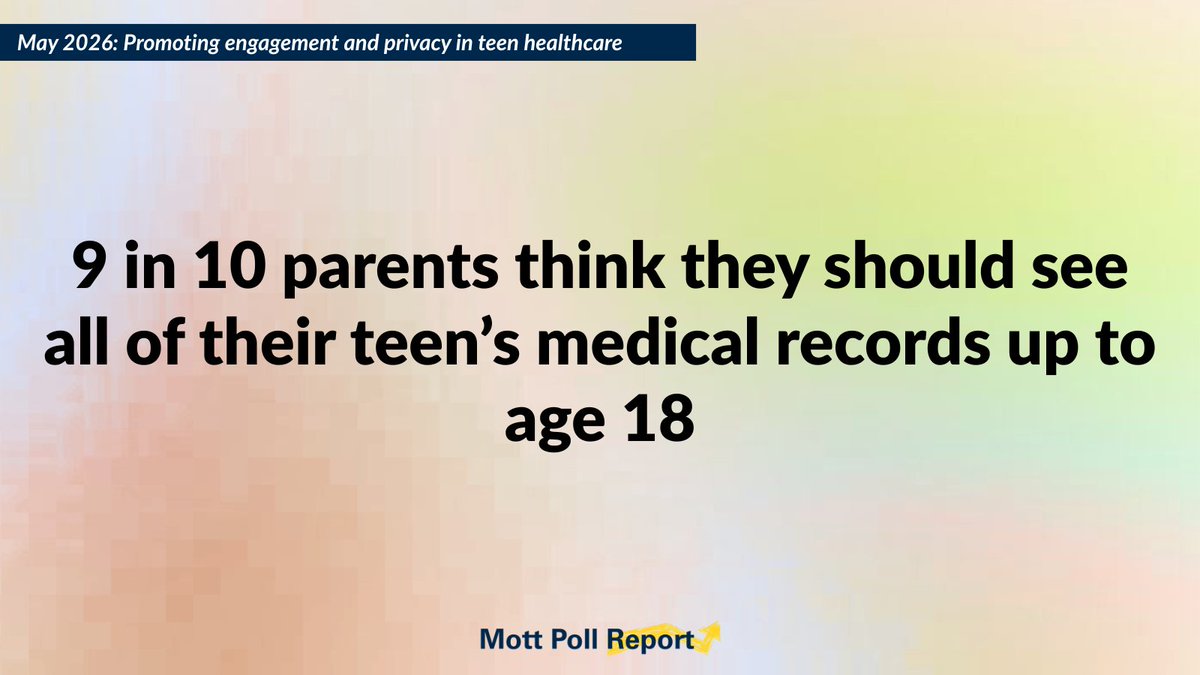
Nearly all parents (92%) think they should have a right to see all of their teen’s medical records up to age 18.
Latest Mott Poll report: https://t.co/h2SMzucH39
Only 21% of parents recall healthcare providers talking with them about confidential services for adolescents, and only 11% recall discussion about limits on information parents are allowed to see on their teen’s patient portal.
Latest Mott Poll report: https://t.co/h2SMzucH39
Among parents who attended their teen’s most recent preventive care visit, only 35% say the provider talked privately with the teen, without the parent in the room.
Latest Mott Poll report: https://t.co/h2SMzucH39
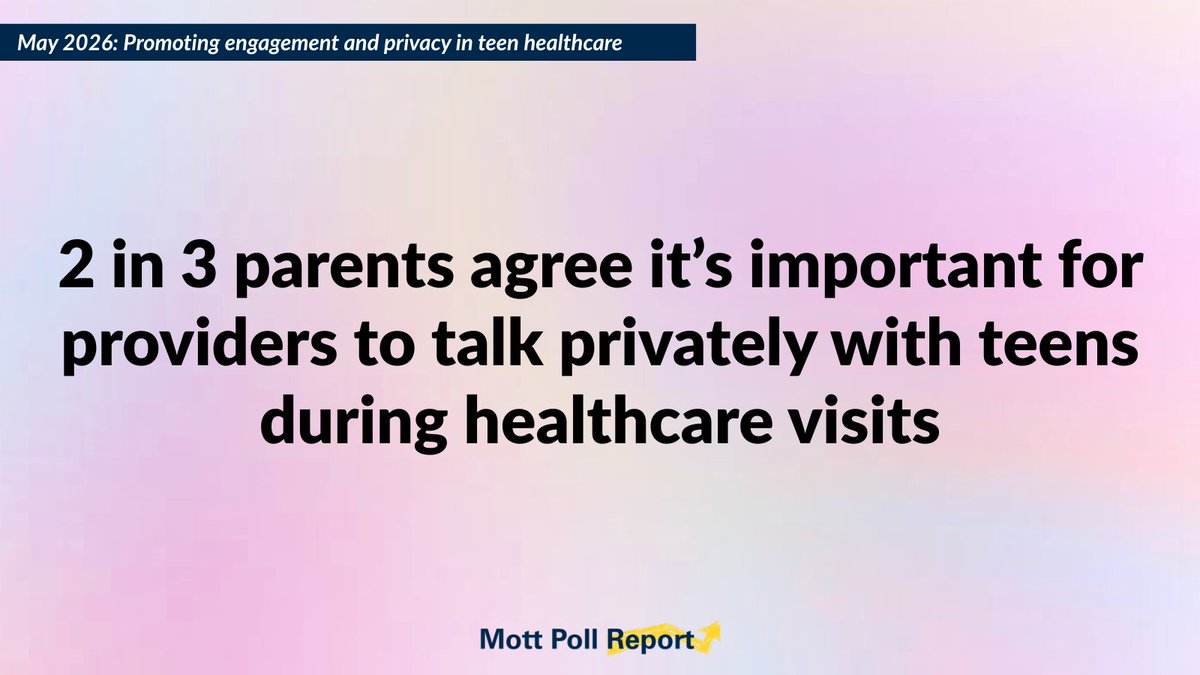
2 in 3 parents agree it’s important for providers to talk privately with teens during healthcare visits.
Latest Mott Poll report: https://t.co/h2SMzucH39
Preventive care visits are an important time for healthcare providers to listen to concerns and questions about their patients’ health and to offer guidance.
Next week we'll look at parent views on healthcare confidentiality for their teens age 13-17.
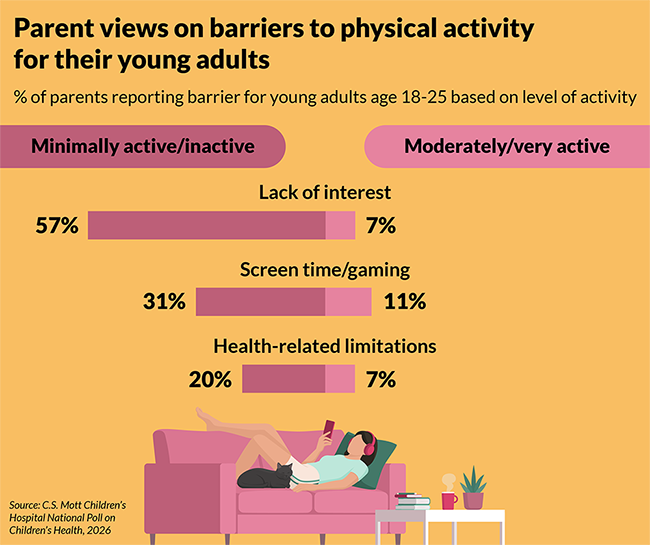
Is there a "cliff effect" in physical activity after high school? Our national @csmottpoll highlights low levels of activity among young adults ages 18-25 with time, screen use and lack of interest as top barriers: https://t.co/SPMjGcUj9V
Parents have tried to encourage their child to be more physically active by:
-giving verbal encouragement, 73%
-suggesting options to try, 61%
-doing an activity with their child, 50%
-paying for an activity, 27%
-offering a reward for being active, 18%
https://t.co/WEC7PAZJdm
Parents say things that get in the way of their adult child getting enough physical activity include time (36%), lack of interest (23%), screen time/gaming (17%), having no one to be active with (13%), cost (10%), and health-related limitations (11%).
https://t.co/WEC7PAZJdm
Parents describe their young adult child’s usual level of physical activity as 26% very active, 41% moderately active, 28% minimally active, and 5% inactive.
Latest Mott Poll report: https://t.co/WEC7PAZJdm
Get the latest Mott Poll news delivered straight to your inbox, once a month: https://t.co/XK7K30nQay
Monday’s report: Helping young adults stay active
Being physically active is a key part to a healthy lifestyle. There is a concern that as children graduate from high school, they may have fewer opportunities for physical activity.
Next week we'll look at parent views on their young adult children's physical activity habits.
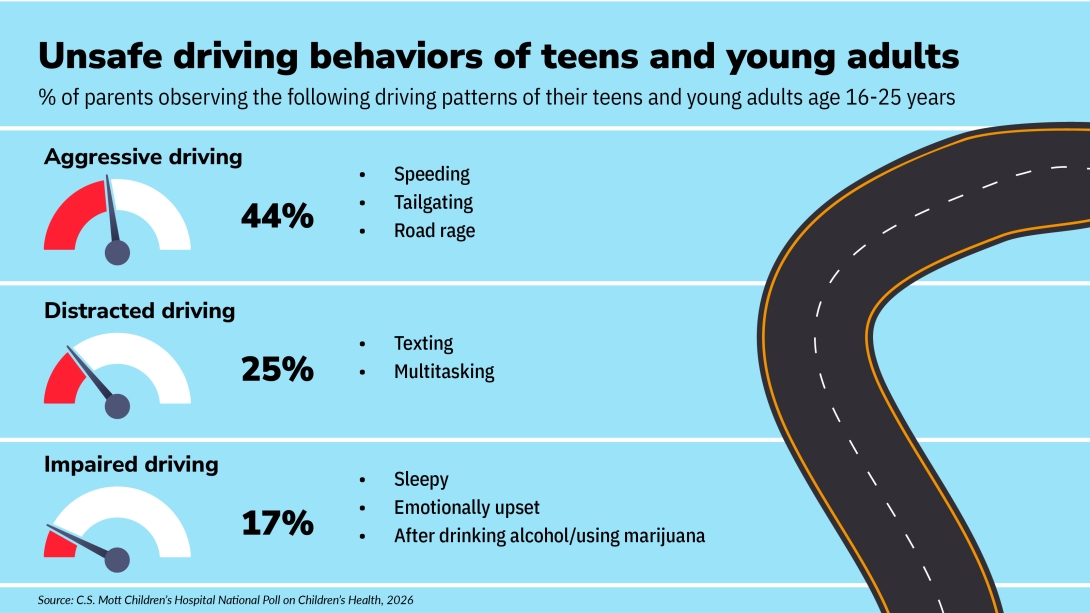
More than 1/2 of parents have witnessed at least one unsafe driving behavior by their child, including aggressive driving such as speeding or tailgating.
1 in 4 have observed distracted driving.
More findings from the national @csmottpoll: https://t.co/SfBZw8N73y