Casual fan of the American voices that make C-SPAN the greatest public forum in the USA. Bio: first gen. lawyer & engineer, third gen. pedant & immigrant.
Look, is AI making our lives better? No. But is it making things less expensive? Unfortunately, the opposite. Now, is it making the internet a better place? More slop than ever, actually! But does it allow us to spend more time being creative? That's actually the thing it's best at stealing without shame. Though, surely it's making us smarter, right? You’ll never guess, but…
January 6th participant: You can't gaslight me. I was there. I saw the officers being pepper sprayed. I watched one of them fall down and hit his head and his back. So don't be telling me it wasn't violent. Don't come to me with that ever again.
I've watched thousands of videos from the Jan. 6 riot as part of NPR's reporting and archive project on that day.
Here are some of the lesser known videos that have really stuck with me.
🧵
Who, me? I can’t call the National Guard anywhere without orders signed in triplicate, sent in, sent back, queried, lost, found, subjected to public inquiry, lost again, and finally buried in soft peat for three months and recycled as firelighters.
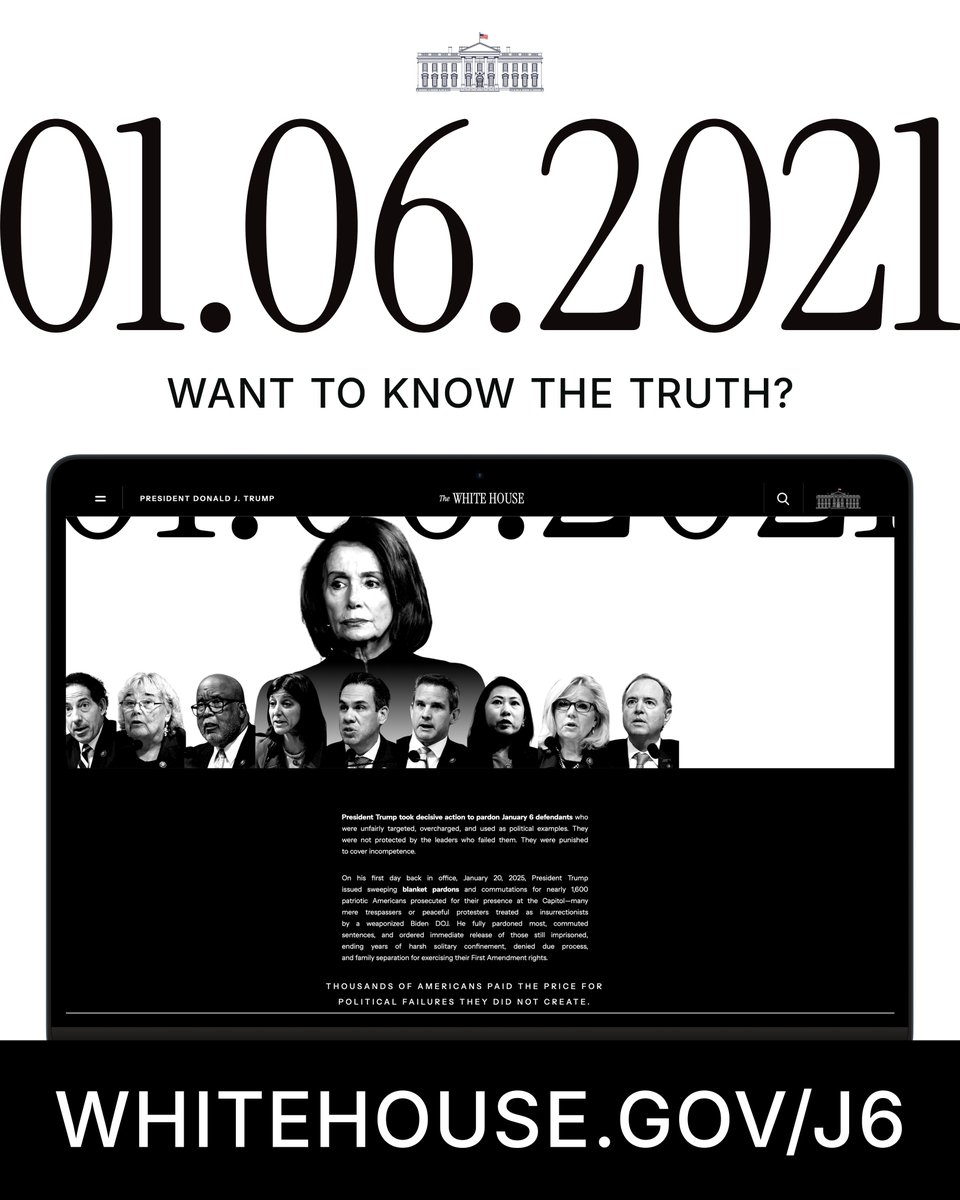
Thousands of Americans paid the price for failures they didn't create.
President Trump delivered pardons.
Pelosi admitted responsibility.
The media lied.
Now see the REAL Jan. 6 story 👀📲 https://t.co/GBL2EyiCB3
It's true that NYC has historically been one of the most expensive places to live in the US, but it has gotten more expensive over time. This affects everyone.
I'll give you a couple of examples.
In 1989, a young transplant named Camella Ehlke dropped out of art school and opened a studio in NYC's Lower East Side. This was both her workspace and living quarters. Given that she was relatively young and involved in the arts, she didn't have much financial means. But she was able to afford this space because it only cost $500/ month. She called her workspace Triple Five Soul, inspired by the business cards and local newspapers littered all over the street, which carried the phone numbers to various party and club info lines (often starting with 555).
The area at the time was a bit grimy, but it was also a cultural hub for underground art and music. Since Ehlke was embedded in the local scene, she naturally made clothes for her friends, which included musicians, artists, and dancers. Her clothes became part of the scene's "look." And so, when people wrote about the scene, they naturally talked about the fashion. Soon, Ehlke found herself fielding orders from Japan and styling artists such as the Jungle Brothers for magazine covers.
This look, which would today be called "streetwear" (even though it wasn't called that at the time), has since evolved into a multi-billion-dollar industry. Ehlke didn't invent it herself from whole cloth, of course. It developed as an extension of an actual underground cultural movement, which was only made possible through the availability of affordable housing. It's impossible to discuss the rise of streetwear without mentioning the music and art scene that gave the clothes their cultural meaning. Similarly, it's impossible to discuss the artists, musicians, and clothiers without mentioning how non-mainstream or commercial creatives were able to live in proximity to one another.
Today, such a scene is no longer possible in that area. A unit in Ehlke's old 151 Ludlow quarters costs $1.2M (rent is in the many thousands of dollars). To afford a place like that, you need to make six figures a year — impossible for young creatives outside of tech and finance.
The history of NYC is full of similar stories. For instance, the art scene in the 1960s and 70s benefited from low rent. When he was young, Andy Warhol lived in one of the tenements in St. Mark's Place; Jean-Michel Basquiat jumped from one drafty loft to another throughout the city. However, by being near each other, artists were able to share ideas as they interacted.
Such proximity not only improved their art but also created a kind of community that fueled romantic stories about this history. Their success benefited them and local New Yorkers (who were able to enjoy the art scene), as well as economies in far-flung places. Think of all the tchotchkes and bric-brac that corporations adorn with Warhol and Basquiat's art, which they sell to yuppies around the world.
We know proximity is important for cultural and economic development because we see them in other areas: the tailoring cluster in London (Savile Row), the tech cluster in the Bay Area, and the pharma cluster in Boston/ Cambridge. Even some of these are threatened by exorbitant rents. Many tailors can no longer make a living because the cost of a bespoke suit is too expensive. And it's expensive because rent is crazy high.
Instead of asking "Is living in NYC naturally more expensive than living in the hinterland" (the answer will always be yes), you should compare like-for-like. In other words: "Has NYC become less affordable?" And if so, how does this affect cultural life?
When Hurricane Katrina ripped through New Orleans in August 2005, there was a real risk of it killing the local jazz scene, as people were displaced. When you lose cultural creators in an area, it's not so easy to recreate that same scene. If that were the case, then nearly every place in the world would be a cultural powerhouse, as they could combine the right ingredients, like cooking mushroom soup. Instead, the best you can do is create a good environment that allows for specific communities to form and thrive — and hope for the best. One of those ingredients has to be affordable housing.
People who think they're above such things don't consider the wide ranging effects of culture: the suburban kid who may get inspired by Basquiat and create a totally new form of digital art; a Texan designer who riffs off the language of NYC streetwear; or the millions of people who enjoy Larry David's TV shows (he lived in Hell's Kitchen when rent was super cheap).
IMO, it's undeniable that NYC has become more expensive over time. We should think of ways to make cities more affordable, as economic diversity benefits everyone.
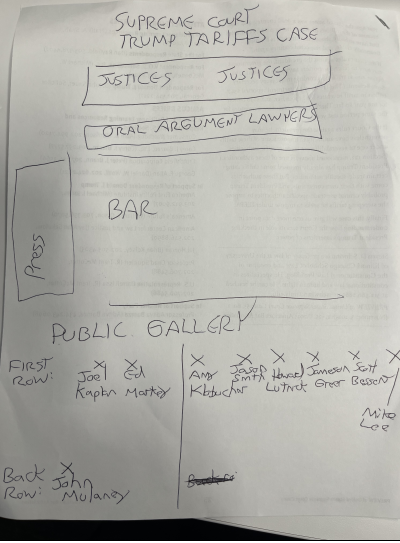
Was inside SCOTUS for oral argument in Trump tariffs case.
AMONG THOSE SPOTTED in public section...
front row from left to right: Joel Kaplan, Ed Markey, Amy Klobuchar, Jason Smith, Howard Lutnick, Jamieson Greer, Howard Lutnick, Scott Bessent, Mike Lee
back row: John Mulaney
@JustinWStapley Our Right to Petition is literally all we have left. Unless…you have any better idea? (Short of what your Irish ancestors might suggest, of course)
@JustinWStapley Cult of the protest, i.e., “the free speech of the people”? When Congress and the Judicial branches fail to respond (and the fourth estate either ineffective or compromised), what is left but the only other power is granted by our Constitution?
Speaker Johnson and Leader Jeffries Accept Invitation to Appear Together on C-SPAN.
C-SPAN looks forward to providing a forum for a smart, civil, respectful exchange of ideas between both leaders.
Schedule TBD.
https://t.co/eZdwS7181G
Mike Johnson @SpeakerJohnson (R) is now the fourth sitting U.S. House Speaker to join C-SPAN in-studio and answer questions from Americans...
Others:
Dennis Hastert (R) (2 times: 2001, 2000)
Tom Foley (D) (6 times: 1993 3 times, 1992 2 times, 1990)
Jim Wright (D) (1 time: 1987)
.@SenateDems are holding the floor for 30 hours for debate to speak out against the confirmation of Russell Vought — the architect of Project 2025 — for Director of the Office of Management and Budget.
I’m scheduled to speak at midnight so make some coffee and tune into C-Span!
Where did Trump voters get their news? 📰
Yes, there's social and partisan sites, but there is another influential strategy that isn't getting enough attention: Manipulated, pay-to-play and all out fake news sites
I've been covering a mix of those for years. Here's a primer
🧵