Nearly 3.5 billion metric tonnes of CO2 - more than half of U.S. 2019 emissions- have been lost to the atmosphere due to the loss of Everglades peat soil exposed to drought and saltwater intrusion. #EVCO22#RehydrateTheEverglades@TeamOcean
Sink or Store - Collapse of Everglades peat soils due to sea level rise and saltwater intrusion threatens to convert an important carbon sink into a carbon source. #EVCO22#EvergladesCarbonSink@TeamOcean
Oil development in the Big Cypress National Preserve is a bad idea that threatens the Everglades, the quality and quantity of water that flows through Everglades to the coast and indigenous cultural rights. #EVCO22@TeamOcean
“The Everglades is an ecological masterpiece we are trying to reatore on an ever shrinking canvass.” -Richard Grosso #EVCO22#RestoreAnAmericanMasterpiece
The thing about oil spills like the 2010 BP oil disaster is they are like a bullet that ricochets - the impacts bounce around the ecosystem long after the initial impact. #BPOilSpillLegacy. @OurOcean
Take a minute to celebrate a BIG new discovery from @NOAA—the Rice’s whale! We’ve always known that the #GulfofMexico was unique and special. Let’s work together to protect this critically endangered species! 🐳
Legacy of an oil disaster on Florida Panhandle beach coated with oil likely from 2010 BP oil spill and resuspended from seafloor by Hurricane Sally. #BPOilDisasterLegacy @OurOcean https://t.co/1BQTmK0yx7
Red snapper in eastern Gulf declined following BP oil spill, driven by low recruitment. This is correlated with the disaster, but causation is less clear. @OurOcean@GulfConference#DeepwaterHorizon
All fish populations in the open ocean declined up to 75 percent following the BP oil disaster. Lantern fishes decreased up to 89 percent. Tracy Sutton, NOVA SE Univ, @OurOcean#DeepwaterHorizon@GulfConference
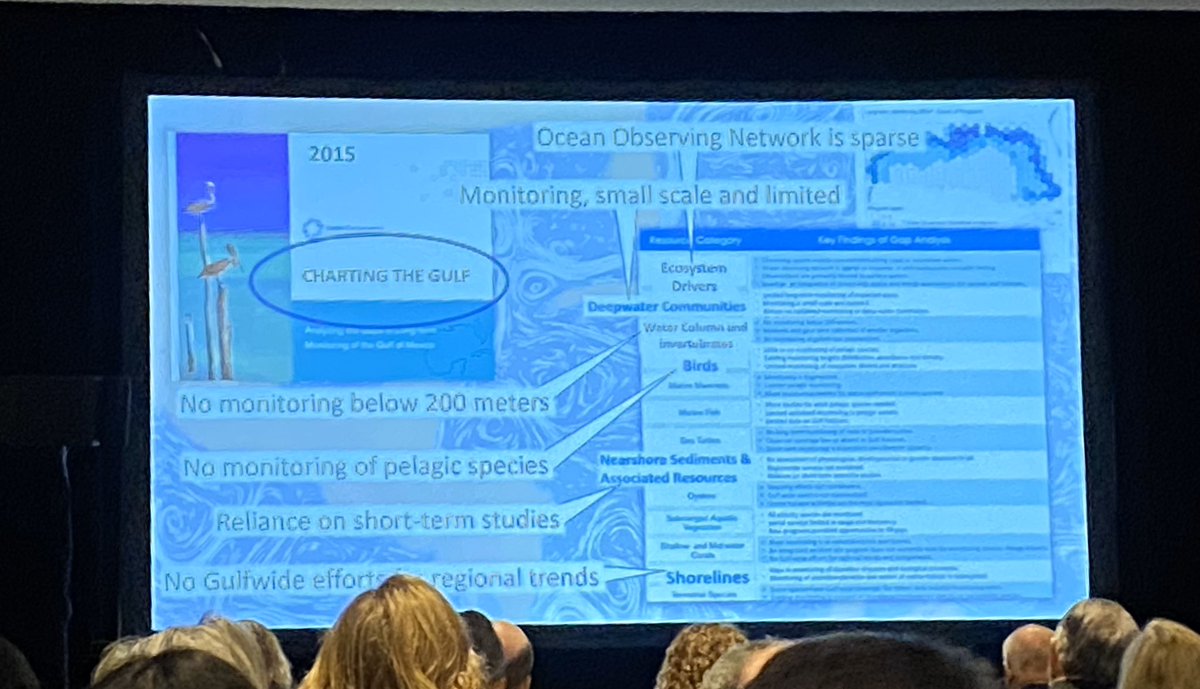
Thank you Larry McKinney, Chair of the GoMOSES Executive Committee, for the shout out: Ocean Conservancy has contributed to Gulf restoration through its science products, including Charting the Gulf. @OurOcean#DeepwaterHorizon@GulfConference
The BP oil disaster shuffled the microbial community deck, the ecosystem consequences of which for the Gulf of Mexico might not be known for decades, Mandy Joye @OurOcean@GulfConference#DeepwaterHorizon
Oil spill research is directly applicable to tracking other pressing ocean issues such as plastics, red tides and sargassum blooms, Tamay Ozgolman. @OurOcean#DeepwaterHorizon
The offshore water column is the biological engine of the Gulf of Mexico where much of the energy transfer between prey and predators occurs. Tracy Sutton, Nova SE University #GoMOSES @GulfAction
Whales & dolphins are the Gulf of Mexico’s canaries in the coal mine. The 2017-19 red tide is eerily similar to 2005-06 event with dolphin prey down >90% in Florida’s Sarasota Bay. How will dolphins respond? Only time and monitoring will tell. Randall Wells #GoMOSES. @GulfAction
What do airplanes and restoration have in common: correcting course as needed. Buck Sutter #GoMOSES talks role of adaptive management in restoration. @GulfAction