New Protocol Paper! As #Botanicals & #NutritionalSupplements gain popularity for physical & #MentalHealth, rigorous human studies to validate absorption, bioavailability, & physiological effects are more important than ever. @ElsevierConnect🌿
https://t.co/01j0gRb8eB
This is a diagnostic immunohistochemistry app that I have been working on:
https://t.co/l2sqmLj6CR
It is very much a work in progress and comes with all the usual caveats: there are almost certainly omissions, errors, and oddities that need fixing.
🧬 Nature Medicine | AI Immuno-oncology
Generalizable AI predicts immunotherapy outcomes across cancers and treatments
DOI: 10.1038/s41591-026-04502-7
Despite immune checkpoint inhibitors (ICIs) transforming cancer therapy, accurately predicting who will benefit remains a major challenge. This Nature Medicine study introduces COMPASS, a pan-cancer foundation AI model that predicts immunotherapy response directly from tumor transcriptomes while providing biologically interpretable mechanisms of response and resistance.
Key findings
🤖 A foundation model for immunotherapy
Pretrained on 10,184 tumors across 33 TCGA cancer types
Fine-tuned and validated using 1,133 patients from 16 independent clinical cohorts
Covers 7 cancer types and 6 immune checkpoint inhibitor regimens, including anti-PD-1, anti-PD-L1, anti-CTLA-4, and combination therapies.
🧠 Biology-first AI architecture
Rather than making predictions directly from gene expression, COMPASS compresses transcriptomes into 44 interpretable immune concepts, representing immune cell populations, stromal biology, tumor–immune interactions, and signaling pathways such as IFNγ and TGFβ. This provides mechanistic explanations alongside predictions.
📈 Outperforms existing biomarkers
Compared with 22 published biomarkers and machine-learning approaches, COMPASS improved:
Accuracy by 8.5%
AUPRC by 15.7%
while maintaining robust performance across different cancers, treatments, sequencing platforms, and cohort sizes.
🌍 Generalizes across cancers and drugs
The model successfully transferred to:
unseen cancer indications,
previously unseen checkpoint inhibitors,
combination immunotherapies,
and small clinical cohorts through parameter-efficient fine-tuning,
demonstrating strong cross-disease and cross-treatment generalization.
�� Reveals mechanisms of resistance
COMPASS identified biologically meaningful resistance programs, including:
TGFβ signaling
Endothelial-mediated immune exclusion
CD4⁺ T-cell dysfunction
B-cell deficiency
It also generates patient-specific response maps, linking individual gene-expression patterns to immune programs and predicted treatment response.
🏥 Better survival stratification
In the independent IMvigor210 urothelial cancer trial, patients predicted as responders by COMPASS experienced significantly longer overall survival (HR ≈ 4.7), outperforming conventional biomarkers including PD-L1 and tumor mutational burden (TMB).
Why it matters
COMPASS represents a shift from black-box prediction toward interpretable foundation models in precision oncology. By integrating transcriptomics with biologically grounded immune concepts, it enables more accurate patient stratification, supports biomarker discovery, and generates mechanistic hypotheses that could improve immunotherapy trial design and future combination strategies. The authors emphasize that COMPASS remains an exploratory research tool requiring prospective clinical validation before routine clinical use.
Excited to share Navigo, our first step toward building an AI-powered Virtual Embryo!
By integrating flow matching at the population level with RNA kinetics modeling at the molecular level, and learning developmental dynamics from 12.4 million single cells across 43 embryonic time points, Navigo transforms static snapshots into a continuous, generative model of embryogenesis. The model enables:
1. 🧬 Predicting developmental trajectories across the entire mouse embryogenesis
2. 🫀 Enabling disease modeling by mechanistically resolving regulatory networks that distinguish congenital heart disease subtypes
3. 🧪 Zero-shot genetic perturbation prediction and uncovering lineage-specific gene-compensation mechanisms
4. 🔬 Rational cell-fate engineering, exemplified by fibroblast reprogramming analyses, including identifying pro-fibrotic barriers to cardiac fates and evaluating hundreds of pairwise transcription factor combinations for neuronal fate, each consisting of one bHLH factor and one POU factor
We hope this represents an important milestone toward predictive, in silico developmental biology, where virtual embryos can help us understand, simulate, and eventually engineer development.
A huge congrats to @YiminFanCUHK from Dr. Yu Li's group at CUHK on this awesome work and all members in my lab and collaborators who made this work possible, and especially to @LaudeInstitute for supporting our vision of building AI-native virtual embryos.
We also thank @JShendure@CXchengxiangQIU@junyue_cao@malte_spielmann@XingfanH Jana Henck and @coletrapnell for reporting the original studies and for producing the data we used for training and prediction!
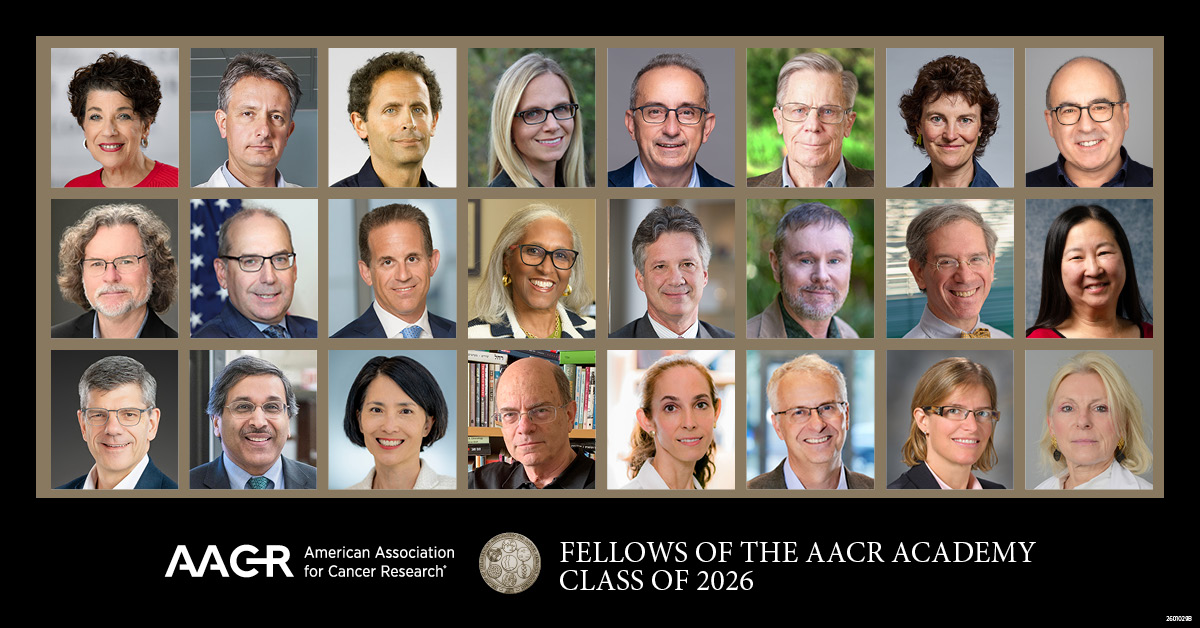
Twenty-four eminent scientists whose pioneering discoveries have accelerated progress in cancer science and medicine have been elected Fellows of the @AACR Academy, Class of 2026. Learn more: https://t.co/kYU2Otw9bu
How do you capture true #spatial context in cell atlas studies—without losing sensitivity or needing specialized instruments? Unlock spatial insights across #singlecell workflows with Trekker® Single-Cell Spatial Mapping Kits. This sequencing, donation-based, instrument-free approach to spatial biology will be featured at #HCA2026GM.
Read more: https://t.co/kTG4s02QQ5
To solve aging, we first need to measure it. Excited to share our study in @NatureMedicine! Different cell types age at different rates within our body. From a tube of blood, we track aging across 40+ cell types, from immune cells to neurons, revealing signatures that forecast disease risk and resilience. @wysscoray 🧵1/9
Very nice resource paper in @Cancer_Cell that enables correlation of cell type specific expression data with survival in #PancreaticCancer.
https://t.co/9qvooPYaup
Takes TCGA type datasets based on bulk RNA to the next level. Interactive web tool (ctPANDA) allows facile queries.
🚀 We are introducing PerturbPair (with @TakaKud0) — a platform that combines parallel Perturb-seq and optical pooled screening (OPS/PerturbView) in primary cells to systematically map at massive scale how genetic perturbations reshape cellular states across modalities.
With wonderful collaborators @TakaKud0, @AnaMeireles, @AntRios, @jchuetter, @MinOta, @ORozenblattRosen, @LeviAGarraway, @KGeiger, @avtarsingh, @jkpritch, and Aviv Regev.
Paper link: https://t.co/fnSUymW95s
A new cellular atlas of atherosclerosis based on scRNAseq, snATACseq, and spatial transcriptomics across 216 human samples.
A useful resource, including associations with histological levels of atheroprogression.
Analyzing protein-coding variants across 1.2M individuals, our study by @skoyamamd identifies new targets for lipid and CAD therapeutics & informs genetic testing for Mendelian dyslipidemias https://t.co/dFv7mDn9EJ @NatureGenet
Today we all lost our jobs.....
Three Nature papers showing that scientists in the conventional sense are obsolete
At least read the first one.... the AI replaced all things that the scientist does ....
https://t.co/zMsRLaaRDU
NEW: $3M in Fast Grants for AI-driven life sciences research.
We’re funding pilot projects in AI diagnostics, prediction, and personalized therapeutics — with a two-week review turnaround.
35 grants · $25K–$100K · Deadline: June 15
Please share!
https://t.co/7h7gcSF1md