🧵1. Aldosterone isn’t just “salt & water.” In modern sodium-rich contexts it drives inflammation, fibrosis, and residual cardiorenal risk. We map physiology → disease → therapies, and argue for reprogramming the signal. Follow the thread ---> https://t.co/VLpwPTVvh8
Hundreds of AI models for SLE. Zero FDA/EMA clearances. One used at point of care.
We asked of each: if it showed up in your clinic tomorrow, what would you do differently?
New review in Lupus, w/ @wisit661 and @FrancescoPesce Pesce.
https://t.co/bgRijG27oP
Now open access in @NDTsocial
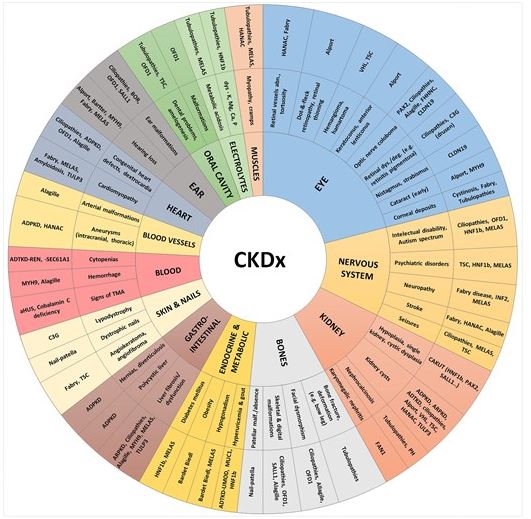
CKD of unexplained cause (CKDx): A consensus statement by the Genes &Kidney Working Group of the ERA
🧐Check also our 2 open access editorials on this innovative concept.
▶️https://t.co/E3AlNE29wO
Where does aldosterone actually do its work? In the aldosterone-sensitive distal nephron (ASDN): DCT2, CNT, and the collecting duct.
The control room for Na⁺ balance and K⁺ homeostasis. (Follow the thread 🧵)
#Nephpearls#Nephrology#Physiology
8. Aldosterone: From Essential Tubular Regulator to Pathological Driver—Physiology, Disease, and Therapeutic Advances.
In collaboration with @FrancescoPesce @DAmbrosioViola
Open Access in @IJMS_MDPI:
https://t.co/VLpwPTVvh8
🧵1. Aldosterone isn’t just “salt & water.” In modern sodium-rich contexts it drives inflammation, fibrosis, and residual cardiorenal risk. We map physiology → disease → therapies, and argue for reprogramming the signal. Follow the thread ---> https://t.co/VLpwPTVvh8
Proud to share our new paper: a road map to redesign nephrology clinical trials by pairing modern methodology and computational tools. With @FrancescoPesce.
https://t.co/yld0y2d7JG
Basics of Glomerulonephritis (GN). GBM is key.
All patterns can be explained by glomerular basement membrane (GBM) & type of injury.
Let’s do one at a time
CRESCENTIC GN
1. Results from breach/break of GBM (red arrow)
2. Injury is sudden & severe
Eg-ANCA & anti-GBM GN
"Drink more water!" It's the easiest health advice around. Tired? Headache? Trying to be like Tom Brady? Just drink more water. But as a nephrologist, I get asked all the time: How much is the right amount? And the truth is... we don't really know. 🧵
1/14
🤔 Why do we use iodine as an intravenous contrast agent?
The answer requires a review of the composition of the human body and a brief tour of one of my favorites, the Periodic Table of Elements.