📢Abstract deadline extended to March 6, 2026 for the CSH Asia AI & Biology meeting.
We welcome both short talk and poster submissions.
Updated speaker list - check it out, and we look forward to seeing you at the meeting!
BREAKING: Apple just proved AI "reasoning" models like Claude, DeepSeek-R1, and o3-mini don't actually reason at all.
They just memorize patterns really well.
Here's what Apple discovered:
(hint: we're not as close to AGI as the hype suggests)
What happens to bacterial genomes when they're cloned into yeast? Do they transcribe, do they get silenced, do they get packaged away from the rest of the DNA? This cool study congrats to the Koszul lab team at Pasteur for this great work https://t.co/OWyLeAxTbv
"Oh, I'm a *pure* mathematician, I don't write code/do calculations/etc.."
"Oh, I'm a *theoretical* physicist, I don't do experiments/analyze data/etc.."
Etc.
These kinds of statements are typically uttered with an air of intellectual smugness. But what are they really? (1/6)
But b/c there are *so few* jobs and so many applicants, you're gonna see all the people who were lucky enough to be studying the right thing at the right time get jobs while you don't. You learn that "fit" drives most hiring, and "fit" is all vibes masquerading as "merit"
Last night at #pint24 was my first time talking science outside a conference! Thankfully it turned out great with an amazingly engaged audience with lot of great questions!😃
Thanks a lot to the organizers for making it happen @orlandorosss @DanJ910@HarryGreenTKD
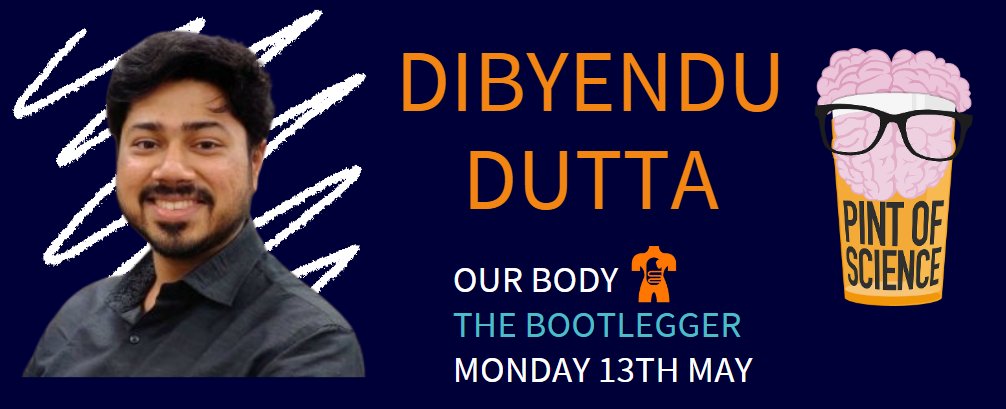
🔬 Journey into the world of Phage Therapy with Dibyendu Dutta at the Bootlegger on Monday, May 13th! Explore the captivating potential of bacteriophages in battling antibiotic-resistant bacteria. Join us for an enlightening discussion! @CuriousModeller#PhageTherapy#Pint24
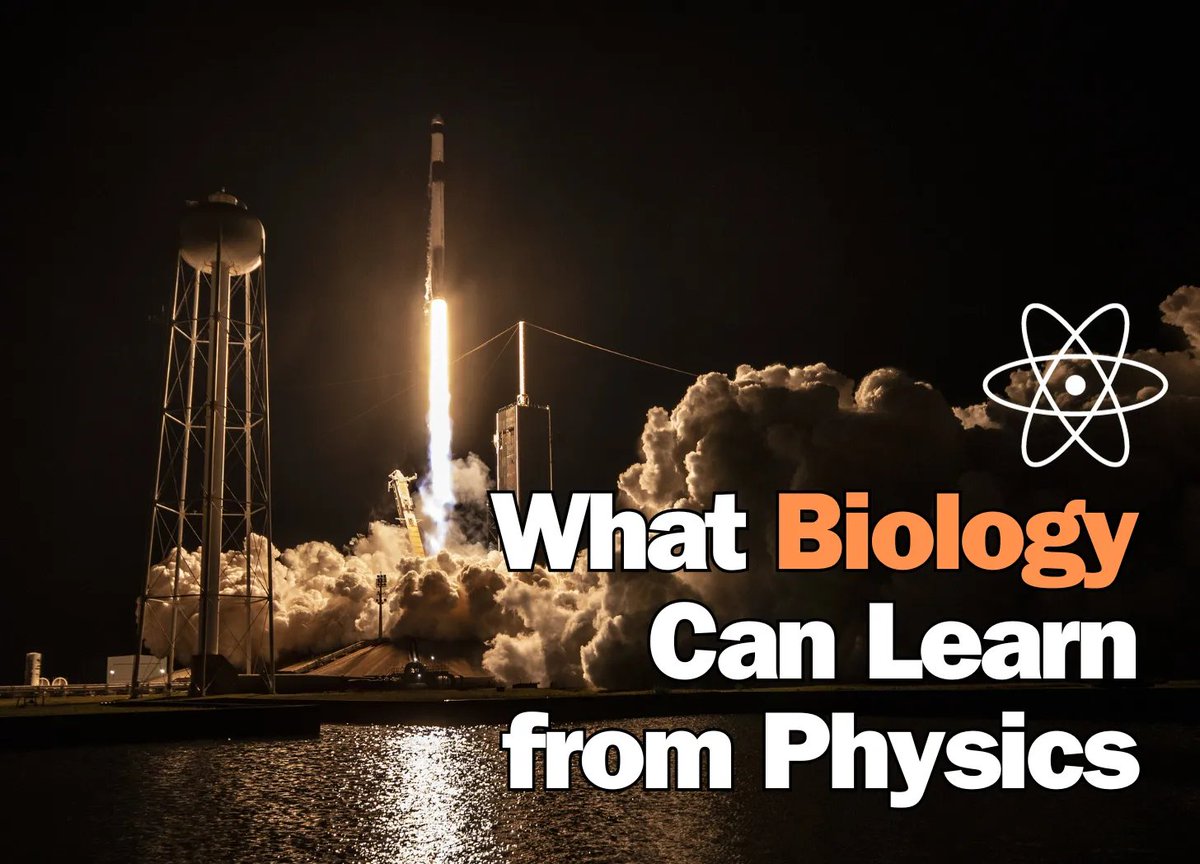
What Biology Can Learn from Physics 🚀
World War II shifted physics from a field of brilliant individuals to one of well-managed teams. CERN, LIGO, and the JWST all cost >$1 billion.
Biology has had a few "moonshots," but not nearly as many. Why not?
Read: https://t.co/1a9zzdvc6c
***
There are probably a few reasons. First, biology research is inherently broad. A zoologist, ecologist, and protein engineer all call themselves “biologists,” but rarely attend the same conferences. Biological discoveries are also made organically, with thousands of teams chipping away at problems. And it's opaque; researchers don’t share their results until a paper is published. These quirks make it difficult to coordinate on large problems.
The foundation of physics has been built over several centuries, thanks to a constant back-and-forth dialogue between theory and experiment. Progress in biology will similarly accelerate once the field builds predictive models that can accurately anticipate the outcome of experiments before they have taken place.
AlphaFold2, a model that predicts protein structures, was a great start. But now, biologists should work to build predictive models at more scales: from molecules, to whole cells, to the behavior of cells at the macroscale. This is what @Align_Bio and others are doing. But it will require large-scale funding and coordination amongst biologists.
The last century of biology looked like an organic and exploratory process, with many small groups discovering and rediscovering curiosities. But the next century may resemble a coordinated, whole-field effort to divide biology into a series of prediction tasks and then solve those tasks, one-by-one.
This piece was written with @erika_alden_d.
@authorea My last edits and comments on my draft from around Oct 12-13 are missing. Latest version shows as Oct 6. Can I expect the data to be recovered soon? Or just migrate to a service where my data safety can be ensured!
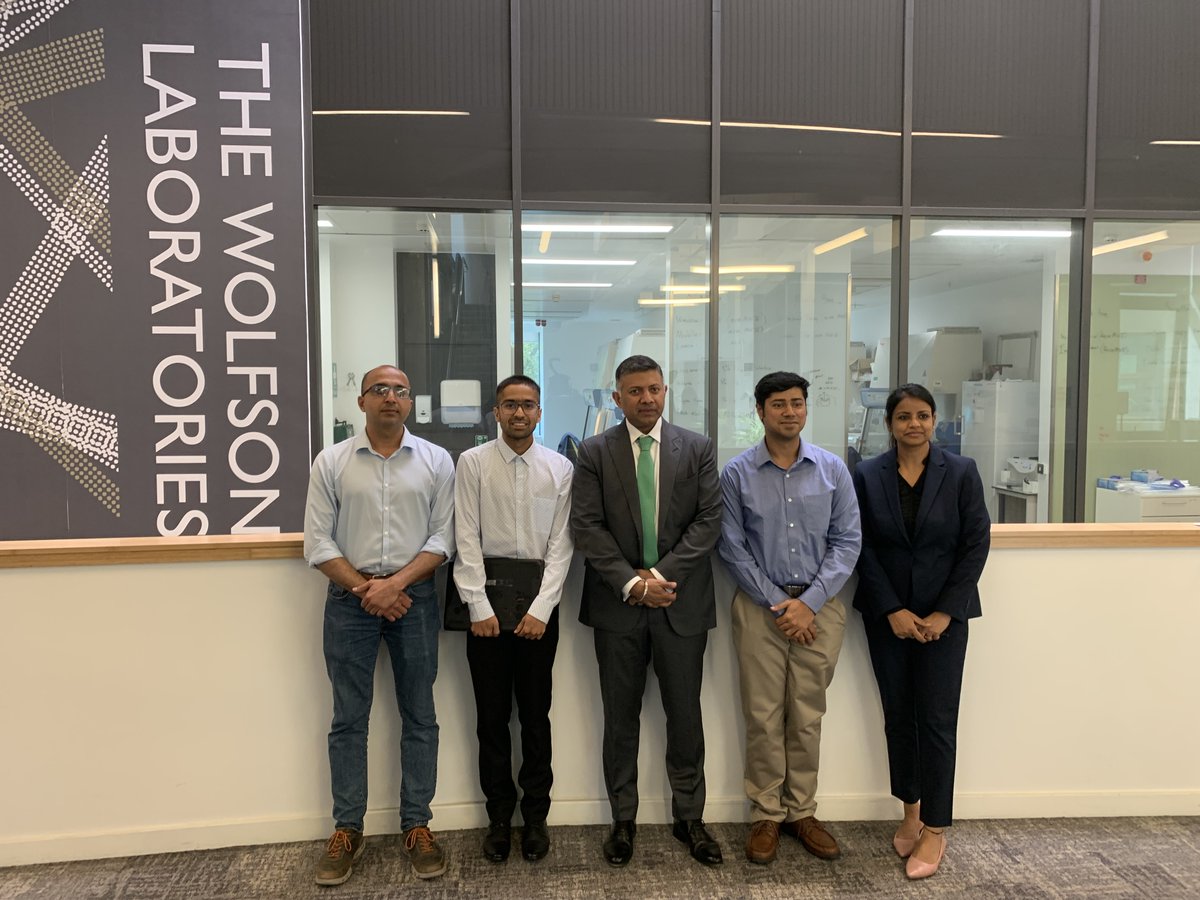
We were very excited to welcome the Indian High Commissioner H.E. Mr Vikram Doraiswami at the Living Systems Institute @Uniofexeter on Friday. Dr Akshay Bhinge, Dr Dibyendu Dutta, & PhD student Anuj Tiwary showed H.E. Mr Doraiswami around the LSI and explained their research.
Introducing "data-to-paper": autonomous AI research! We've let it play with the large CDC Health Survey Dataset. Went to lunch. When back, it had already chosen several research topics, wrote data analysis codes, interpreted results and wrote 5 transparent, reproducible papers.
*DISCUSS* Which problems are treated using the "particle physics approach" (as discussed in the video) in your respective fields?
https://t.co/VQV9JrXX8P
I really like the concept, since today science in most fields is way too complex and collaborations are often not sustainable.
Such focused orgs with proper plans may help small labs execute large projects that are usually the exclusive domain of big shot labs.
Rishi Sunak just announced up to £50m in funding for new “focused research organisations.”
FROs are a new way of doing science. In effect, they apply the startup model to scientific research. 🧵
You think ChatGPT is impressive?
Wait till you see Microsoft's new Bing. It'll blow you mind away.
Here's a comparison of ChatGPT and Bing for:
• Outlining a research paper
• Brainstorming research questions
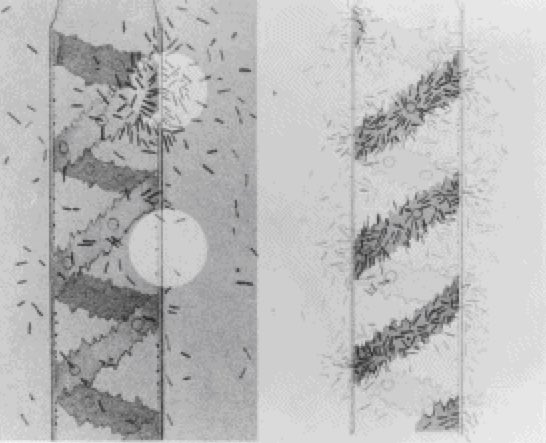
Today in ingenious historical experiments: Theodor Engelmann demonstrated that chloroplasts are the site of oxygen production in plants by taking bacteria that would migrate towards oxygen and seeing that they went to the choloroplast
(from Howard Berg's "E coli in Motion")
I have an @EPSRC funded PhD position to work with myself and @michaelsulu, using model microbial communities to improve our understanding of how communities can be used for future bio-industry
Get in touch if you're interested and please share/RT
https://t.co/kcWIsgSKou