“An AI consultant tells Axios one of their clients recently spent half a billion dollars in a single month after failing to put usage limits on Claude licenses for employees.”
We are running 28 AI usage audits at large companies now. It is massive issue. https://t.co/0HrEF2P1Os
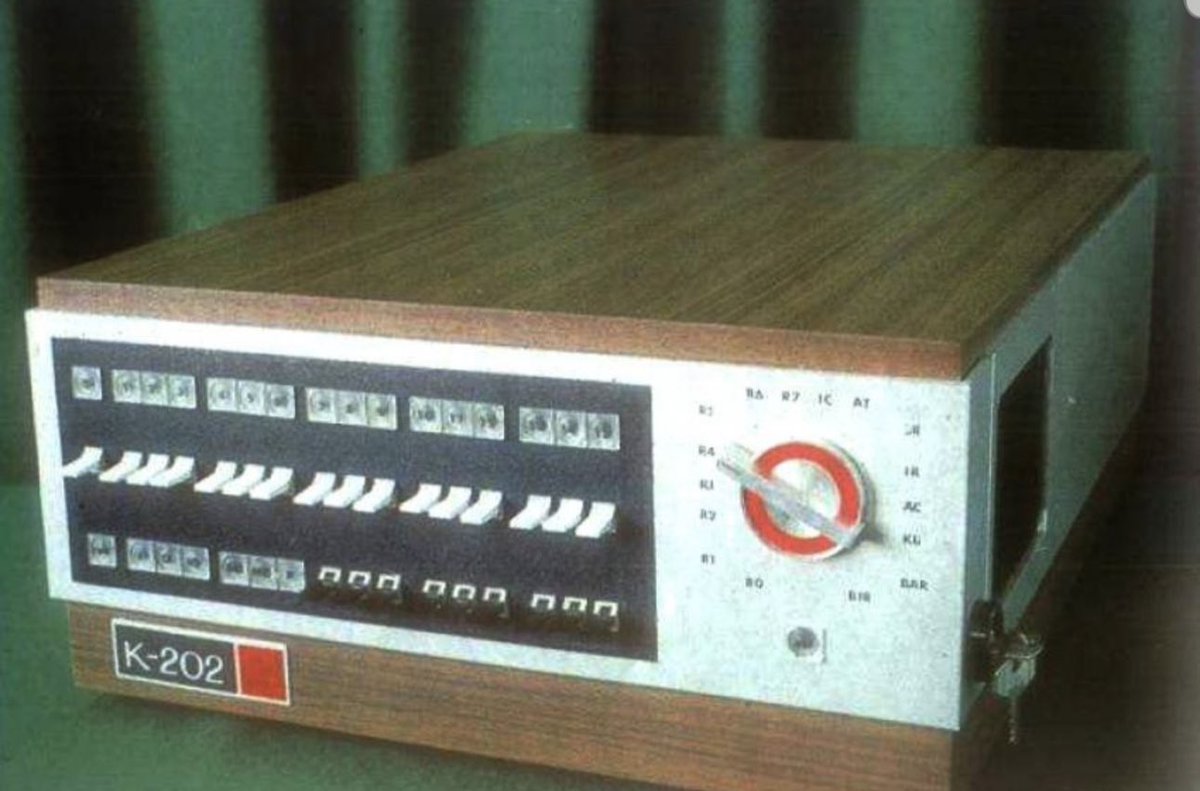
They had a chance to own the world of robotics. They could have produced a robots that will come out in 2027, in 2017.
Now the South Korean company is deflating talent…
This group of academics, politicals, and crony opportunist met to “save you”—from your money.
Their ridiculous theory discounted human ingenuity and they sold us a false future of—scarcity.
They cost us trillions.
They assured us, we would not be here in 2026.
We are here.
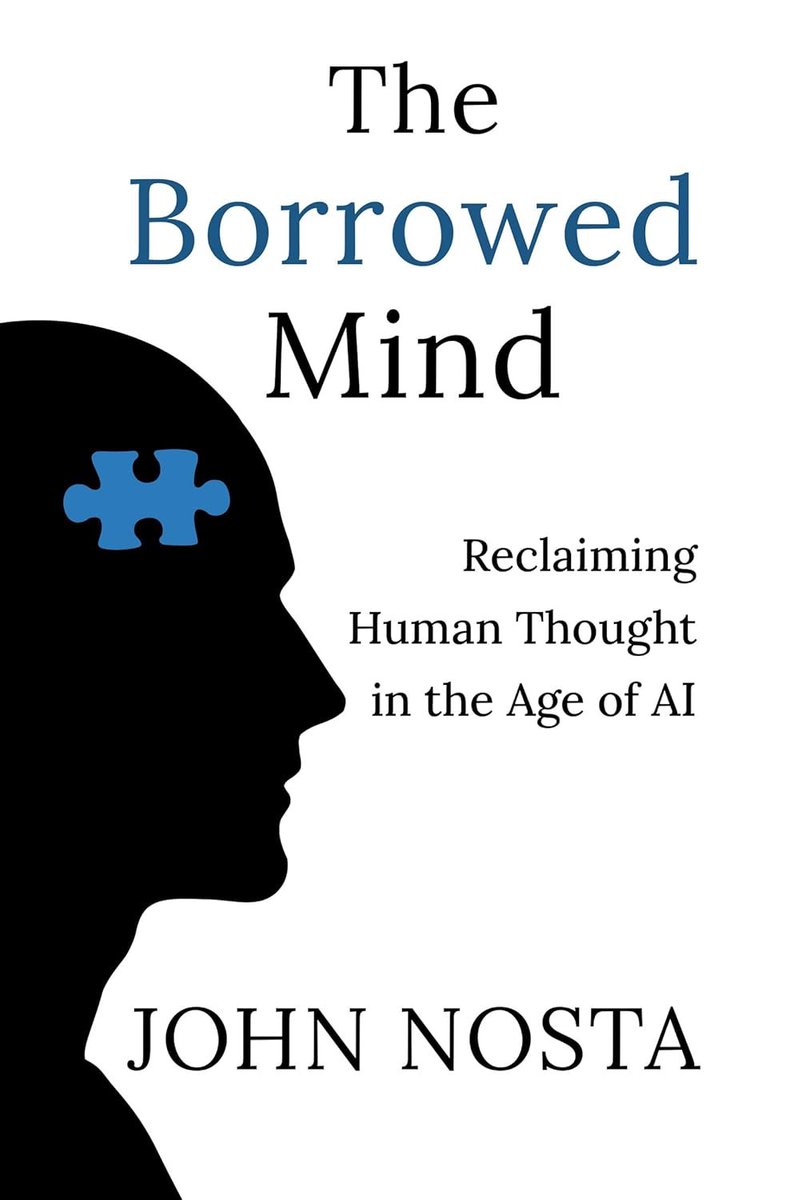
Get this book:
The Borrowed Mind: Reclaiming Human Thought in the Age of AI—by John Nosta
In a world flooded with breathless AI hype and doomsday warnings, John Nosta delivers something rare: a clear-eyed, deeply human reckoning with the technology reshaping our minds. As his friend and fellow explorer of this frontier, I read The Borrowed Mind with anticipation.
This is not another tech manifesto. It is a passionate, unflinching invitation to remain the authors of our own thoughts.
Nosta organizes the book into three powerful movements: The Promise, The Perils, and The Path Forward, mirroring the very cognitive journey he urges us to master.
In The Promise, he traces the arc from Gutenberg’s words to Google’s facts to AI’s living thoughts. He introduces the “Socratic Mirror”—an infinitely patient dialogue partner that turns static knowledge into dynamic discovery and “composite intelligence,” where human and machine form something stronger together. Centaur workflows, learner-centric studios, and the rebirth of agency make this section electric with possibility. AI doesn’t replace us; it amplifies the best of us.
The Perils is the book’s beating heart and its most original contribution. Nosta coins “anti-intelligence”: fluent coherence without understanding, a seductive shadow of real thought. He names the “borrowed mind,” the “coherence trap,” “amathia drift,” and the “smoothness trap” devastatingly precise terms for how convenience quietly erodes our cognitive integrity.
With grace and urgency, he warns that frictionless answers can steal the very struggle that makes meaning possible. This is not fearmongering. It is friendship-level honesty.
The Path Forward offers a luminous framework: “parallax cognition.” Just as two eyes create depth through separation, human and AI perspectives must remain distinct to generate true insight.
Sequence matters. Guardrails matter. We must protect our cognitive baseline and treat this relationship exactly for what it is powerful, non-reciprocal, and ours to shape.
The Borrowed Mind stands apart because it refuses easy answers. Nosta honors AI’s gifts while fiercely defending the irreplaceable friction of human experience. His prose is warm, philosophical, and relentlessly clear drawing on everything from the Upanishads to Flatland without ever losing the reader.
To my good friend John, this book is a gift. It captures the same generous, fearless intellect I’ve admired in our conversations for years.
If you care about thinking clearly in the age of borrowed brilliance, read it now. Share it widely. Let it spark the very dialogues it celebrates.
We are not losing our minds to AI.
With guides like John Nosta, we are finally learning how to reclaim them.
Highly recommended: five stars, without hesitation.
Buy it now: https://t.co/ZcGve53Qb3
This is, of course, retarded. The great men of history were deeply introspective. They wrote memoirs, journals, diaries, poetry. They were philosophers, theologians. They yearned. They were romantics. They were in fact much more introspective than the average person today.
However it is true that none of the great men of history, or any men at all (or even women), were sitting around whining to therapists about their feelings. I think the difference (and maybe this is what he's trying to get at) is that historical man wanted to KNOW himself while modern man cares only about how he FEELS about himself. The former wanted to know himself and the world beyond regardless of how it made him feel. The latter wants to feel good about himself even at the expense of knowing himself and the world beyond. That's why he drugs himself into oblivion. But this is not introspection. It's anti-introspection.
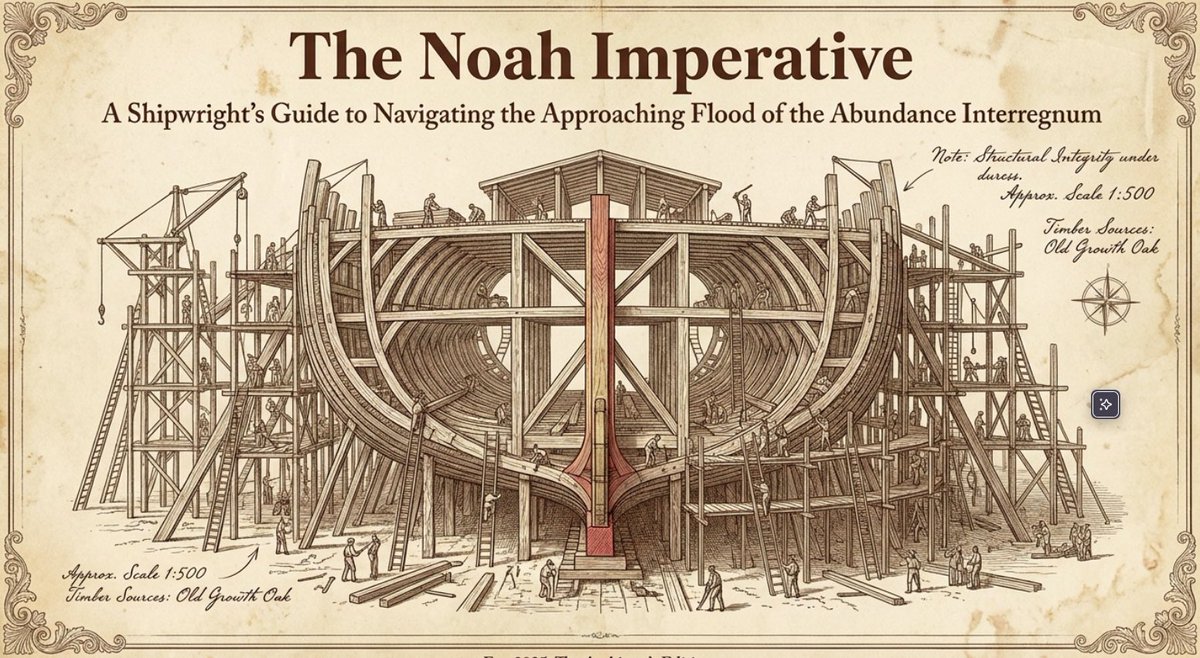
YOU ARE NOAH.
While the world around you enters in to chaos drowning in the “We are so cooked” AI fears.
You stand stoic, ready for the storms ahead.
They will think you are crazy.
You are prepared.
Let’s build an Ark and have a plans.
We act—not react.
Read how:
The neuroscience here is more damning than the advice.
Killingsworth and Gilbert tracked 5,000 people across 83 countries using real-time iPhone sampling. They pinged participants at random moments throughout the day, asked what they were doing, whether their mind was wandering, and how happy they felt.
The finding that should change how you think about your own brain: mind wandering explained 10.8% of the variance in happiness. The actual activity you were doing explained 4.6%. What you’re thinking about matters 2.3x more than what you’re doing.
And here’s the part nobody talks about. People’s minds wandered to pleasant topics 42.5% of the time. Neutral topics 31%. Unpleasant topics 26.5%. Even when wandering to pleasant topics, they were no happier than when focused on the present. The only state that reliably produced happiness was attention locked onto the current activity.
This is a prefrontal cortex problem. Your default mode network activates the moment you disengage from a task. It runs simulations of the future, replays the past, and generates the anxiety you interpret as “I’m lost.” Dr. Fabiano is pointing at the right paper. The mechanism is your brain literally cannot generate satisfaction in default mode. It can only generate rumination.
The 2,250 adults in this study averaged 46.9% of their waking hours in mind wandering. Almost half their conscious life spent in a state the data shows makes them unhappy. Training sustained attention on whatever is in front of you right now is the intervention, because the research says that’s the only configuration your brain produces wellbeing in.
Your attention is the quest.
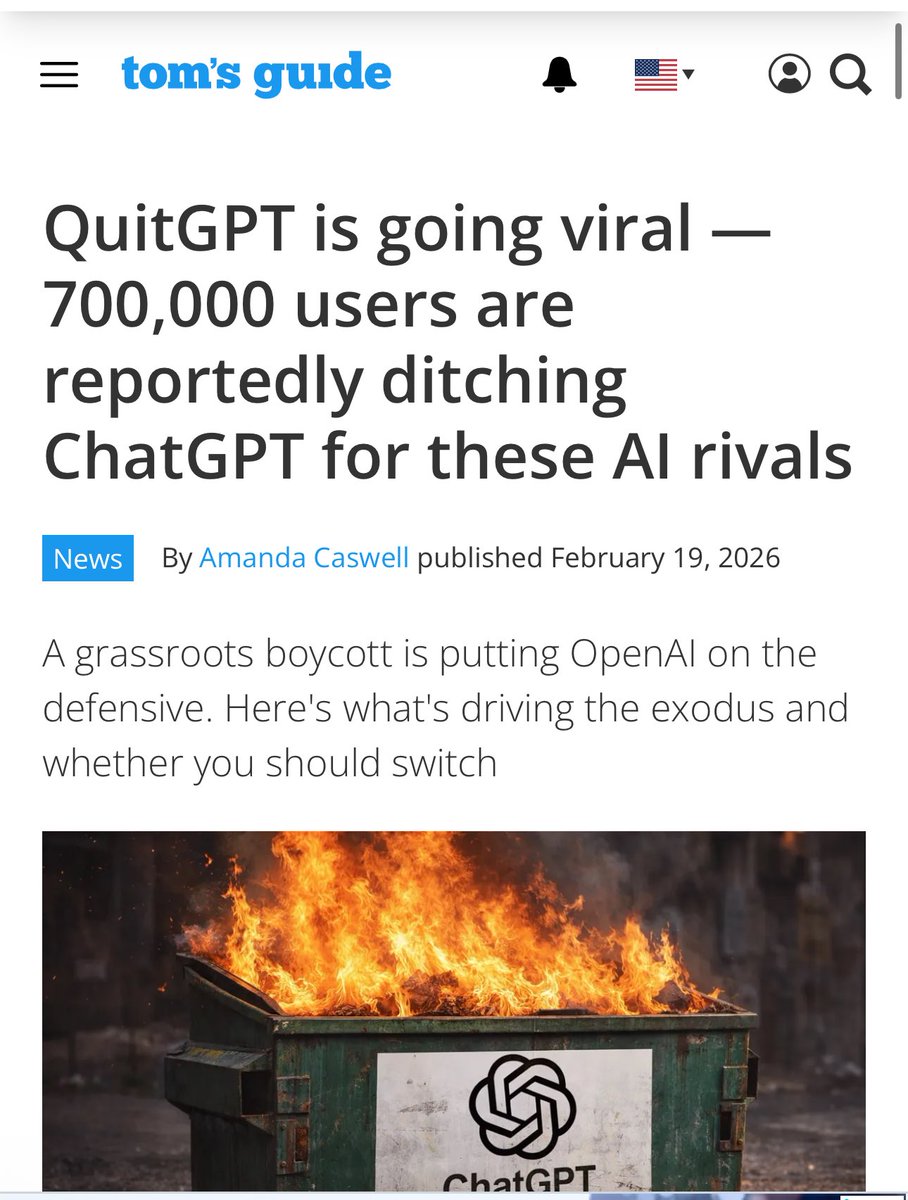
“QuitGPT is going viral —700,000 users are reportedly ditching ChatGPT for these Al rivals”
@Grok has seen some of the largest increases in users according to my metrics in the last few weeks…
What is fascinating to me is that I helped on 14 COBOL projects using LLAMA in 2023 and other models in 2024.
This is not new news and Anthropic should know this.
As for IBM, they should have seen the wrong on the wall in 2020 when a group of us helped Pennsylvania on COBOL.
I am making a map for you, for this Interregnum.
The old king is gone and the new king is not yet crowned.
You are early, so early this is a once in a lifetime period where you absolutely can thrive.
We have a map and we know where we are going, join us.
It’s free…
@JanSpiewak@ryszard_wilk Wygodnie to tak narzucać innym, kiedy Pana samego to nie dotyczy. Osobowo��ć medialna, która sama na etacie nigdy nie pracowała i której takie życie nigdy nie będzie dotyczyć. Szlacheckie podejście.
Donald Hoffman, MIT professor and cognitive scientist, challenges the idea that space and time are fundamental. He suggests they may be part of a perceptual interface - not the base layer of reality itself.
@ZGnojowy1758@Arbeit5569@elvoyk@MarekLangalis Specyfika Polski, pracowałem w dwóch korpo na Zachodzie, najczęstsza forma imprezy z ludźmi z pracy, to gdy ktoś odchodził na emeryturę. Duży kontrast pomiędzy korpo w Polsce, zupełnie inna demografia, a jeśli młodzi to na ogół przyjezdni z Europy Środ.-Wsch. lub spoza Eur.