🧠 Are brain-inspired algorithms inherently unscalable compared to backpropagation?
🎉 Pleased to share that our work on scaling predictive coding to 100+ layer networks has been accepted at NeurIPS 2025.
💻 Notebook: https://t.co/TDc3wsY9E5
📄 Paper: https://t.co/7UhbrbqNPq
Hairballs may reveal why cats eat grass: spiky projections on plant matter may act like “drain snakes,” helping felines dislodge wads of fur | Plant eating behavior in domestic https://t.co/P3djV4tfXn
Is sweeping enough to reduce slip and fall incidents?
Dry contaminants like salt, dust, or flour can be as hazardous as spills. Our study shows #DryParticles lowers #SlipResistance by 19%.
Read more in our #JFS article (@dr_jlc) of the week! https://t.co/m0QKiPXJVR
Passive social media use can significantly increase women's body-related envy via the mediating role of appearance upward comparison. And the increased body-related envy will further increase women's cosmetic surgery. https://t.co/PorH0MsTpP
Slower arm movements linked to greater fall risk for older adults
A first-of-its-kind study could inform physical therapy protocols aimed at strengthening arms to prevent falls likely to cause hip fractures.
Explosive arm movements help a person who is slipping regain balance and prevent a potentially catastrophic fall.
Older adults have slower arm acceleration that may make stabilization during falls more difficult.
New research could lead to more effective physical therapy protocols to prevent potentially devastating falls in older adults.
Source in comments.
🧠💥 When you slip, your arms whip out like a tail to save you — but older adults react 36% slower, causing nearly twice the sideways shift, making balance recovery harder.
New study suggests faster arm reactions may be key to better fall prevention. #Aging#balance#exercise
https://t.co/HLVlSy9E4E
New Research: Strength in arms: empowering older adults against the risk of slipping and falling—a theoretical perspective https://t.co/Grrjss7QU0 #sports#activeliving
Older people may be prone to falls because they move their arms more slowly than their younger counterparts when they slip, with this helping us to regain our balance https://t.co/ELVsCUestU
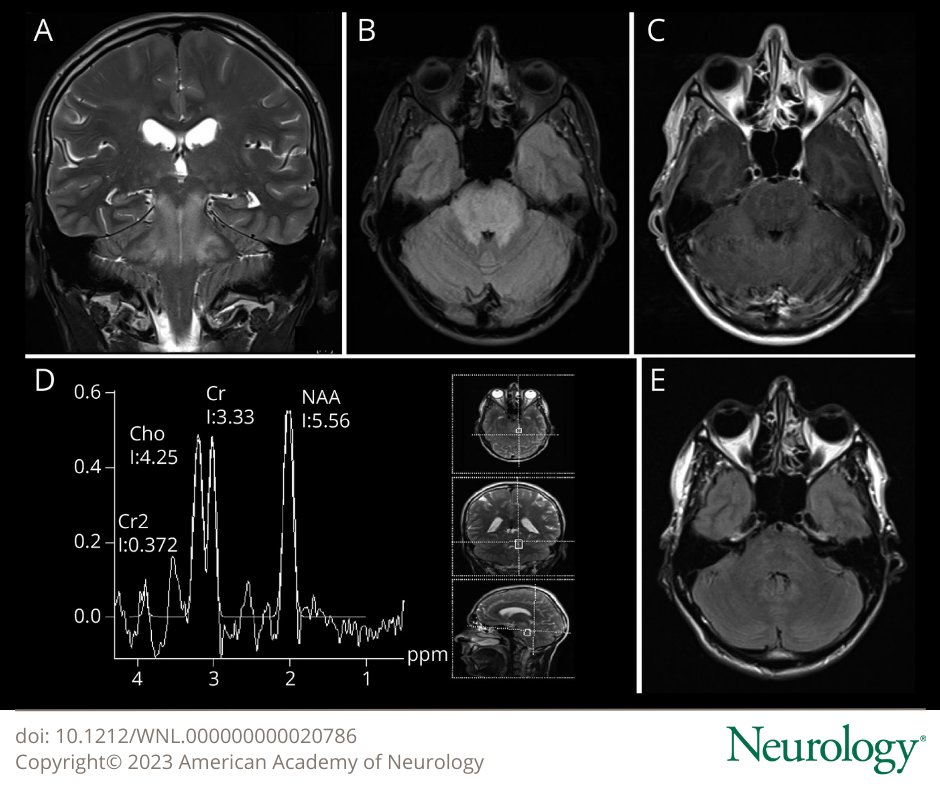
NeuroImage: MR Spectroscopy in a Patient With Isolated Brainstem Posterior Reversible Encephalopathy Syndrome https://t.co/9E6n0Pvnf6
#NeuroTwitter#Neurology
Astrocyte Study Ties Vitamin B12 to Multiple Sclerosis Progression
A new study links Vitamin B12 to MS, revealing a crucial role for the MS drug fingolimod in enhancing B12 uptake. This finding opens doors for improved MS treatments and novel therapies for neurodegenerative diseases.
https://t.co/NqwTbgcTUH
1/2
New #biomechanics Preprint! Younger adults accelerated their arms quicker than older adults during a #slip incident. Furthermore, this resulted in YA significantly reducing their lateral CoM excursion by over 2 inches compared to OA. Check out our preprint!https://t.co/5eBVbhT6bR
Overground walking slip perturbations induce frontal plane motion of the trunk indicating that slips are not just a backwards but also a sideways loss of balance
https://t.co/TPLeR0e54i
#biorxiv_bioE
Gaining a younger sibling increases behavioral problems for first- and second-born children. Having older siblings has beneficial effects on sociobehavioral development. https://t.co/gqyxlLsvAI #science#social_science#sibling#increases#problems#children
People with higher BMIs are over 10% more likely to develop obesity-related cancers such as colorectal, kidney, pancreatic or ovarian cancer even if they don't have a cardiometabolic condition such as https://t.co/aWSSF9Y6oG #science#medicine#people#bmis#cancers#colorectal
I didn`t start my academic career until I was 30.
I didn`t obtain my PhD until I was 35.
At 20, I thought my life was over🎗️
At 42, I know it`s just the beginning & I signed the contract for my permanent position (tenure track/ assistant professor).
It is never too late to start.
Overground walking slip perturbations induce frontal plane motion of the trunk indicating that slips are not just a backwards but also a sideways loss of balance. #wellness#exercise#workout
🚨 New Research Alert!
🔍 Our latest preprint focuses on sideways trunk motion!
🔄 Time to shift our research from sagittal plane for better balance & safety - key to preventing hip fractures in older adults.
#FallPrevention#Aging#Safety#Health
https://t.co/ypwrOIoUBY
Decoding Cognitive Decline: Key Aging Mechanism Discovered
Researchers have discovered that the mis-regulation of the brain protein CaMKII is a key mechanism behind cognitive decline during normal aging. This opens the door for new drug development strategies to fight age-related memory loss.
https://t.co/t3WgkJQOJn
#neuroscience
1/2
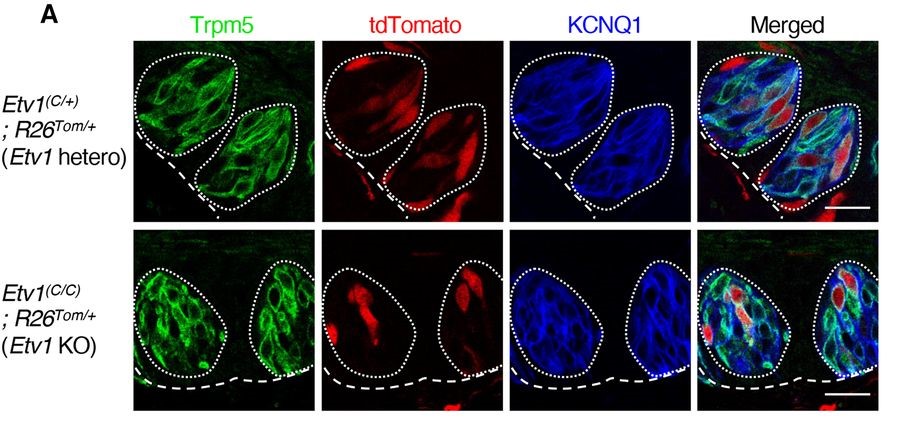
#eNeuro: Ohmoto et al. @MonellSc found the transcription factor Etv1 in mice enables taste cells to detect nutritional substances & evoke palatable tastes. If this molecule doesn't work, tastes that are sweet, umami, & salty could be lost or compromised.
https://t.co/VyLJyiY2is