Co-Founder & Director of Center for Cooperative Problem Solving at Virginia Tech. Associate Professor. Research interests: solving problems and leading change.
We are building a strong global community of KAI practitioners who approach diversity with humility & respect; to improve team effectiveness & engagement in change.
Want to join us?
Apply for our next KAI Accreditation Course at
https://t.co/Vv59VIfhDb
#adaption#innovation
Interesting to see how the word #innovation has increased greatly since 1960.
Will the use of the word come back down?
Does the word innovation have the same meaning as it used to?
https://t.co/RJGrYKqh5j
In 2022, a group of 38 leaders of a New Jersey school district came together to review past successes and future challenges.
@GRSnyder, a KAI practitioner, introduced the KAI and Cynefin Decision Making Framework. Center for Cooperative Problem Solving, at Virginia Tech.
👉Goals were better realized by separating the two problems of "what we want to accomplish" and "how do we best work together"
👉Focus was better placed on the merit of a good idea instead of the status of the individual coming up with the idea.
We don't often consider how stress resulting from a mismatch of style, between individuals, or between the individual and the nature of the problem.
@mmseibel writes in this article about stress attributed to this mismatch of problem-solving style.
https://t.co/0i0Ys2uVpZ
Latest research using KAI to explore how more #adaptive, more #innovative, and mixed teams consider their teamwork and team effectiveness.
Much more research to do in this area!
Full article online at https://t.co/IqGTKjivd5
Thanks to @DamiAlegbeleye for taking the lead!
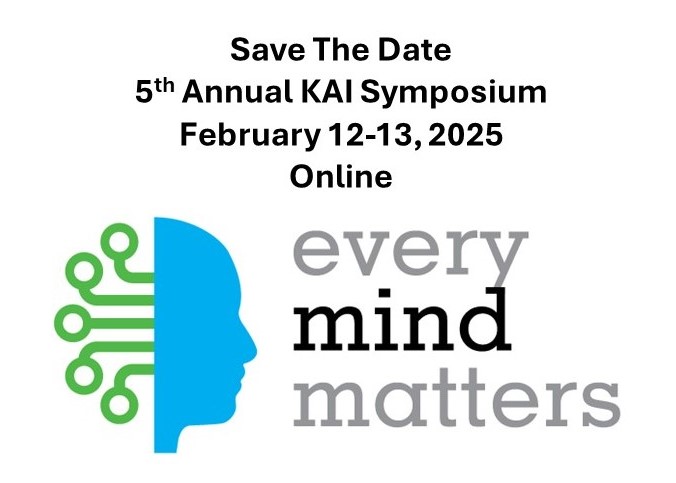
Pleased to share the Call for Presentation and Roundtable Discussions for the 5th Annual KAI Symposium!
👉The 2025 theme is "Every Mind Matters"
👉The Symposium will be held February 12-13, 2025, online.
For submission info, see - https://t.co/yri1EPbNxa
#adaption#innovation
I'll be attending and presenting at the amazing Game Changer Week. Let me know if you're planning to attend so that we can say Hi! 👋
Or register now and join me at the event! https://t.co/nqZig6G87n
https://t.co/nqZig6G87n
@gradyroberts@UFAEC@UFCALS@UF_IFAS Nice article - per the recommendations, would love to explore the relationship of hard-soft systems thinking and KAI.
If you have an understanding of how individuals prefer to solve problems, you can help Gen Z employees reach their full creative and resilient potential.
If you are actively hiring Gen Z employees, you may want to consider reading this article:
https://t.co/HrgnJHm0gQ
As the speed of business continues to move faster, building a culture of teamwork has become the answer to keep up with pace of change.
This has created a growing challenge.
👉The KAI was built to reduce conflict and improve collaboration of teams, by predicting where there may be potential for conflict.
The KAI is backed by nearly 50 years of published research and used around the world to develop leaders and build team.
On Feb 25, 2022, I received an email from a consultant who missed the KAI Symposium, heard it was amazing, and wanted to gain access to the recordings.
👉Don't put yourself in this position.
👉It's not too late to register. Go to https://t.co/zcfqXEJ0bW
👉Yo won't regret it.
If you would like to learn more about proactively leading change in your organization, you may want to consider attending our KAI Symposium, online, running Feb 21-22. For the list of keynotes, presentations, and roundtable discussions, see - https://t.co/q9Owl5aKxA
Many change management programs focus on how individuals are experiencing change (reactive), instead of having people contribute to the change, in the way they prefer change (proactive).