The most devastating split-second in Welles’s Chimes at Midnight: "I know thee not, old man!"
As Henry V delivers the blow, Falstaff wears a fleeting, prideful look. It's a surrogate father briefly taking credit for the king he forged. Then the realization. He’s entirely ruined
~90% of the dominant cultural, ideological, and institutional architecture that accreted from the mid 1960s up until around 2020 broadly favored progressives and a teleological narrative of social enlightenment and moral and technocratic advancement.
That infrastructure has been damaged by mismanagement and RW populism but a lot of it is still in relatively good working order.
However, the people it is being turned over to on the Left are incompetent and unwell and don’t know how to use it much less maintain it.
I think a key dynamic of capital-p Progressivism will be entropy; people will continue to act with the conceit that they are ‘doing something’ while the foundation of the project dissolves so that even if they are superficially moving to their imagined destination it will be come increasingly incoherent and psychotic (e.g. Luigi-ism).
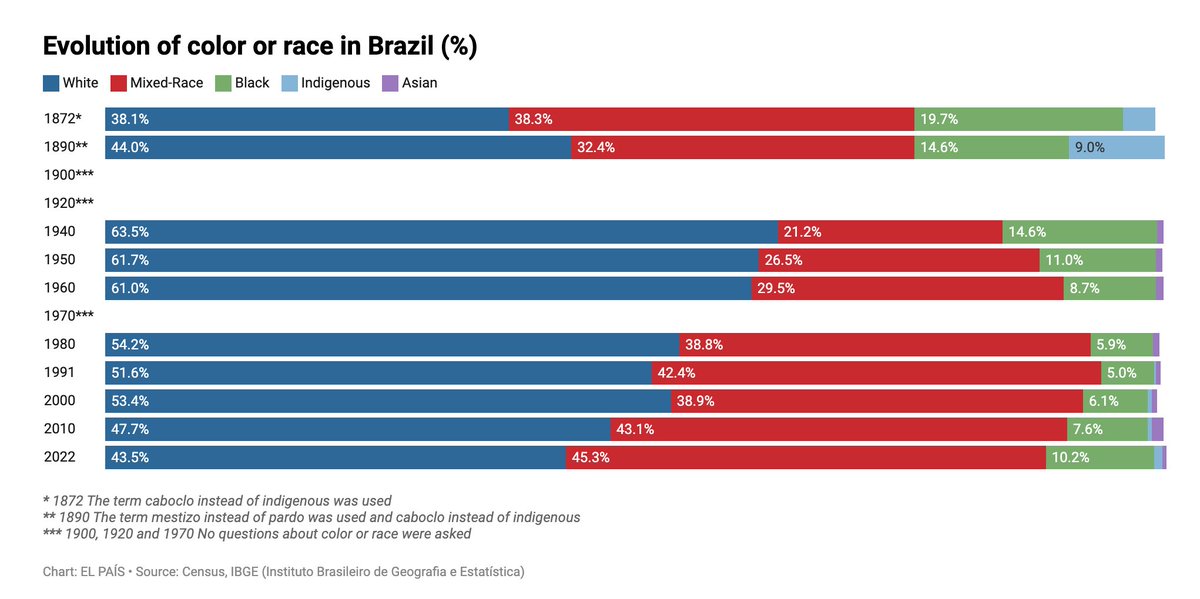
🇧🇷 In the 1970s, Brazil was briefly richer than Portugal (GDP per capita). But as Brazil's demographics changed, it's economic performance also changed. $EWZ
In the 1970s, Brazil was 60% White. Today it's 40%.
Today the US is also around 60% White. It's expected to be majority non white in 2045.
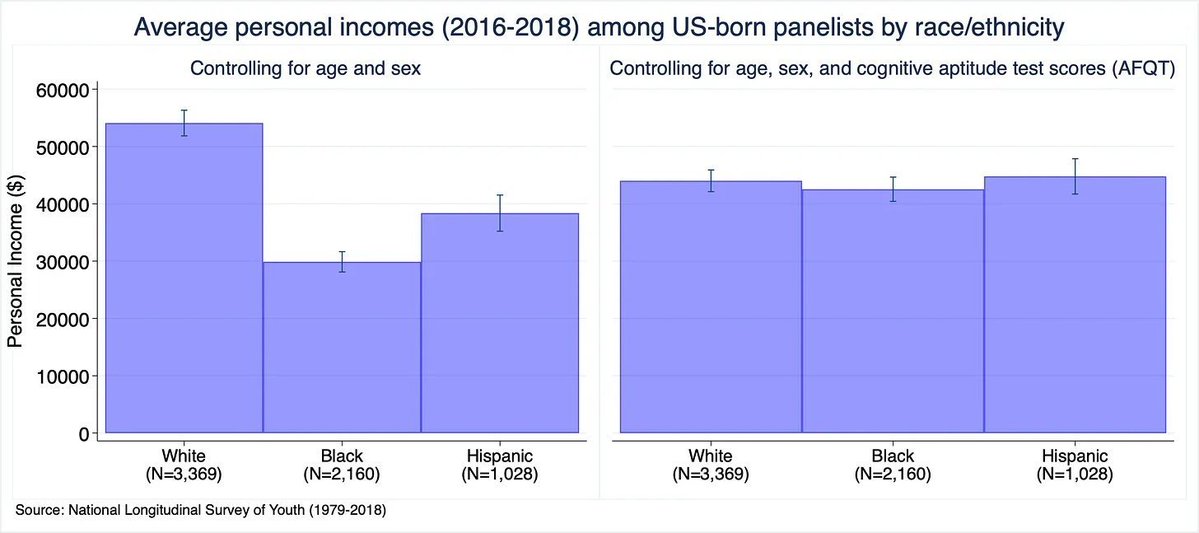
In the United States, white people earn significantly more than black people on average.
But as soon as you compare blacks and whites with the same IQ, that gap disappears like magic...
This is one of the clearest pieces of evidence that systemic racism isn't what's driving the raw overall income disparity between the two groups.
That's Tullock's Paradox:
There's so much money to be gained through politics, yet firms spend comparatively little on it.
It's mysterious why there's *so little* money in politics.
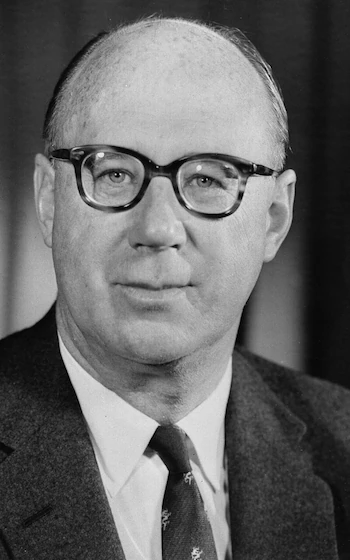
John Cowperthwaite did more for human prosperity than any development economist drawing a government salary ever managed, and he did it by refusing to do almost anything at all.
As Hong Kong's Financial Secretary from 1961 to 1971, Cowperthwaite ran one of the most radically free economies the modern world has ever seen. He kept taxes flat and low (the top income tax rate sat at 15%), ran consistent budget surpluses, abolished import tariffs, and blocked nearly every subsidy request that crossed his desk. When British civil servants demanded economic statistics to justify intervention, he refused to collect them. Not out of laziness. He genuinely believed that giving planners numbers gave them excuses.
The results? In 1960, Hong Kong's per capita income stood at roughly 28% of Britain's. By 1997, Hong Kong had surpassed Britain. That trajectory happened without natural resources, without foreign aid, and without a single five-year plan drafted by well-intentioned economists from Oxford. Hong Kong had a harbor, people willing to work, and a bureaucrat with enough intellectual discipline to keep the state out of their way.
Capital flows toward secure property rights and reliable rules, and flees the moment politicians start allocating it. Every industry Beijing picked as a "priority sector" during those same decades burned through subsidies and produced junk. Hong Kong's industries emerged organically, serving real demand, building real wealth.
You benefit from this history whether you know it or not, because Hong Kong's success gave the world a controlled experiment that still embarrasses every advocate of managed development. The control group thrived. The planned economies didn't.
Cowperthwaite retired to St Andrews, received a knighthood, and gave almost no interviews. That restraint was entirely in character.