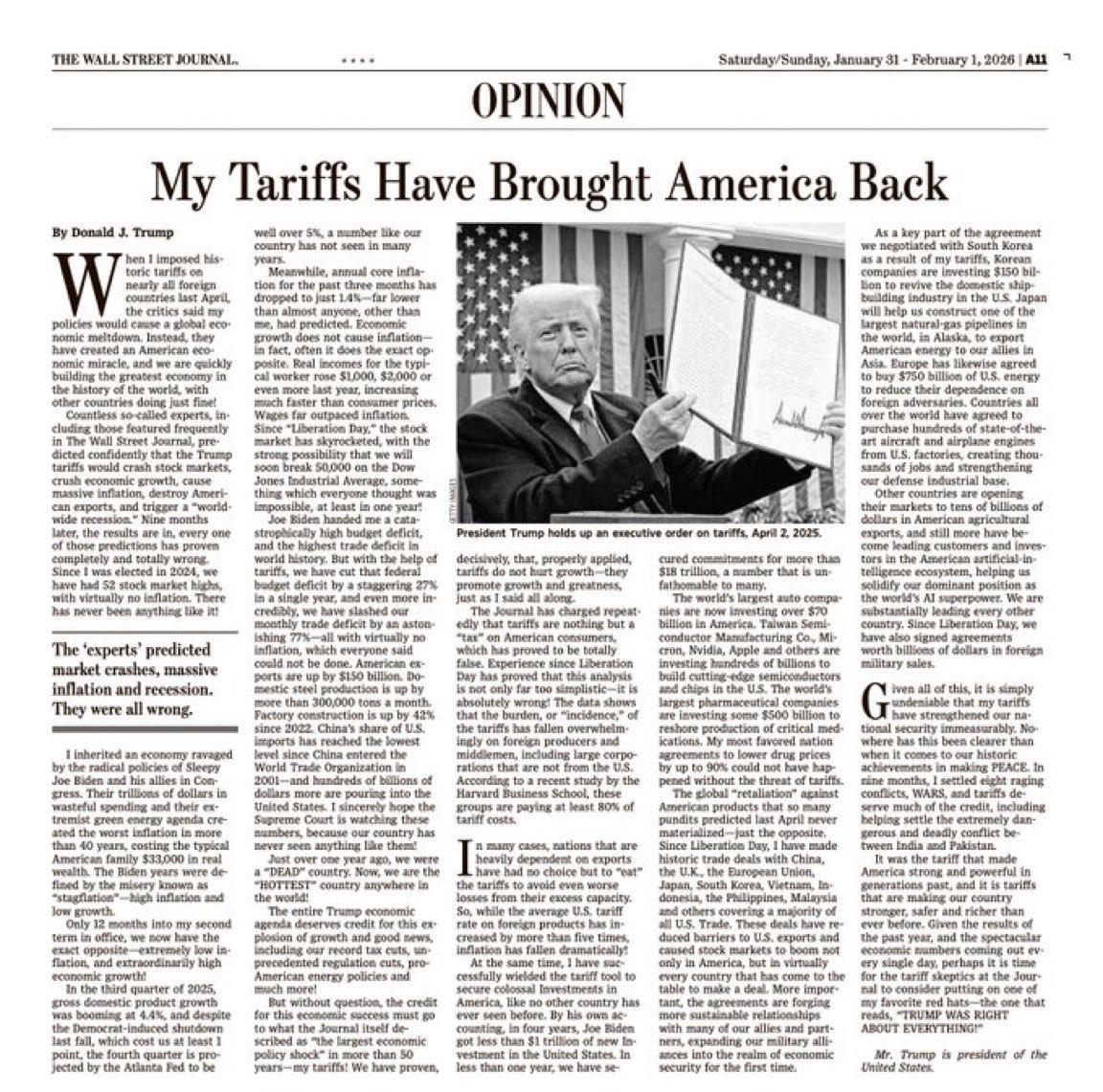
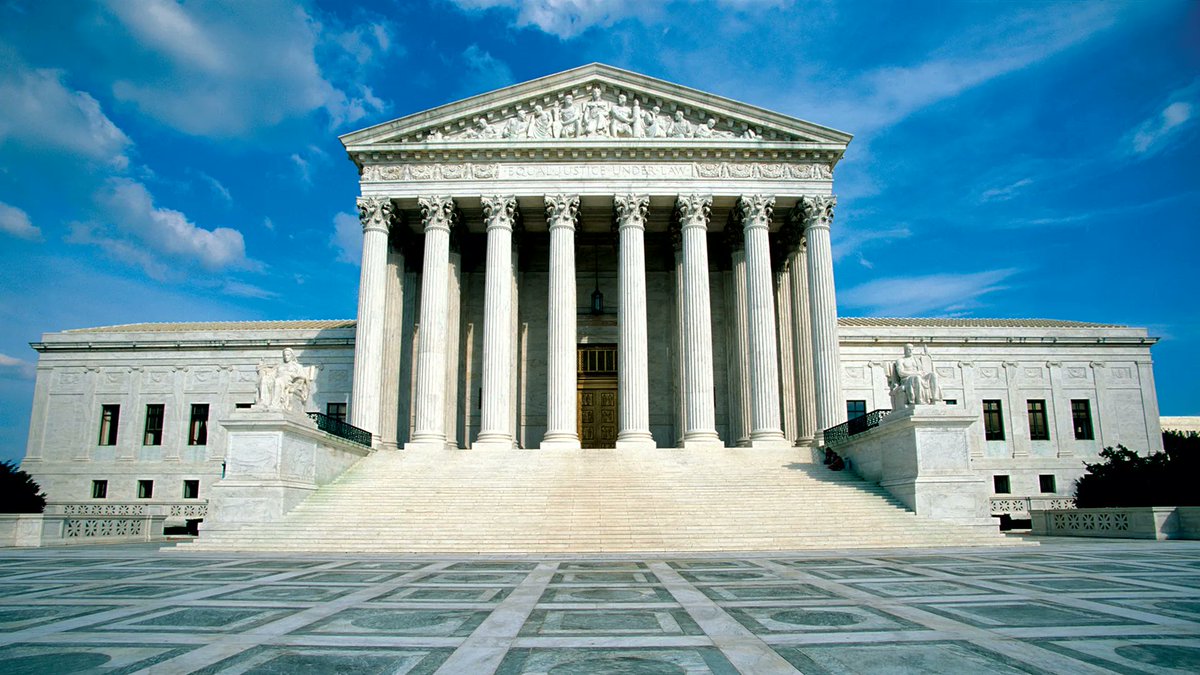
SCOTUS and the Trump Doctrine.
Supreme Court is not merely tidying up a tariff statute; it is, in effect, ruling on the Trump Doctrine itself. The IEEPA tariffs case has become the vehicle through which the justices will decide whether a vision of economic sovereignty as national security is an acceptable constitutional operating system for the United States.
From statutory skirmish to Trump doctrine test.
What began as a dispute over the reach of the International Emergency Economic Powers Act now doubles as a referendum on whether control over trade flows, supply chains and capital should be treated as core elements of U.S. security, on par with tanks and treaties. The live question is no longer just whether IEEPA supports “reciprocal” tariffs; it is whether a permanent, crisis‑framed economic nationalism can sit comfortably inside the constitutional architecture.
Why the delay.
The delay is itself a form of judgment. By stretching out deliberations while leaving the tariff regime in place, the Court avoids being the proximate cause of market turmoil or diplomatic rupture, yet quietly preserves the very leverage the executive has built. The more time the justices spend hunting for a narrow, carefully hedged opinion, the clearer it becomes that they see this case not as a routine statutory correction but as a structural decision about how much economic firepower a president may wield in the name of security.
Economic sovereignty as a constitutional value.
The Trump Doctrine treats tariffs, export controls and investment restrictions as routine instruments of national defense rather than exceptional tools reserved for rare emergencies. A decision that preserves the core of IEEPA���based tariffs, even while pruning procedures or tightening definitions, effectively elevates that logic from political program to constitutionally tolerated practice. If the Court accepts that Congress may delegate sweeping economic war‑powers to the president in the name of national security, it is blessing the underlying premise that economic sovereignty is itself a constitutional interest worthy of deference.
Judicial caution as quiet endorsement?
The Court’s caution, its reluctance to abruptly dismantle the tariff edifice or deliver a clean, hostile break—already functions as a form of quiet validation. By allowing the regime to persist while it searches for a narrow path, the Court signals that destabilising the executive’s economic leverage is a step it is unwilling to take lightly. That caution is not neutral; it tilts the field toward a world in which the fusion of trade and security is treated as a legitimate baseline rather than an aberration to be swiftly corrected.
Likely outcome: trim, don’t topple?
The most plausible outcome is a ruling that trims the edges without toppling the structure: tightening how emergencies are declared, policing some excesses, perhaps clipping the most aggressive readings of IEEPA, but ultimately leaving intact the president’s ability to weaponise access to the U.S. market. That kind of decision allows the Court to speak the language of restraint and separation of powers while, in practice, ratifying the central feature of the Trump Doctrine: that a president may run foreign policy through tariffs and financial coercion with broad legal shelter.
The Trump Doctrine, judicially normalized.
Once that line is drawn, the post‑war, rules‑based trading order is no longer merely eroded by executive practice; it is eclipsed by constitutional precedent. The old assumption, that multilateral tariff disciplines constrain Washington except in narrow, time‑bound emergencies, gives way to a hierarchy in which U.S. security claims and economic sovereignty sit at the top. In that hierarchy, the Trump Doctrine is no longer just a presidential preference disputed in think‑tank papers. It becomes a doctrine the Supreme Court has heard, weighed and, in crucial respects, allowed to stand.
🚨SEIZURE/ARREST🚨 @DetroitWindsorTunnel @CBP officers seized more than $34K in undeclared #currency, a #pistol and ammo, and #marijunana products from an outbound #traveler. The man--a U.S. citizen w/ extensive criminal history--was arrested and turned over to @detroitpolice.
President Trump and I know that there are areas where our nations can compete — and areas where we will be stronger together.
We’re focused on building these new opportunities.
Beginning November 1st, 2025, all Medium and Heavy Duty Trucks coming into the United States from other Countries will be Tariffed at the Rate of 25%. Thank you for your attention to this matter!
Congratulations Ambassador Joseph Barloon on his confirmation as Deputy U.S. Trade Representative and U.S. Ambassador to the World Trade Organization!
The Trump Administration will benefit greatly from your expertise and insight in this role as you work to advance the interests of the United States with America First Trade Policy.
In order to protect our Great Heavy Truck Manufacturers from unfair outside competition, I will be imposing, as of October 1st, 2025, a 25% Tariff on all “Heavy (Big!) Trucks” made in other parts of the World. Therefore, our Great Large Truck Company Manufacturers, such as Peterbilt, Kenworth, Freightliner, Mack Trucks, and others, will be protected from the onslaught of outside interruptions. We need our Truckers to be financially healthy and strong, for many reasons, but above all else, for National Security purposes!
(TS: 25 Sep 18:51 ET)
We will be imposing a 50% Tariff on all Kitchen Cabinets, Bathroom Vanities, and associated products, starting October 1st, 2025. Additionally, we will be charging a 30% Tariff on Upholstered Furniture. The reason for this is the large scale “FLOODING” of these products into the United States by other outside Countries. It is a very unfair practice, but we must protect, for National Security and other reasons, our Manufacturing process. Thank you for your attention to this matter!
(TS: 25 Sep 19:10 ET)
Starting October 1st, 2025, we will be imposing a 100% Tariff on any branded or patented Pharmaceutical Product, unless a Company IS BUILDING their Pharmaceutical Manufacturing Plant in America. “IS BUILDING” will be defined as, “breaking ground” and/or “under construction.” There will, therefore, be no Tariff on these Pharmaceutical Products if construction has started. Thank you for your attention to this matter!
(TS: 25 Sep 19:24 ET)
🛑MEGA COUNTERFEIT HAUL STOPPED🛑
Miami CBP officers seized 349 counterfeit Rolex and Cartier watches and Gucci, Louis Vuitton and Balenciaga products.
With an estimated retail value of more than $377,000, these fakes were stopped before they could reach unsuspecting consumers and fund transnational organized crime. CBP protects consumers and legitimate businesses by keeping dangerous knockoffs out of the market and safeguarding the U.S. economy.
#OFOProud🇺🇸
More than $18K in intentionally misreported currency was seized from a Jordan-bound traveler at #DetroitMetroAirport, Aug. 21. The traveler claimed only $10,000 despite several opportunities to amend his declaration to @CBP officers.