New paper out! For the first time, we demonstrated sensing with GKP states. We measured position and momentum simultaneously, with precision above the standard quantum limit! Read it here: https://t.co/myRGJW3lYq
@CValahu@tingreitan @JoshKoomz @BBaragiola
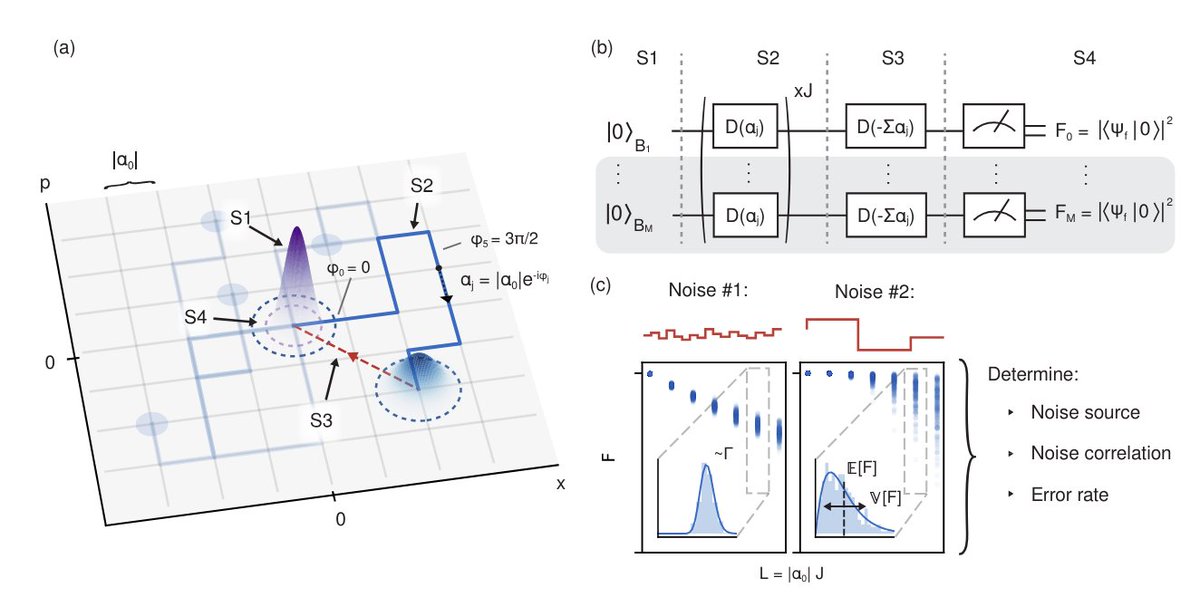
An efficient, cross-platform method for benchmarking bosonic modes by applying randomized displacements can identify underlying noise using few measurements. @CValahu@MJBiercuk@tomas_navickas@Sydney_Uni@SydneyNano
🔗 https://t.co/R1DF4RkhLR
The hits don't stop! Another massive #quantumcomputing outcome, this time combining leadership @Sydney_Science with tech from @qctrlHQ !
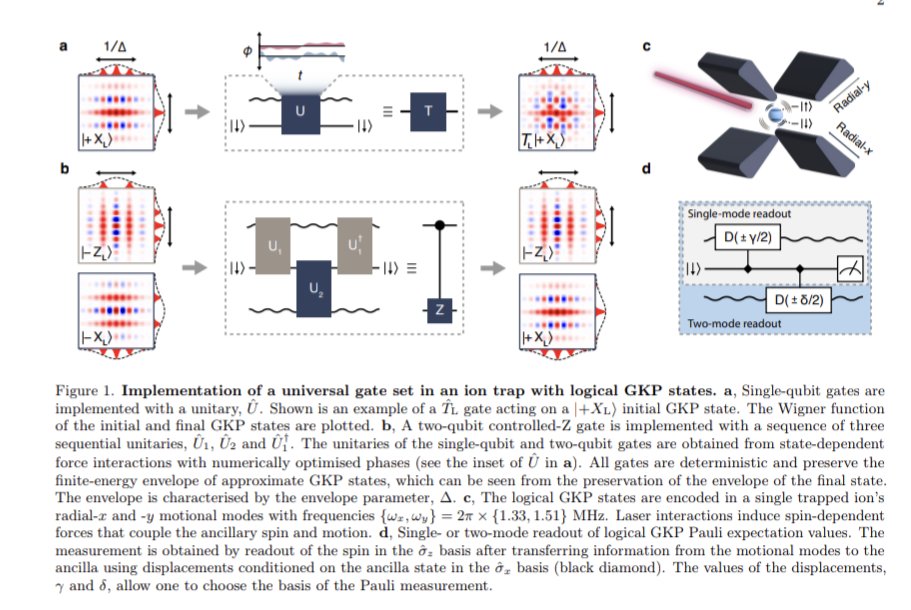
Universal gate set for #GKP encoded #qubits enabled by optimized control waveforms!
https://t.co/K6tKrUucVh
New arXiv drop: "Universal Quantum Gate Set for Gottesman-Kitaev-Preskill Logical Qubits" (https://t.co/GpJ0TqwBoi)
We demonstrate a universal gate set for GKP qubits, and, for the first time, 2-qubit entanglement with 2 logical GKP codewords encoded in a single trapped ion 1/N
It's been really fun to work on! Huge props to Vassili Matsos for driving this, and to @MJBiercuk, @tingreitan, M. Millican, T. Navickas, X. Kolesnikow
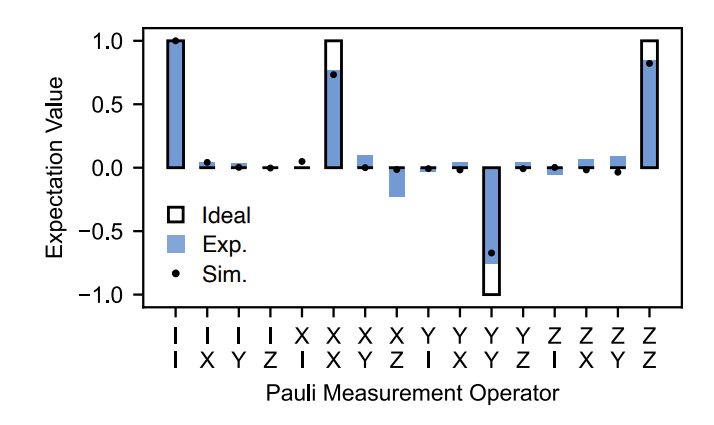
As a bonus, we prepare a maximally entangled logical Bell state in a single step from vacuum using a similar sequence of optimised pulses. Through state tomography, we measure a logical state fidelity of 84.2%. 4/N
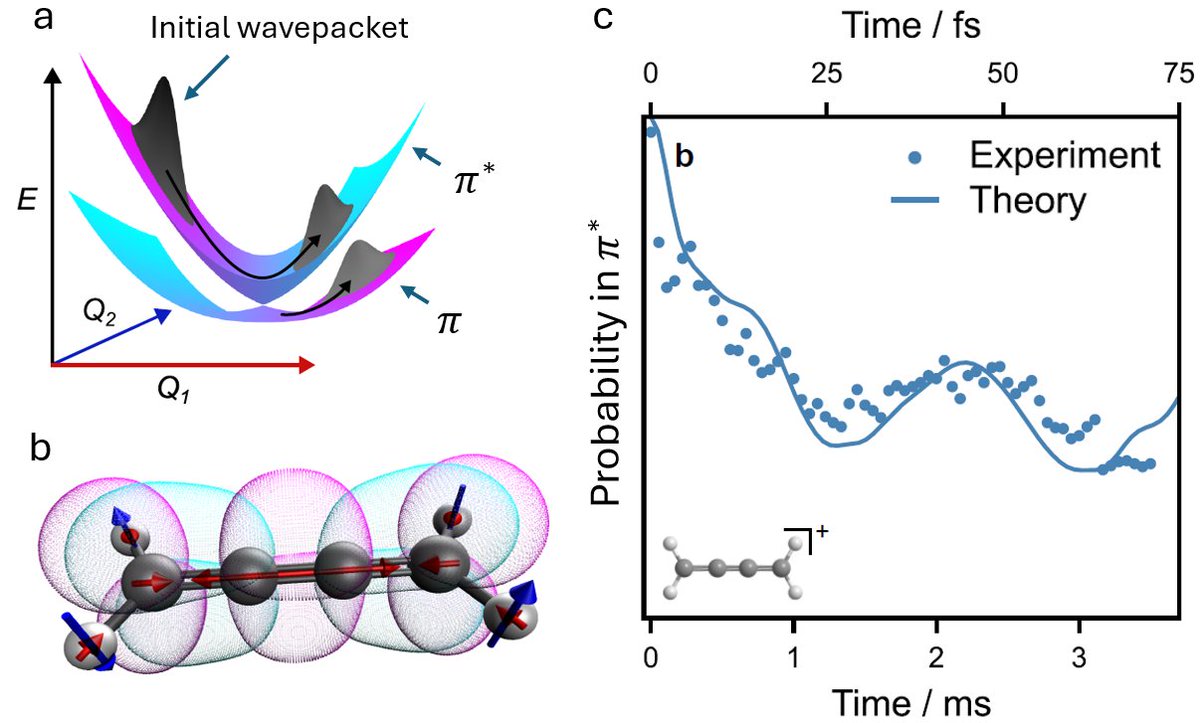
About 5 years in the making, here it is: The first simulation of chemical dynamics on a quantum computer!
"Experimental Quantum Simulation of Chemical Dynamics"
https://t.co/9VoylP5Z1B
About 5 years in the making, here it is: The first simulation of chemical dynamics on a quantum computer!
"Experimental Quantum Simulation of Chemical Dynamics"
https://t.co/9VoylP5Z1B
Excited to share our new preprint: https://t.co/CUZQpVhAuB
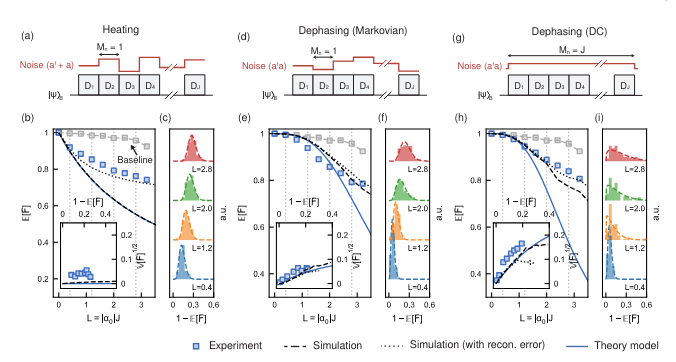
We adapt a randomized benchmarking-like protocol to bosonic modes to efficiently characterize a noise source, its strength and its correlation.
With our protocol, we can also determine the noise source (heating vs dephasing) and the correlation of the noise. We built analytical error models to describe these and validated everything on our trapped ion experiment.
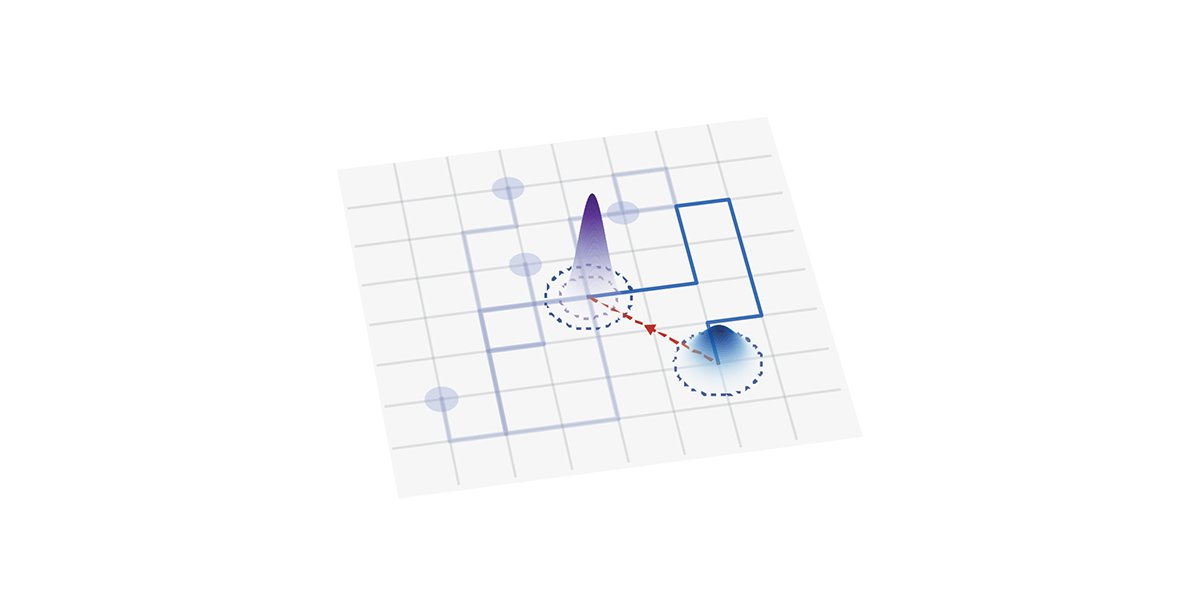
Our goal is to characterize bosonic modes in a driven setting. To do this, we apply randomized displacements in phase space, followed by an inversion step and measure a fidelity.
Similar to traditional RB, the decay of mean fidelity gives us the error rate.
📢Apply now for #Quantum#PhD Scholarships.
Gain industry-ready skills, conduct groundbreaking research under world-leading experts at Sydney 's top universities and benefit from competitive stipends, networking, and exclusive events.
Apply by 15 May.
➡️https://t.co/Opu5GAt3iB
🚨 Job alert! 🚨
Three (!) postdoctoral positions in quantum computing for chemistry
Total package: $119k – $148k p.a. for up to 4 years
Some details below; apply by 11 March here: https://t.co/YZodbcsdFy