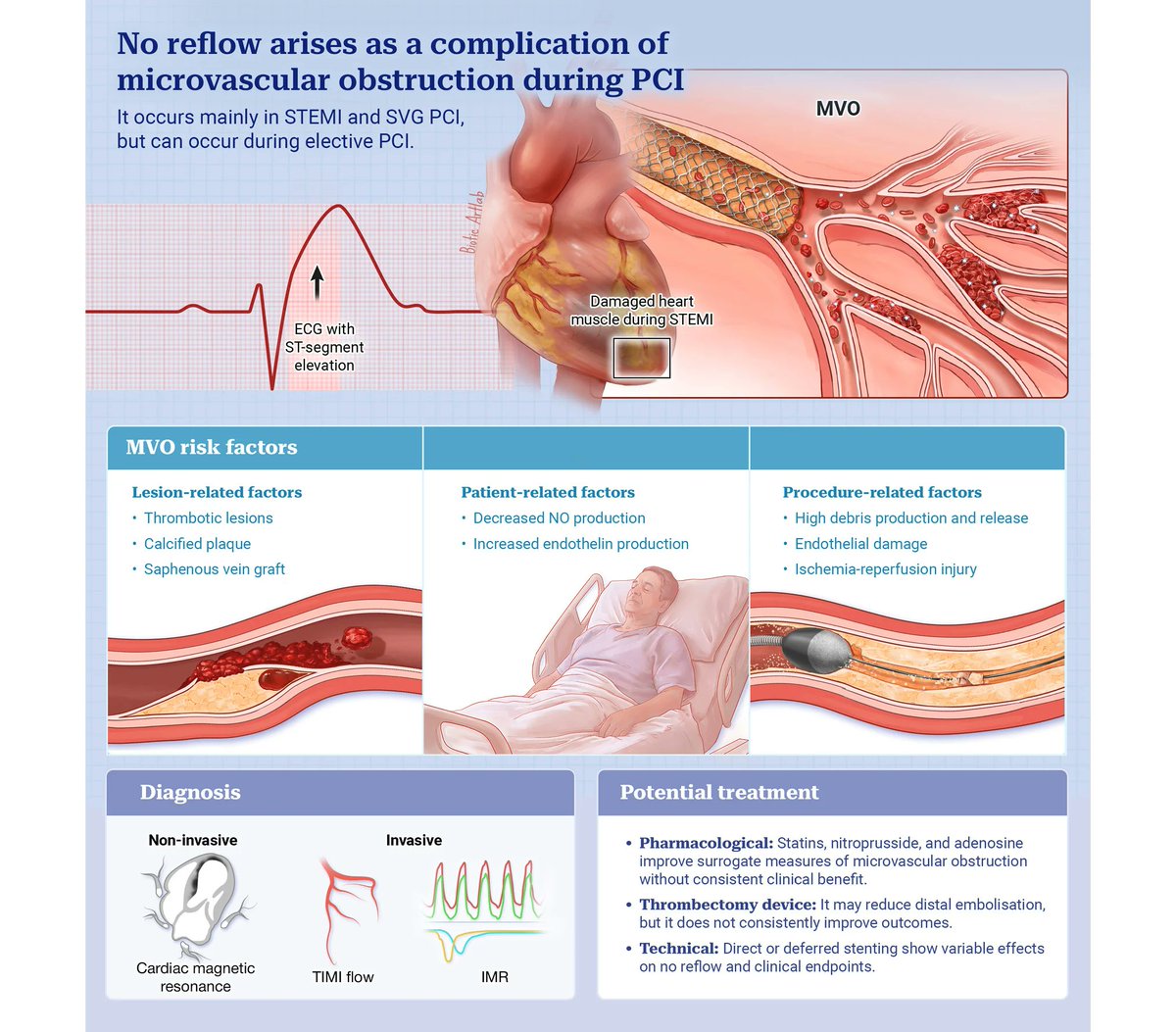
Coronary microvascular obstruction: the "no-reflow" problem that haunts STEMI care. New ESC clinical consensus on pathophysiology, prevention & management: a must-read. Read more in #EHJ.
https://t.co/WWlcFSfVyj
#cardiotwitter@ESC_Journals@escardio
This state-of-the-art review provides a comprehensive overview of the pathophysiological mechanisms underlying the no-reflow/slow-flow phenomenon, covering invasive and non-invasive diagnostic tools, pharmacological and interventional treatment strategies, and the key clinical gaps that still need to be addressed in the field. https://t.co/glYW3u2X2z
Another piece of evidence from ORBITA-2 supporting functional assessment before PCI, as recommended by the 2024 ESC CCS guidelines: Focal and Diffuse CAD Patterns and Placebo-Controlled Angina Relief With PCI 10.1016/j.jacc.2026.02.5126
The American Heart Association mourns the passing of the legendary cardiologist Eugene Braunwald, M.D., widely recognized as one of the most influential figures in the history of cardiovascular medicine. Over seven decades, his work reshaped the understanding and treatment of heart disease, leading many to call him the father of modern cardiology.
Braunwald was a lifelong contributor to the American Heart Association, helping advance its research and scientific mission, and was honored with some of the Association’s highest honors for his lasting influence on cardiovascular care and research. His influence extended well beyond his own discoveries, as generations of Association‑supported investigators, clinicians and academic leaders were trained by Braunwald or guided by the clinical trial standards and mentorship models he helped establish.
https://t.co/ieZuHYMyOP
You have a busy schedule?
Not being able to attend #ACVC26 ?
Don't worry, we got you covered.☑️
Listen to the wrap up of hot topics of this year congress selected beautifully by @ATycinska@JaninePoss@rafavidalperez
https://t.co/midkxqzFs2
#ACVCPodcast@escardio
@DFCapodanno Nice review, but conceptually rooted in the 20th century. Further progress may come not from refining antithrombotic therapies, but from strategies aimed at detecting vulnerable — most often nonobstructive — atheroma, and from novel anti-atherosclerotic therapies.
The SCAPIS study published in JAMA
~25,000 🇸🇪 participants, ~8 years follow-up. Adding coronary CT angiography #CCTA plaque information improved event prediction beyond clinical risk and calcium score.
This is the first study showing the added value of CCTA on top of the calcium score for risk prediction.
🎯 What to look for: lipidic soft (non-calcified) plaque.
👀 Practical takeaway: Consider a CT angiography for risk stratification on top of the calcium score.
Link: https://t.co/EOK6DH6PF6
🎥 Posting my avatar summarizing the study.
Holiday season is at the end and do you know what comes next?
The first @escardio congress of the year #ACVC26
TOMORROW is the deadline for late breaking clinical trial submissions - if you have some raw research you still have time until noon CET
And don't forget to register for an early fee discount - 7 days left.
See you 🔜 in Lisbon. 🇵🇹 https://t.co/yLMhe0Hm7B
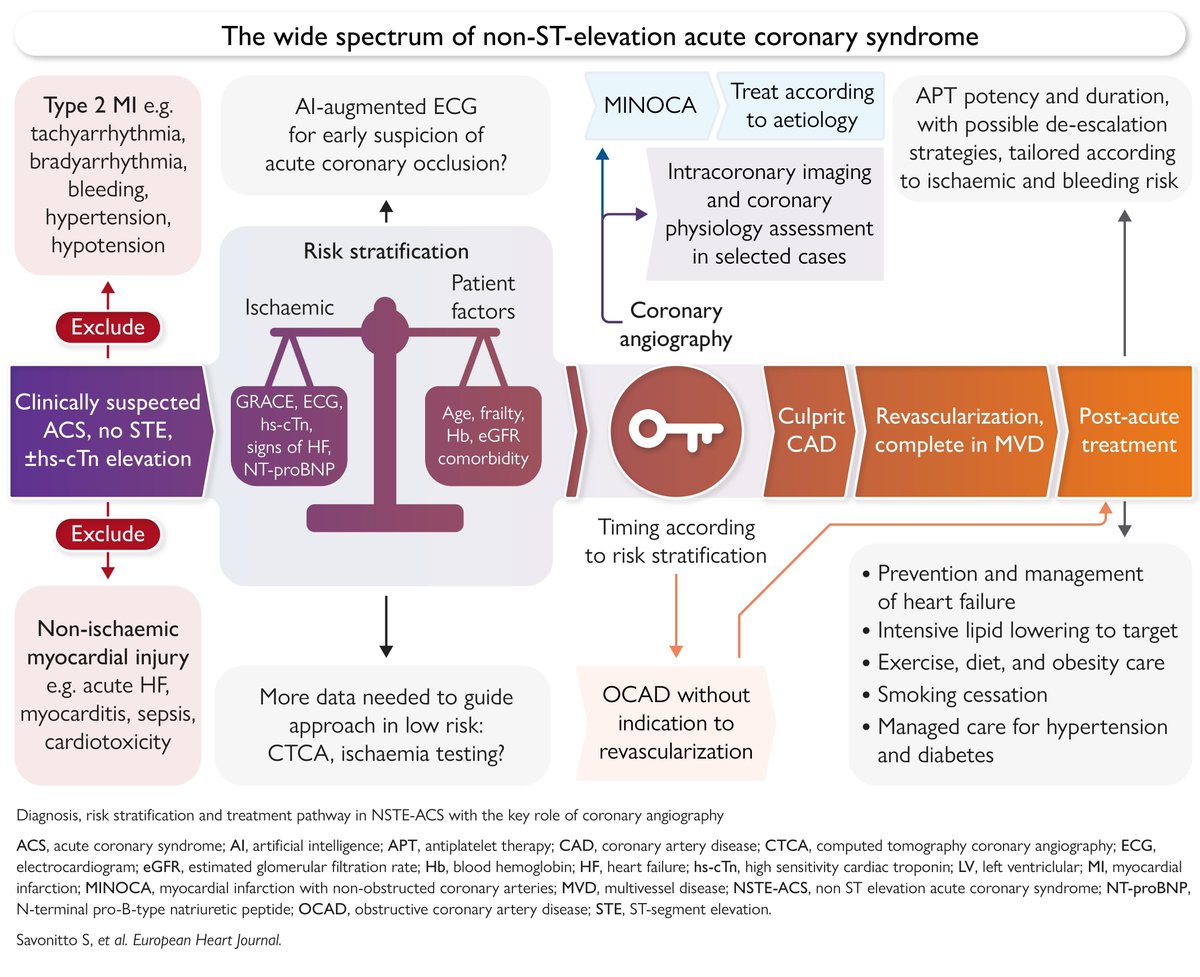
Non-ST-elevation acute coronary syndrome gets a fresh deep dive, revealing its full spectrum and why tailored, smarter management matters more than ever. Read more in #EHJ. https://t.co/pLptkxyZs2
#ACS#cardiotwitter@ESC_Journals@escardio