why I’m personally excited about Kaspa’s upcoming Toccata covenants
- for the first time, I can build creative, complex apps directly over infrastructure I helped design and build
- we designed under architectural constraints, but the result came out surprisingly expressive and powerful
- Silverscript is cool as hell
- I can literally open a *.sil file and write a complex contract that will be fully verified on Kaspa L1
- (nottoself: create a 10-minute video showing the building of such an app e2e)
- I can design my own vaults and safeguards, and manage funds securely without risking a heart attack each time I touch a wallet
- covenant ids, contract templates, and inter-covenant communication (ICC) feel like a new set of axioms, or a new algebra to work with and discover
- sig verify from stack / sighash anyone-can-pay + covenant ids can allow interesting shared-state covenants (requires a non-consensus miner policy; kudos to @maxibitcat for pushing this line of thinking)
- complex contract systems can be deployed in one spk hash. no storage rent, no deployment tax; users pay only the transient mass for tx data as they use it
- as I’ve mentioned in the past, this becomes especially interesting for AI/agentic environments, where bots could cheaply create one-time agreements between themselves
- I didn’t even mention based apps yet. That’s a whole vertical that isn’t ready for exploration yet, but will be very soon
Amazing work. Words that make me proud to be a diehard Kaspian.
> “Kaspa did not come out of the usual hype cycle. It came out of veteran research, fair launch, open-source execution, and years of pushing where most of crypto stopped pushing.
A live blockDAG. 10 BPS on mainnet. Real-time decentralization as the north star. Toccata next. DAGKnight after that.
If this reads like it's early, that's because it is.”
[new kaspa(.)org/lore]
https://t.co/n1qOT2qd7m has been refreshed.
Kaspa has a lot going on, but the main site does not need to put it all at the front door. Its first job is simple: help someone arrive, understand what Kaspa is, and know where to go next.
The previous site accumulated more over time. Pages, explanations, resources, and audiences were added. This version starts smaller, so it can grow with Kaspa from here.
The refresh is not just visual. The wording, structure, and narrative direction all needed attention IMO.
The content traces back to @hashdag’s writing, simplified for a first read. Kaspa is already deep enough. The first read should not make people work harder than necessary.
There are many true ways to talk about Kaspa, but https://t.co/n1qOT2qd7m cannot carry twenty narratives at once. For this version, the strongest one to unify around is real-time decentralisation.
Part of the refresh was also about making the builder path easier to follow. https://t.co/n1qOT2qd7m gives people the overview of what exists, why it matters, and where to go next. https://t.co/FrgQZdNMey gives builders the deeper material, with room for examples, detail, and ongoing improvement.
https://t.co/FrgQZdNMey starts with @IzioDev's work and has the broader goal of bringing important Kaspa L1 builder documentation into one place.
Both repos are public. Pages will be added, wording will change, gaps will be filled, and the work can happen in the open.
Big shoutout to @kasmediadotcom for their support in helping bring this refresh together.
Have a look around. If you see something that can be better, please open an issue or PR.
A network that puts restrictions, controls, or centralizing features before decentralization will end up with neither true decentralization nor genuine scalability and freedom. On the other hand, a network that puts uncompromising decentralization and permissionless participation first will, as a happy by-product, end up with both greater decentralization and stronger security.
Kaspa has achieved this whilst enhancing speed and scalability.
Let the Stag Hunt begin
$KAS
None of the above, WarpCore on Kaspa $kas, is far superior in almost every metric and much greater in reach terms of feature set. We are nearing full production readiness with some minor tweaks for the upcoming Toccata Fork. Will leave these faux ISO projects in the dust. There is nothing comparable.
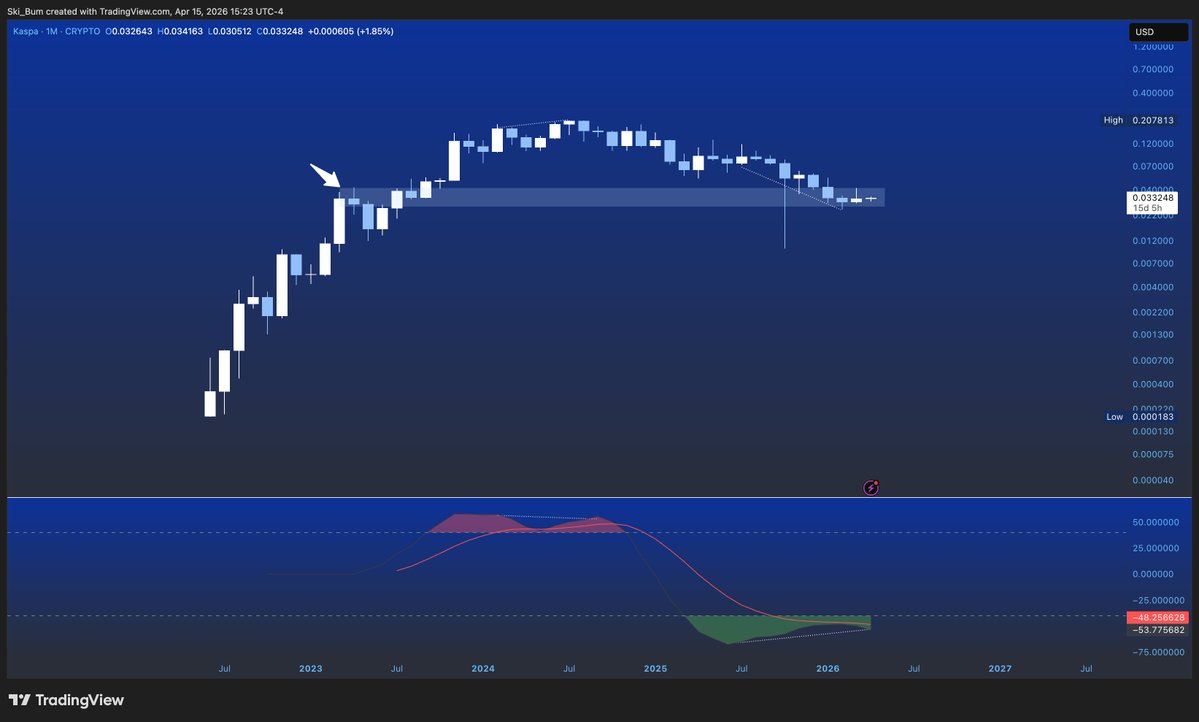
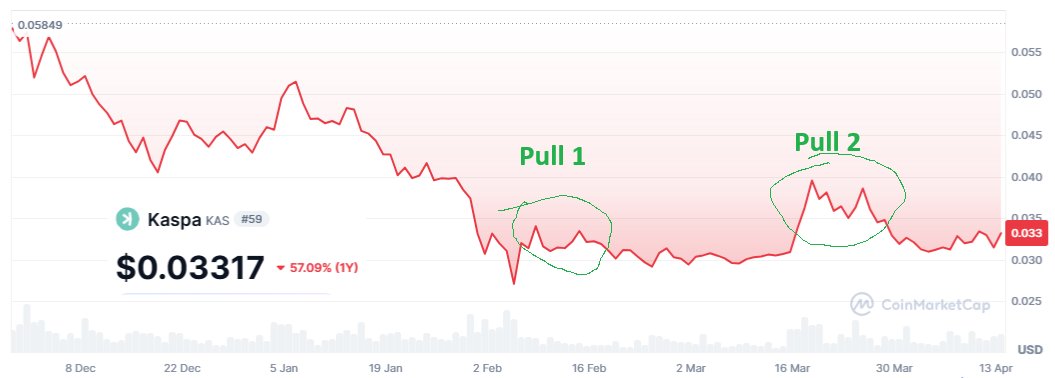
I’m naming this the Lawnmower Bottom on $KAS
Mini rallies keep sputtering like bad pull‑starts.
But once air, fuel, compression and spark click at the same time, the chart does what the engine does: it comes alive.
Let's try this "engagement farming" thing.
I was invited to a big YT channel to discuss the quantum threat. Inspired by the comments to the previous video (pinned), if this post gets 1k likes I'll wear a $kas Kaspa shirt.
$KAS : Review 📜
What if you could take Bitcoin's security model, make it 600x faster, and then add ZK-powered smart contracts without sacrificing a single atom of decentralization?
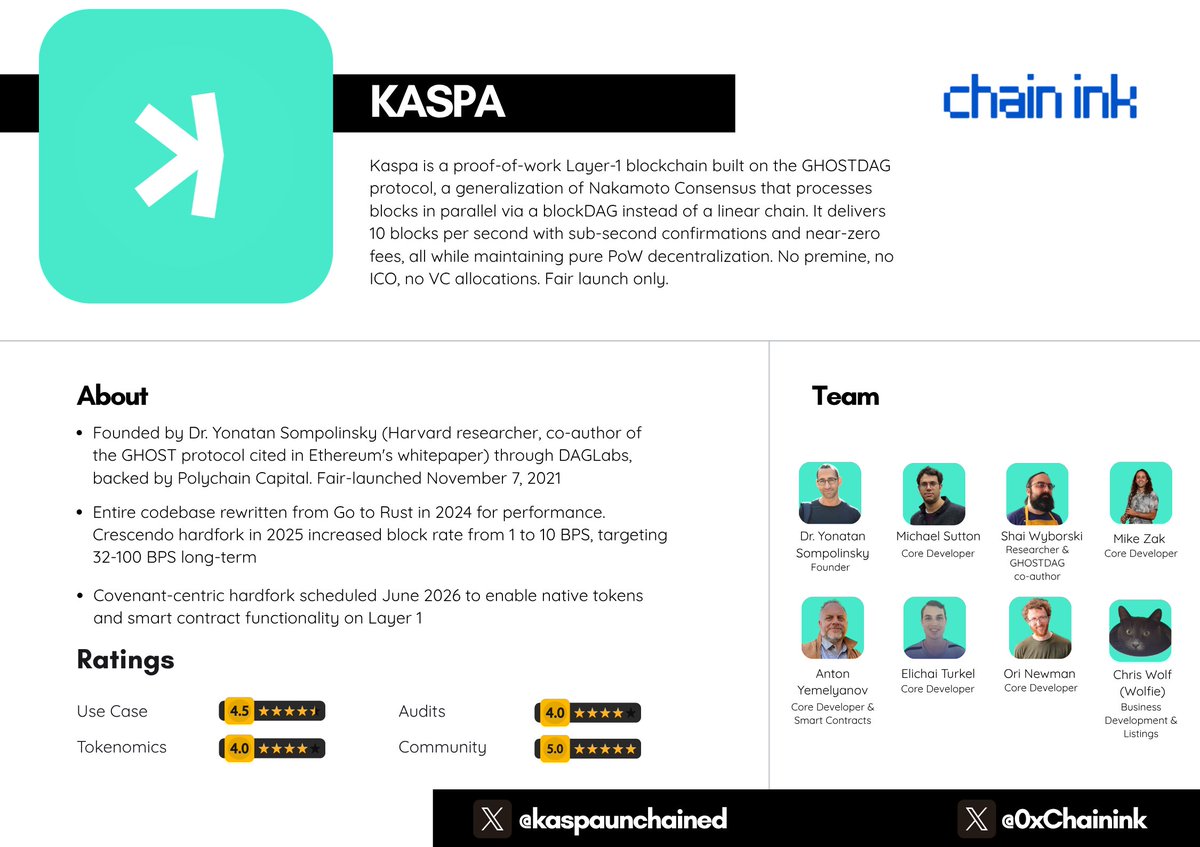
Meet Kaspa - a fair-launched, proof-of-work Layer-1 blockchain that replaces the traditional single-chain structure with a blockDAG, processing 10 blocks per second with sub-second confirmations, designed by the Harvard researcher whose GHOST protocol is cited in Ethereum's whitepaper. And with the Toccata hard fork weeks away, it's about to become programmable.
Let's explore how Kaspa is rewriting the rules of proof-of-work. 👇
⚪ Kaspa at a Glance
Kaspa is a decentralized, scalable Layer-1 cryptocurrency built on proof-of-work and powered by the GHOSTDAG protocol, a novel consensus mechanism that extends Nakamoto's original design.
Unlike traditional blockchains that discard competing blocks, GHOSTDAG allows parallel blocks to coexist and orders them within a Directed Acyclic Graph (blockDAG).
The $KAS token is the native currency, distributed entirely through mining with no premine, presale, or founder allocations. The name "Kaspa" means "silver" or "money" in Aramaic.
As of April 2026, $KAS trades around $0.03 with a market cap of approximately $800M. The max supply is ~28.7 billion KAS, with over 95% already emitted through mining. The network currently processes 10 blocks per second following the Crescendo upgrade.
Marketplace Insight: The Toccata hard fork (June 5-20, 2026) is about to transform Kaspa from the fastest PoW payment network into a fully programmable platform with native tokens, covenants, ZK verification, and based ZK apps. Proving costs scale with app activity rather than the entire network, unlocking canonical bridging, stateful multi-contract flows, and DeFi on pure proof-of-work.
⚪ Mission
Kaspa's mission is to create a PoW that operates with internet speed, combining the reliability of proof-of-work with the responsiveness demanded by modern applications.
The project aims to realize Satoshi Nakamoto's original peer-to-peer electronic cash vision but with the throughput, speed, and now programmability that Bitcoin's single-chain design structurally cannot achieve.
🟢 A Brief History
DAGLabs was founded by Dr. Yonatan Sompolinsky with the purpose of implementing the GHOSTDAG protocol, invented by Yonatan with his then PhD advisor Professor Aviv Zohar.
Sompolinsky gained recognition in the blockchain academic world in 2013 when he and Zohar conceived the GHOST protocol, famously cited in Ethereum's whitepaper as a design goal.
Together with a small team including Michael Sutton, Shai Wyborski, and others, Sompolinsky founded Kaspa under DAGLabs, with backing from Polychain Capital. Kaspa's November 7, 2021 launch had no premine, no ICO, and no early allocations. Anyone could start mining from day one.
DAGLabs was dissolved around the time of Kaspa's fair launch, transitioning the project to a decentralized, community-led model. Since then, Kaspa has been developed by a global group of open-source contributors with no central governance or business model.
In 2024, the team completed a full rewrite of the codebase from Go to Rust, dramatically improving performance. The Crescendo hardfork in 2025 increased the block rate to 10 BPS while maintaining network stability.
Now, the Toccata hard fork (originally scheduled May 5, moved to June 5-20, 2026 to finalize the sequencing architecture) is set to introduce extended covenant opcodes, ZK proof verification via Groth16 and RISC Zero, native token issuance, SilverScript programming language, and the Computational DAG (CDAG) for resource management. Feature freeze hit April 15, followed by testnet validation and mainnet node upgrades.
Yonatan currently holds a post-doctoral position at Harvard researching transaction ordering protocols and MEV, while continuing to lead Kaspa's research direction.
🟢 Ecosystem Narrative
Kaspa's ecosystem is built on a simple but powerful premise: you can have proof-of-work security at proof-of-stake speeds if you change the underlying data structure from a chain to a DAG. With Toccata, you can now add programmability without compromising any of it.
Key dynamics include:
➛ BlockDAG architecture allows multiple blocks to be created and confirmed in parallel, eliminating the bottleneck that forces traditional blockchains to be slow. Blocks reference multiple predecessors, forming a graph instead of a single linked list.
➛ GHOSTDAG consensus orders parallel blocks using a greedy algorithm that favors well-connected, honest blocks. The upcoming DAGKnight protocol will further improve ordering with adaptive, parameterless consensus.
➛ Toccata hard fork (June 2026) adds powerful covenants via extended opcodes, enabling native L1 programmability. Introduces a Computational DAG (CDAG) to manage resource usage and sets the stage for sovereign programs (vProgs).
➛ ZK verification at Layer 1 with support for Groth16 and RISC Zero verifiers, enabling based ZK apps where proving costs scale directly with app activity instead of the entire network. This unlocks canonical bridging, stateful multi-contract flows, and privacy-preserving applications.
➛ Partitioned sequencing allows L1 to serve all three roles for based ZK rollups: sequencing, data availability, and settlement. No external dependencies.
➛ SilverScript is a new high-level programming language built specifically for Kaspa covenants, lowering the barrier for developers to build programmable transaction logic, smart wallets, vaults, and DeFi applications.
➛ Native token issuance (KRC-20) directly on Layer 1, with atomic transfers built into the Kaspa transaction model. No external smart contract systems needed.
➛ Kaspa Industrial Initiative (KII) is testing the network in enterprise environments including supply chain tracking, industrial automation, smart grid coordination, and settlement infrastructure.
⚪ Token Utilities
$KAS is a pure proof-of-work currency evolving into a programmable asset:
➛ Peer-to-Peer Payments - Fast, feeless transactions with sub-second first confirmations and ~10 second probabilistic finality. Designed for everyday digital cash use.
➛ Mining Rewards - All KAS enters circulation through PoW mining using the kHeavyHash algorithm. No premine, no allocations, no insider supply.
➛ Transaction Fees - Minimal fees for on-chain transactions, designed to remain low even at high throughput levels.
➛ Smart Contract Fuel (Post-Toccata) - $KAS will power covenant execution, native token operations, ZK verification, and vProg settlement on Layer 1.
➛ Governance via KIPs - Kaspa Improvement Proposals allow the community to propose and adopt protocol changes based on technical merit and consensus.
⚪ Key Features
➛ BlockDAG + GHOSTDAG - Processes blocks in parallel via a Directed Acyclic Graph, ordering them through a greedy consensus algorithm. The core innovation that makes high-speed PoW possible.
➛ 10 BPS (Targeting 100) - Currently processes 10 blocks per second following the Crescendo hardfork, with a roadmap to 32, then 100 blocks per second. Sub-second first confirmations.
➛ Toccata Hard Fork (June 2026) - Adds extended covenant opcodes, ZK proof verification (Groth16, RISC Zero), native tokens (KRC-20), CDAG for resource management, partitioned sequencing for based ZK apps, and SilverScript programming language. The single biggest upgrade in Kaspa's history.
➛ Fair Launch - No premine, no ICO, no presale, no VC allocations, no founder tokens. 100% of supply distributed through open mining since day one.
➛ Rust Rewrite - Entire codebase migrated from Go to Rust in 2024, achieving significant performance improvements and enabling the 10x block rate increase.
➛ DAGKnight (Upcoming) - Adaptive, parameterless consensus protocol that will replace GHOSTDAG, providing optimal confirmation times without manual parameter tuning.
➛ Full Node on Standard PC - Efficient pruning and multithreaded CPU use mean anyone can run a full node on modest hardware, preserving true decentralization.
🟢 Meet the Kaspa Team
Kaspa is built by academic researchers, applied cryptographers, and open-source contributors with no corporate structure, no central entity, and no executive hierarchy. Development is funded entirely by voluntary community donations via a multi-sig wallet.
▶️ Core Members:
➛ Dr. Yonatan Sompolinsky - Founder & Lead Researcher | Co-inventor of the GHOST and GHOSTDAG protocols. PhD under Professor Aviv Zohar at Hebrew University. Currently holds a post-doctoral position at Harvard researching transaction ordering and MEV. His GHOST protocol is cited in Ethereum's whitepaper.
➛ Michael Sutton (msutton) - Core Developer | Distributed Systems Researcher with an https://t.co/m1x1uKVUTt from Hebrew University, where he researched parallel algorithms. Led the Rust rewrite and Crescendo implementation. Serves as one of four community-elected treasurers managing the dev fund.
➛ Shai Wyborski (deshe) - Researcher | Co-author of the GHOSTDAG paper. PhD candidate at Hebrew University and Ben-Gurion University researching classical and quantum cryptography.
➛ Mike Zak (svarog) - Core Developer | Cryptocurrency and Distributed Systems Developer contributing to core protocol implementation and network stability.
➛ Elichai Turkel (elichai2) - Core Developer | Applied Cryptographer and High-Performance Developer. Bitcoin Core contributor bringing deep cryptographic expertise to Kaspa's architecture.
➛ Ori Newman (someone235) - Core Developer | Cryptocurrency and Distributed Systems Developer. Key contributor to SilverScript development.
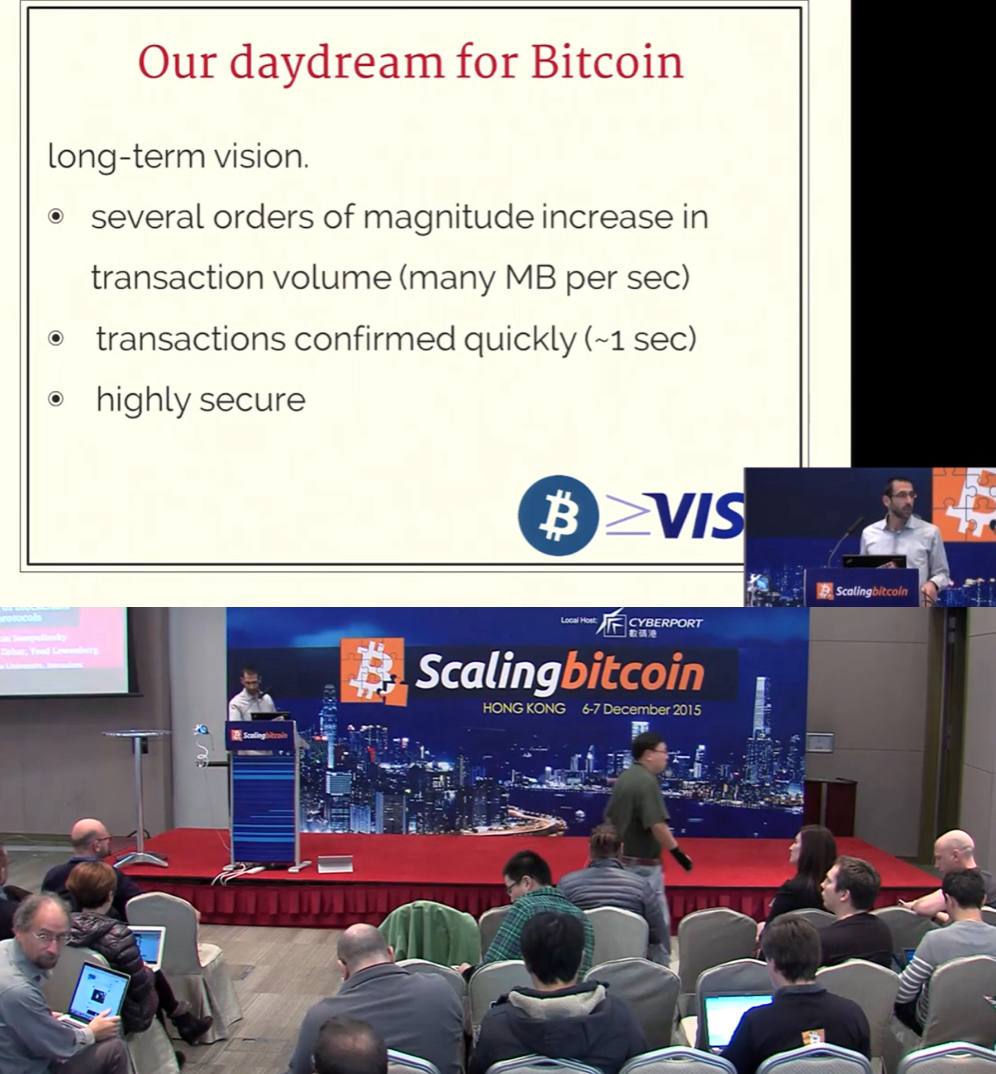
➛ Anton Yemelyanov (aspect76) - Core Developer, Advisor & Smart Contracts | 30 years systems engineering, 12+ years in cryptocurrency. Co-founder of the Scaling Bitcoin academic conference. Leading smart contract development efforts.
➛ Chris Wolf (Wolfie) - Business Development & Listings | Driving exchange listings, partnerships, and ecosystem business development.
➛ Chad Ballantyne (Rhubarbarian) - Marketing, Branding, PR, Web Development & Creative Content.
➛ Community-Governed - No CEO, no board, no foundation with allocated tokens. Dev fund is a multi-sig wallet managed by 4 community-elected treasurers requiring 2/4 signatures. All spending is publicly documented.
🟢 Ratings
➛ Use Case: ★★★★✦ (4.5/5) - Kaspa solves a problem that every other PoW chain has accepted as unsolvable: high throughput without centralization. The blockDAG architecture is a structural rethinking of how proof-of-work operates. 10 BPS with sub-second confirmations is already remarkable; 100 BPS would be historic.
The Toccata hard fork transforms the equation entirely: covenants, native tokens, ZK verification with Groth16 and RISC Zero, SilverScript, and based ZK apps with partitioned sequencing. This isn't an incremental update, it's Kaspa evolving from digital cash into a programmable settlement platform while keeping PoW security.
The 0.5 deduction is because Toccata hasn't shipped yet and the developer ecosystem around smart contracts is still pre-launch.
➛ Tokenomics: ★★★★ (4/5) - This is what fair-launch tokenomics should look like. Zero premine, zero VC allocation, zero founder tokens. Every single KAS in existence was mined.
The max supply of ~28.7 billion is fixed and predictable. By design, ~87% of the supply was mined in the first 3.5 years, meaning inflation is now rapidly declining toward Bitcoin-like low levels. By July 2026, over 95% will be emitted.
The emission follows a smooth chromatic curve (not halving steps), creating predictable monetary policy. Post-Toccata, smart contract execution will introduce burn mechanics through covenant commissions, adding deflationary pressure.
➛ Audits: ★★★★ (4/5) - Kaspa holds a 4.2 star rating on CertiK via CoinMarketCap, validating the project's security posture. The GHOSTDAG protocol has been peer-reviewed and published in academic literature. The codebase is fully open-source with 188 commits in the trailing 12 months versus an industry average of ~65, nearly 3x the activity.
The network has never been exploited or suffered a consensus failure. The pure PoW model and academic foundations provide inherent security strength. The 1-point deduction is because smart contracts aren't live yet, and as Toccata ships and programmability launches, deeper protocol-level auditing will become increasingly critical.
➛ Community: ★★★★★ (5/5) - Kaspa has one of the most genuine, grassroots communities in all of crypto. Built entirely through mining and organic discovery, with no airdrop, no marketing budget, and no influencer campaigns. The fair launch created a community of true believers who chose to mine and hold from day one. Developer activity is nearly 3x the industry average with dozens of independent contributors.
The KEF (Kaspa Ecosystem Fund) is funded entirely by voluntary community mining donations, not corporate treasury. Kaspa ambassadors are active globally, from Dubai energy summits to Oxford Union speaking events. The dev fund is a multi-sig wallet managed by 4 community-elected treasurers with all spending publicly documented. This is Bitcoin-era community energy applied to next-gen technology.
🟢 Conclusion
Kaspa is what happens when a world-class academic researcher takes the best parts of Bitcoin's philosophy and asks "what if we made this actually fast, and then actually programmable?" The blockDAG architecture isn't a marketing gimmick.
It's a peer-reviewed, mathematically rigorous generalization of Nakamoto Consensus that allows proof-of-work to operate at speeds previously reserved for proof-of-stake chains.
The Toccata hard fork changes everything about Kaspa's positioning. Covenants, native tokens, ZK verification with Groth16 and RISC Zero, SilverScript, partitioned sequencing for based ZK apps, proving costs that scale with app activity instead of the entire network.
This is Kaspa's Ethereum-moment: the transition from "fast digital cash" to "programmable settlement layer." And it's doing it without touching the PoW security model.
The fair launch ethos remains unmatched. No premine, no VC, no founder allocations, no corporate entity. Just open-source code, academic rigor, and a community that funds development through voluntary mining donations.
The risks are clear: Toccata hasn't shipped yet (moved to June 5-20 from the original May 5 date), the developer ecosystem around smart contracts is pre-launch, and the price sits well below previous highs. But the trajectory speaks for itself.
A full Rust rewrite, a successful 10x block rate increase, ZK verification coming to Layer 1, and a community that builds in the open with zero corporate backing. If Toccata delivers, Kaspa won't just be the fastest proof-of-work chain. It'll be one of the most important L1s in crypto, period.
WarpCore now provides comprehensive support for:
1. **Fedwire** (US Federal Reserve wire transfers) - all tests passed
2. **SEPA** (Single Euro Payments Area) - all tests passed
All tests verify end-to-end payment processing, compliance screening, Kaspa blockdag settlement, and regulatory adherence for both global payment systems.
**Status: ✅ READY FOR INTEGRATION WITH FED/SEPA TEST ENVIRONMENTS**
---
#kaspa #warpcore
I want to clear something up that people keep pushing around that isn't factual about $KAS.
"@MARA is not selling their $KAS."
If you look at the labeled address it appears this way - https://t.co/NJYDK1YyeA
Top 30 holder with over 57 million Kaspa but all you have to do is click on the address they are receiving the Kaspa from and you will see there is an address that is getting Kaspa to sell a few thousand Kaspa daily.
So it seems the MARA tagged address operates as long term holds but they are still selling Kaspa and they have not added to their long terms holds since Feb 5th 2026.
This isn't unexpected though. They have to sell in order to cover costs of mining.
Either way Kaspa is freedom money. You are free to sell it or hold it. MARA mining Kaspa is simply a testament that Kaspa has value because if it didn't they wouldn't mine it at all. (Note that its the only other proof of work they mine besides Bitcoin)
🔥179M transactions moved through the #Kaspa DAG in a community-run test. Thanks, @Kaspadrome
For context, many top networks process on the order of:
• Bitcoin: a few hundred thousand transactions per day
• Ethereum: roughly 1M to 1.5M per day
This wasn’t a daily average. It was a concentrated load, run voluntarily, on a live network.
Everyone claims high TPS, but usually it’s testnets, incentives and/or controlled environments.
What’s useful is what it shows:
• how the DAG handles continuous activity
• how well parallel blocks stay coordinated
• how stable confirmations remain under pressure
It’s a practical look at how the system behaves when activity compresses.
Why this matters:
Modern systems are trending toward continuous, high-frequency data exchange:
• AI agents coordinating and settling micro-interactions
• machine-to-machine payments and logging
• global services operating across time zones with no downtime
• enterprise systems requiring fast, reliable finality
It isn’t just about peak speed. It’s about whether a network can stay responsive as activity becomes constant.
Sustained throughput becomes a baseline requirement.
And this is where it gets more interesting.
Speed and Throughput at this level, combined with real-time decentralization, starts to align with what modern systems require. #StudyKaspa
The biggest marketing tool in crypto is community word of mouth.
$KAS does not need Coinbase or Binance, it just needs every country to be able to buy it, eg. Kraken for USA and Gate in China.
Kaspa broke 5 billion without B/C and more people know about it now, than then.
Kaspa (KAS) is now supported on the ELLIPAL Titan series. @kaspaunchained@Kaspa_KEF
Store KAS on an air-gapped device
with no USB, Bluetooth, or WiFi.
Private keys stay offline.
Exactly where they belong.
Link���https://t.co/y2p79CXpiZ
$KAS is fast. Why it’s not just about speed 👇
Yes, $KAS is the fastest proof of work in the 🌎 , surpassing #BTC’s block time of 10 minutes with a staggering 1 second block time (and soon 10 bps), but when it comes to #KAS, it’s not JUST the speed that’s important.
#KAS is also FAIR LAUNCHED. And when it comes to the launch, it’s not just that it was fair! It was RAPIDLY RELEASED. $KAS mainnet is less than 2 years old, and already over 72% of the supply is circulating.
Why? The core devs decided on a fast emissions schedule for good reason. This way, ordinary miners on CPU/GPU could get a fair share of the supply before any super powerful ASICs were manufactured.
They chose a specific algorithm for which no existing ASICs on the market were capable of mining $KAS. This allowed for much more fair distribution than if expensive ASIC equipment and big mining operations were able to rush in and snatch a bunch of the supply from inception of the network.
Instead, ordinary casual home miners were able to mine $KAS for a good 18 months without competition from ASICs.
Once you realize this, it makes much more sense about why the community is so passionate. The coins were widely distributed and there are MANY individuals with a fair slice of the pie.
What’s the big picture? Well, given that
@KaspaCurrency
is a fast, secure, decentralized network, it may even have solved the trilemma 🤫. And given that smart contracts are coming, #Kaspa will soon be able to host a decentralized economy of applications AT SCALE.
So, if you appreciate the ethos of #Bitcoin — stateless money — but see the value of a SCALABLE stateless money, an actual peer to peer electronic cash, not just store of value, then $KAS is a really interesting project. It will host the world’s first scalable, decentralized economy on its network.
Pretty incredible to see $KAS putting all this work so lightly, great tool to showcase kaspa's uniqueness, feel free to Boost the current workload by sending some kaspa to have fun. Kudos to @Kaspadrome