Angelic Homework Assignment
To my Seventh-day Adventist brothers and sisters:
This week, I invite you to join me in completing a homework assignment, one originally given by an angel to Ellen White.
While in vision, she momentarily doubted what God was showing her. The angel didn’t rebuke her harshly. Instead, he gave her an assignment:
“You will read the verses for yourself.”
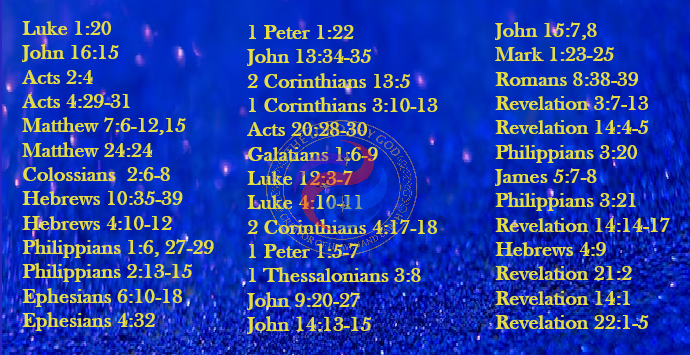
Then, in her vision, a golden card was held before her with fifty verses written upon it. She wrote them down and read each one. By the end, her doubt was gone, her tongue was loosed, and her calling was confirmed.
Let us do the same. Read these verses, in the exact order they were given, and allow the Spirit to teach us as He taught her.
Let the Word interpret itself.
Let the order of heaven be followed.
Let us speak only after we’ve listened.
📖 Read the vision.
🔍 Read the verses.
🙏 Then come back and testify what it taught you.
“I saw how great and holy God was. Said the angel, ‘Walk carefully before Him, for He is high and lifted up, and the train of His glory fills the temple.’
I saw that everything in heaven was in perfect order. Said the angel, ‘Look ye; Christ is the head; move in order, move in order. Have a meaning to everything.’
Said the angel, ‘Behold ye, and know how perfect, how beautiful, the order in heaven; follow it.’”
— Manuscript 11, 1850 (Early Writings pp. 162–163; 13MR 299–302)
“Immediately I was struck dumb… and I then saw my sin in doubting the power of God… A card was held up before me, on which were written in letters of gold the chapter and verse of fifty texts of Scripture.”
— Early Writings p. 22.2
“I was taken off in vision and saw that sooner would every drop of water in the ocean be dried up than we perish, for my work had but just begun.”
— Early Writings p. 23.2
📜 The 50 Verses (In Divine Order)
Luke 1:20
John 16:15
Acts 2:4
Acts 4:29–31
Matthew 7:6–12,15
Matthew 24:24
Colossians 2:6–8
Hebrews 10:35–39
Hebrews 4:10–12
Philippians 1:6, 27–29
Philippians 2:13–15
Ephesians 6:10–18
Ephesians 4:32
1 Peter 1:22
John 13:34–35
2 Corinthians 13:5
1 Corinthians 3:10–13
Acts 20:28–30
Galatians 1:6–9
Luke 12:3–7
Luke 4:10–11
2 Corinthians 4:17–18
1 Peter 1:5–7
1 Thessalonians 3:8
John 9:20–27
John 14:13–15
John 15:7,8
Mark 1:23–25
Romans 8:38–39
Revelation 3:7–13
Revelation 14:4–5
Philippians 3:20
James 5:7–8
Philippians 3:21
Revelation 14:14–17
Hebrews 4:9
Revelation 21:2
Revelation 14:1
Revelation 22:1–5
Alternatively Here is a link to https://t.co/36bGB9BrRL with the full list of verses. https://t.co/eHR8HFFDhc
🔍 Misunderstanding #2: "The Soul Is Immortal"
1. The Misunderstanding
Many Christians believe that the soul is inherently immortal—that it exists as a conscious entity separate from the body, and continues to live on forever after death, either in heaven, hell, or purgatory.
You’ll hear phrases like:
“Their soul has gone to be with the Lord.”
“Their soul is at peace now.”
“You can kill the body, but not the soul.”
2. Why People Might Believe It
Popular Theology: Many pastors and Christian authors repeat the phrase “immortal soul” as if it’s straight from scripture.
Church Creeds: The Nicene Creed, and others, imply immortality of the soul without qualification.
Misquoted Verses: Jesus’ warning in Matthew 10:28 is often misunderstood to support the idea.
Greek Philosophy: Again, the influence of Plato and dualistic thinking (body = bad, soul = good) shaped church teaching for centuries.
3. Traditions & Origins
Pagan Origins: Nearly all ancient pagan religions taught the immortality of the soul—from Egypt to Babylon to Greece.
Catholic Influence: The doctrine of an immortal soul was formalized in Catholic theology and absorbed by many Protestant denominations.
The Reformation Gap: Despite rejecting many Catholic traditions, most Reformers retained the immortal soul teaching out of familiarity or fear of controversy.
4. The Contradiction it Causes
If the soul cannot die, why does the Bible say “the soul that sinneth, it shall die”?
If the soul is conscious after death, why is death called “sleep”?
If only God has immortality, how can any created being possess it inherently?
This belief collides with dozens of scriptures that affirm death as unconscious, the resurrection as future, and immortality as a gift, not a default.
5. Scripture-Based Correction
Let’s examine what God actually says about the soul, death, and immortality:
📜 The Soul Can Die
Ezekiel 18:4 — “The soul that sinneth, it shall die.”
Ezekiel 18:20 — “The soul that sinneth, it shall die...”
If the soul were inherently immortal, it could not die—but God says it can and will.
📜 Only God Has Immortality
1 Timothy 6:15-16 — “...the King of kings, and Lord of lords; Who only hath immortality…”
No created being—including humans—possesses innate immortality. It belongs to God alone.
📜 Immortality Is a Gift at the Resurrection
1 Corinthians 15:51-53 — “This mortal must put on immortality…”
Romans 2:7 — “To them who by patient continuance... seek for glory and honour and immortality...”
We seek immortality—it is not something we already have. It is put on at the last trump—not at death.
📜 Man Is a Living Soul—Not Possessing One
Genesis 2:7 — “And man became a living soul.”
The soul is not a separate part of us—it is the whole of a living being: body + breath = soul. When breath returns to God, the soul ceases to exist.
📜 Death Is Sleep, Not Conscious Experience
(Reiterating for anchor, because truth harmonizes.)
Ecclesiastes 9:5 — “The dead know not any thing…”
Psalm 146:4 — “In that very day his thoughts perish.”
John 11:11-14 — “Lazarus sleepeth... Lazarus is dead.”
No thought, no awareness, no continued experience—the soul does not float or watch or wander. It sleeps.
📜 Destruction of Both Soul and Body
Matthew 10:28 — “Fear him which is able to destroy both soul and body in hell.”
This verse is often misused to prove that the soul survives death. But it actually confirms the opposite: God can destroy both body and soul. Destruction = end. No immortality here.📷
6. Conclusion: Let God Define the Soul
The soul is not an indestructible ghost trapped in a human shell.
It is your life—your conscious, breathing, embodied self. And when the breath departs, the soul ceases to be.
Immortality is not ours by default. It is the reward of the faithful—bestowed at the resurrection, not inherited by tradition.
“Let God be true, but every man a liar.” — Romans 3:4
“Can two walk together, except they be agreed?” — Amos 3:3
“To the law and to the testimony: if they speak not according to this word, it is because there is no light in them.” — Isaiah 8:20
🔍 Misunderstanding #3: "The Dead Can Communicate With Us"
1. The Misunderstanding
Many believe that deceased loved ones can watch over us, send messages, appear in dreams, or guide us from the afterlife. Phrases often heard include:
“Grandma is watching over you.”
“He visited me in a dream to tell me he’s okay.”
“I can feel her presence near me.”
This belief is deeply emotional—and widely accepted, even among Christians.
2. Why People Might Believe It
Grief and longing: The heart wants to feel that loved ones are still close.
Anecdotal stories: Many people claim dreams, visions, or unexplainable experiences.
Media saturation: TV shows, movies, books, and TikToks portray comforting ghosts, ancestral spirits, and “visits from heaven.”
False signs and wonders: Satan counterfeits miracles to deceive, even using emotional truth to tell spiritual lies.
3. Traditions & Spiritualist Influence
Catholicism teaches praying to saints and “communion of the faithful departed.”
Spiritualism/New Age teaches “crossing over” to speak with the dead.
Many churches downplay or ignore scriptures about necromancy, allowing mysticism to infiltrate Christian belief.
But the Bible is crystal clear: the dead do not communicate. If something speaks pretending to be them—it is not them.
4. The Contradiction it Causes
If the dead are asleep (as the Bible teaches), who is speaking in their voice?
If spirits can impersonate the dead, how do we discern the source?
If God forbids necromancy, why would He allow “visits from heaven” after death?
This belief opens the door to spiritual deception—especially in the last days, when signs and wonders will be used to deceive even the elect (Matthew 24:24).
5. Scripture-Based Correction
📜 The Dead Know Nothing
Ecclesiastes 9:5-6 — “The dead know not any thing… neither have they any more a portion for ever in any thing that is done under the sun.”
Psalm 146:4 — “His breath goeth forth... in that very day his thoughts perish.”
They are not thinking, watching, or feeling. They are not present.
📜 Death is Sleep
(Reinforcing again)
John 11:11-14 — “Lazarus sleepeth... Lazarus is dead.”
Job 14:12 — “So man lieth down, and riseth not... till the heavens be no more.”
They are unconscious—awaiting the resurrection. They are not roaming the Earth or whispering from beyond.
📜 God Forbids Spirit Communication
Leviticus 19:31 — “Regard not them that have familiar spirits...”
Deuteronomy 18:10-12 — “There shall not be found among you... a consulter with familiar spirits, or a wizard, or a necromancer.”
These were not cultural taboos—they were divine commandments. Why? Because familiar spirits are not dead people—they are demonic impersonators.
📜 Satan Can Masquerade
2 Corinthians 11:14 — “Satan himself is transformed into an angel of light.”
Revelation 16:14 — “They are the spirits of devils, working miracles…”
Satan can fake loved ones, perform “miracles,” and even appear beautiful, kind, and familiar. But the source is deception, not heaven.
📜 King Saul’s Demise via Necromancy
1 Samuel 28 — Saul consults a witch to call up Samuel. But:
God had already left Saul (v. 6).
The “Samuel” that appears delivers death, not blessing.
Saul dies the next day.
This was not truly Samuel—it was a demon. God had forbidden necromancy (see Leviticus above), and Saul died under its curse.
6. Conclusion: Don’t Be Deceived by Comforting Spirits
If someone appears to you in the form of a lost loved one—test it by the Word. The dead are asleep. Any spirit speaking as them is a counterfeit. God does not violate His own Word to comfort us through forbidden means.
“To the law and to the testimony: if they speak not according to this word, it is because there is no light in them.” — Isaiah 8:20
“Let God be true, but every man a liar.” — Romans 3:4
"Blessed is the man who endures temptation; for when he has been approved, he will receive the crown of life which the Lord has promised to those who love Him"
~ James 1:12
🔍 Misunderstanding #1: "When We Die, We Go Straight to Heaven"
1. The Misunderstanding
Many Christians believe that when someone dies—especially a believer—their soul immediately ascends to heaven to be with the Lord. This belief is often shared at funerals with phrases like:
"She’s in a better place now."
"He’s looking down on us from heaven."
"They’re reunited with loved ones."
2. Why People Might Believe It
Emotional Comfort: The idea that loved ones are conscious and at peace offers deep emotional relief.
Church Teachings: Many denominations teach the immortality of the soul and immediate reward or punishment at death.
Popular Culture: Books, movies, and even cartoons depict people going to heaven or hell right after dying.
Selective Reading of Verses: Scriptures like Luke 23:43 and 2 Corinthians 5:8 are often quoted without full context.
3. Traditions & Origins
Greek Philosophy Influence: The concept of the soul as an immortal, separate entity originates in Plato’s teachings, not the Bible.
Roman Catholic Doctrine: Medieval church teachings formalized the idea of an immortal soul, purgatory, and immediate judgment.
Protestant Echoes: Many Protestant churches retained this belief after the Reformation, despite lacking full scriptural support.
4. The Contradiction it Causes
If people go directly to heaven, why would we need a resurrection?
If people are alive in heaven, why would the Bible call death "sleep"?
If the righteous are already in paradise, why does Paul talk about a “crown” being given “at that day” (2 Tim 4:8)?
This belief creates contradictions between the Gospels, the prophets, and Revelation—but the problem is not with the Bible. The problem is the overlay of tradition onto God’s Word.
5. Scripture-Based Correction
Let’s re-establish the truth about death from a broad scriptural view:
📜 Death = Sleep
John 11:11-14 — Jesus says, “Lazarus sleepeth... Lazarus is dead.”
Daniel 12:2 — “Many of them that sleep in the dust of the earth shall awake…”
1 Thessalonians 4:13-15 — “Them also which sleep in Jesus will God bring with him.”
Death is not consciousness in heaven. It’s a state of unconscious sleep, awaiting the resurrection.
📜 The Dead Know Nothing
Ecclesiastes 9:5-6 — “The dead know not any thing...”
Psalm 146:4 — “In that very day his thoughts perish.”
A person cannot think, praise God, or observe events—they are asleep, unconscious.
📜 Resurrection Happens at the End
1 Thessalonians 4:16-17 — “The dead in Christ shall rise first...”
1 Corinthians 15:51-52 — “At the last trump... the dead shall be raised incorruptible...”
Job 14:12-14 — “Till the heavens be no more, they shall not awake...”
Resurrection is future, not immediate. No one has received their full reward yet—not even David:
Acts 2:29, 34 — “David... is both dead and buried... For David is not ascended into the heavens.”
📜 Even Paul Waited for His Reward
2 Timothy 4:8 — “A crown... the Lord... shall give me at that day.”
Not at death. At that day—the day of the Lord.
📜 Correcting Luke 23:43
Luke 23:43 — “Today shalt thou be with me in paradise.”
But Jesus didn’t go to heaven that day. He said:
John 20:17 — “I am not yet ascended to my Father.”
The comma was added by translators. The verse should read:
“Verily I say unto thee today, thou shalt be with me in paradise.”
6. Conclusion: Aligning with God’s Word
The belief that we go straight to heaven after death contradicts the Bible’s teaching on:
the state of the dead,
the nature of resurrection,
the timing of judgment and reward.
Let God be true, and every tradition a lie if it conflicts with His Word.
“Can two walk together, except they be agreed?” — Amos 3:3
“To the law and to the testimony: if they speak not according to this word, it is because there is no light in them.” — Isaiah 8:20
ElsieAnna, first, I hear you. 25 days away from home, surgery, stitches, rehab…😯 that’s a lot. I admire that even while adjusting boots and gauze you’re seeking God. That’s powerful. 🙏
About Messianic Judaism, just remember: not all fellowships are the same. Some are deeply rooted in Scripture, others drift into tradition. Jesus warned in Mark 7:7–9 about the danger of “teaching for doctrines the commandments of men.” Paul said in Colossians 2:8: “Beware lest any man spoil you… after the tradition of men, and not after Christ.”
The heart of it is this: Truth isn’t found in learning Hebrew names or customs, it’s in knowing Jesus personally through His Word. He is the vine; we are the branches. (Romans 11) The Torah points us to Him, but He is the Bread of Life.
You mentioned you loved your time with SDA friends growing up, that spark is still alive. Maybe your ankle, painful as it’s been, is part of God’s way of slowing you down to seek the Bread that truly satisfies.
If you’d like, I’d love to open the Bible with you, study together, walk carefully through truth, and see where the Spirit leads. No pressure. Just sharing the bread from heavens bakery. 🌿
Friends, a couple things worth clarifying here:
1. “Until” doesn’t always mean “never after.”
Yes, Dennis is right, it can end the action, or not.
Example: “Michal had no child until the day of her death” (2 Sam 6:23). That clearly means “never after.”
But in Matthew 1:25:
“[Joseph] knew her not until she had brought forth her firstborn son.”
The natural reading is: no union before Jesus’ birth, implying union after. “Firstborn” reinforces this (a term used when other children follow, cf. Luke 2:7).
2. Who wrote Matthew?
Here’s the bigger picture, Matthew didn’t “author” the book as moderns think. None of the Gospels were casual biographies. Luke himself says he “set in order” what was delivered (Luke 1:1–3). The Spirit was the true Author.
2 Peter 1:21 makes it plain:
“For the prophecy came not… by the will of man: but holy men of God spake as they were moved by the Holy Ghost.”
So whether it came through Matthew, Luke’s pen, or oral testimony, it is the Spirit’s Word, not man’s invention.
3. The real issue isn’t grammar, it’s prophecy.
Isaiah 7:14 required the virgin conception. That’s the miracle. Afterward, Scripture leaves no reason to assume perpetual virginity, only tradition.
4. Beware the traditions of men.
Jesus warned in Mark 7:7–9:
“Howbeit in vain do they worship me, teaching for doctrines the commandments of men. For laying aside the commandment of God, ye hold the tradition of men… Full well ye reject the commandment of God, that ye may keep your own tradition.”
Paul echoed the same in Colossians 2:8:
“Beware lest any man spoil you through philosophy and vain deceit, after the tradition of men, after the rudiments of the world, and not after Christ.”
The perpetual virginity idea belongs to tradition, not to the Word. And Christ Himself warned us how dangerous it is to let tradition obscure the plain witness of Scripture.
Friends, let me help settle this with Scripture itself, because the Bible already gives us the language, the framework, and the clarity.
1. “To know” is covenantal, not mechanical.
Genesis 4:1: “Adam knew Eve his wife; and she conceived.”
The Hebrew yada isn’t just biology, it’s relational knowing. The act is real, but the word emphasizes union and covenant, not mechanics. That’s why Scripture never talks in raw biology terms, it frames intimacy as a bond.
2. Perpetual Virginity?
Catholic and Orthodox traditions hold Mary remained a virgin perpetually. Protestant tradition generally rejects this. Why? Because of Matthew 1:25:
“[Joseph] knew her not till she had brought forth her firstborn son.”
The word “till” strongly implies consummation after Jesus’ birth, and “firstborn” naturally suggests others followed (see Matthew 13:55–56).
3. Prophecy > Biology.
This isn’t a biology class. The miracle wasn’t in the “how” of intimacy but in the absence of it at Jesus’ conception. That’s the sign Isaiah pointed to (Isaiah 7:14). After that, Mary and Joseph’s marriage was a normal, covenantal union, beautiful, honorable, holy.
So let’s be clear:
• The Bible doesn’t speak in fables, it speaks in covenant language.
• Mary’s virginity was prophetic and essential for the Incarnation, but not perpetual.
• To know = intimacy in covenant. Not crassness. Not biology textbook.
This thread is gold. 🙌🏼 The clarity you bring to the “handwriting of ordinances” and the distinction between the moral and ceremonial law is such a gift to the body. Hebrews 10:1 and 1 John 3:4 really seal it, Christ fulfilled the shadows, not abolished the light.
Please check your DMs. 🕊️